
Middle schoolers love being the ones to figure things out, yet they have limited attention spans. Give them what they want—quick, exploratory artmaking that results in lovely finished pieces each time! Spring, in particular, is the perfect time to introduce bite-sized flexible ideas because they require minimal preparation and instruction, and engage wandering minds. Infuse your curriculum with fresh life as the year winds down with fun, colorful florals designed to help everyone experience success.
When you need a spring art activity, but don’t have time for a lot of prep or heavy instruction, these five one-day project ideas are a lifesaver!
1. Crazy Cardboard Flowers
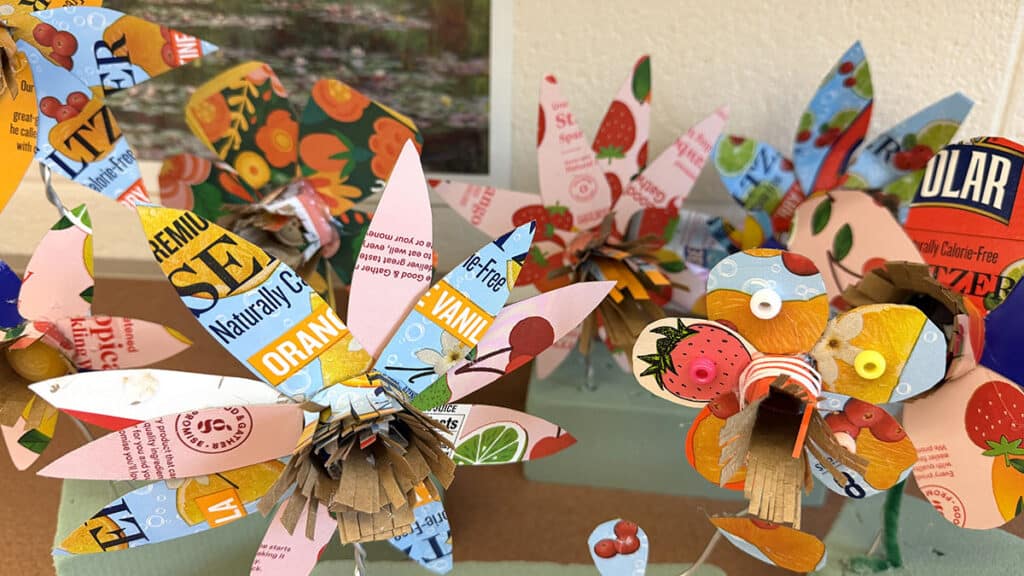
It’s time to have fun with color, shape, and three-dimensionality—and use up some of your cardboard mountains! Middle schoolers are beginning to grow a deeper awareness of bigger problems and solutions, such as excessive waste and recycling. Incorporate concepts around reusing and repurposing thin cardboard in this activity. You can even sneak in connections to graphic design by introducing students to the designers behind the packaging!
If you want to add a bit of natural inspiration, mention that many flowers have petals arranged in a radial pattern, often in odd numbers. That said, a full lesson on flower anatomy isn’t needed; these flowers will be expressive and fun! All students can succeed with this activity and walk away with a make-and-take they’re proud of. You can also keep the flowers for a quick, inclusive display.
Get started with these steps:
- Collect thin cardboard boxes, such as tissue boxes or selzer boxes.
- Disassemble a box, turn it inside out, and draw the first petal.
- Use the first petal to trace the other petals.
- Glue together with the teachers’ choice of adhesive: hot glue, white glue, or craft glue.
- Attach sturdy sculptural wire for stems with hot glue.
- Embellish the flowers for more fun!
- Optional: Provide a plastic bottle cap for the center of the flower to make assembly easier.
2. Field of Dreams
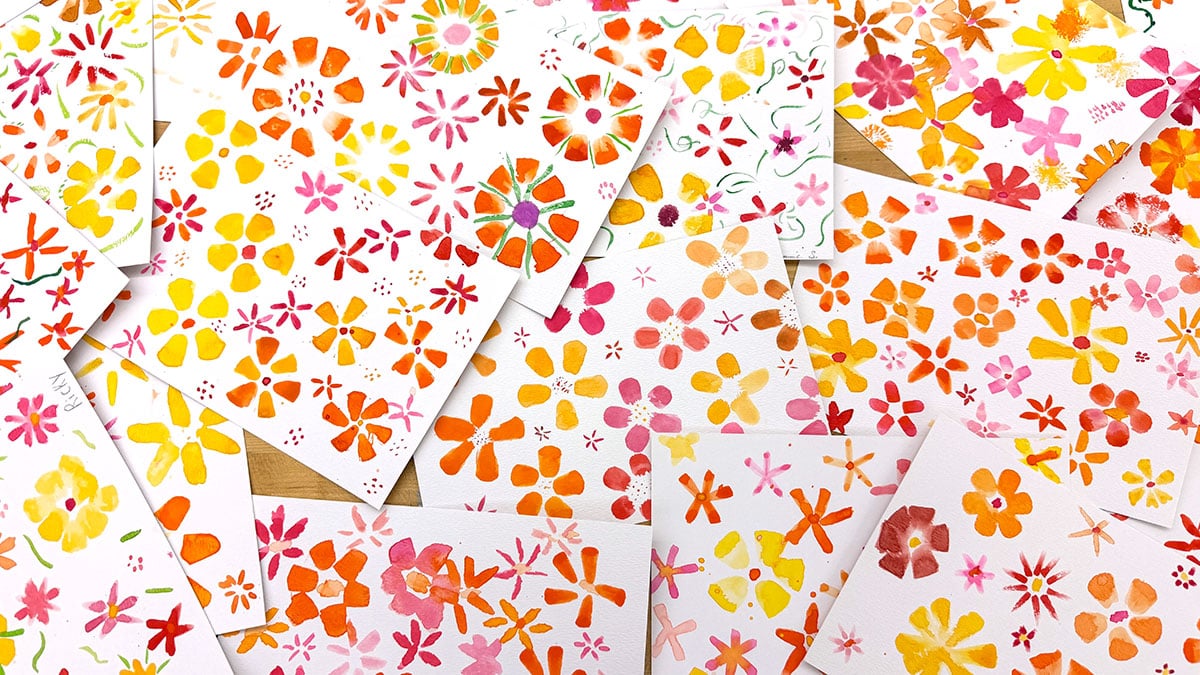
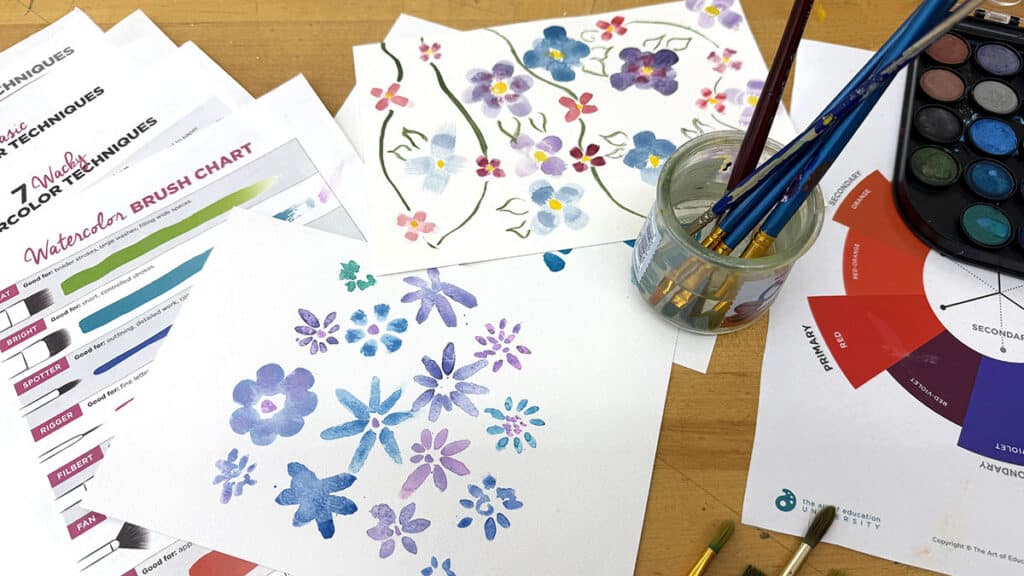
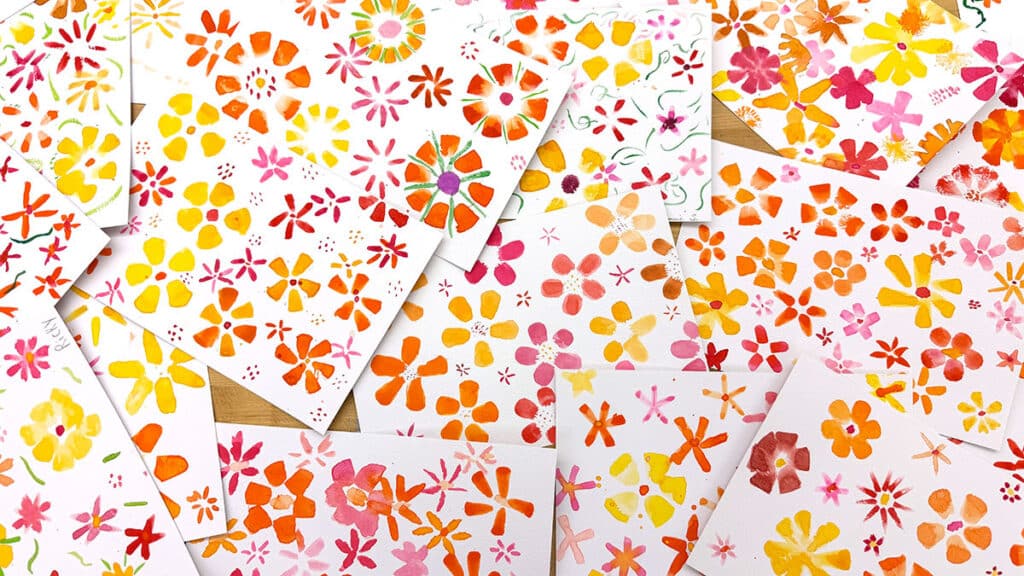
This one-day people pleaser builds confidence, teaches basic watercolor techniques, and finds its way home the very next day. Watercolor is notoriously difficult to control and often requires patience and layering. Middle schoolers want instant results, and this technique delivers!
Use a projector to break down the process and paint step by step with your students. This project is truly captivating once they get the hang of it! If you don’t have a projector, demonstrate two to three flowers and send them on their way. At the end of the period, everyone can admire the “fields” of flowers and see how different brushes can create such a variety of petal shapes.
Get started with these steps:
- Use small sheets of watercolor paper for cuteness and economy.
- Provide an assortment of brush sizes and shapes.
- Choose a color family, such as warm or cool.
- Load the paintbrush, press the brush down, then lift!
- Experiment with varied amounts of water in the brush.
- Repeat for a fun field of flowers.
- Optional: Offer larger paintbrushes, paper, and a pre-drawn inner circle.
3. Paper Cacti
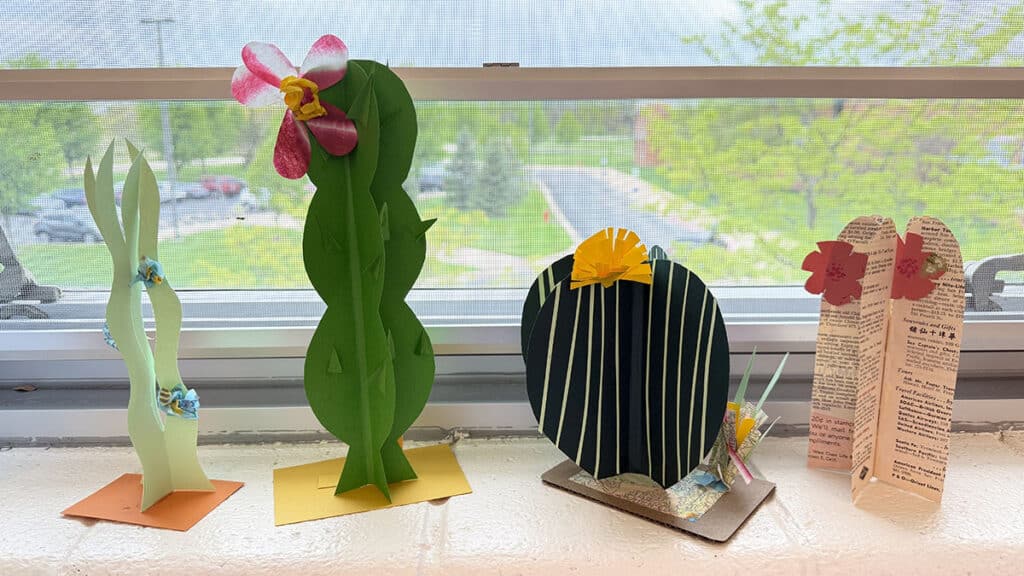
Break into the third dimension with a paper cactus sculpture. This one-day exploration gives students foundational skills in paper sculpture that you can use in a future three-dimensional unit or as a one-and-done reset. Challenge students’ spatial thinking—they love to see how a flat piece of paper can transform into a free-standing object with a few simple folds.
Get started with these steps:
- Choose 3-4 sheets of construction paper or cardstock.
- Fold each sheet vertically.
- Draw a cactus shape on the folded paper.
- Cut out the shape, making sure NOT to cut through the folded edge so the pieces stay connected at the center.
- Layer and attach shapes at the fold to build a 3D cactus form.
- Secure to a base using tabs or folded supports for stability.
- Add flowers using tissue paper or folded paper.
- Optional: Hand out reference images, and incorporate fun facts about cacti for your budding scientists.
4. Felted Flowers
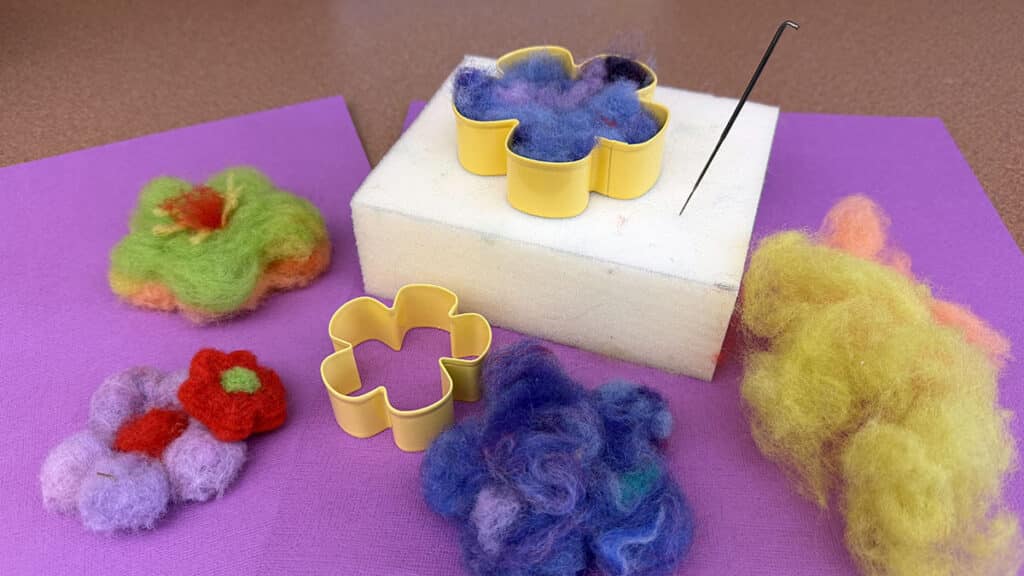
Needle felting is the process of sculpting wool by poking it with a barbed needle. Felting inside of a cookie cutter is an easy hack for beginners—the cookie cutter provides a distinct shape and reduces the chance of poking fingers. Once students acquire basic needle felting skills, they can develop shaping skills for free-form felting. Display with quick stems underneath or magnets on the back.
Get started with these steps:
- Assemble materials for felting, including roving wool, barbed felting needles, cookie cutters, and a felting pad (a foam surface beneath).
- Tuck the fluffed-out wool loosely inside the cookie cutter.
- Poke evenly with the felting needle.
- Increase the thickness and density of the flower by adding more wool.
- Flip the project and needlefelt the opposite side.
- Add secondary pieces of felt to add dimension and variety.
- Spend more time felting along the cookie-cutter outline for a more defined shape.
- Optional: Try needles with handles or give hand-over-hand help (with permission from the student’s special education case manager).
5. Surreal Botanicals
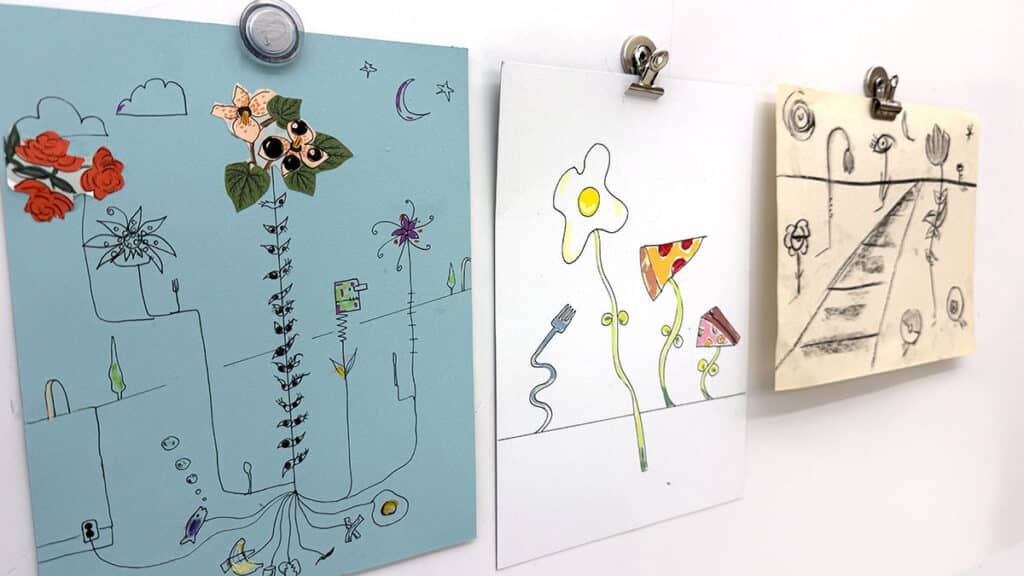
Salvador Dalí created botanical prints using aquatint and etching in the late 1960s and early 1970s. As an iconic surrealist, Dalí combined imagery in unexpected, dreamlike ways. His floral prints, created late in his career, offer a fun source of inspiration for middle school artists and an approachable way to introduce Surrealism. His botanical works can also include subtle one-point perspective, adding depth to the piece.
Get started with these steps:
- Share examples of Salvador Dalí’s botanical works.
- Brainstorm unexpected juxtapositions and surreal combinations.
- Choose a medium, like drawing or collage.
- Draw a flower or cut and glue a flower from printed materials.
- Transform the flower with unexpected elements.
- Add touches of one-point perspective.
- Optional: Give a list of objects, foods, and other items they can merge with their flower.
Middle school students need experiences that provide instant gratification, boost their artistic confidence, and spark their curiosity. And, honestly, so do you! These one-day floral ideas offer fresh, low-prep ways to keep creativity blooming, even when your energy and their attention are running low. With just a little color and imagination, you can turn the last few days of school into something joyful, memorable, and full of possibility!
What are your favorite one-day activities during the spring?
Which activity are you excited to try with your students?
To chat about flower-inspired art projects with other art teachers, join us in The Art of Ed Community!
Magazine articles and podcasts are opinions of professional education contributors and do not necessarily represent the position of the Art of Education University (AOEU) or its academic offerings. Contributors use terms in the way they are most often talked about in the scope of their educational experiences.