

Teaching advanced art classes is not your average elective. Often college-level, these courses demand a unique blend of conceptual thinking, technical skill, and independent investigation from students. They also require an extraordinary level of planning, advocacy, and flexibility from the teachers who lead them.
Whether you’re stepping into teaching AP Art or IB Art for the first time or you’re looking to strengthen your existing program, success depends on two powerful components: gaining support from your school community and implementing intentional teaching strategies to empower students to thrive.
Step 1: Gain support.
Creating a strong foundation of support isn’t optional—it’s essential. AP and IB art programs often operate under the radar, misunderstood as casual electives rather than rigorous academic courses. To shift that perception and gain the resources your students need, consider the following strategies.
Help stakeholders understand the rigor.
The biggest misconception about AP and IB visual arts classes is that they’re “fun” or “easy” electives for talented students. In reality, these students engage in deep artistic inquiry, write extensively about their work, and construct high-level portfolios under strict guidelines. It requires students to pull connections and learning from all areas of their lives to create a reflective and cohesive body of work that is externally assessed.
How to Gain Support:
- Share course outlines, assessment rubrics, and past portfolio examples with administrators.
- Provide major deadlines to other AP/IB teachers to prevent overloading students with big assignments on the same days.
- Host an annual AP/IB Art Night to showcase student work and allow stakeholders to see the depth of learning firsthand.
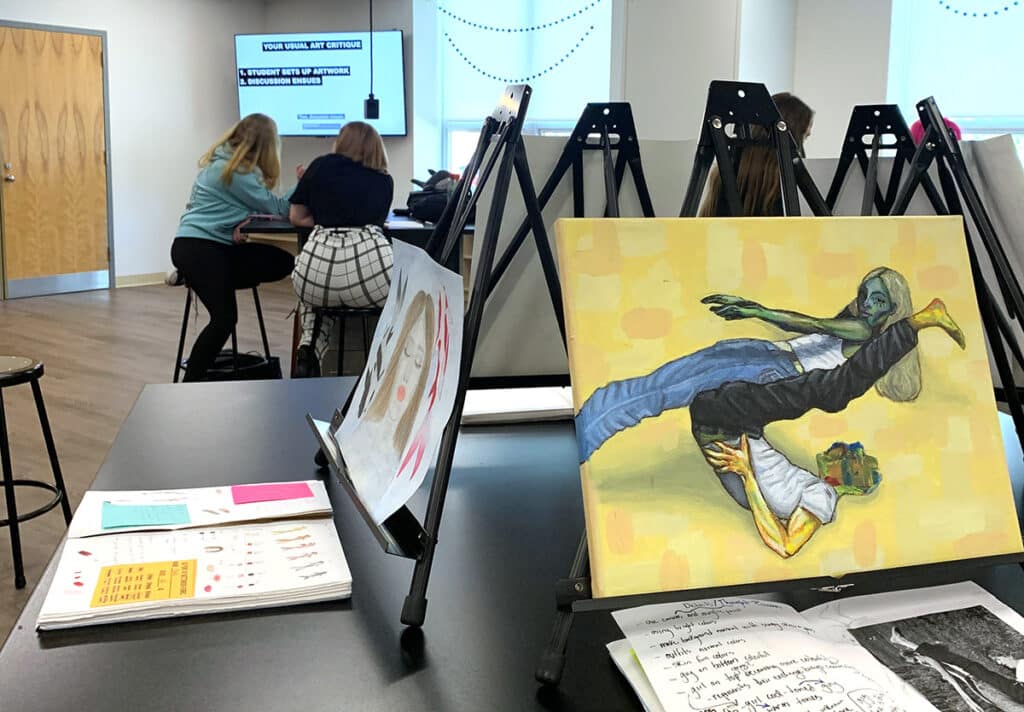
- Invite stakeholders to attend critiques or in-progress workdays to witness the learning process in action.
Nurture collaborative relationships with counselors.
Counselors are often the gatekeepers to your advanced courses. When they understand the academic value and prerequisites, they are able to intentionally steer qualified students into these courses. One way to equip them with the correct information is to provide user-friendly program guides that include a short description. Share stories and data that highlight a diverse range of student successes, so counselors can see that qualified students don’t always equate with “top-tier artists.”
Communicate the portfolio process clearly to guardians.
Parents and guardians may have little context for what AP or IB Art entails, which can lead to misunderstandings about grading, deadlines, or expectations. In addition to providing a welcome packet at Back to School Night, share a year-long pacing calendar with checkpoints and major deadlines so they can fully grasp the scope of the program. Communicate frequently about their students’ progress, from logistical requirements to artistic breakthroughs.

Secure the resources you need.
Teaching advanced art is more difficult without advanced materials. Students often work in mixed media, require access to studio time outside of class, and need digital tools for photographing and uploading their work. Share a Needs vs. Wants List with your PTA/PTO, apply for mini-grants, or partner with local art organizations and businesses. Depending on your school’s schedule and policies, request independent work passes for extended studio access.
Prioritize advocacy through student voice.
No one communicates the value of your program better than your students. When they articulate their process, challenges, and creative discoveries, people listen. Plus, these are additional opportunities for students to build their confidence and hone their voice and communication skills.
How to Gain Support:
- Ask students to present portfolios or process journals at school board sessions, PTA/PTO meetings, or all-staff professional development workshops.
- Feature student voices through social media, newsletters, or hallway displays.
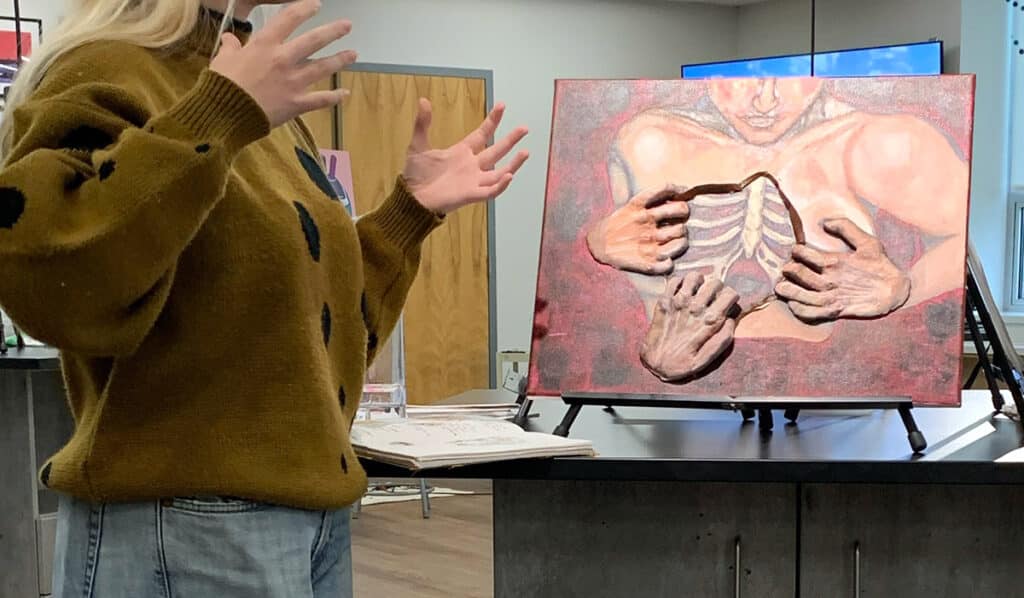
- Invite parents to a final critique or exhibition and let students lead the conversations about their work.
Step 2: Implement intentional teaching strategies.
Support structures are vital, but teaching these courses also requires strategic, intentional instruction. AP and IB Art go beyond foundational skills and guide students toward artistic independence and conceptual depth. One of the keys to accomplishing this is to foster a natural passion for their work by making meaningful connections to things they already love.
Implement backward design from the end goal.
In both AP and IB, the portfolios are the final destination. AP students complete a Sustained Investigation and Selected Works, while IB students build a Process Portfolio, Comparative Study, and Exhibition. Whatever the specific requirements are, start with a clear breakdown of all of the components. Work backwards to design checkpoints, critique sessions, and writing tasks. Use this to set a pacing guide that you share and reference often with students.
To gain more knowledge about these two advanced courses, listen to these podcast episodes:
- Exploring IB Visual Arts, Part One (Ep. 312)
- Exploring IB Visual Arts, Part Two (Ep. 313)
- Breaking Down AP Portfolios, Part One (Ep. 289)
- Breaking Down AP Portfolios, Part Two (Ep. 290)
Build student independence early.
These courses thrive when you empower students to take creative risks and direct their own paths. That doesn’t mean throwing them into the deep end—it means teaching them how to swim with lots of scaffolding. Begin with structure, inquiry-based prompts, and guides, and gradually release control and replace them with lots of check-ins and feedback. Mini-lessons are also a great way to introduce students to research and ideation processes.
Check out these mini-lesson ideas:
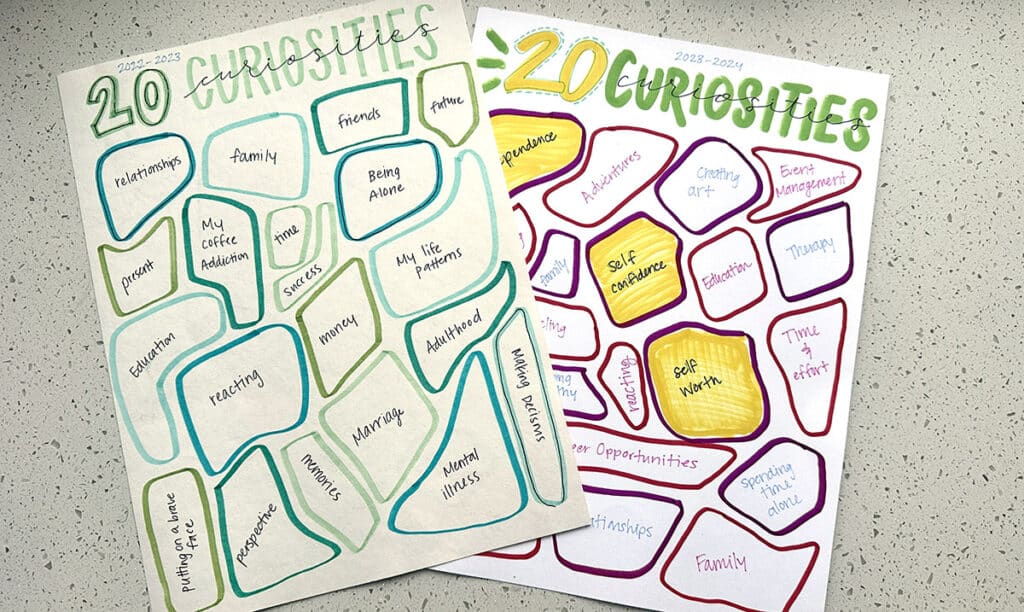
- “From Topic to Inquiry” Warm-Up
Give students a basic theme, such as Identity, and generate a list of questions that they can explore later, such as What parts of my identity are hidden or performative? - Question-Storming Activity
Students compile 10 or more questions about a personal photo, object, or memory. - Visual Thinking Strategies (VTS)
Show an unfamiliar artwork and guide students through careful observation with questions like, What’s going on here? What do you see that makes you say that? What more can we find? - Question Ladder Exercise
Start with a simple question, like What materials do I want to use? Make it deeper at each “rung,” with questions like, Why do I gravitate toward these materials? or What do these materials say? - Peer Critiques
Use informal critiques to normalize revision and support creative voice from the start. Mimic a mini gallery opening and make this a fun celebration of growth—with snacks!
Use themes and prompts to jumpstart ideas.
Creative blocks are real—especially for students used to structured teacher-led projects. Provide open-ended themes and prompts to help them dig into personal meaning. They don’t have to stick with these themes, but they can be a helpful starting point to kick off their body of work.
Here are some activities to get ideas flowing:
- Visual Research Tasks
Encourage students to find five artists working with unconventional materials or processes, or respond to a childhood photo in three different mediums. - Brain Dump
Tell students to fill their page with everything bouncing around in their brain right now—no plan, just react! - Visual Metaphor
Provide a fill-in-the-blank statement to inform a future artwork, like If ___was a ___, what would it be? - What’s In Your Bag?
Draw 5-7 items that would be in their bag. Challenge them to go beyond literal with more symbolic representations.
Integrate reflection as a routine.
Both AP and IB criteria demand that students write thoughtfully about their artistic decisions. Reflection isn’t a final step—it’s a core practice. It doesn’t happen on its own, so build in weekly or biweekly reflections. Ask lots of intentional questions to invite students to be curious and understand the why behind everything they do.
Try these reflection strategies:
- Introduce the “What, Why, What’s Next?” framework.
This breaks down reflection into three clear parts: What did I do? Why did I make those choices? What’s next in my process? - Play the Reflection Dice Game.
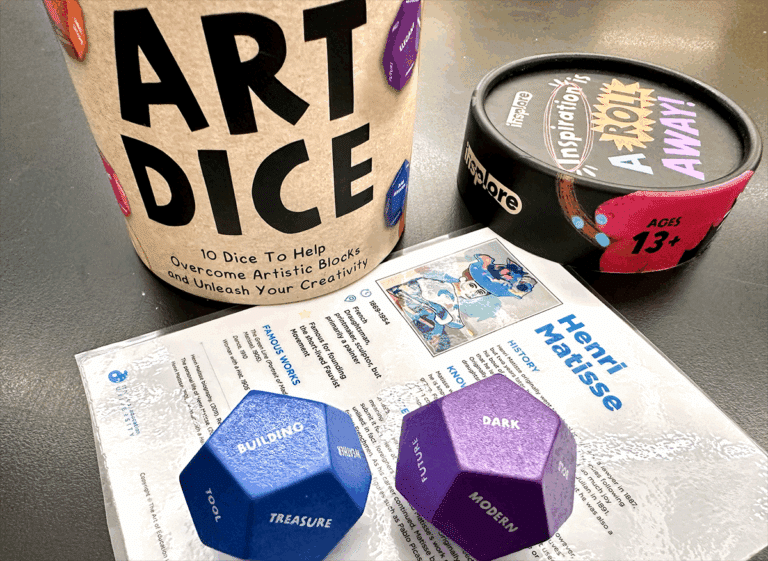
Use a set of physical or digital dice and pair numbers with reflection prompts like, Describe one mistake you made and what it taught you. What surprised you about your work today? What part of your piece feels most intentional? What are you struggling to resolve? - Offer alternative ways to record reflections.
Introduce visual journaling, video reflections, or voice recordings for students who struggle with written expression. - Analyze past student exemplars.
Share past reflections to model strong processes and use the criteria as a discussion guide.
Set up a system for portfolio documentation from the start.
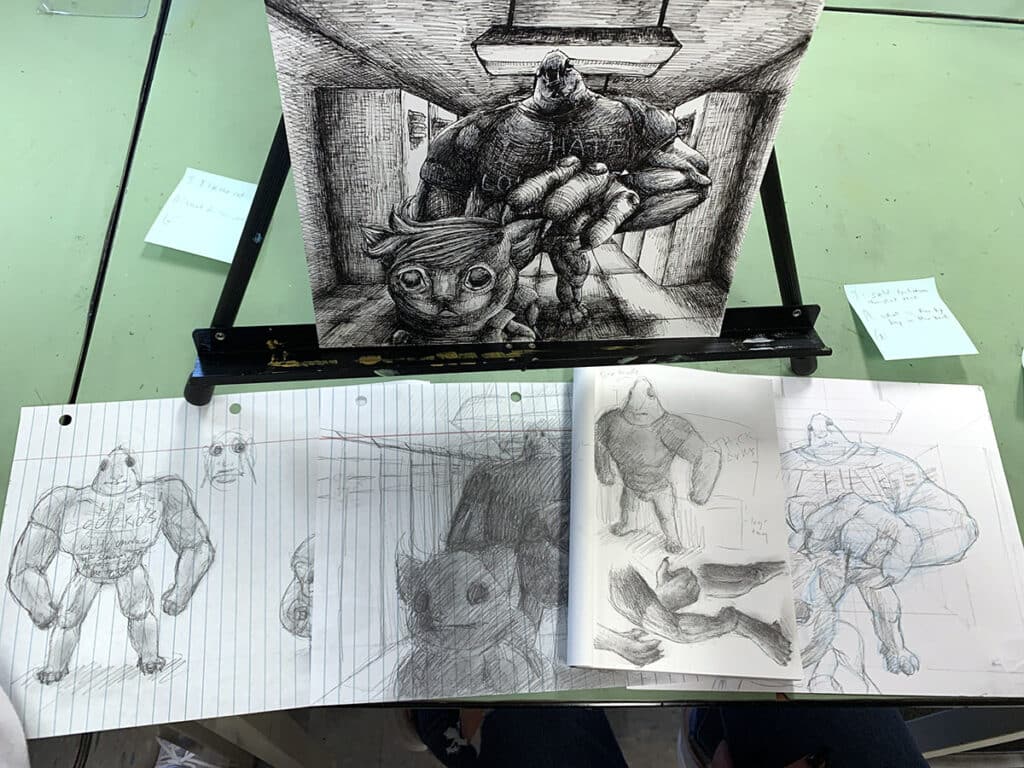
Last-minute portfolio uploads usually equate to unnecessary stress. Help students develop consistent digital documentation habits throughout the year so they’re only left with final checks before uploading. Start by demonstrating how to take strong photos with bright, filtered lighting. Also, share hacks for simple photo editing and tips to clearly label files. Require documentation at every major stage of a project so nothing is missing later. Regularly add this to a digital portfolio system so everyone can pull it up from anywhere.
Make assessment transparent and growth-oriented.
AP and IB Art rubrics are complex, but your classroom culture and grading systems don’t have to be. Share the rubrics with students ahead of time and clarify what the language means. It can be helpful to translate it into your own version with student-friendly language that you use during peer critiques, self-assessment, and progress tracking. This ensures that there are no surprises when external evaluations come.
Give yourself grace and time to learn.
Teaching advanced courses for the first time can feel overwhelming. That’s normal—and okay. Be transparent with your students and show them that you’re learning too. Reflect often and take notes on what worked and what didn’t so you can tweak and improve as you go. Seek support from other art teachers teaching the same course(s) you are through online communities, workshops, or social media groups. Celebrate small wins—a thoughtful statement or moment of clarity from a student can be as important as a perfect final piece.
As an AP or IB art teacher, you aren’t just helping students make art—you’re helping them become creative thinkers, storytellers, and independent learners for life. This is an important responsibility, and it’s extremely challenging to do on your own. Invite the support of stakeholders like administrators, counselors, and parents. Foster artistic discovery with intentional instructional strategies from brainstorming to documenting to reflecting. Then, watch students step into becoming confident artists who carry their voice far beyond the art room walls.
Identify a future ally of your advanced art students in your school or community. How will you invite them into the process this year?
What strategies do you use to help students develop independent thinking and sustained investigation?
To chat about finding support for teaching advanced art courses with other art teachers, join us in The Art of Ed Community!
Magazine articles and podcasts are opinions of professional education contributors and do not necessarily represent the position of the Art of Education University (AOEU) or its academic offerings. Contributors use terms in the way they are most often talked about in the scope of their educational experiences.