
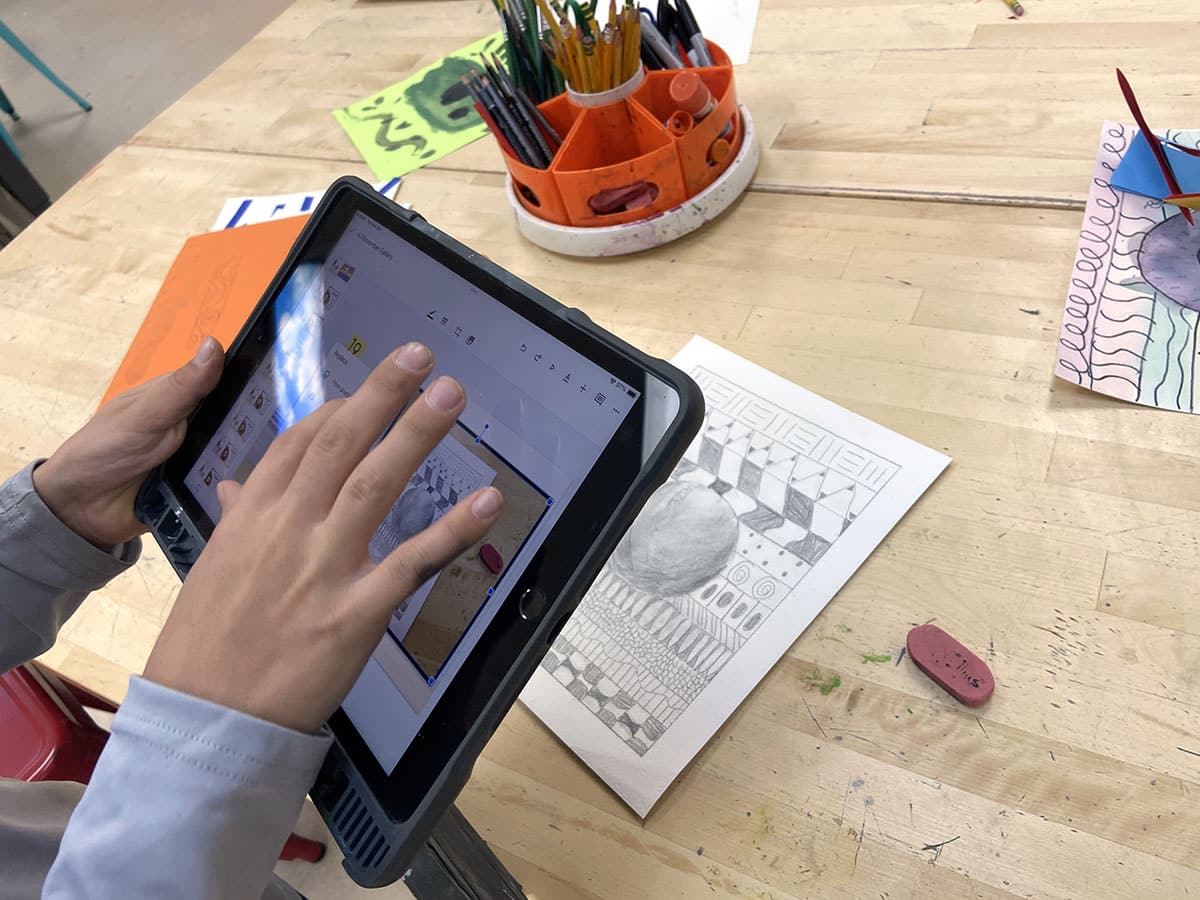
When you unlock your phone and open social media, your feed is probably flooded with artists posting their work to share or sell. For a professional artist, working with technology to photograph and market their work is now an integral part of their job. One way to prepare your students for the current landscape of the art world (and streamline your work) is to collect student artwork digitally.
Simplify your teaching load: reflect on the challenges and discover the benefits of collecting artwork digitally.
Challenges of Digital Art Submission
Accuracy
It can be difficult to see details, such as subtle color variations or layered textures, through a screen. The colors can change dramatically depending on the lighting used during photography. Sometimes, the quality of the work can be hard to accurately assess through a photo, especially if scale is a factor. While students can note dimensions, there’s something special about cradling a tiny, intricate work in your hands versus looking up at a giant floor-to-ceiling sculpture that you can walk around.
Accessibility
Students may not have access to technology and the internet. While most students have a school-issued device, sometimes it may not be the best option for photographing artwork. Damaged and forgotten devices can also throw a wrench into your plans—especially on deadline day!
Benefits of Digital Art Submission
Teaches students to photograph artwork.
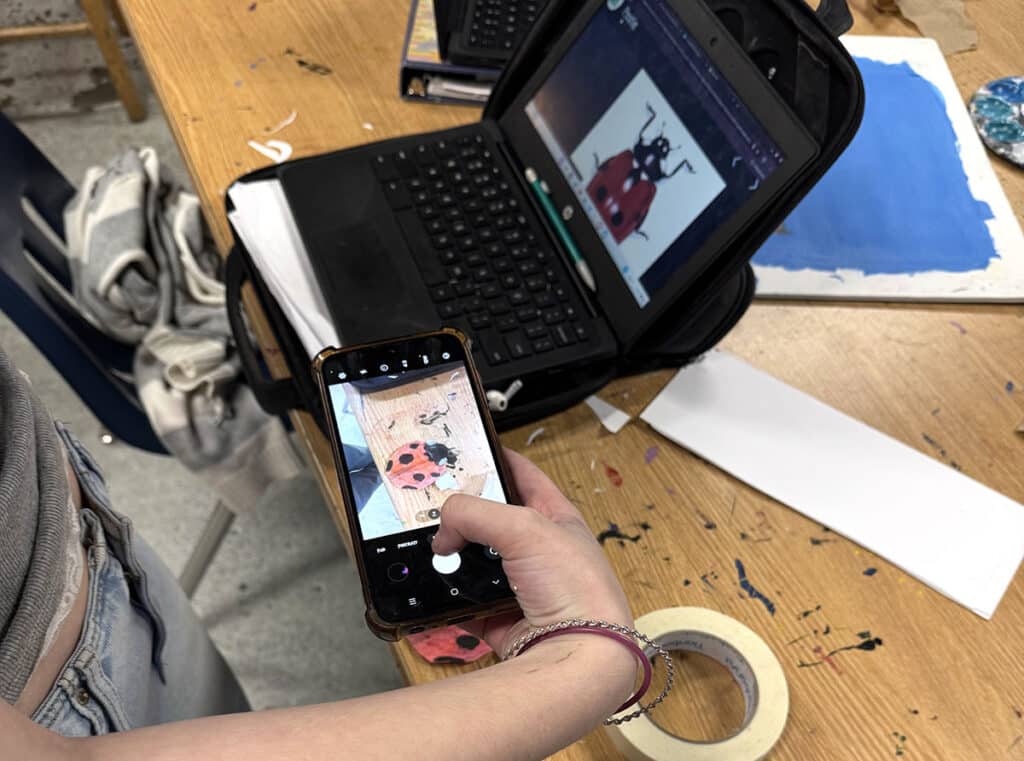
When students need to turn in their work digitally, it provides an opportunity to teach them how to properly photograph their work. While our students snap photos all of the time, learning how to take a quality photograph that captures nuanced details and coloring is a whole other skill set.
Show students how to set up bright, filtered lighting. Demonstrate how to place their artwork on a low, clean surface so they can get a clear shot of the work from above. This ensures the photograph captures the artwork as flat as possible without any wonky angles. It’s helpful to have a designated spot in your art room set up for this purpose. This is also a great time to discuss how professional artists need to know how to take really strong photos to promote their work.
Creates a digital catalog of student work.
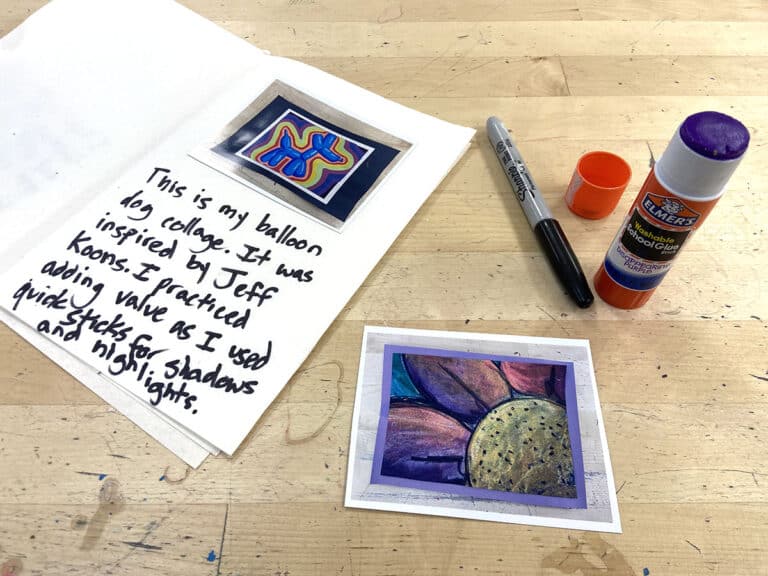
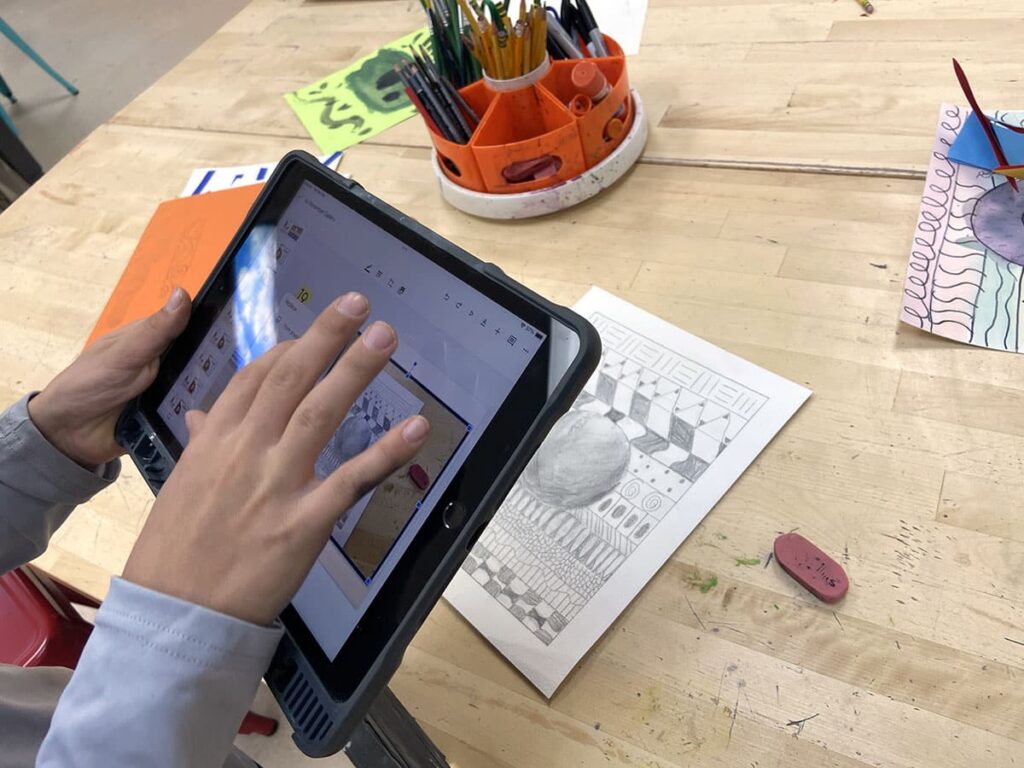
When students submit their work digitally, all files are in one easy-to-access location within your platform’s storage. Student artwork is always just a click away, making organization simple and reducing the likelihood of misplaced or forgotten work. In just a few months, you’ll have a vast archive of in-progress and final student artwork images to use for lesson plans, exemplars, resources, and more.
Provides students at the end of the year with a digital portfolio.
If you have students consistently submitting their work digitally throughout the semester or the year, they will automatically have what they need for a digital portfolio. This can also make for a great final project. Students can look back, evaluate, and reflect on their learning. There’s no need to worry about hunting down work for a photo, because it’s already done!
Advertises your program.
You can also use your bank of student artwork photos as an advertisement for your program. Create digital slideshows of student work to display on your school’s screen in the main lobby and office, or before a school event. Include photos of students working and in-progress shots to show the growth and learning coming out of your program! If the budget allows, you can print the final artwork photos and exhibit them in community spaces, freeing up the originals for contests and competitions.
De-clutters your desk.
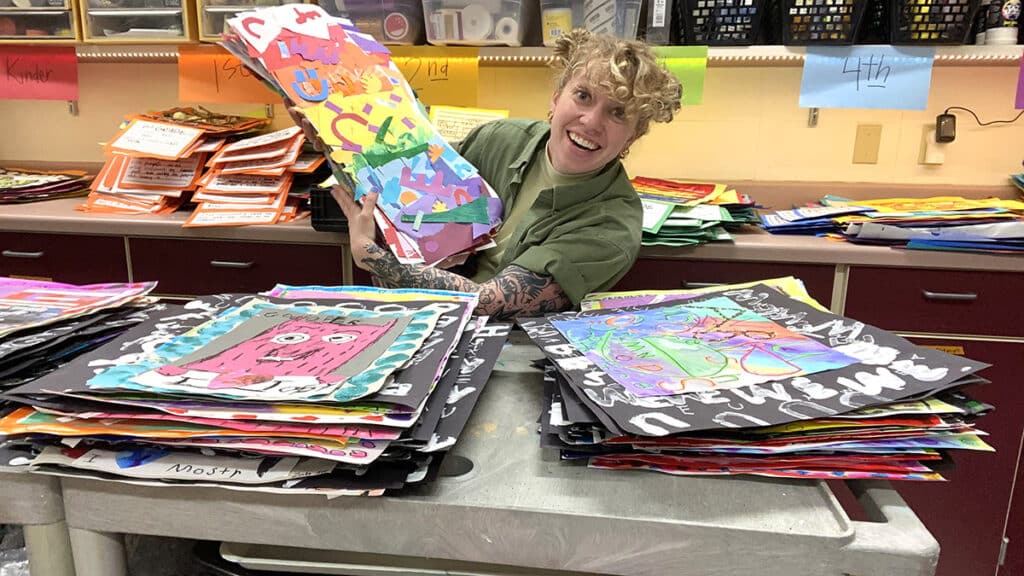
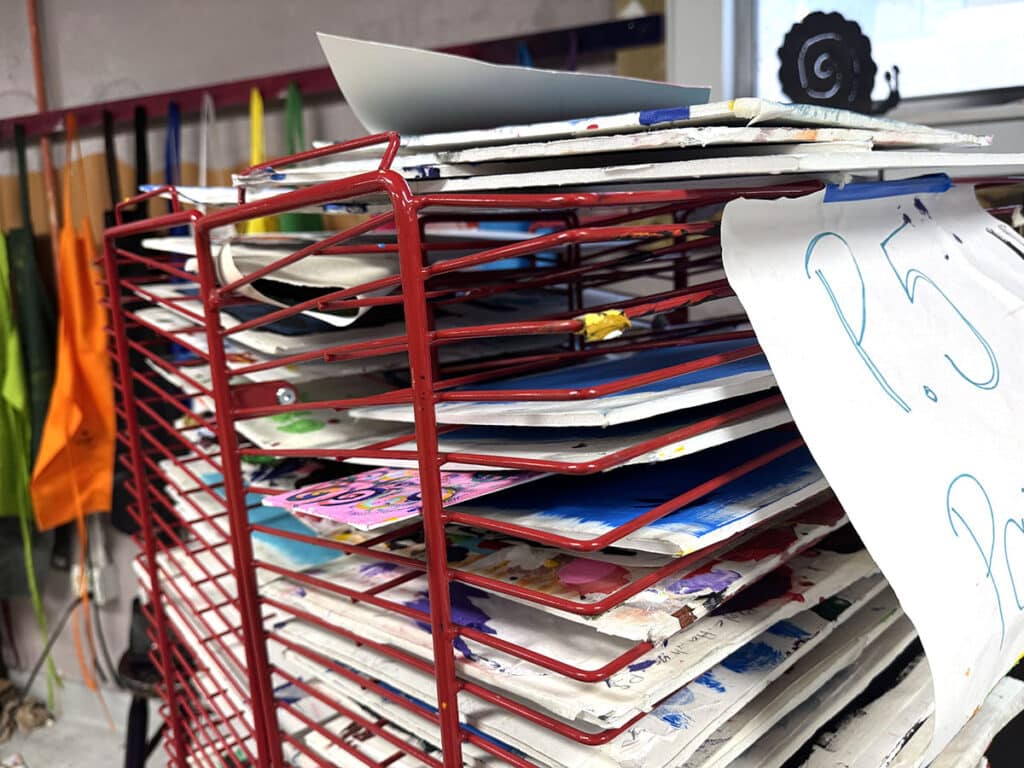
We all have hit a point where stacks, upon stacks, upon stacks of student artwork are piled on our desks. Plus, sketchbooks and sculptures often take up even more space! Digitally submitted artwork eliminates clutter and protects your workspace, keeping it for your items alone.

Provides an easy avenue for academic feedback.
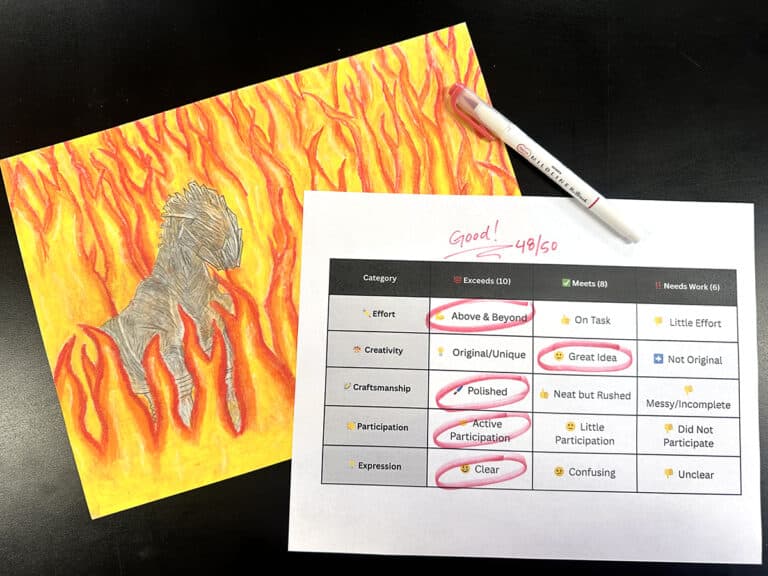
After you have finished grading, students may have questions. Sometimes, it can be a week or more before they come back to you and ask about a specific grade. With the passing of time and the large quantities of artwork you grade, you probably won’t remember your reasoning behind their score. Having the photo of the artwork with its corresponding digital rubric and comments will make your preparation for the chat much easier.
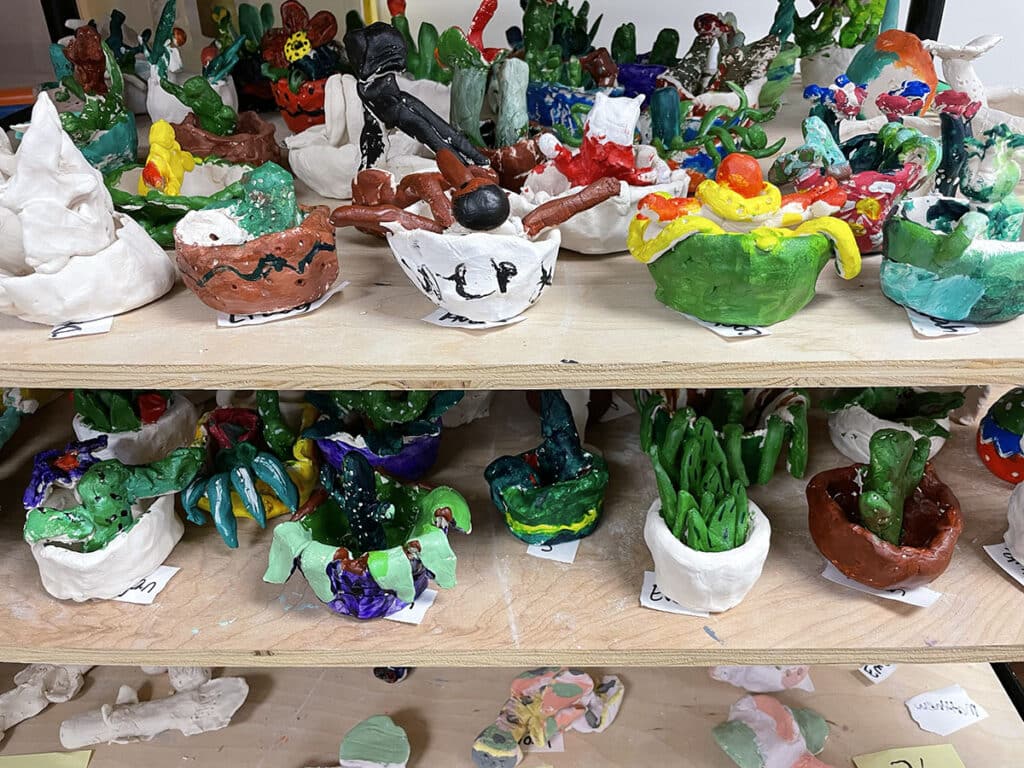
Collecting artwork digitally reduces clutter, creates a bank of student artwork, and makes it easy to track progress over time. It also simplifies grading and feedback, giving you more time to focus on teaching rather than managing physical work. While digital submissions may not always capture the true quality and intricacies of an artwork, they open the door to conversations about presentation, documentation, and the real-world habits of professional artists. By thoughtfully blending digital and physical practices, we prepare our students not only to make art but also to share it confidently with the world.
How do you streamline the submission of student artwork?
What is one way you adapt to the developing digital art landscape?
To chat about digital artwork submission with other art teachers, join us in The Art of Ed Community!
Articles and podcasts are opinions of professional education contributors and do not necessarily represent the position of the Art of Education University (AOEU) or its academic offerings. Contributors use terms in the way they are most often talked about in the scope of their educational experiences.