Connect Visual Arts Education to Your District Goals

Arts supports the priorities districts are already pursuing.

Explore research-backed connections between visual arts education and seven district outcomes. Start with the priority that matters most to your district, access resources to learn more, and identify practical ways visual arts can support students and schools.
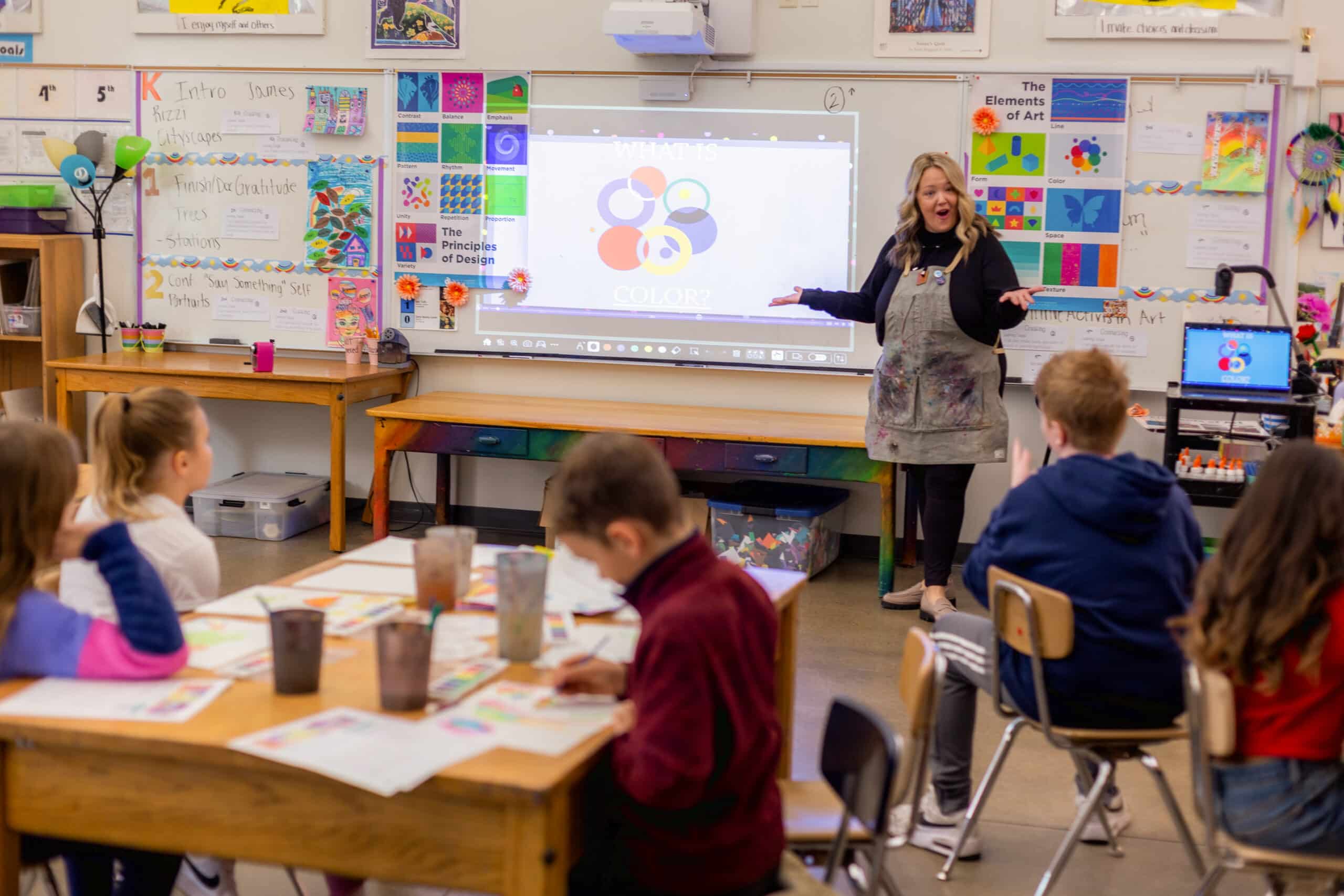
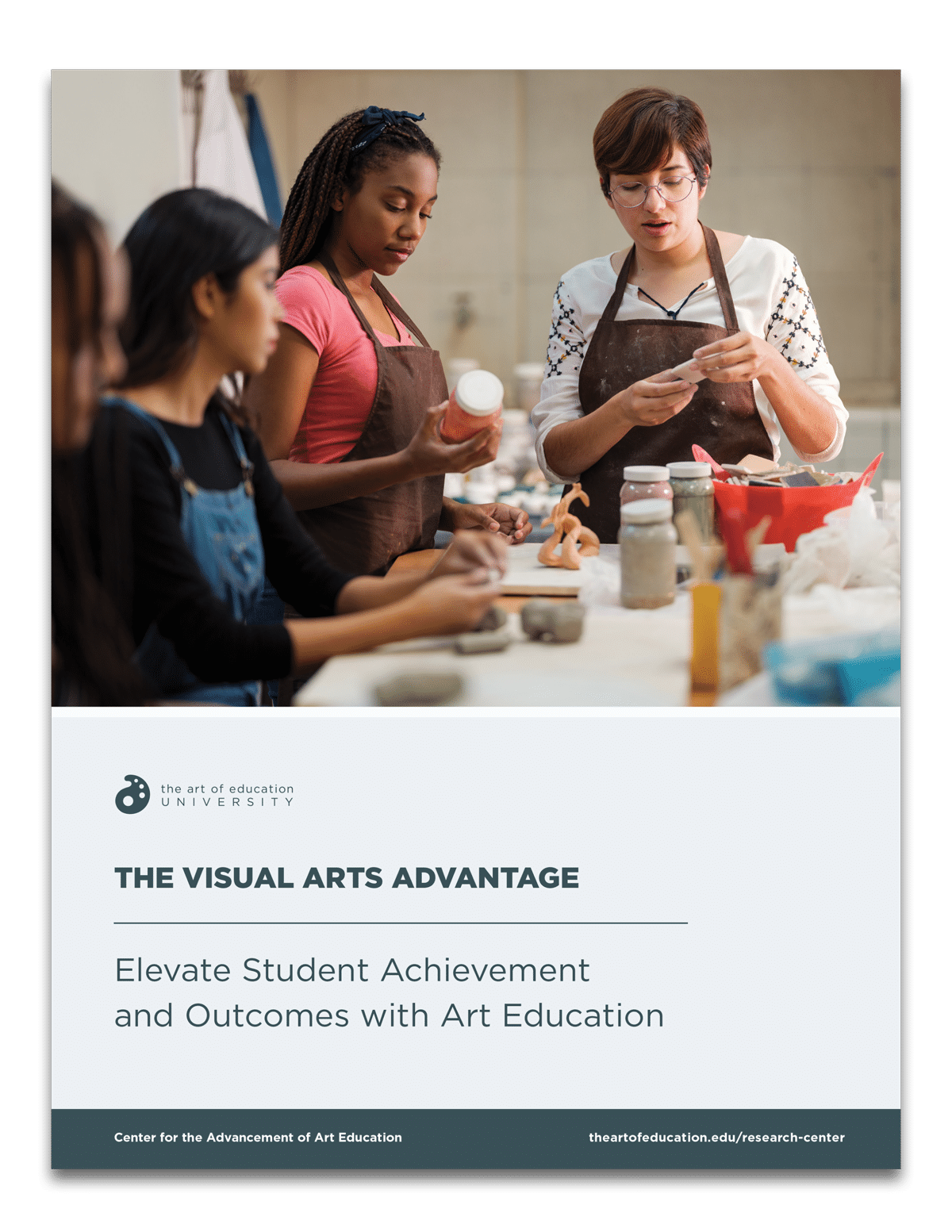
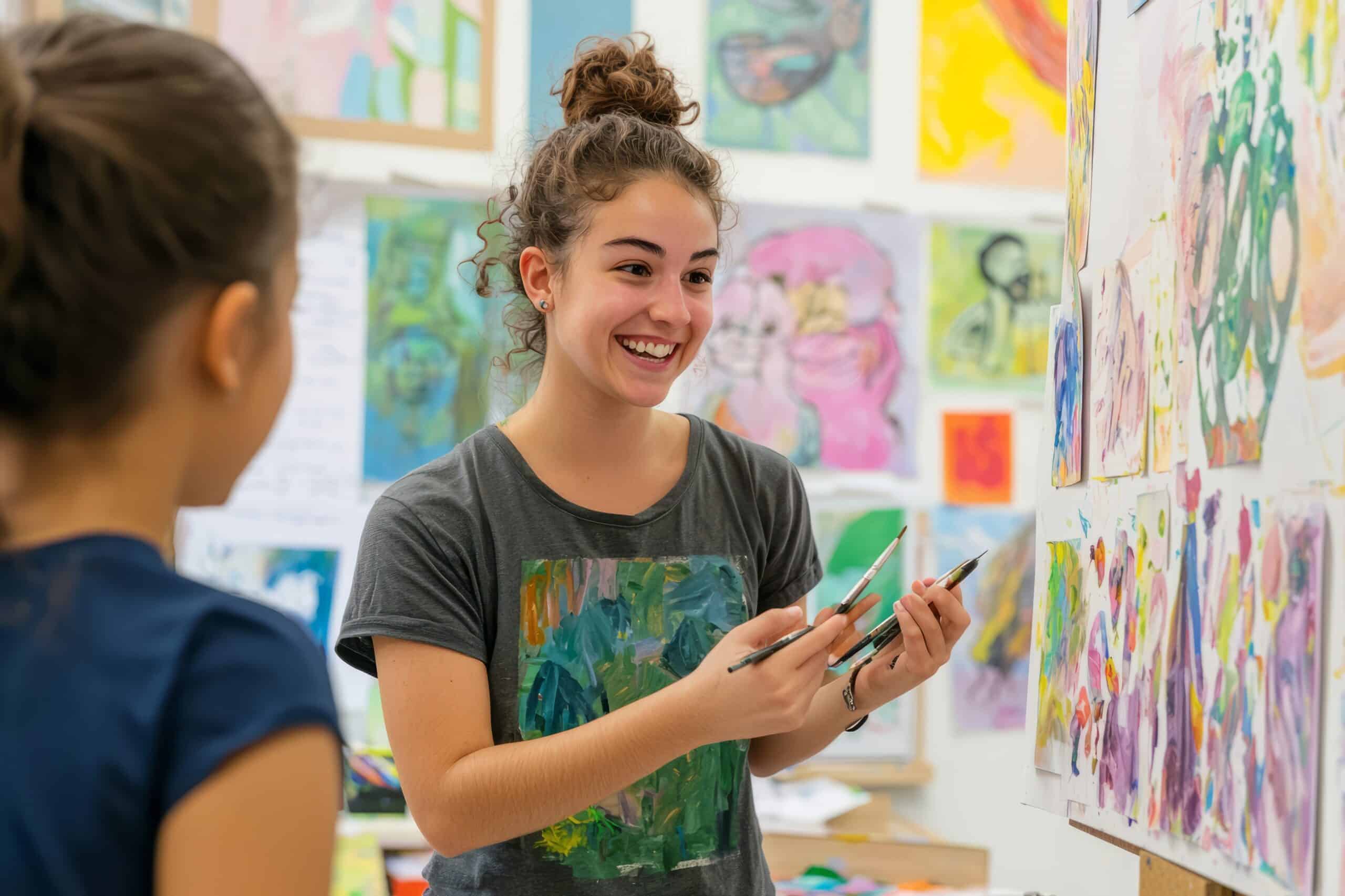
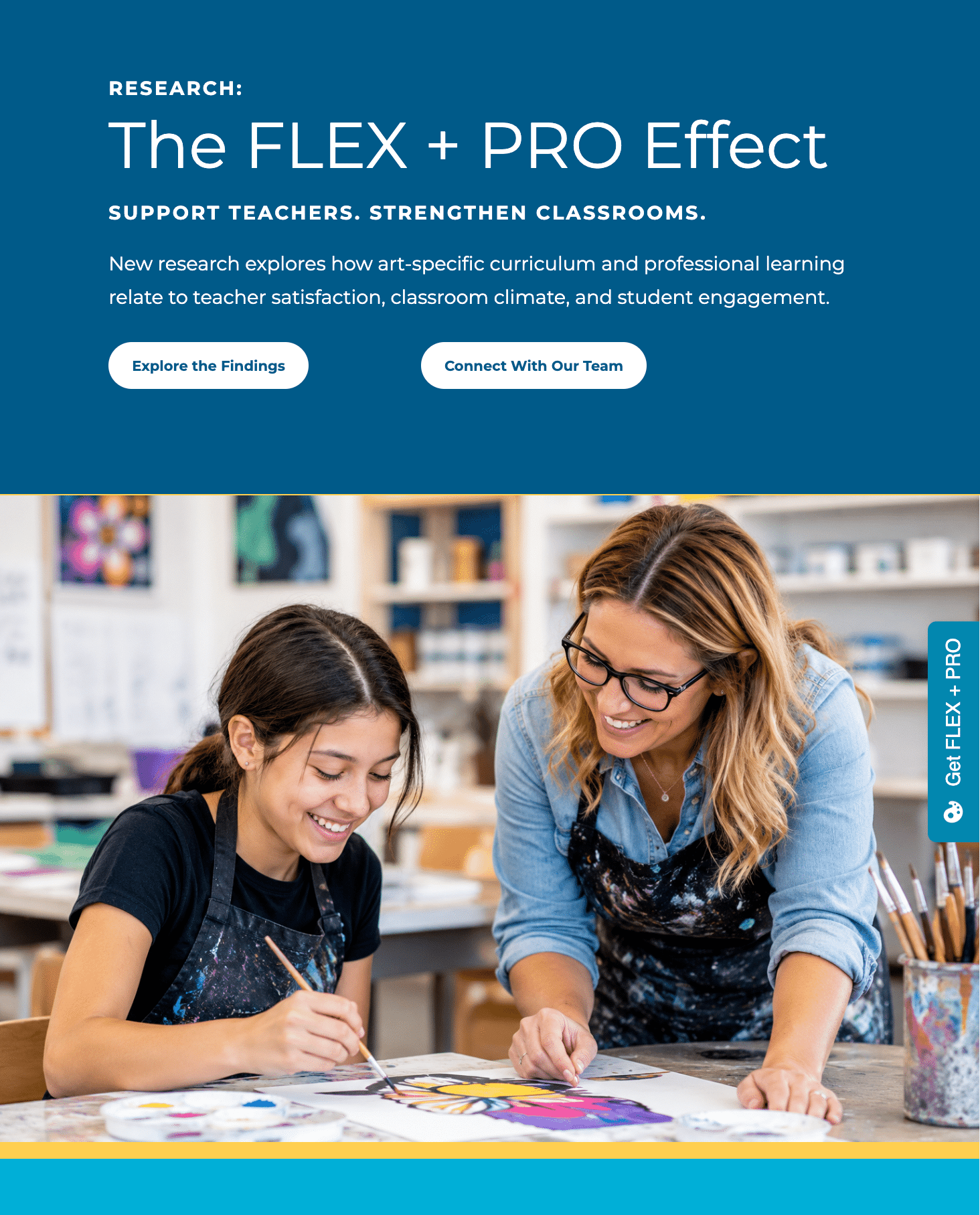
An art classroom, with a teacher standing at the front and students working at tables

DISTRICT PRIORITIES ART SUPPORTS

Explore the sections below to see how visual arts education supports the outcomes your district cares about most.

Attendance & Engagement

Meaningful learning gives students more reasons to participate.

Visual arts education gives students opportunities to create, make choices, express their ideas, and see their work valued. These experiences can support participation, persistence, connection, and engagement at school.

What the research shows

More attendance: In a study of 175,000 Texas ninth graders followed for five years, students in art education had higher attendance (Thomas et al., 2015).

Biggest gains for students at risk: Students without at least one fine arts class had significantly higher absenteeism. The gap was largest for students with IEPs, lower test scores, or a history of chronic absenteeism (Bowen, 2023).

Fewer behavior incidents: In a randomized Houston study, students given more arts opportunities had 3.6% fewer disciplinary infractions (Bowen & Kisida, 2019).

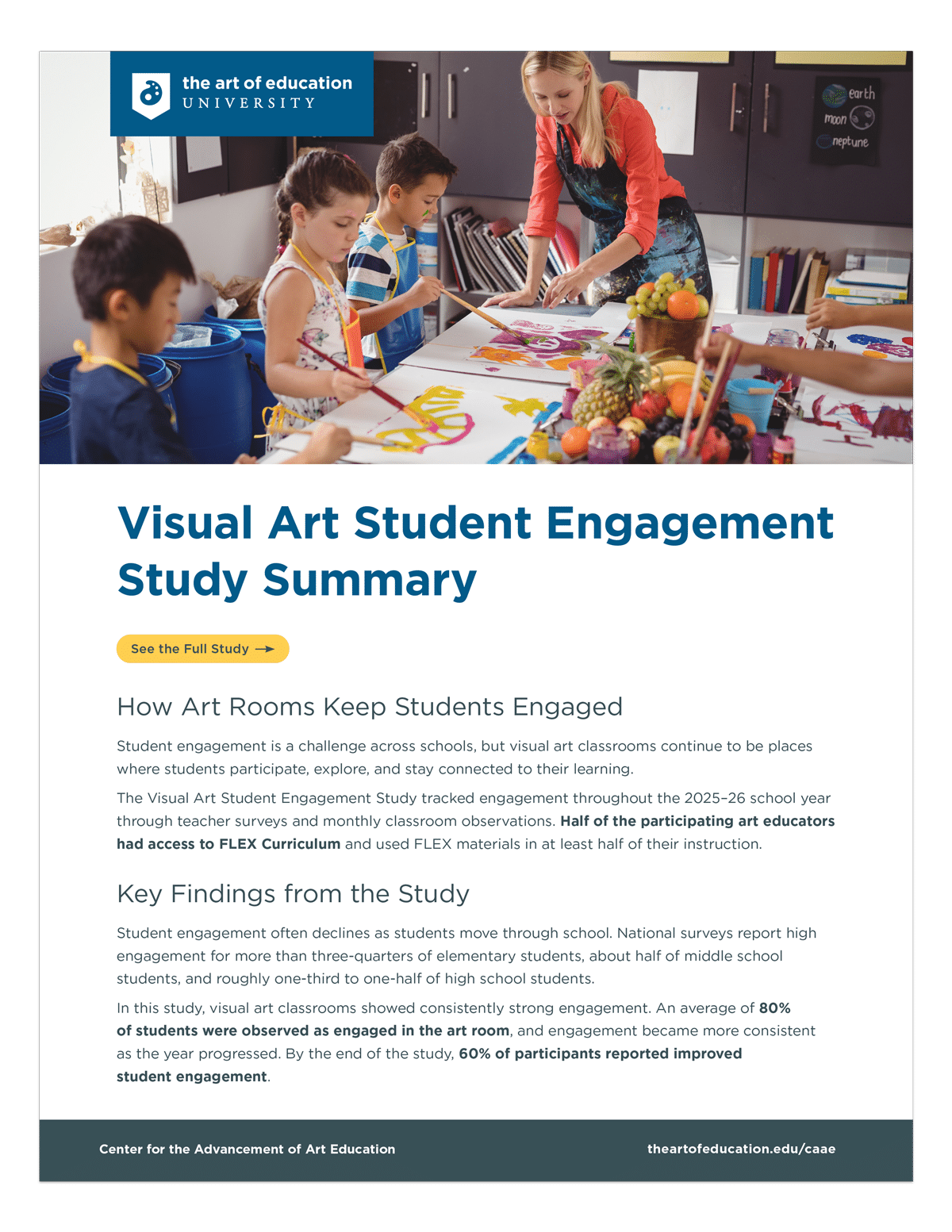
Higher engagement: 92% of elementary students were engaged in art class, compared with 75% across other subjects (CAAE, 2025).


EXPLORE MORE RESEARCH

Early Literacy & Learning Foundations

Visual thinking builds important foundations for learning.

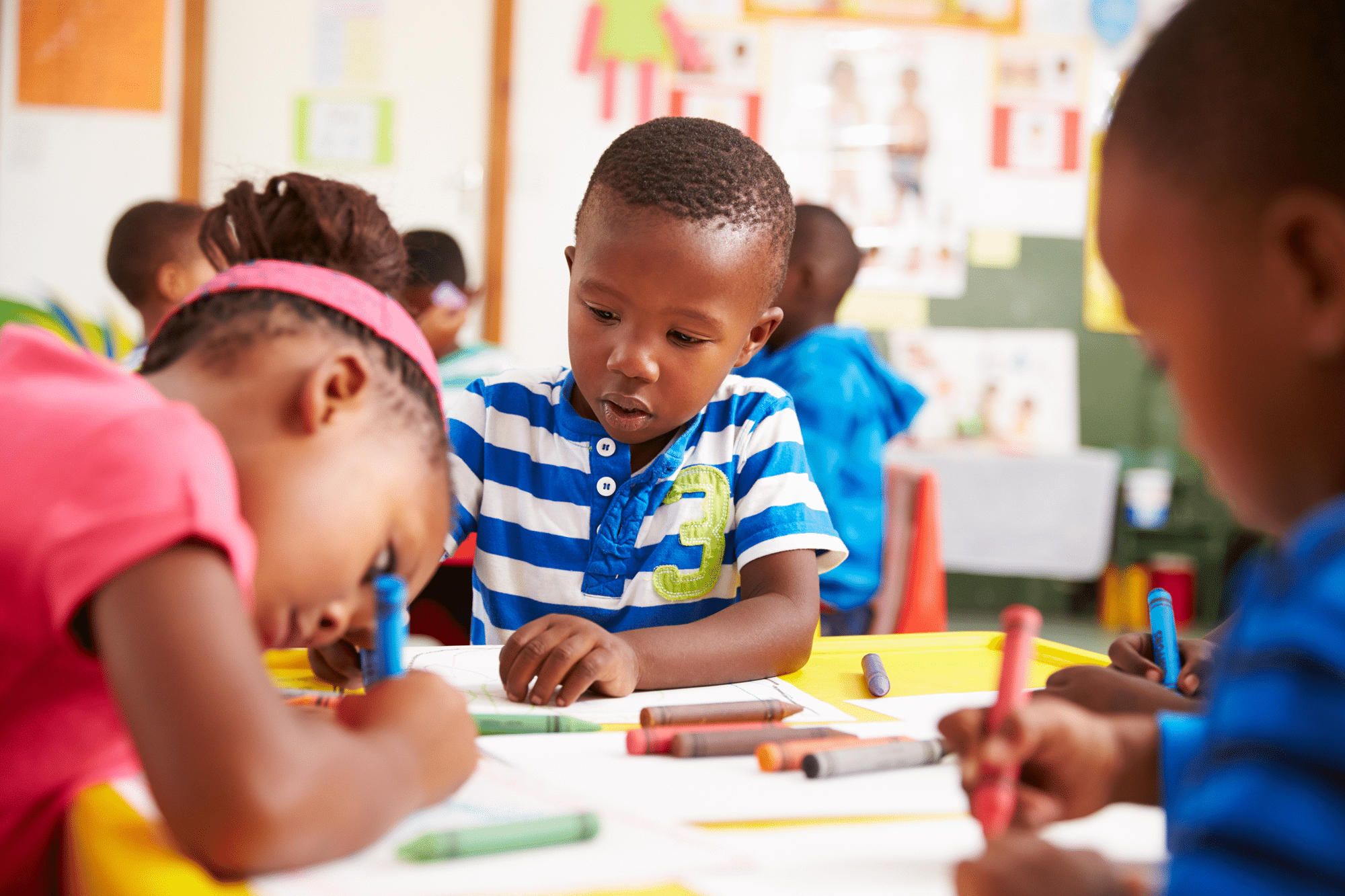
Drawing, fine-motor practice, visual thinking, discussion, and art-based writing can support early literacy and learning foundations. Visual arts experiences give young learners opportunities to build language, focus, observation, communication, and school-readiness skills.

What the research shows

Ready to focus on reading: Children who start kindergarten able to draw and trace can focus on reading and writing instead of struggling to hold a pencil (Cameron et al., 2012).

Faster growth: Kindergarteners with stronger fine motor skills made greater gains from fall to spring in decoding and reading comprehension. Executive function also contributed independently to kindergarten achievement (Cameron et al., 2012).

A strong predictor: Fine motor skills, attention, and general knowledge together predict later reading, math, and science scores better than early reading and math scores alone (Grissmer et al., 2010).

English learners: English learners in art programs improve their listening, speaking, and writing (Catterall & Peppler, 2007; Valcarcel, 2008).


EXPLORE MORE RESEARCH

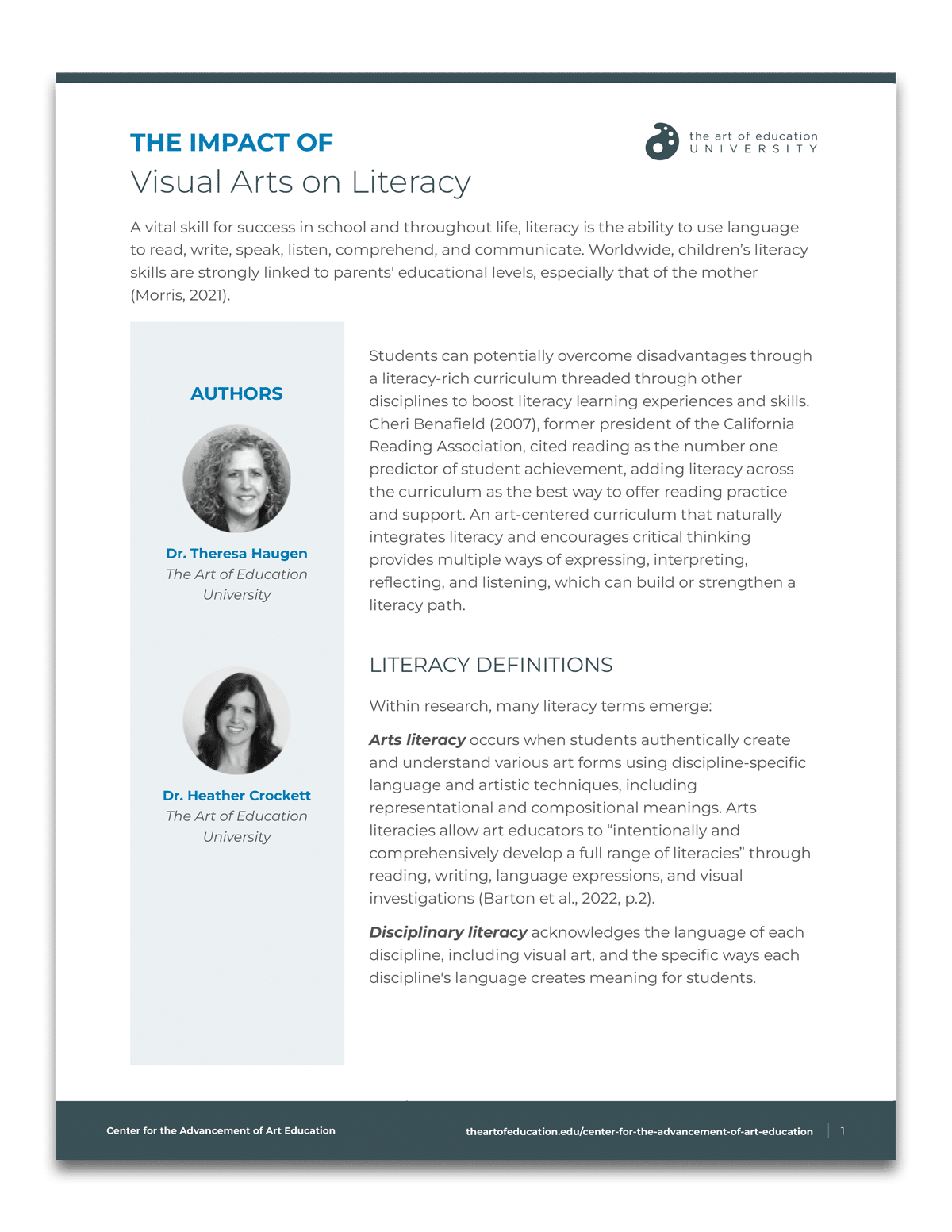
Integrating Literacy and Visual Art Curriculum: A Case Study

Graduation & Postsecondary Readiness

Art helps students practice skills they will carry forward.

Artmaking gives students practice with creative thinking, communication, persistence, revision, reflection, and independent decision-making. These skills can support students as they prepare for graduation, college, careers, and continued learning.

What the research shows

College attendance: 71% of students with rich arts experiences in grades 8-12 attended college, compared with 48% of students with little arts exposure (Catterall et al., 2012).

Even bigger for low-income students: 74% versus 43% attended college, and 17% versus 5% earned a bachelor’s degree (Catterall et al., 2012).

Graduation: High schoolers who take art are less likely to drop out, and the effect grows with each additional art class (Thomas et al., 2015; Spelke, 2008).

What employers want: Employers rank creative thinking among the top five core skills (World Economic Forum, Future of Jobs Report 2025).


EXPLORE MORE RESEARCH

Learn more about how visual arts education impacts college and career readiness.

Achievement & Closing Gaps

Visual arts education can expand meaningful opportunities to learn.

Visual arts education can strengthen academic learning while giving students opportunities to solve problems, communicate ideas, persist through challenges, and demonstrate growth in multiple ways. It can also create meaningful access to learning for students who may have limited opportunities to participate in the arts outside of school.

Higher scores: Middle schoolers who took arts electives had significantly higher GPAs and math and reading scores (Winsler, 2020).

English learner gains: English learners who took art electives gained in literacy and math test scores (Winsler, 2020).

Better writing: Students with expanded arts access improved in writing achievement in a randomized study (Bowen & Kisida, 2019).

Closing gaps: Many of these studies focused on high-poverty schools, where students have the least access to art outside school.


EXPLORE MORE RESEARCH

See how visual arts education connects to reading, math, writing, achievement, and student growth.

Well-Being & Belonging

Students need opportunities to feel seen, heard, and connected.

Visual arts education gives students opportunities for self-expression, reflection, identity, and voice. Inclusive and collaborative art experiences can help students build connection, strengthen relationships, and contribute to a positive school climate.

What the research shows

Reduced stress: Arts education can help reduce stress.

Empathy and tolerance: Arts participation develops empathy and tolerance.

Collaboration and communication: Arts participation develops collaboration and communication skills.

Engagement and creativity: Visual art experiences can support critical thinking and creativity, strengthen memory, and improve engagement.


EXPLORE MORE RESEARCH

The Art of SEL

The Art of SEL is an eight-episode podcast series on how social and emotional learning can strengthen everyday teaching and support student success.

Portrait of a Graduate

The skills students practice in art prepare them for what comes next.

Many districts want graduates who can think creatively, communicate clearly, collaborate with others, solve problems, persist through challenges, and reflect on their learning. Visual arts education gives students repeated opportunities to practice these competencies through meaningful work.

What the research shows

Human skills: Arts participation develops empathy, tolerance, collaboration, and communication skills.

Skills employers value: Employers identify analytical thinking, creative thinking, leadership, social influence, and collaboration as critical skills (World Economic Forum, Future of Jobs Report 2025).

Visual literacy: Visual literacy is essential in a media-saturated, image-rich world.

Transferable thinking: Visual literacy develops critical thinking, decision-making, and problem-solving that can transfer to other disciplines and life outside school.

Creativity: Visual art experiences and artistic development are associated with higher creativity scores.


Great Teachers Stay

Strong visual arts programs depend on supported teachers.

Art teachers are more likely to build strong, consistent learning experiences when they have access to useful curriculum, relevant professional learning, practical implementation support, and a strong professional community.

What the research shows

Most teachers want to stay: 88% of participating teachers planned to return to their art education position the following year (CAAE Visual Art Teacher Retention Study, 2025-26).

Retention risk is real: 56% of participating teachers fell into elevated or high retention-risk categories based on their wellness profiles (CAAE Visual Art Teacher Retention Study, 2025-26).

Support shapes job satisfaction: Teachers identified administrator support as the strongest influence on job satisfaction (CAAE Visual Art Teacher Retention Study, 2025-26).

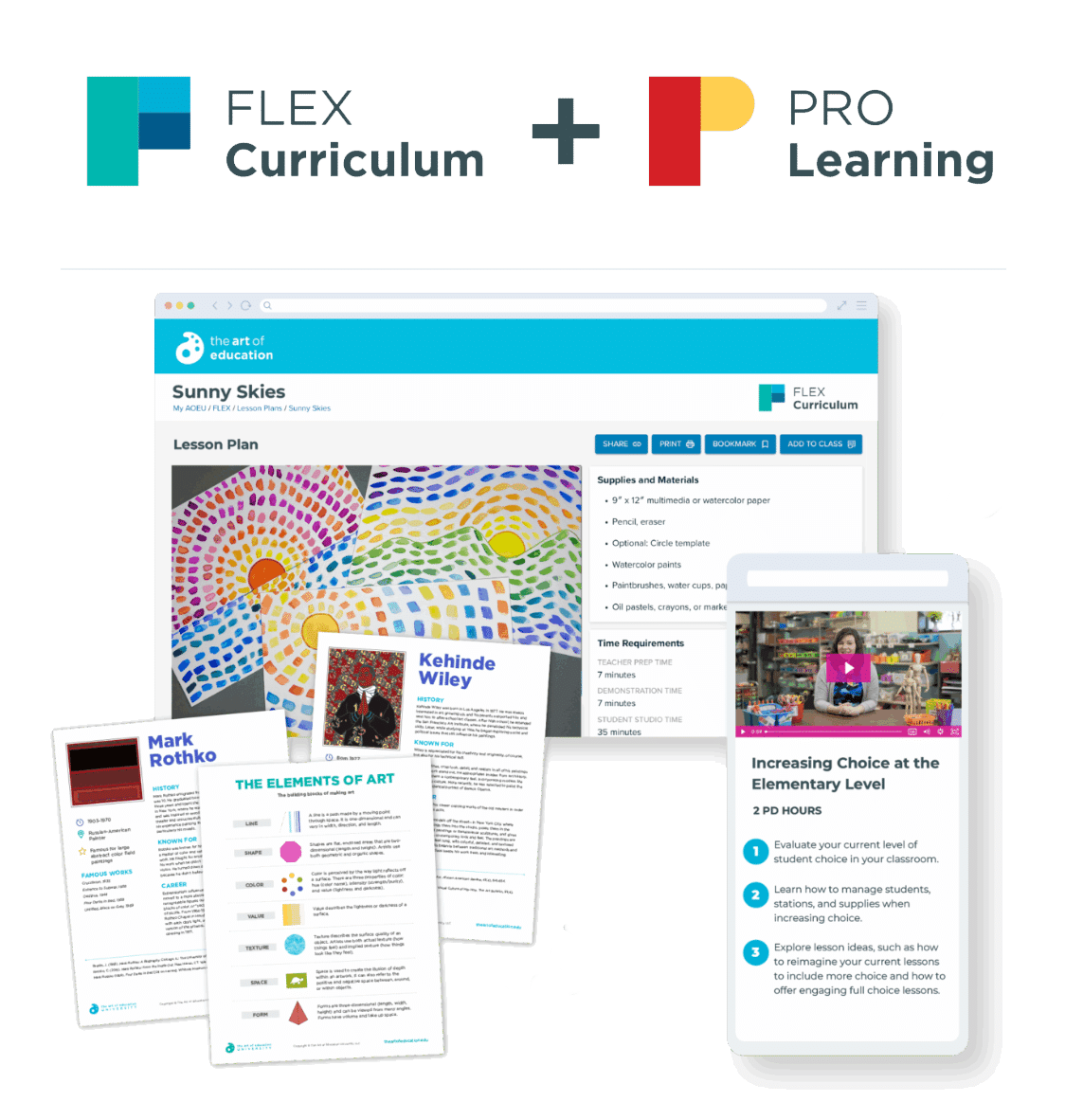
FLEX + PRO users reported healthier wellness profiles: Teachers with access to both FLEX Curriculum and PRO Learning Packs were 2.5 times as likely to report low burnout and twice as likely to report high compassion satisfaction (CAAE Visual Art Teacher Retention Study, 2025-26).


EXPLORE MORE RESEARCH

The Future Needs the Skills Art Builds

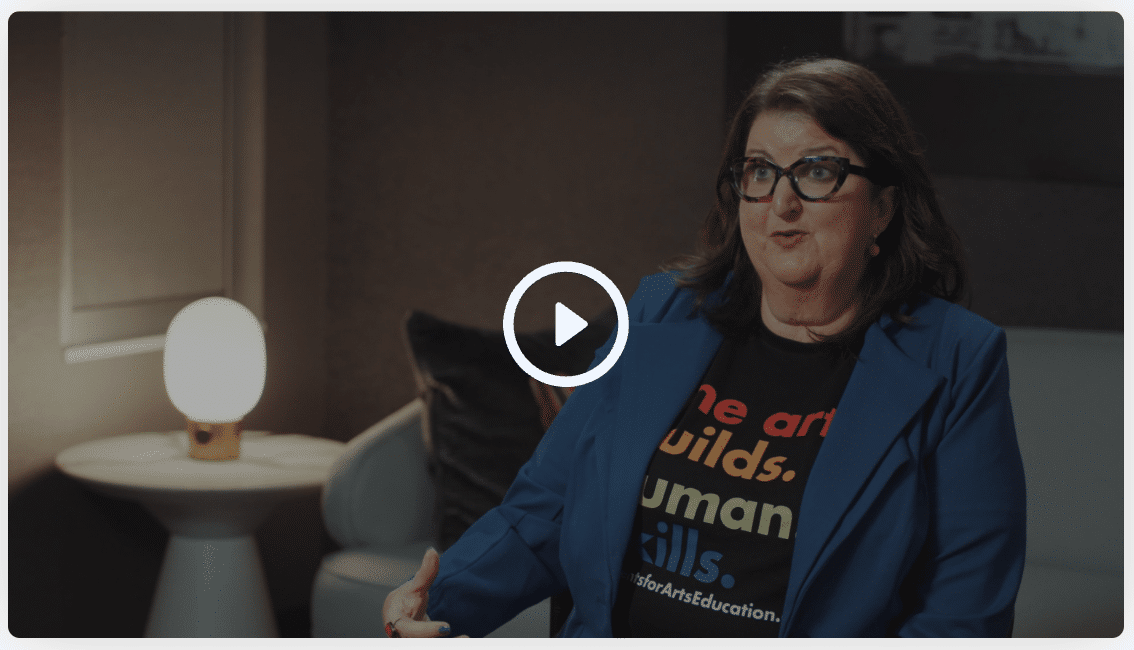
What will students need for careers that have not been created yet? Dr. Matt Borek and Trina Martin discuss how arts education helps students develop the human skills they will need to navigate changing work, learning, and life.

Creative thinking, collaboration, communication, problem-solving, persistence, and curiosity are skills students practice in the art room every day. 

Dr. Matt Borek, Director of the Center for the Advancement of Art Education, in conversation with Trina Martin, Founder of Parents for Arts Education.