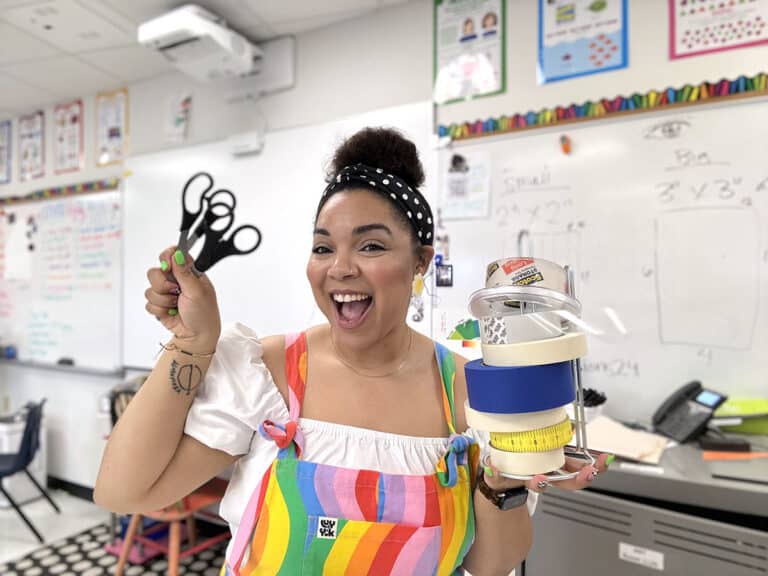


There’s nothing quite like talking to someone who gets it. It’s encouraging to chat with someone who understands why you hoard yogurt containers and that the kiln is currently both your best friend and worst enemy. As art teachers, we often work in unique spaces, but that doesn’t mean we have to work in isolation. Often, a few trusted voices can completely change how supported you feel in your role. Whether you’re starting out or have years of experience, building strong connections can fuel your creativity, lighten your mental load, and remind you why this work matters.
Check out these five ways to grow your art education network.
1. Connect across your building.
You may be the only art teacher in your school, but your building is still full of colleagues who can bring value to your art room and teaching practice! Some of the strongest support systems are right down the hall. Tap into your colleagues to troubleshoot tough student behavior, clarify building policies, or simply share a laugh between classes. When you’re surrounded by people who know what it’s like to teach your unique students, you gain not just support but solidarity.
Classroom teachers are great natural collaborators. Whether it’s combining storytelling with illustration or chemistry with cyanotypes, teaming up builds deeper learning, can lead to better student success, and expands your creative reach. Check out the cross-curricular content in FLEX Curriculum for ready-made content to support math, science, and history.
But it doesn’t stop there! Connection can go beyond the classroom. Maintenance staff, office personnel, and paraprofessionals are often the ones who show up when you’re in a pinch. Investing in these relationships makes your day smoother and your art room stronger. Don’t overlook your administrators either. Looping your principal into a student exhibit or inviting them to a classroom celebration builds visibility for your program and opens the door to future support.
Here are other simple ways to connect:
- Co-host a hallway art display with another team.
- Invite colleagues to judge a student art contest.
- Start a shared notebook or digital space to collect funny moments or positive notes in your school.
- Sit with another teacher at lunch and chat about your day.
2. Plug into art education organizations.
Joining a state or national art education association is one of the easiest ways to link up with educators who understand your world. These groups often offer workshops, student art shows, local grant opportunities, and annual conferences. They also keep you in the loop on state standards, policy changes, and funding updates that directly impact your program. If you prefer to network from the comfort of your own home, The Art Ed NOW Conference offers powerful virtual opportunities to learn, grow, and build lasting connections with art teachers across the country.
You don’t need to jump in all at once. Start small and attend one event, and exchange contact information with one other art teacher. Volunteer to help with a student exhibit or booth, or sign up for the mailing list and read the next newsletter. If you’re already a member or regular attender and are looking to foster deeper relationships and learning, apply to be a presenter!

3. Find your people online.
Art teachers know that our work matters. As such, it’s too important to do on our own. Did you know that 65% of art teachers are the only art teachers in their building? That’s a lot of preps and students for one person to handle! But there are thousands of other solo art teachers out there, just like you! Sign up for The Art of Ed Community to find your people. Ask what that mystery tool you found in your closet is, share a funny drawing your student gave you, or post pictures of all the furniture items in your classroom you stuck giant googly eyes on.
Try one of these three opportunities to find your crew in The Art of Ed Community:
- Join a discussion that speaks to your current challenge or passion.
- Hop into a Pop-Up Art Studio.
- Explore recent posts and leave a comment or reaction on something helpful.
4. Lean into mentorship as a mentee or mentor.
Mentorship is one of the strongest buffers against burnout and can lead to better teacher retention. Data shows that first-year teachers who feel supported are more likely to stay in the profession. Imagine if that kind of support continued for everyone!
If you’re newer to teaching, seeking out a mentor can help you navigate tough situations like wild behaviors or tricky parent phone calls. They also have a wealth of knowledge if you need a last-minute presentation, bellringer suggestion, or artist connection. If you’re more experienced, mentoring someone else can reignite your own creativity and remind you of how far you’ve come. Find an art teacher mentee or mentor in the New Art Teachers Space in The Art of Ed Community today.
Mentorship doesn’t have to be a formal relationship between art teachers. You can invite a colleague to visit your class and make observations, collaborate on a lesson with a newer teacher, or start a casual lunch group with the teachers in your hall to swap wins and challenges. You never know what moment of support will stick, whether you’re giving or receiving.
5. Create small circles to keep you going.
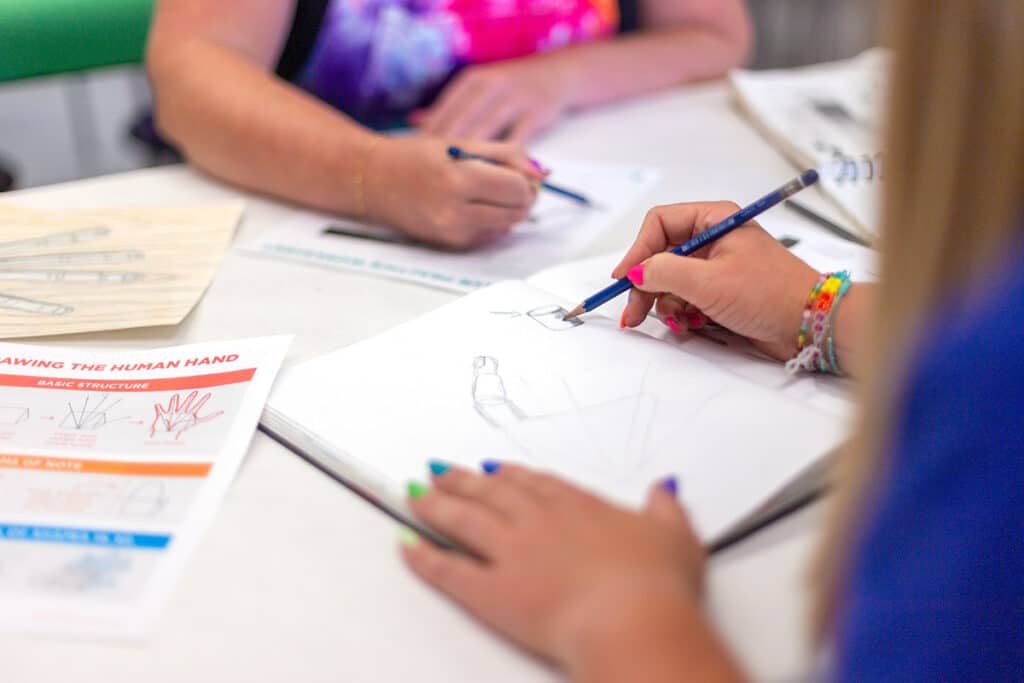
More is not always better; sometimes, all you need is a small trusted group of peers to sustain you through the chaos. Data shows that teachers in larger districts often benefit from built-in peer networks. But if you’re in a small district or flying solo, you can still build that same sense of connection on a smaller scale.
Try starting a monthly virtual coffee chat or a group text with a few fellow art teachers or creative colleagues. It’s a low-pressure way to share ideas, process situations, and celebrate the successes that only other educators truly understand. Select people who will genuinely cheer you on and help you hold onto your joy!
Nurture other small circles to support you during the school year. Invite parents in for volunteer days and strike up friendly conversations with local business owners when you grab your next coffee. Keep an eye out for standout students in your Art Club or general roster, too. A little intentionality now can result in big support later.
Creating a strong art teacher network is one of the best ways to protect your energy, spark new ideas, and stay grounded in what matters most. We’ve seen over and over that your greatest joy comes from watching your students grow as you build relationships with them. A powerful support system helps you stay connected to that purpose, even when challenges arise. Take small steps by reaching out to a colleague, starting a group text, or attending an art education session. When art teachers support each other, everyone benefits—especially the next generation of artists and creatives.
Who’s in your art teacher circle right now?
What’s one small step you will take this month to build or grow your art teacher network?
To chat about building your network with other art teachers, join us in The Art of Ed Community!
Magazine articles and podcasts are opinions of professional education contributors and do not necessarily represent the position of the Art of Education University (AOEU) or its academic offerings. Contributors use terms in the way they are most often talked about in the scope of their educational experiences.