
I don’t know what to draw; I don’t have any good ideas; I don’t know where to start. Sound familiar? Or sometimes it’s not spoken: a student jumps into the first idea that comes to mind and settles for “good enough.” These moments are incredibly common in the art room, and they point to a deeper question. How do we help students develop truly creative, unique, and thoughtful ideas?
Too often, brainstorming is treated as a last resort—something we pull out when students hit a wall. But in reality, it’s a fundamental part of every artistic process. Artists don’t create from nothing, and ideas don’t appear out of thin air. They come from noticing, collecting, and transforming what’s already around us. Maybe it’s a color on a paint sample, a texture on a wall, a favorite place, a memory, a piece of music, or even a single word that sparks a chain of associations. The challenge for our students is not a lack of creativity, but a lack of process.
Discover simple, low-prep brainstorming strategies to help students generate ideas, build confidence, and start their artwork with purpose.
Many students believe that “real” artists are naturally inspired, and if ideas don’t come easily, they assume they’re just “not creative.” The truth is much more encouraging! Brainstorming, seeking inspiration, and developing ideas are skills that you can teach, model, and practice with students. Similar to ideas presented in Austin Kleon’s book, Steal Like an Artist, when we give students simple, structured ways to generate ideas (whether through sketchbook routines, personal “idea banks,” or fun guided prompts), we’re not just helping them get started—we’re teaching them how to think and create like artists.
What Students Gain When We Teach Brainstorming
When brainstorming becomes a consistent part of every project, students begin to approach their work differently. Instead of waiting for inspiration, they learn how to build it for themselves! Original and personal work comes from generating multiple possibilities rather than stopping at the first idea. Confidence grows as the blank page becomes less intimidating and more exploratory. Students stop asking, “Is this good?” and start asking, “What could this become?”
You’ll also see stronger planning and design. Brainstorming naturally leads to sketching, testing, and refining ideas before committing to a final piece. Perhaps most importantly, students become more engaged. When ideas come from their own thinking and experimentation, students will take more pride in their work.
Why Students Get Stuck (and How to Help Them Start)
When students feel stuck, it’s often because they don’t have an entry point. Too many possibilities can feel overwhelming, and without a process, students either freeze or default to copying.
One of the most effective ways to support students is to model your own thinking. Narrate your process out loud. For example, “This texture reminds me of something… What can I turn this into?” These small moments show students that they can build ideas through observation, association, curiosity, and revision.
Here are three quick activities to promote strong starts:
- Scribble Rescue
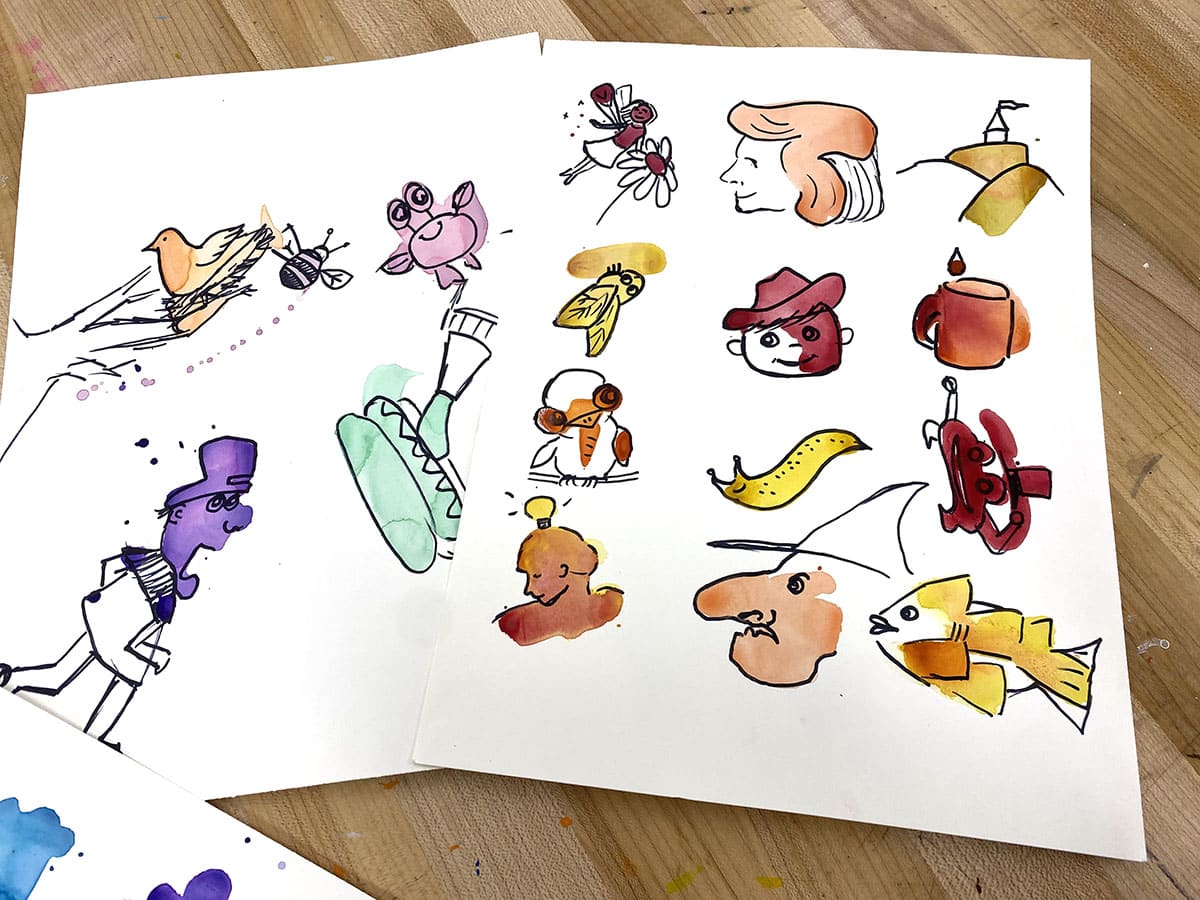
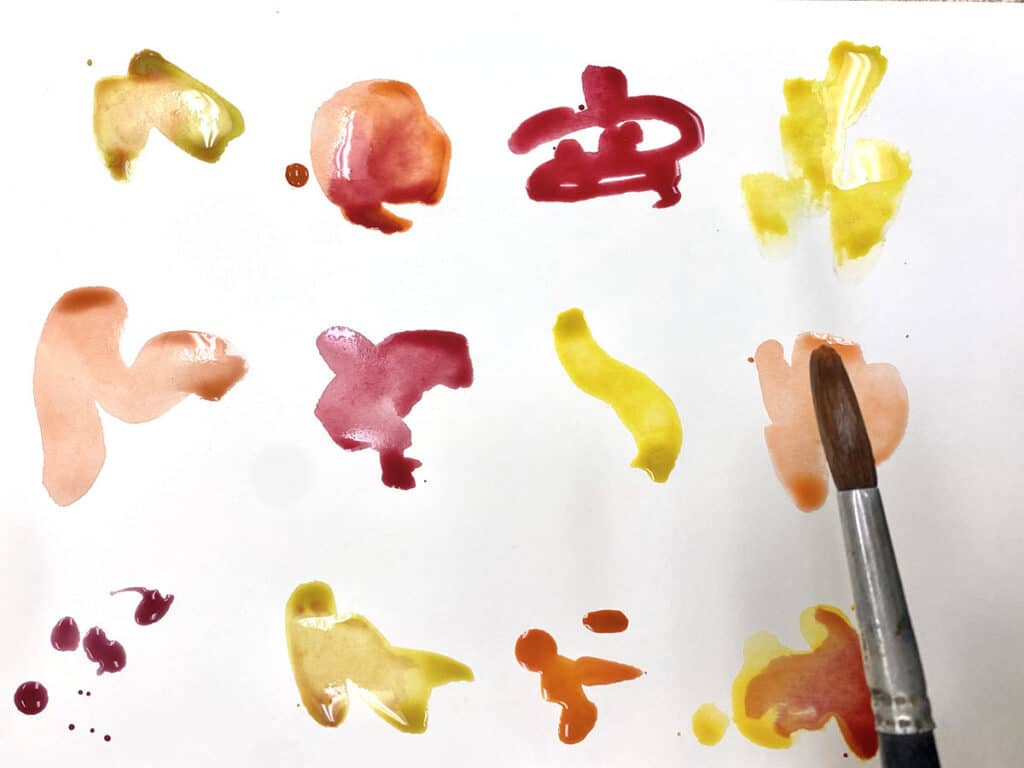
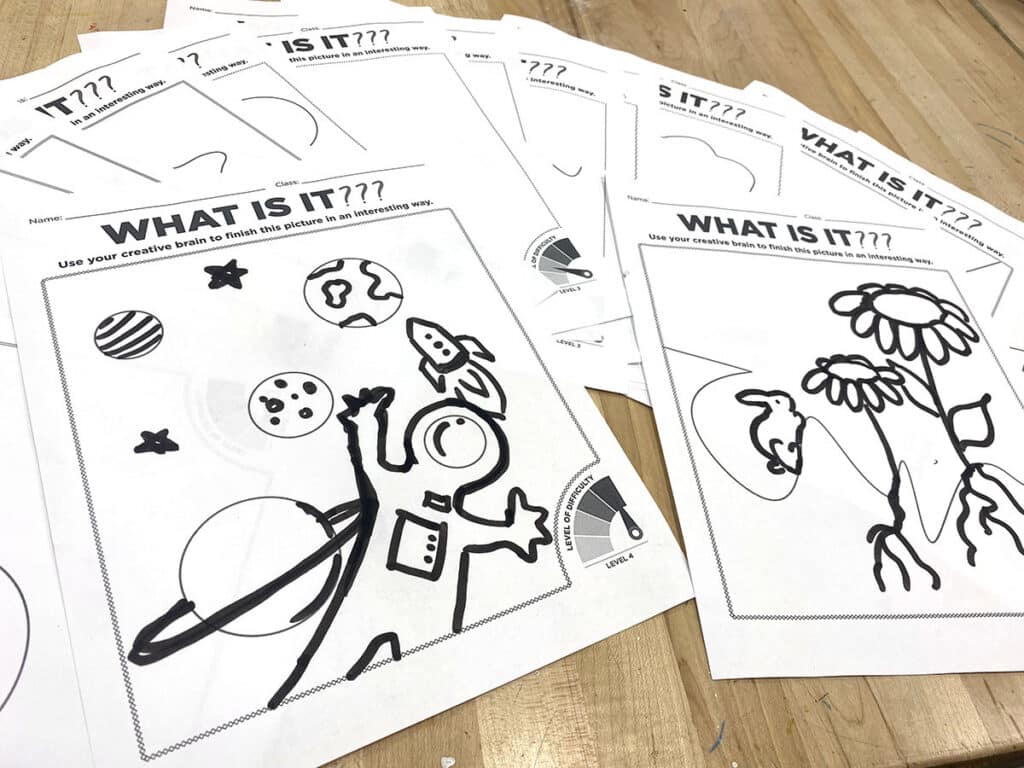
Give students papers with a single scribble or a watercolor splatter. What can they turn it into? For an even quicker, grab-and-go warmup, download these free finish-the-drawing resources. - 30 Circles Challenge
Build creative fluency by asking students to transform one shape into as many objects as possible. Use sheets with fewer circles for shorter warmups, such as the Circle Thumbnails Resource from FLEX Curriculum. - 3-Minute Memory Sketch
Encourage students to draw from their own experiences to strengthen personal connections. For example, draw your lunch from yesterday, something from your drive home, or your favorite pair of shoes.
Constraints and limitations are also a powerful way to begin. It seems counterintuitive, but giving students one requirement can unlock more possibilities than letting students have complete rein. A constraint gently pushes students to solve a problem. When they generate a solution, they get an immediate boost in confidence because success is measurable.
Here are three ideas that balance constraints with structure:
- Vocabulary Blitz
Set a five- or ten-minute timer and give students a random adjective, such as Bumpy, Brave, or Whimsical. See how many different ways they can express the word through drawings. - 5-Shape Challenge
Limit students to drawing an object or scene with only five shapes to encourage inventive solutions. - One-Line Drawing
Remove overthinking by having students use one Element to create a pattern. Use the Doodle Brainstorm Resource in FLEX Curriculum to guide this activity.
Make Brainstorming Part of Every Project
The most effective brainstorming happens when it becomes part of your routine, not a one-time activity. Use short, consistent strategies as warmups, sketchbook prompts, or the first step in a project. Over time, students will expect brainstorming to be a part of the creative process. You can also build in simple accountability. A completed brainstorm page can serve as a “ticket” to begin working with materials, ensuring students take the process seriously.
Another powerful tool is helping students build an “idea bank.” At the beginning of the year, students create a sketchbook page focused on a broad, personal theme, such as Identity. They can write or doodle about favorite places, memories, interests, and experiences. When they feel stuck later, they can return to a meaningful source of inspiration.
Incorporate brainstorming into every artwork with these ideas:
- Mind Mapping
Begin with a central idea and expand outward into related words, images, and associations. This helps students organize their thinking and generate multiple directions to one topic or issue. - “What If?” Prompts
Challenge students to transform an idea: What if it were underwater? What if I only drew with straight lines? What if it told a story? These small shifts can lead to entirely new concepts! - Art Dice
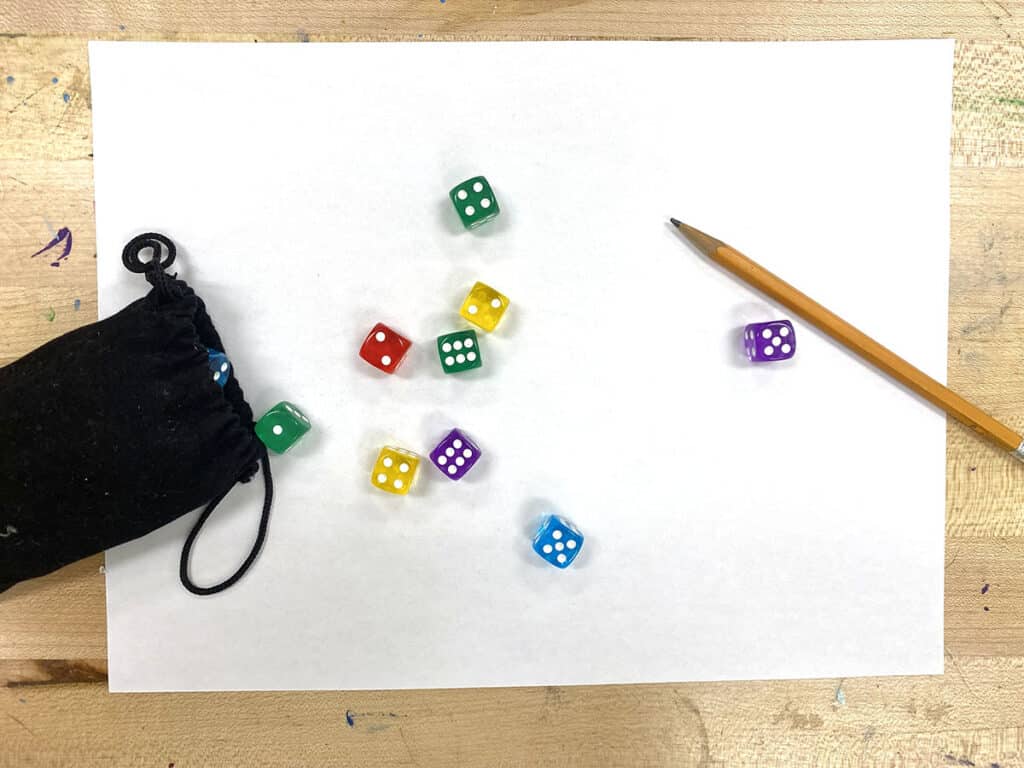
Introduce an element of chance. Rolling for the subject, setting, or style removes decision pressure and often leads to surprising combinations.
Brainstorming as a Thinking Process
Not all brainstorming looks the same, because not all brains think the same. Multiple strategies help students explore different ways of thinking and find approaches that work best for them. Try a variety of strategies together as a class, and as students become more confident, provide them with a choice of brainstorming options. One simple way to show multiple avenues is to use the Brainstorming Anchor Chart from FLEX Curriculum.
Here are four thinking processes to consider when brainstorming:
- Associative Thinking
This is when one idea naturally leads to another. A simple word, image, color, or texture can spark a chain of unexpected connections and inspire new directions. - Divergent Thinking
Students generate many possibilities before choosing one. Activities like rapid thumbnails or short-timed drawings encourage students to quickly explore multiple options. - Visual Organization
Mind mapping or other graphic organizers help students organize their thoughts through words, sketches, and branching connections. It’s a powerful bridge between artmaking and literacy skills. - Collaborative Thinking
When students share ideas, pass drawings, or build on one another’s concepts, they learn that creativity can grow through interaction, not just individual inspiration.
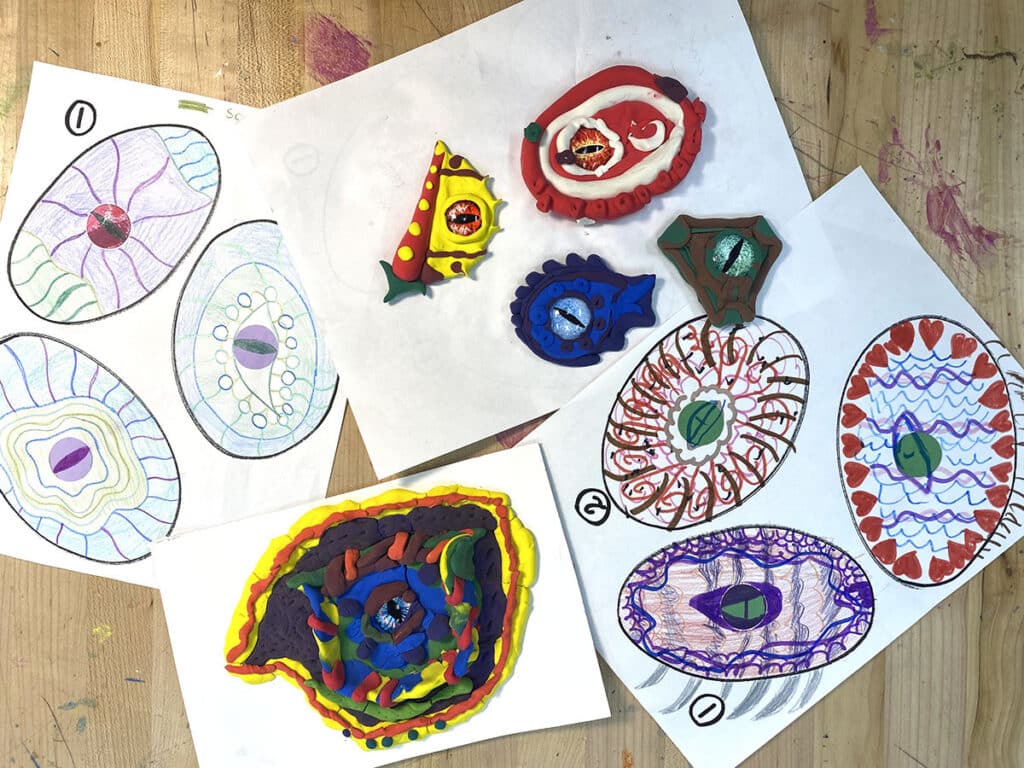
When brainstorming becomes a regular part of art class, rather than just something you do when students are stuck, it begins to change how students see themselves as artists. They learn that ideas aren’t something you wait for, but something you can nurture. With simple routines, clear structures, and a classroom culture that values exploration, students move beyond “I don’t know what to draw!” They begin to notice and connect more, and take greater ownership of their ideas. Most importantly, students begin to understand that creativity isn’t reserved for a select few but is a skill they can practice, develop, and carry beyond the art room.
Which brainstorming strategies work best in your classroom?
How do you help students move past the blank page?
To chat about brainstorming with other art teachers, join us in The Art of Ed Community!
Articles and podcasts are opinions of professional education contributors and do not necessarily represent the position of the Art of Education University (AOEU) or its academic offerings. Contributors use terms in the way they are most often talked about in the scope of their educational experiences.