
At the beginning of the new school year or semester, there is a strong focus on building positive relationships with your students. Starting on the right foot is important for creating a welcoming learning environment, improving classroom management, and meeting your students’ needs. But once you’ve gotten to know your students, now what? Unlock how to maintain and repair ever-evolving relationships in the art room to keep rapport and attitudes strong.
Follow these simple steps to maintain and repair relationships with your students as the year progresses.
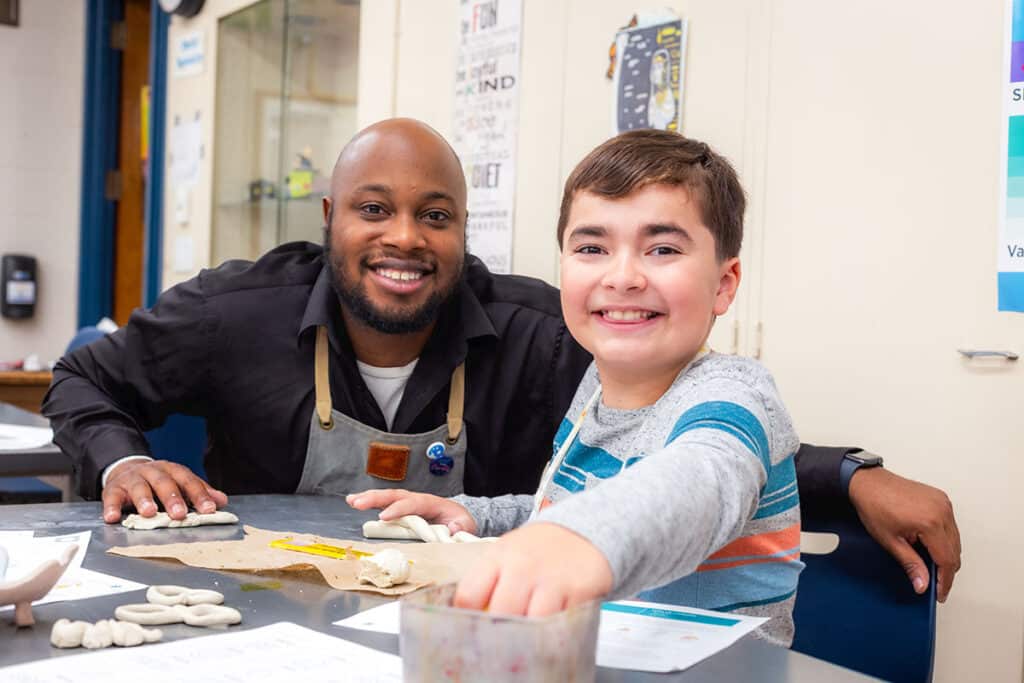
1. Send Positive Posts.
Did you know that it takes five positive interactions with a student to repair the damage of one negative interaction? That’s a lot of work! Be proactive and start filling your students’ “banks” with encouragement and praise now. That way, if a situation pops up that warrants a corrective conversation, you’ve already established a relationship of care that will make students more receptive to hearing you.
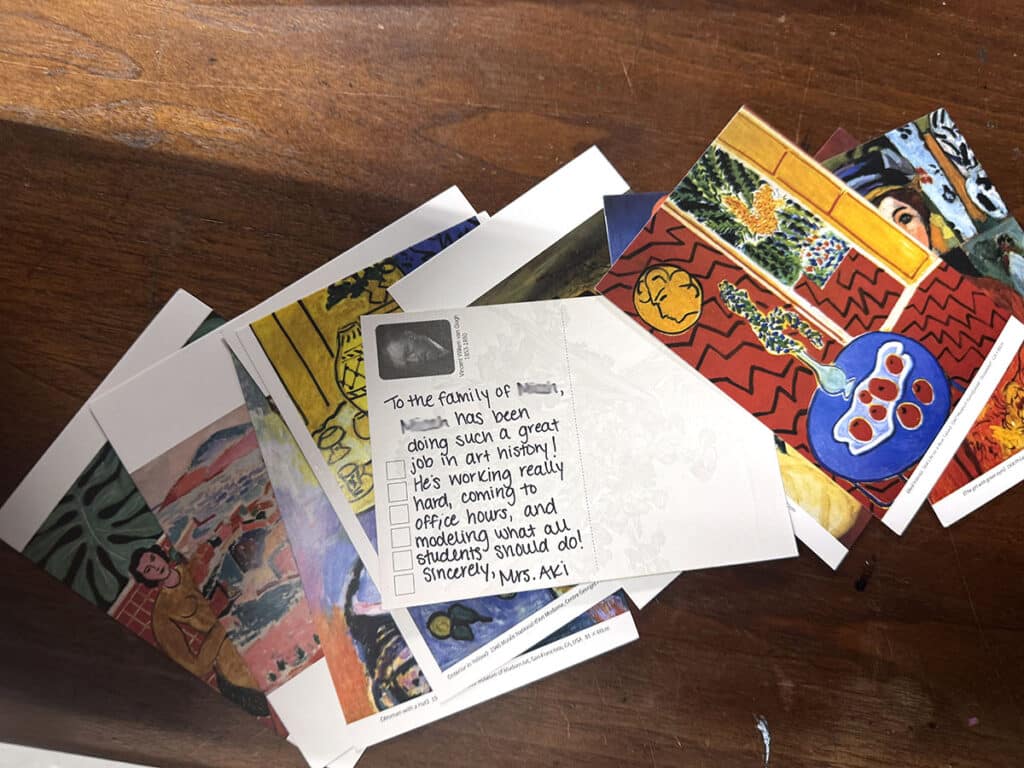
There are so many positive things our students say and do every single day. We get so busy with the daily tasks on our plate that we can start to take these positives for granted. Write a quick Positive Post to your students (and their parents) to keep morale high. It doesn’t have to be a big ordeal—one quick yet authentic compliment goes a long way. Don’t discount the lovely surprise of snail mail, but handing it out during parent-teacher conferences or sticking it in their take-home folder are also effective.
Here are some bright ideas for your Positive Posts:
- Write on cut-down colorful scrapbook paper
- Order art-related postcards
- Include fun vinyl stickers
- Repurpose messy mats, leftover artwork, or painted paper
- Make a small mark on your attendance roster so you can track who received them and when
2. Provide verbal affirmation.
Every student needs someone to support, love, and champion them. Repeating verbal affirmations to your students will convey that you care for them, continue to build that bank of positive interactions, and reinforce the behaviors you want to see more of. Affirmations can be encouragements to keep doing what they’re doing well, whether it’s how they’re treating supplies or a classmate, or how they’re improving their attitude or artwork. It’s also a good opportunity to throw in light constructive feedback. Whatever it is, be sure to make it specific.
Here are some examples of how to make your affirmation specific:
- Instead of “Have a great day,” try, “You’re going to crush it at your game tonight!”
- Instead of “Looks good,” try, “Love how you made a really strong cast shadow—it makes your tree pop off the page.”
- Instead of “Great job,” try, “You were so kind and thoughtful to help your friend cut all that extra paper.”
- Instead of “Thanks for sharing,” try, “I appreciate your examination skills; I never noticed that part of the painting before!”
3. Use the 2×10 Rule.
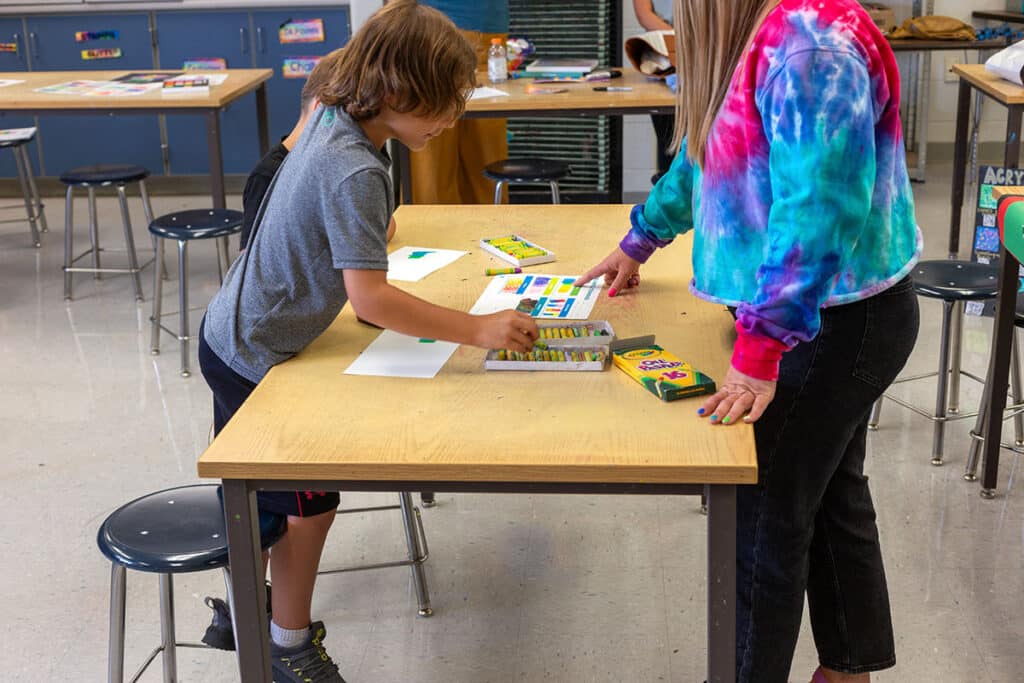
Once you establish relationships, don’t miss out on keeping up with students’ changing lives and interests. The 2×10 Rule is when you have a two-minute conversation with a student about a non-academic topic for 10 consecutive days. Studio time is the perfect opportunity to move around the room and chat with as many students as possible!
Depending on the number of students, this can be a daunting task. Just like with the Positive Post, make it a part of your roster so you have a record of your connections. You may not be able to reach every student, and that’s okay—prioritize students who are struggling, lonely, or whom you don’t know much about.
4. Reframe negatives into positives with clear choices.
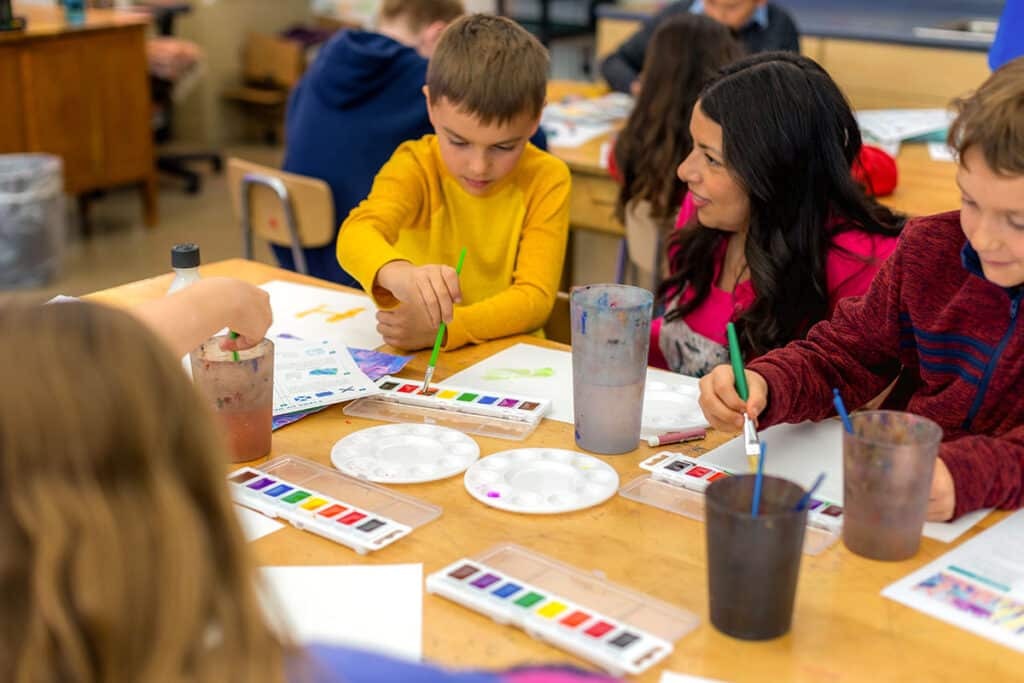
While teachers often have a sixth sense for detecting when a potential disaster may occur, we can’t predict everything. We can control how we guide our students through less-than-ideal circumstances. When something frustrating happens, students can feel powerless and act out in defiance. Instead of getting pulled into the drama, offer choices tied to positive outcomes to help them reframe. Try to separate the behavior from the student’s identity and character.
Let’s say you have a student who is covering their hands in glue and then putting it on other students. Because of the immediacy of the situation, approach the student directly and offer clear choices. You can say, “We treat our materials and classmates with respect in this art studio. You will wash your hands now—you may use the sink or wet wipes—or you will clean up with your administrator.”
If the student is cooperative and seems to have capacity, you could add, “When you’re done, I’d appreciate it if you wiped up the glue trail to prevent anyone from slipping and falling. I’d also love for you to apologize to anyone you got glue on so we can finish class with everyone on good terms!”

Every behavior usually has a personality trait behind it that you can also redirect into praise. If a student keeps telling their tablemates what they should do in a bossy manner, take a moment to flip the script. Tell them, “I love how you’re stepping up to lead your table—you’re a natural leader! Right now is individual work time, so everyone needs to make their own artistic decisions. However, would you like to practice your leadership skills by reading the exit ticket question at the end of class?”
Sometimes getting to this mindset takes time, so give yourself a minute or two to get there. Address any safety concerns immediately, but take a break to help another student, cut a stack of papers, or grab something from the supply closet. Then, come back to the student with the goal of restoration. You may discover you need to take ownership of your part in the situation, and that modeling an apology will empower your student to do the same!
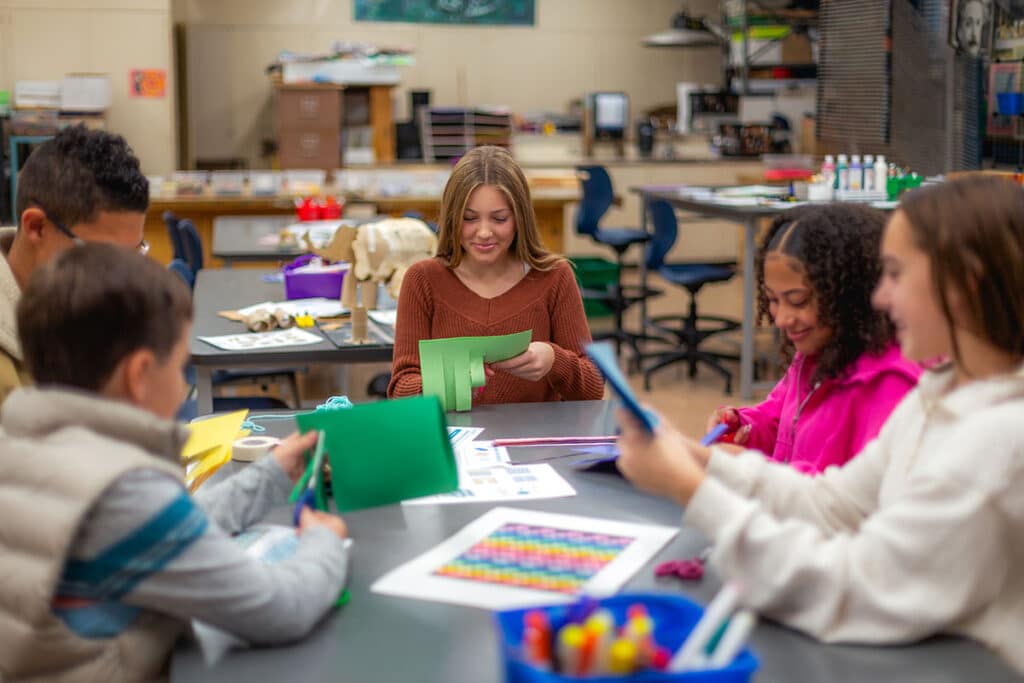
As the year progresses, maintaining the connections you’ve built with students takes care. By choosing to lead with positivity through notes, chats, praises, choices, and redirects, you continue to foster an art room where students feel seen, valued, and comfortable taking risks in their artwork. When your students know that you believe in them—even after a tough moment—they’ll continue to show up ready to learn and grow, both in visual art and in character.
What is another strategy to turn a negative interaction into a positive one?
Share a heartwarming story of a restored student relationship!
To chat about how you maintain and repair student relationships with other art teachers, join us in The Art of Ed Community!
Magazine articles and podcasts are opinions of professional education contributors and do not necessarily represent the position of the Art of Education University (AOEU) or its academic offerings. Contributors use terms in the way they are most often talked about in the scope of their educational experiences.