
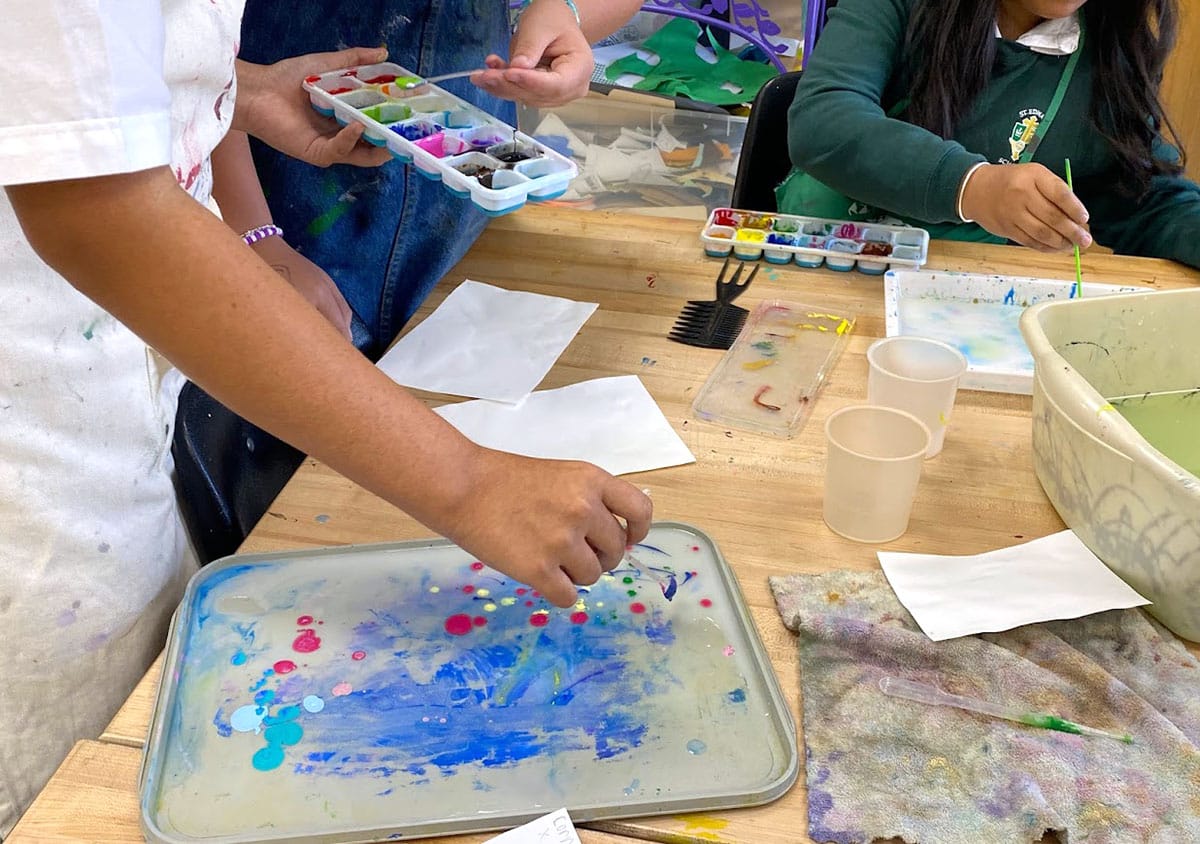
Do you ever feel like your students rely on you for everything? They raise their hands for help before they’ve even tried. You hear, “What are we doing today?” right after your explanation. We’ve all been there. It’s part of teaching, but it can leave you juggling every brush, pencil, and question in the art room.
What if your classroom looked a little different? Imagine students jumping in to help each other on their own: explaining techniques, asking for feedback, and cleaning up. With the right structure and encouragement, this can be more than an art teacher’s dream—you can establish collaboration and kindness as the norm.
Here are simple, low-stress ways to build independent, empathetic, and creative support systems in your art room.
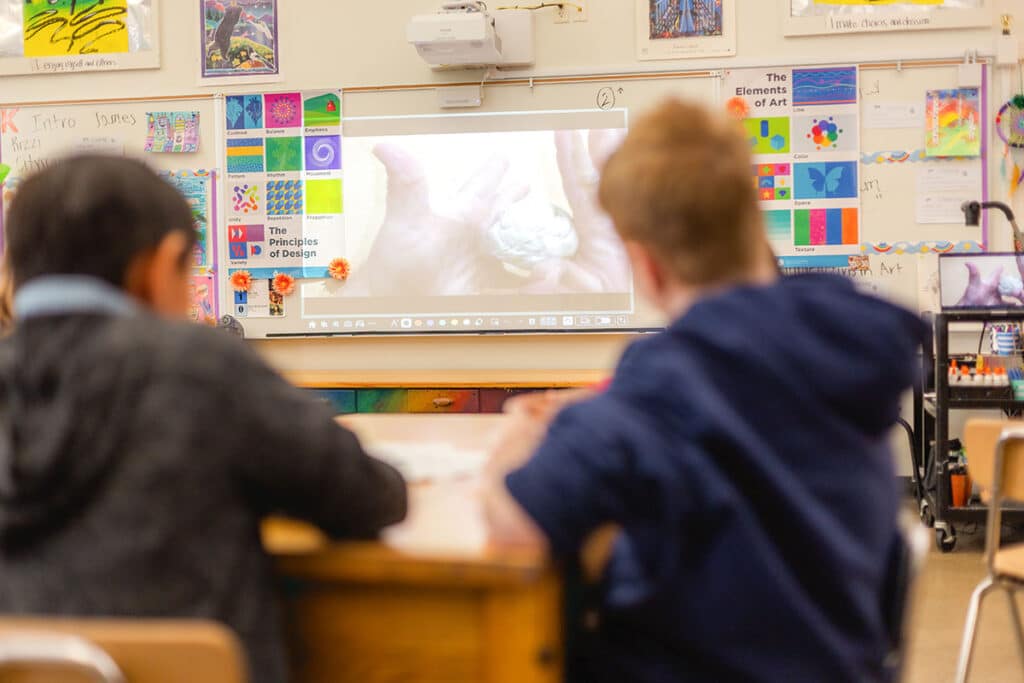
Start small with building everyday helpfulness.
Culture grows from consistency. It may take some redirection at first, but after a few classes, helpfulness will start to become the norm rather than the exception. It embeds the idea that being an artist is not a solo sport but a collaborative activity. Try adding one or two small routines to each class to make helpfulness a natural part of the day.
Here are seven quick ideas you can add to your students’ daily routine:
- Table Talk First
Similar to the classic “Three Before Me,” students inquire with their table peers before asking the teacher. Gameify it by having them record the questions they helped each other with and award the “Most Helpful Table” with a prize or bragging rights! - Feedback Fridays
Reserve five minutes for giving or receiving kind, specific feedback. Use the Practicing Art Feedback Resource from FLEX Curriculum to help your students get started. - Studio Assistant
Assign a rotating student each week for material, project, or technique questions. Students love being the go-to person, and it trains them to both give and seek help from peers. Honor them with a special name tag or “Studio Assistant” badge. - Peer Check
Before submitting work or moving to the next stage, students ask a classmate to review one or two specific aspects of their work. You can give a quick yes/no requirement or a short rubric. - Helper Jobs
Rotate roles like Materials Manager, Cleanup Captain, or Brush Washer. It gives students ownership and creates natural systems of support. - Reflection Prompts
End class with a quick share-out, such as, “Who did you help today?” or “What’s something you learned from a classmate?” This can be a quick and informal process, or you can create a set of laminated reflection cards with specific prompts. - Reminder Cards
Likewise, students can create visual how-to cards with FAQs, like “How do I clean a brush?” or “How do I mix skin tones?” Laminate and post them so you can use them across multiple classes for several years!
Promote thoughtful collaboration.
Collaboration doesn’t always mean group murals or classroom chaos. It can happen quietly and creatively through well-structured partnerships. Look for unexpected ways to pair students to foster meaningful connections. You can group students within a single class or across your entire program! Either way, it’s a powerful way to encourage students to step outside of themselves and help one another.
Art Buddies
One of the most rewarding ways to foster community is to pair older and younger students. You can even do this if they’re not in the same class! The key is to take the time to train your older students. Talk about how to help without taking over, how to listen first, and how to offer feedback with kindness. Practice common situations ahead of time so they know what to expect. This provides older students with leadership practice, you with extra sets of hands, and younger students with role models.
You can also implement a buddy system in the same class. Strategically pair students with different strengths and give them a shared task. Maybe one’s great at composition and another at color mixing, and they do a brainstorming activity together before breaking off to focus on their individual pieces.
Try these Art Buddy projects across classes:
- Character-to-Creation
Younger students design a character or creature, and older students bring it to life as a 3D sculpture, felt stuffy, or ceramic figure. Older students love the challenge of creating something from a fun, imaginative sketch, and you’ll amaze younger students with the older ones’ creations. As an added bonus, it eliminates hearing, “I don’t have any ideas,” from older students. - Art Pen Pals
Students exchange artwork or short written notes that share encouragement, tips, or questions. Keep the pairings anonymous and then have a Pen Pal Reveal at the end of the semester or year for additional intrigue! - Technique Mentors
Older students create short video demonstrations or written guides on simple techniques. It’s a great way to integrate technology and do a skill check with your older students. If they can teach it well, they’ve mastered it! This provides you with a collection of resources to pull from, and your younger students will benefit from learning from multiple perspectives.
Shift language to transform culture.
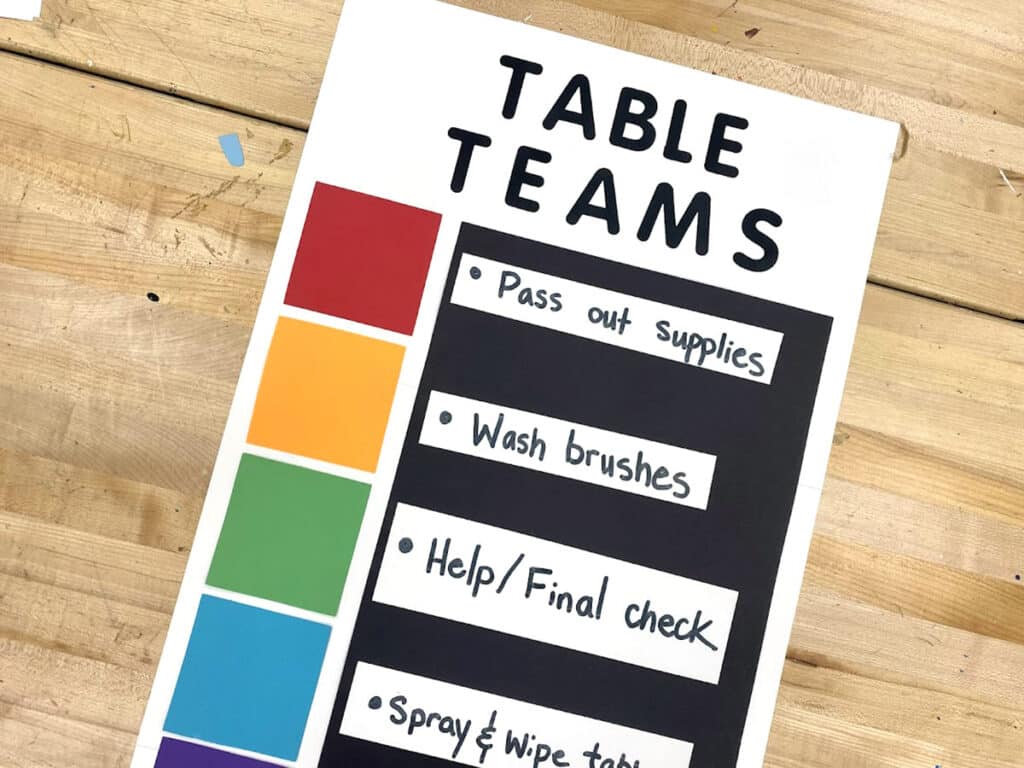
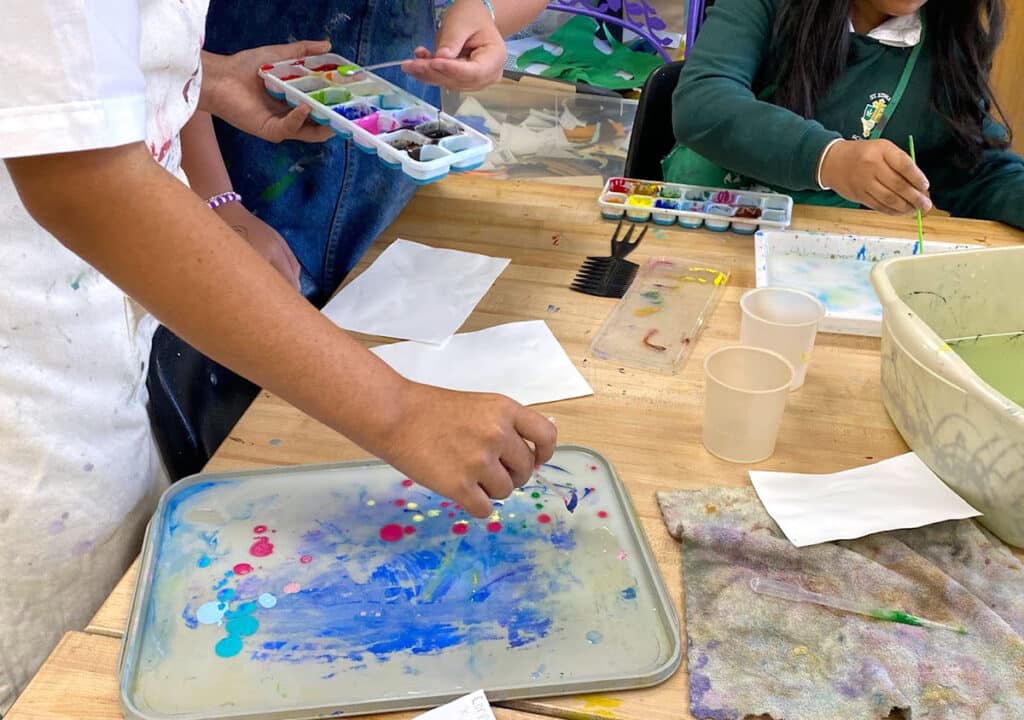
How we talk about each other matters. A few minor language shifts can help reinforce a culture of collaboration rather than competition. One simple shift is to refer to your students as artists or teammates instead of kids or students. You can even set up Table Teams to reinforce the language and collaborative ideals that we all win when we support one another. Celebrate their acts of kindness, cooperation, and helpfulness with points or privileges. For more ideas on instilling teamwork in the art room, explore the Teaching Routines and Procedures Pack in PRO Learning.
Use phrases like:
- Let’s help our Table Team clean up.
- I noticed how well the Blue Table organized its materials. Great teamwork!
- Artists, this technique can be messy. How can we support our neighbors while we create today?
Remind them that art isn’t a solo sport.
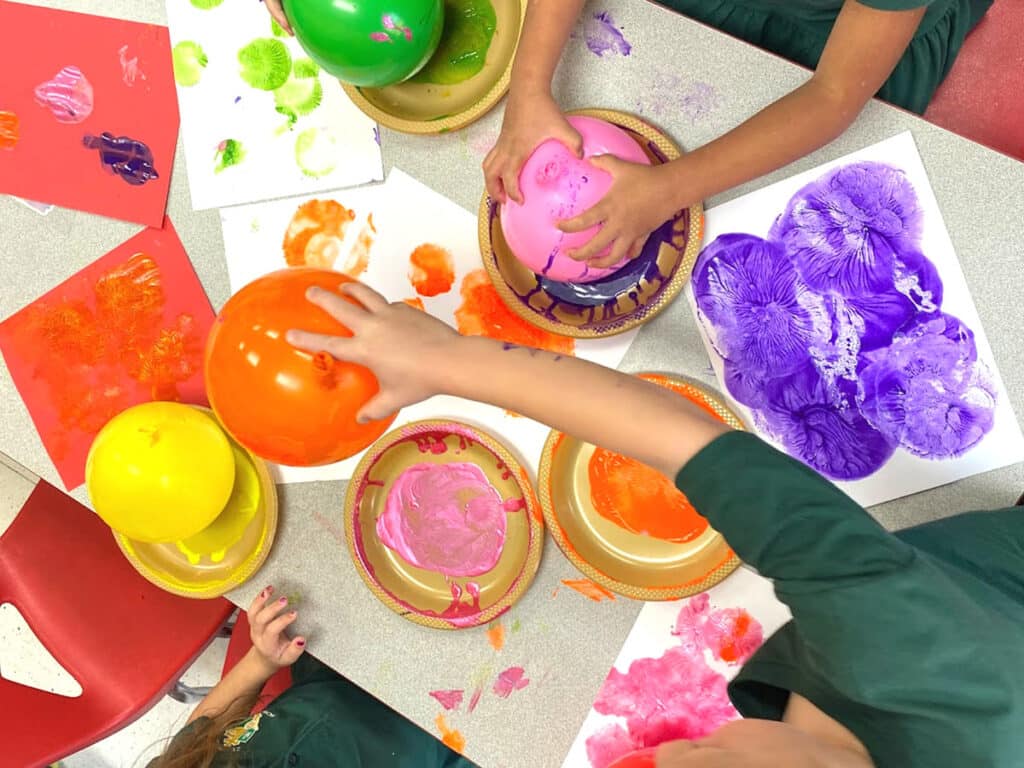
There’s a common myth that artists are lone geniuses. In reality, creativity thrives through connection from mentors, peers, critics, and friends. When your classroom mirrors that truth, students begin to see artmaking not as a solitary act, but as a dialogue. They learn that helping others helps everyone to grow! Take time to build that culture with the strategies above, and you’ll find your classroom becomes a true studio community—where they help you help them.
What small routine will you introduce this week to make collaboration part of your students’ daily studio practice?
How do you balance independence and teamwork in your art room?
To chat about empowering student helpers with other art teachers, join us in The Art of Ed Community!
Articles and podcasts are opinions of professional education contributors and do not necessarily represent the position of the Art of Education University (AOEU) or its academic offerings. Contributors use terms in the way they are most often talked about in the scope of their educational experiences.