
In the art room, it’s easy to fall into the trap of thinking we need to be the most talented, knowledgeable, or in control. After all, teachers are trained to be experts, and the classroom often revolves around our authority. But what if the real magic happens when we loosen our grip, lean into curiosity, and let our students take the lead?
Some of the most powerful teaching moments don’t come from delivering the perfect demo or assigning a flawless project. They come when we admit we don’t have all of the answers, and instead, learn from the artists sitting right in front of us. This doesn’t diminish our role as educators—it transforms it.
Rethink your role.
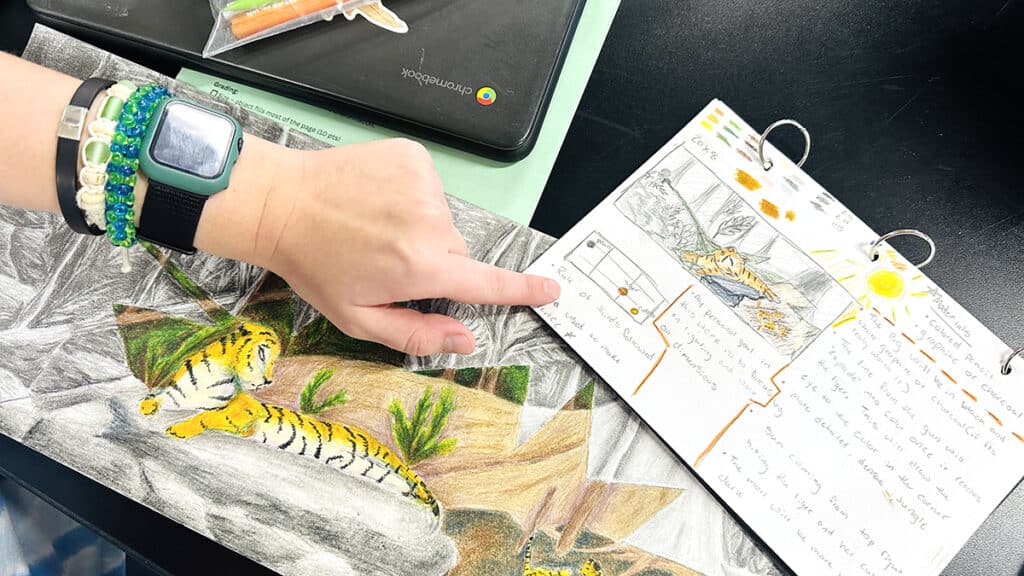
Traditionally, teachers are the central experts: the ones who know the techniques, the art history, the processes, and the answers. But in a creative space like the art room, that model doesn’t always serve us or our students. Being “the best artist in the room” doesn’t need to be your goal. Instead, think of yourself as the most curious person in the room. Your value isn’t measured in how realistic your drawing looks or whether you can flawlessly throw clay on the wheel. Your value is in how you guide discovery, encourage experimentation, and foster resilience—all while modeling what it means to be a lifelong learner.
As a great art teacher, you bring these indispensable qualities to your students:
- Coaching
You help students refine their ideas and processes with your wealth of experiential knowledge. - Critical Thinking
You guide them to find connections to larger contexts and meanings. - Resilience
You model how to respond to failure and adapt. - Collaboration
You create a studio culture where you value all voices and use them to spur growth.
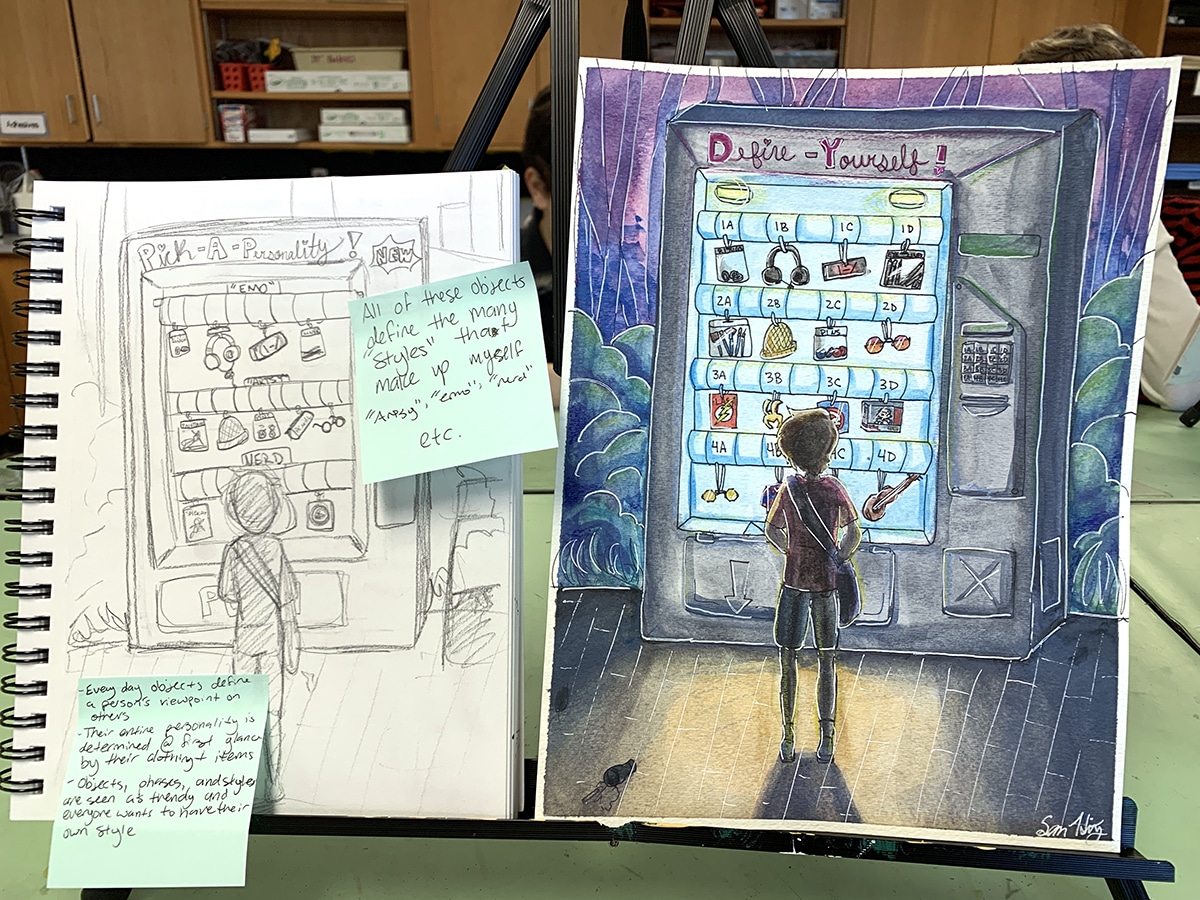
Every art teacher has experienced a student who draws with extraordinary precision, paints with natural mastery, or manipulates digital tools in ways we never imagined. At first, it can feel intimidating. How can we teach someone who already has advanced skills? The answer lies in shifting our mindset. Instead of feeling pressure to correct, outperform, or “prove” our expertise, we can ask good questions.
Try questions like:
- Can you show me how you did that?
- Where did you learn this technique?
- Would you be willing to share this with the class?
- Which artists inspired this approach?
- How did you consider your composition?
When students see you asking questions, it sends the powerful message that even teachers are learners. And when you invite them to share their expertise, you’re not only validating their skills, but you’re reinforcing that art is a collaborative field where everyone has something unique to contribute.
Curiosity doesn’t mean letting advanced students plateau either. Technical ability is only one facet of artistic growth; even the most talented young artists benefit from stretching in new directions. This is where your role as a teacher is irreplaceable. Challenge students by swapping or adding a constraint to get them to boost their creativity.
Consider strategies like:
- Change the medium or surface.
Challenge a student who has mastered graphite portraiture to try ink, clay, or large-scale charcoal on unstretched canvas. Shifting materials forces them to adapt and (literally!) expand their toolbox. - Scale it larger or smaller.
Ask a student who excels at small, detailed drawings to recreate the same subject on a mural-sized surface. Conversely, they can shrink a large-scale painter’s work into a miniature format. Both push their problem-solving and compositional skills. - Shift the inspiration.
Introduce students to artists who work in very different traditions, especially if their style is heavily influenced by anime, realism, or digital art. Examples include Indigenous printmakers, Dada collage artists, or contemporary installation work. Challenge them to reinterpret their subject through a new lens. - Layer in concept.
Encourage students to explore themes like identity, social commentary, or storytelling so their work moves beyond skill into meaning-making.
Remember that feedback goes both ways.
Curiosity thrives in classrooms where feedback flows in every direction. Too often, feedback is seen as something the teacher gives to the student. When we flip that dynamic, not only does it open up opportunities for you to improve as a teacher, but it also empowers students to think critically about how learning happens. Periodically encourage students to share what they notice about your teaching demonstrations, lesson structures, or even the classroom environment.
Ask your students:
- What worked for you in this assignment?
- What confused or challenged you?
- How would you teach this concept in another way?
It can be helpful to make feedback visible by creating a feedback wall where students post quick sticky notes or doodles. Use prompts like, What helped me today… or, If I were the teacher, I would… to guide their responses. Take the idea further with sketchbook conversations and leave space on each assignment for teacher comments and student responses. Over time, these notes evolve into a dialogue that documents both teaching and learning growth.
Experiment with exit tickets or quick digital polls. Instead of only asking what students learned, ask what they noticed about how they learned. Try questions like, What part of the demo made sense right away? or, What could I explain differently next time? These questions invite students to see themselves as collaborators in the learning process.
Don’t forget to model the feedback exchange yourself! Join reflection activities alongside your students. When students see you reflecting on your own challenges, they learn that growth is an ongoing process, even for adults.
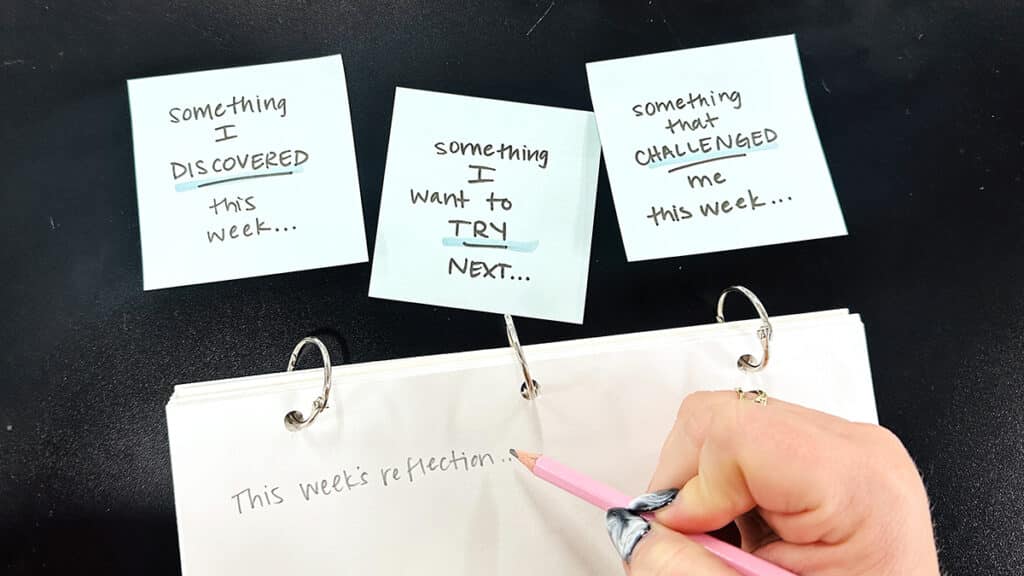
Try ending the week with three quick shares:
- Something I discovered this week…
- Something I want to try next…
- Something that challenged me this week…
Spotlight the experts in the room.
One of the most practical ways to embrace curiosity over control is to spotlight student expertise. Build in time for “student takeovers” or mini-demos where students share a favorite skill, medium, or technique. Even small gestures, like an Ask Me How I Did This bulletin board featuring student work with QR codes to process videos, create a culture where students feel like valued contributors.
Incorporate these sharing activities in your routine:
- Digital Art Tricks
Let students run a short demo on their favorite digital platform. - Cultural Art Forms
Invite students to teach a style, tradition, or craft from their cultural background. - Personal Passions
Showcase work and artistic interests from outside of the traditional art room, like graffiti or manga illustration.
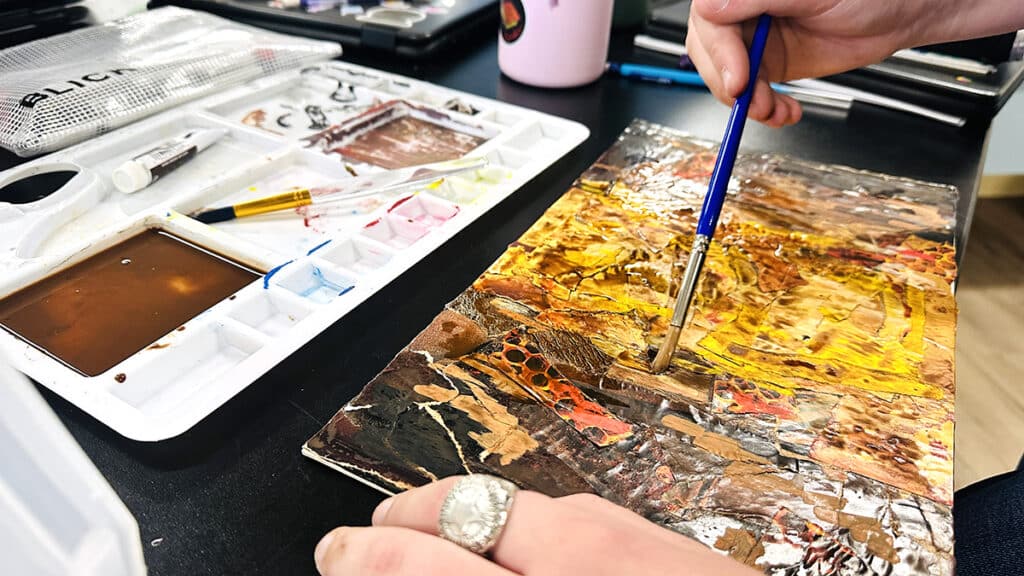
Loosen your grip on control to gain trust.
A classroom built on curiosity rather than hierarchy becomes a place where students feel welcome to experiment, take risks, and share their expertise. As teachers, our value isn’t in outdrawing or outpainting our students, but in modeling openness, humility, and the courage to keep learning. Curiosity reminds us that teaching is not a performance of mastery but a practice of growth. So, the next time a student surprises you with their skill or insight, see it not as a challenge to your role but as a gift to your classroom. Lean in, ask solid questions, and nurture their brilliance to make you a better teacher and learner, too!
When was the last time a student surprised you with their skill or insight?
How did you respond when a student knew more than you in a particular medium or style?
To chat about advanced students with other art teachers, join us in The Art of Ed Community!
Articles and podcasts are opinions of professional education contributors and do not necessarily represent the position of the Art of Education University (AOEU) or its academic offerings. Contributors use terms in the way they are most often talked about in the scope of their educational experiences.