

Drawing people can feel complicated. Students get frustrated when their drawings don’t match what they imagine. Plus, considering how to navigate anatomy can seem advanced. As a result, many art teachers hesitate to teach figure drawing, especially at the elementary level. But here’s the interesting paradox: children already constantly draw people, and they always have. So, why isn’t it a bigger part of our lessons?
Learn how to integrate simple, developmentally-appropriate figure drawing lessons into your elementary classroom.
Start with how young children naturally draw people.
Drawing people is closely tied to children’s cognitive and emotional development. As teachers, understanding developmental stages helps us know when to simplify instruction and when to guide students toward new ways of seeing and drawing.
Research shows that one of the first recognizable images children create is the human figure. Art educator Viktor Lowenfeld described the early “tadpole figure” (a circle with lines representing limbs) as one of the first stages in children’s artistic development. Researcher Rhoda Kellogg, who analyzed more than a million children’s drawings, found that across cultures, by age four, children begin representing people using simple shapes. Figurative art is universal.
It may seem obvious, but children draw people because they care about people. Throughout history, humans have also been deeply drawn to depicting the human figure. It’s a way to explore relationships, identity, and experience. The challenge for art teachers is not whether children will draw figures, but how to guide that natural interest in ways that are developmentally appropriate and build confidence.
Let development guide your instruction.
More recent research continues to show that children’s drawings develop alongside motor skills, perception, and symbolic thinking. As educators, we may feel tempted to introduce every strategy we know. However, this means students are ready for different strategies at different ages, not all at once. For example, research suggests that more complex spatial concepts, such as the intentional use of negative space, typically emerge around age 9.
Meet students where they are and help them take one next step at a time with these strategies:
- Pre-K and Kindergarten:
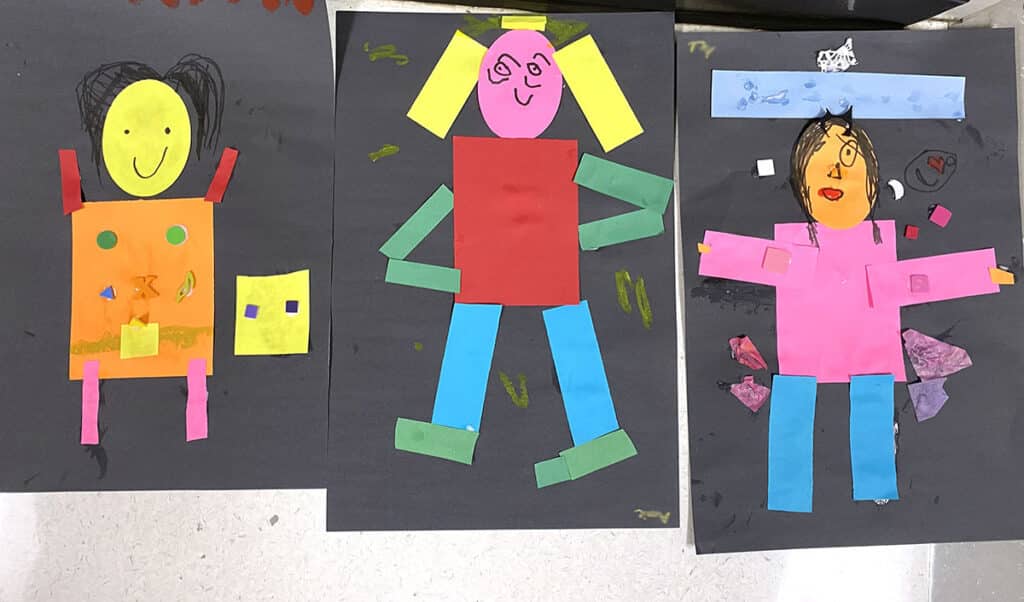
The goal is body awareness and noticing joints (where do we bend?). Cut out oversized shapes for small groups to pose a body. Allow students to pose for each other or incorporate movement games like freeze dance. Then, students create a body from their own smaller cut shapes. - Early Elementary (1st-3rd):
At this age, students can understand basic body forms. For struggling students who may still want to draw stick figures, invite them to “dress up” a stick figure by adding a shirt, pants, and other accessories. Clothing naturally becomes shapes, not lines. - Upper Elementary (4th-5th):
Students at this stage are ready to begin thinking more intentionally about proportion and structure. Introduce simple ideas such as measuring with the head, using negative space to check for accuracy, or building the body from basic 3D forms. Older students love the challenge of drawing each other from life.
Put meaning first and use figurative art as a powerful storytelling tool at any age.
Just like many other types of art, children draw people to communicate meaning, express emotions, and relay experiences. Grounding figurative art in meaning before jumping into technical details like proportions or anatomy isn’t just a lesson hook, but an appropriate developmental base. From early childhood, we create artwork because we want to tell stories, and that shouldn’t change in the art room.
Encourage your students to weave stories with these strategies:
- Pre-K and Kindergarten:
Connect drawings of people with emotions. Show examples of posing figures conveying different emotions (without facial expressions). Ask questions like, “What makes them look happy?” Students draw themselves and what makes them happy. - Early Elementary (1st-3rd):
Marionettes and puppetry naturally bridge storytelling and figurative art. Download FLEX Curriculum’s Merry Marionettes Lesson for students to construct their own puppet that considers how joints move. - Upper Elementary (3rd-5th):
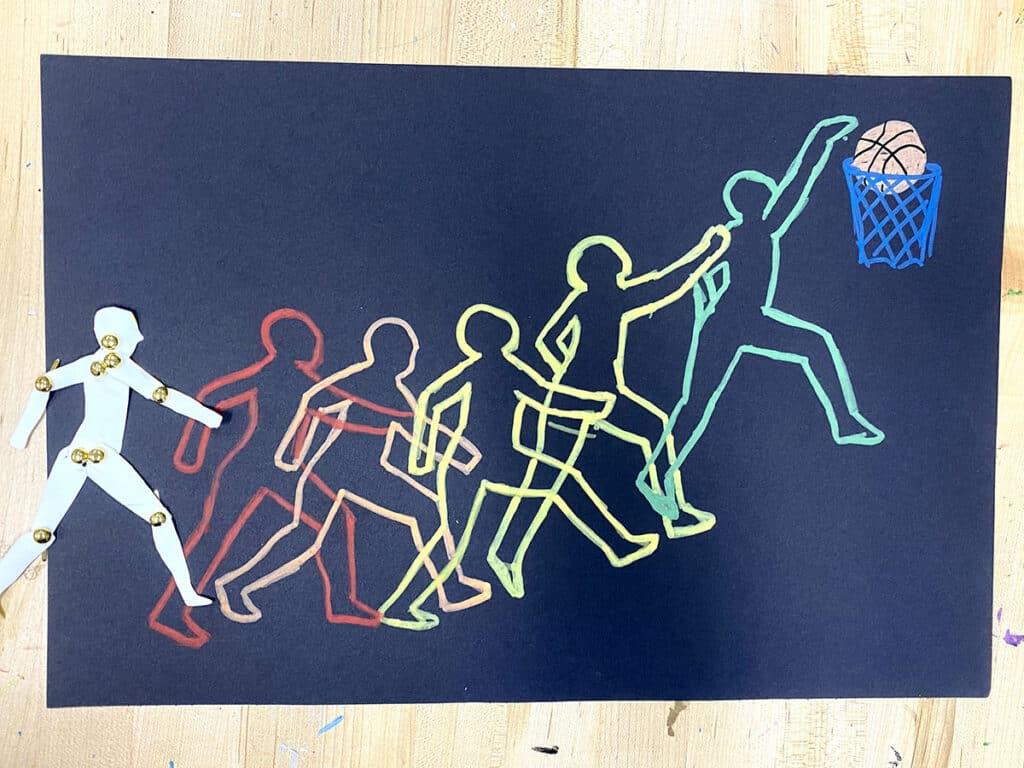
Create a poseable 2D mannequin using brads. Trace each pose so they overlap to create a story with movement. As an extension, use the mannequin for stop-motion projects, animated flip-books, or a 2D reference for future figure drawings.
Consider when students are ready for more when introducing observation and realism.
What about the more “technical” aspects of figure drawing, like gesture, proportion, and structure—can you teach these concepts in elementary art, too? Of course! Just like all of the other strategies, all it takes is a bit of scaffolding and guidance.
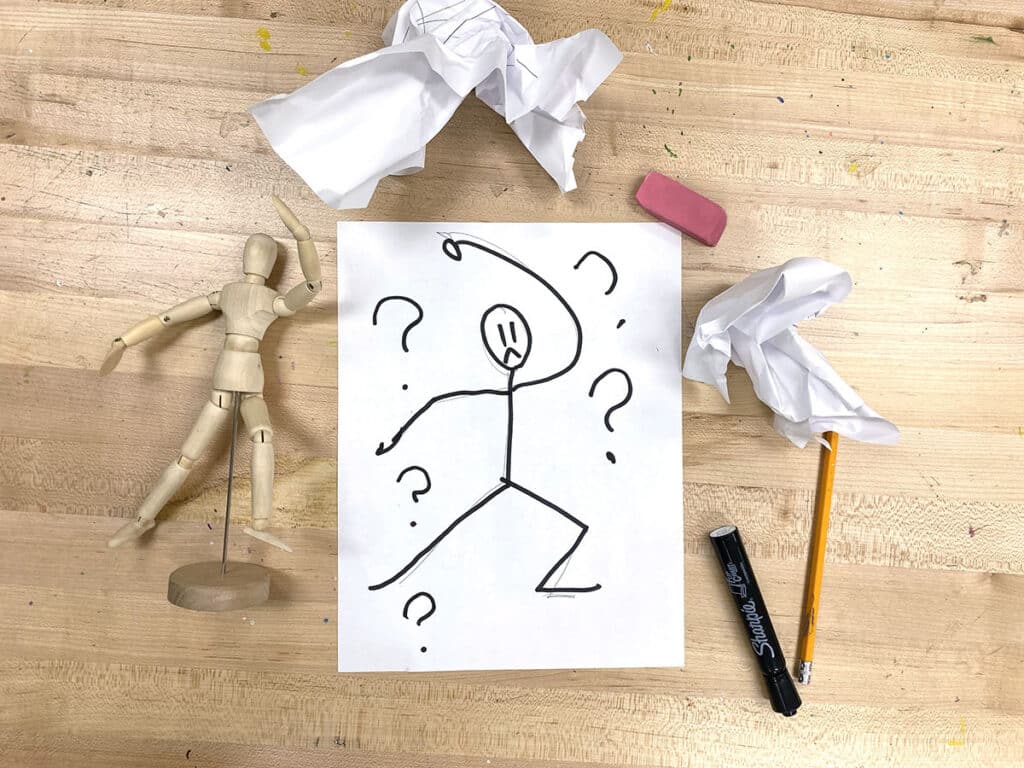
For example, a preschool student may draw a tadpole figure with arms and legs emerging from the head. Show them how they can begin building figures with bodies using simple shapes. Early elementary students might draw figures with bodies, but they’re standing static. Encourage them to play with a mannequin or other digital references, such as SetPose.com, to explore more dynamic poses they can copy. Upper elementary students may have these skills down pat, but could use feedback to ensure their figures are proportionate.
Make proportion meaningful and manageable.
One myth is that proportions are too complex for elementary students. However, most students learn fractions by third grade. Body proportions and head measurements are simply another way to explore fractions visually. For example, if a figure is seven heads tall, the head is one seventh of the body. This is a great opportunity to collaborate with a math and/or science teacher for a cross-curricular lesson in figure drawing, basic geometry and measurements, and anatomy.
Instead of focusing only on realistic proportions, invite students to experiment. Show them artists like Keith Haring and bring in toys like dolls and action figures. Discuss how really tall figures, really short limbs, or really giant heads can affect the character of the people they draw. When students realize they can take control of their character in this way, it empowers them and spurs their artistic confidence.
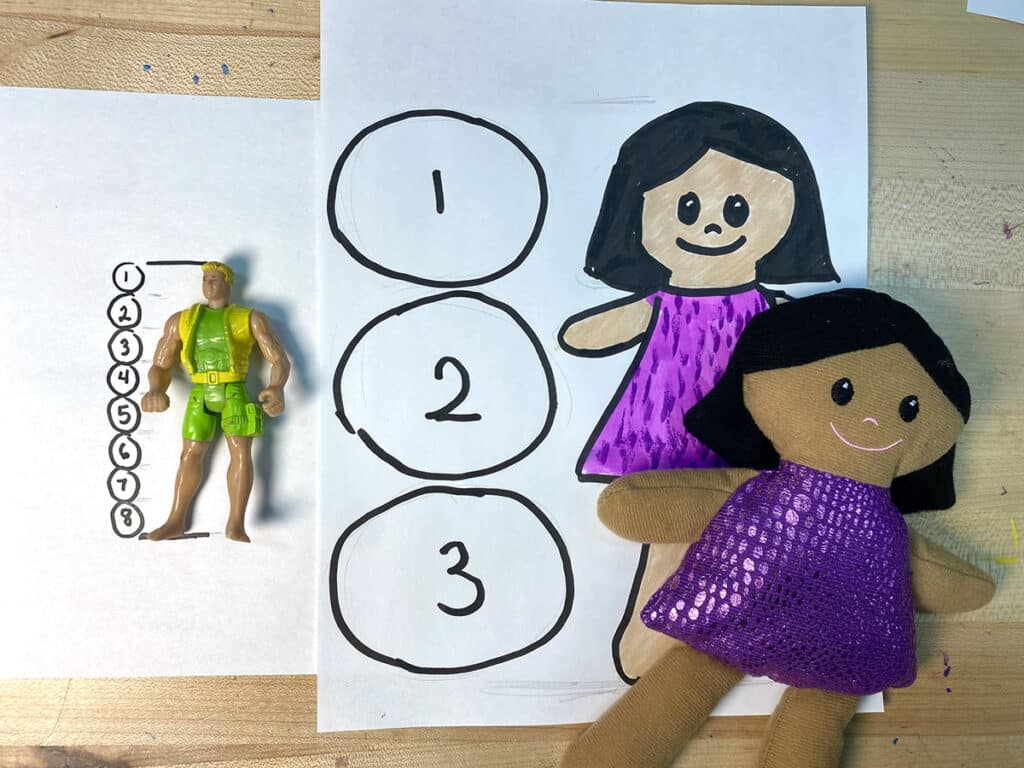
Introduce the concept of proportion with these strategies:
- Pre-K and Kindergarten:
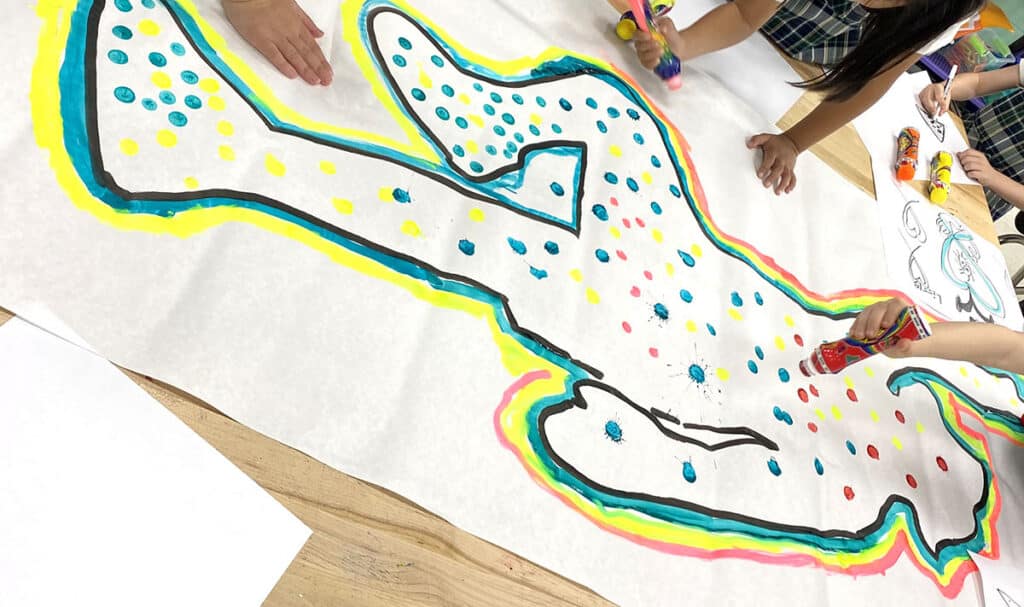
Life-size body tracing is a classic, but always a big hit. Adapt it in many different ways by adding personal details, tracing shapes they identify (i.e., the head is an oval), or notating where bones and joints are. Take it in a more symbolic direction by filling the negative space with things they love. - Early Elementary (1st-3rd):
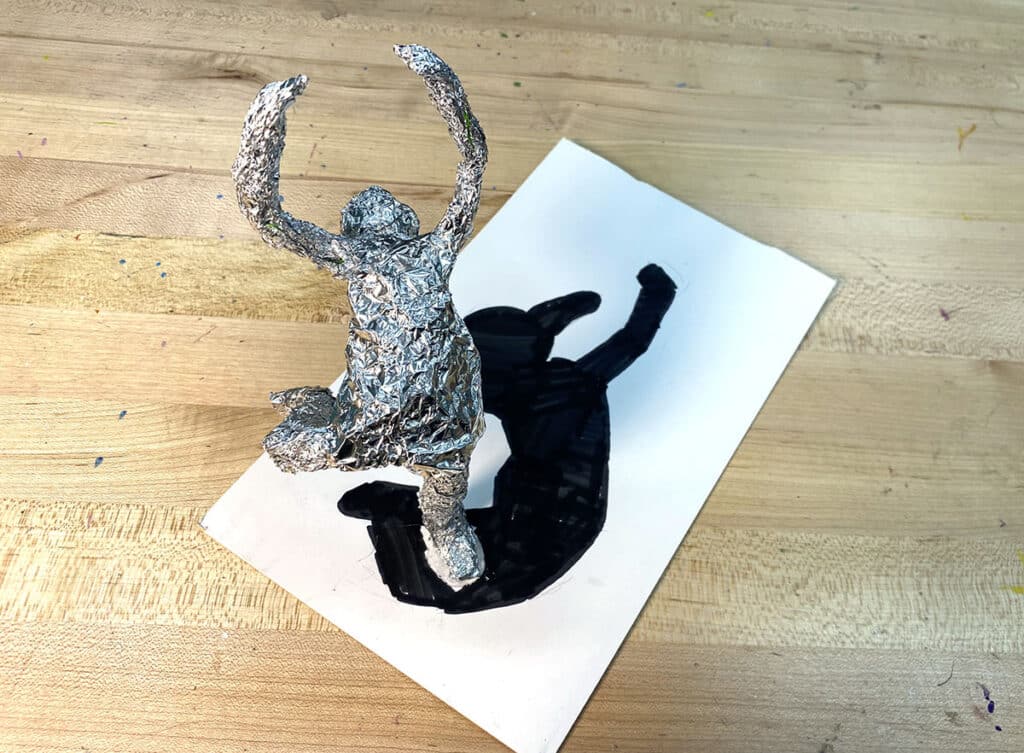
Construct wire (or chenille stem) armatures and build up the figure with tin foil. As they twist the wire, guide them through general proportions. Hot-glue to a cardboard base, then use a bright light to create dramatic cast shadows. Trace the shadows to explore elongated and distorted proportions, too. - Upper Elementary (4th-5th):
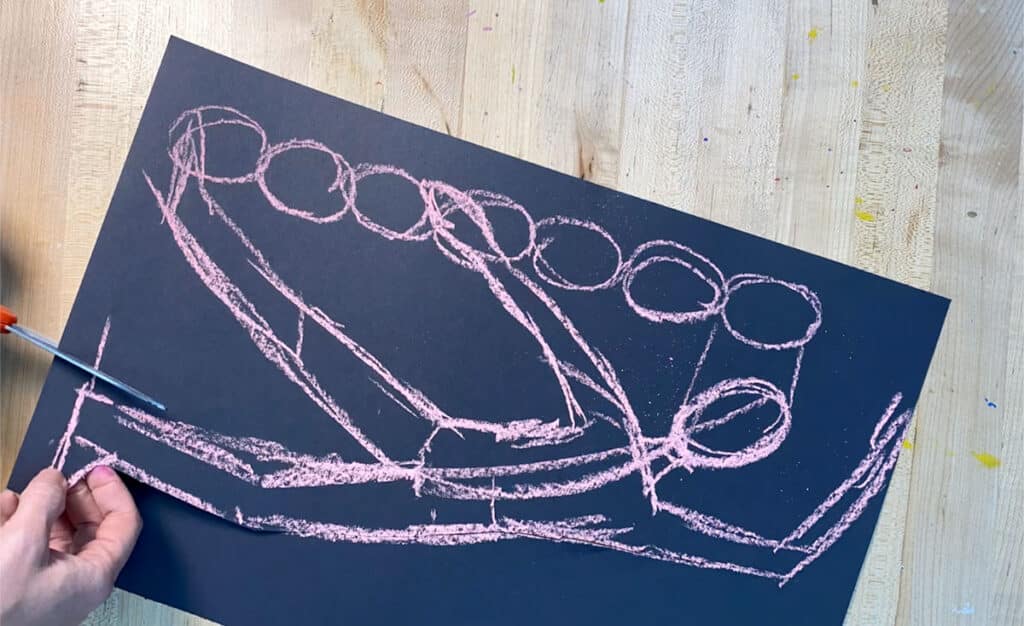
Make large-scale gesture drawings using large paper. Start with one large sweeping line to capture the action, and then sketch in other major forms, reviewing what they know about proportions. To take the pressure off, go extra big! Use butcher paper and charcoal attached to the end of yardsticks or broom handles, a la Matisse.
Children draw people because people matter. From the earliest tadpole figures to increasingly complex drawings in upper elementary grades, the human figure offers students a powerful way to explore identity, movement, and storytelling—some of the most meaningful aspects of art! Across cultures and centuries, artists have returned again and again to the subject of people. When art teachers guide students through developmentally appropriate ways to observe and represent the human body, we help students participate in one of the oldest artistic traditions we share.
What’s one thing holding you back from teaching figure drawing?
Share your favorite figure drawing lesson or activity!
To chat about figure drawing with other art teachers, join us in The Art of Ed Community!
Magazine articles and podcasts are opinions of professional education contributors and do not necessarily represent the position of the Art of Education University (AOEU) or its academic offerings. Contributors use terms in the way they are most often talked about in the scope of their educational experiences.