

Have you ever come across a viral caricature video and thought, “I wish I could bring this into my classroom,” but had no idea where to start? The good news is that you don’t need to be a professional caricaturist to bring this art form to your students. In fact, it’s the perfect way to introduce a larger portraiture unit while building student relationships and observational drawing skills.
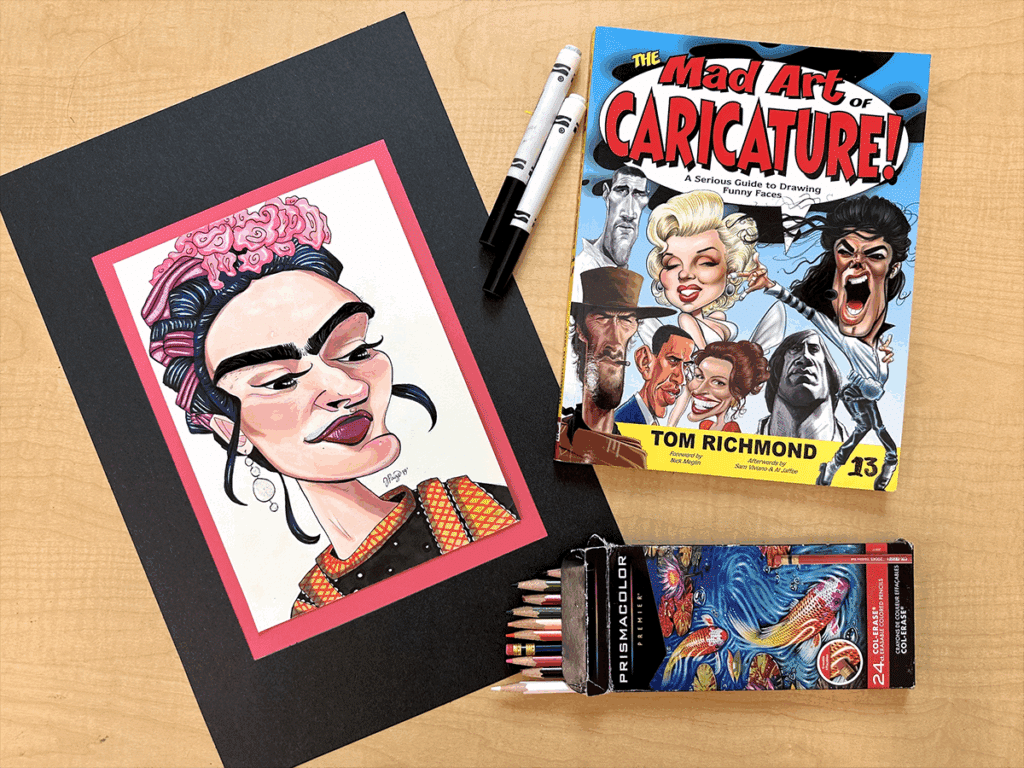
Caricature is a fun, rising art form, and it definitely resonates with our students. With so much exposure to social media, chances are both you and your students have come across a caricature “reveal” video while scrolling. However, caricature isn’t new, and it has historical roots in cartooning and animation. It belongs under the broader umbrella of portraiture and is also its own art form!
Why should I teach caricature?
Whether your first memory of caricature came from a birthday party, a school event, or a trip to a theme park, you’ve likely encountered a caricature artist at some point. Caricature is an art form that students are naturally drawn to. From the “wow” of seeing a portrait drawn in just a few minutes, to the humor and exaggeration that make it instantly recognizable, caricature is a fun and engaging topic to bring into the art room.
Caricature can also work as a low-pressure introduction to a larger portrait unit like the Cool Colored Portraits Lesson in FLEX Curriculum. Caricature builds creative confidence and prompts students to experiment and take risks with exaggeration and style. It reminds them that mistakes are part of the process and there’s no single “right” outcome. If your class all draws the same subject, no two caricatures will ever look alike! Most importantly, caricature allows you and your students to enjoy portraiture in a playful, approachable way.

What materials do I need?
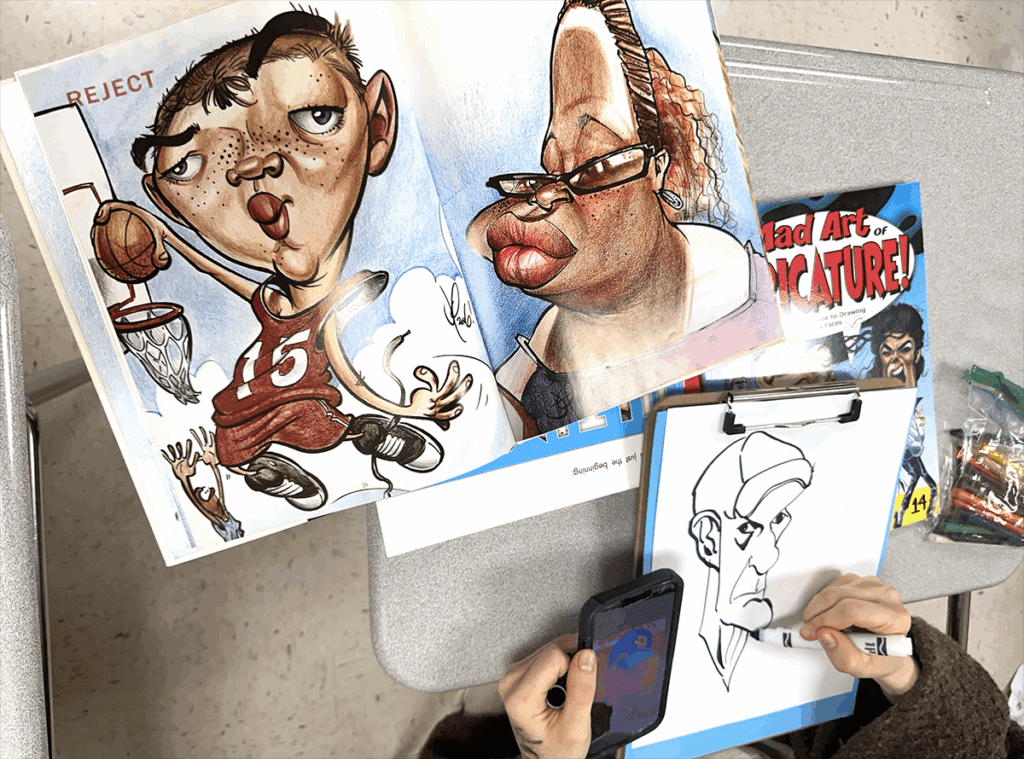
Professional caricature artists use a wide range of materials such as color sticks, markers, pastels, drawing gloves, digital tablets, and easels. But just like any other artist, caricaturists gravitate toward the tools that feel most natural to them. The same goes for you and your students! You don’t need “pro tools” to teach caricature. Use what you already have in your storage bins and art closets, and upgrade as you go.

Here are some materials with classroom-friendly substitutions:
- Easels
Use clipboards, drawing boards, or even student desks. - Specialty Paper
Regular printer paper works perfectly for caricature practice. - Color Sticks
Just use peeled crayons! For a smoother texture and seamless color blending, layer two sheets of paper on top of a foam pad. - Art Markers
Any marker works. Many professional caricature artists actually use regular broad-tipped markers!
And don’t forget—you’ll need subjects! A fun way to start is to play a five-minute song and step in as the subject or pair students up to draw each other. At the end, reveal all of the drawings together for lots of laughs and classroom community building.

What is exaggeration, and why is it important?
If you want to extend your caricature lesson beyond a quick five-minute activity, guide students through a more detailed caricature study. A great place to start is by warming them up with elements they already know, such as line and shape. Caricature builds on these two elements; the artistry comes from how students combine them to create a unique interpretation of their subject.
Practice drawing lines and shapes with markers. While many students have used markers before, they typically use them for coloring instead of drawing. Show them how to hold the marker to achieve various strokes.
Divide them into small groups of 4–6 students. Select one student to be the subject and take a couple of minutes for each group member to compliment them on something that makes them stand out. It should be positive, like a signature accessory or hairstyle, distinctive face shape, or identifiable feature like freckles. Take turns and rotate through each group member so everyone has a chance for kudos! Not only does this build confidence and connection, but it also prompts students to observe their subjects more closely.
From here, transition to the concept of exaggeration. Exaggeration is the opportunity to turn a distinctive trait into a focal point. Select one person in each group to be the subject. Each group member will choose one standout feature and experiment with altering shapes to highlight and amplify that special trait. As you verbally guide students through the process, keep the tone celebratory and remind them to show off what makes their friend unique.

Where do I get great reference images and resources?
Drawing from real-life subjects is the best way to immerse students in observational drawing! However, sometimes this is not possible or ideal. If you’re looking for other options for students to draw from, there are tons of digital archives with expressive and engaging portraits.
Save these three online treasure troves for portrait references:
- Earth’s World Photography
Earth, an Oregon-based photographer, travels to county fairs capturing expressive, everyday faces. His portraits highlight the beauty of ordinary people and are a favorite among artists worldwide. Many now use his images for practice, study, and inspiration. Check out his social media to see how other artists turned his portraits into drawings of their own. - Caricature Resolution
Every January, artists across the globe take part in a month-long challenge to create daily caricatures of celebrities, historical figures, or themed lists. Originally started for the caricature community, it now includes animators, fine artists, and hobbyists. - Facial Expressions: A Visual Reference for Artists by Mark Simon
This book offers over 2,500 photos of 50 different people, resulting in a vast range of facial expressions. It also includes sample drawings and cartooning examples based on the photos.
Invite a guest caricaturist into your art room!
Kaman’s Art Shoppes is the largest caricature, photo, and specialty art retailer. They have setups at zoos, theme parks, and aquariums across the country. Kaman’s also offers classroom visits, so you can bring the caricature experience directly to your students. Just be sure to do your due diligence and follow all district and school policies around guest speakers.
Here are some additional artists, perfect for highlighting in a caricature lesson:
- Hitomi Ishihara is an award-winning Japanese caricature artist.
- Sebastian Martin has a very fun and Cubist approach to caricature.
- Tom Richmond is the author of The Mad Art of Caricature.
- Jason Seiler is a hyperrealistic caricature artist and painter.
- Alani Jimenez is the world’s fastest caricature artist and social media enthusiast.
Check out these books and resources to broaden your caricature library:
- ISCA Exaggerated Features Public Archives
- The Ultimate Guide to Modern Live Caricature by Manny Avetysian
- Infinite Jest: Caricature from Leonardo to Levine
- Rejects: The Extreme Art of Retail Caricature by Joe Bluhm
- How to Draw Caricatures by Lenn Redman

Caricature is a distinctive and valuable art form that deserves a place in any grade-level art room. With deep historical roots and a growing presence on social media, it continues to spark curiosity and creativity, especially among students. From navigating the first steps and connecting to familiar art concepts, to celebrating each individual’s unique features, caricature offers a meaningful and engaging way to explore identity, expression, and artistic interpretation.
How can you add a caricature extension to an existing portrait unit?
Have you tried caricature drawings with your students? We’d love to hear about it and see student work!
To chat about caricature with other art teachers, join us in The Art of Ed Community!
Articles and podcasts are opinions of professional education contributors and do not necessarily represent the position of the Art of Education University (AOEU) or its academic offerings. Contributors use terms in the way they are most often talked about in the scope of their educational experiences.