
A tortilla—as a canvas? If you think tortillas are just for taco night, think again! One of the most fascinating things about art is that the world can be our canvas. As art teachers, we have the privilege of opening the doors of creative possibility to our students. Show them how artists use everyday materials in fresh and unusual ways to transform how they see what’s at their fingertips.
Explore these nine unexpected materials and the artists who use them, with ways to highlight them in your art room!
Note: Be sure to review all resources and preview all artists before determining if they are appropriate to share with your students.
1. Horsehair Pottery (Eric Louis)
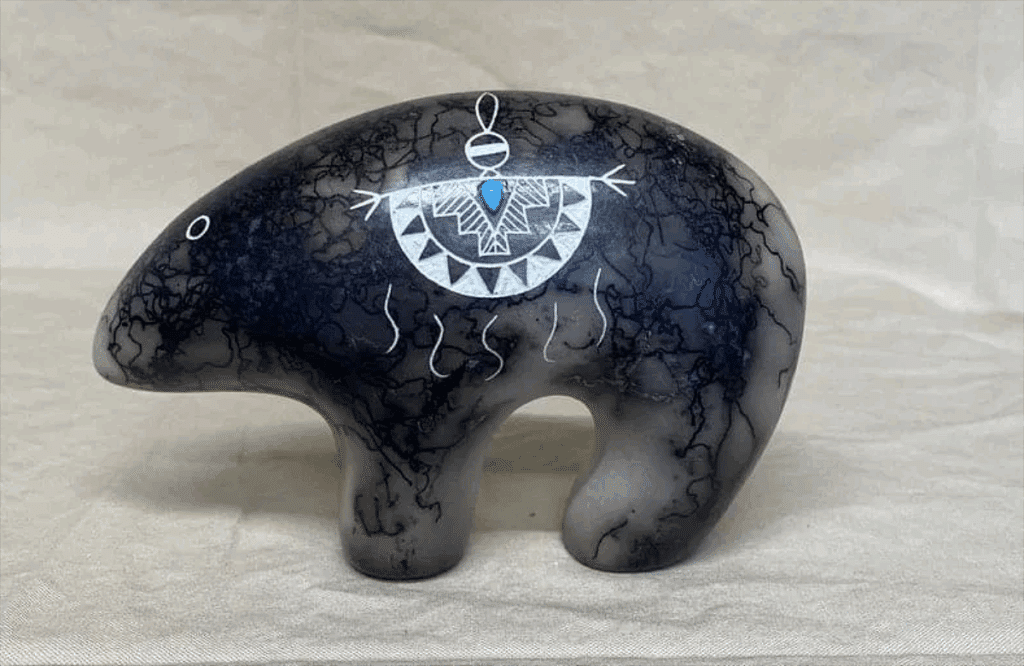
Although horsehair pottery may seem like a new and unusual art medium, it is actually a material with a long history of use. While the exact origins and earliest artists are unknown, Eric Louis has carried on this distinctive technique in his own pottery, continuing a family tradition spanning over four generations. He grew up in Acoma Pueblo, learning the art of pottery from his grandmother. As a child, he would help her collect clay scraps and horsehair to decorate pottery. Today, he not only preserves that tradition but also passes it on to his children.
Using local clay, a plaster mold, slip, and a kiln, Louis fires his pots at 1,200 degrees Celsius. At that moment, he has only about 30 seconds to place the horsehair onto the hot surface, where it instantly burns and shrivels, leaving behind delicate, organic patterns. Afterward, he hand-etches unique designs onto each piece with an engraver. The horsehair becomes a striking background, its motion and texture creating a one-of-a-kind visual effect on every pot.
Classroom Ideas:
- Dialogue
Encourage students to reflect on their own family traditions with the Cultural and Historical Uses of Art Resource in FLEX Curriculum. - Artmaking
Demonstrate how to incorporate natural materials into clay, like straw, feathers, or wood chips. Then, let your students try the process using the How to Make A Pinch Pot Resource, also from FLEX.
2. Bubble Wrap (Bradley Hart)
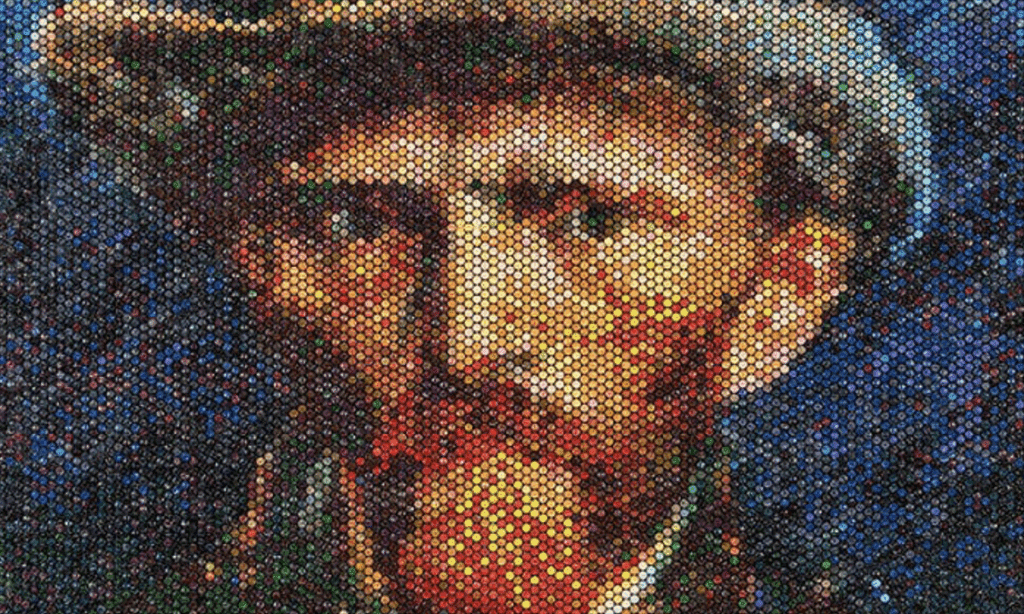
Bradley Hart takes bubble wrap to a whole new level with his unusual—and metaphorically repurposed—approach to art. He first stumbled upon the material in an unexpected way. While preparing for his first solo art exhibition in New York City, Hart noticed museum guards zealously warning visitors not to touch the art. In a playful response, he left a roll of bubble wrap at the show, inviting the urge to touch without harm.
From that spark of irony, Hart developed his signature process: injecting paint into each individual bubble. When the bubbles are popped on the reverse side, they transfer the paint onto a surface. This creates his pixelated, memory-filled portraits of important figures from his life. The method also transforms a mass-produced packaging material into delicate works of art. Hart’s commitment to sustainability is evident because he uses or recycles every bit of plastic and paint.
Classroom Ideas:
- Dialogue
Discuss how artists can repurpose everyday objects and materials that are usually discarded. Download the Everyday Objects Can Be Art Resource in FLEX Curriculum to spur intentional conversation. - Artmaking
Try a mini pixel-art project with the Pixel Art Characters Lesson Plan. Use bubble wrap as a painting tool that students can print or stamp with!
3. Everyday Materials (Vik Muniz)
If there’s one thing about Brazilian artist Vik Muniz, it’s that he can turn just about anything into an art material. While his large-scale masterpieces often use unconventional materials like chocolate syrup, tomato sauce, and even diamonds, Muniz always ensures the medium connects to something meaningful. His works carry powerful messages that spark conversation and create social awareness.
For example, Muniz spent three years in Rio de Janeiro, Brazil, to make his Pictures of Garbage series. He collaborated with the catadores, or waste pickers, who survive by collecting and selling recyclable materials. Through monumental portraits made entirely from garbage, he shed light on their livelihoods, the inequities they face, and the potential for art to drive social change.
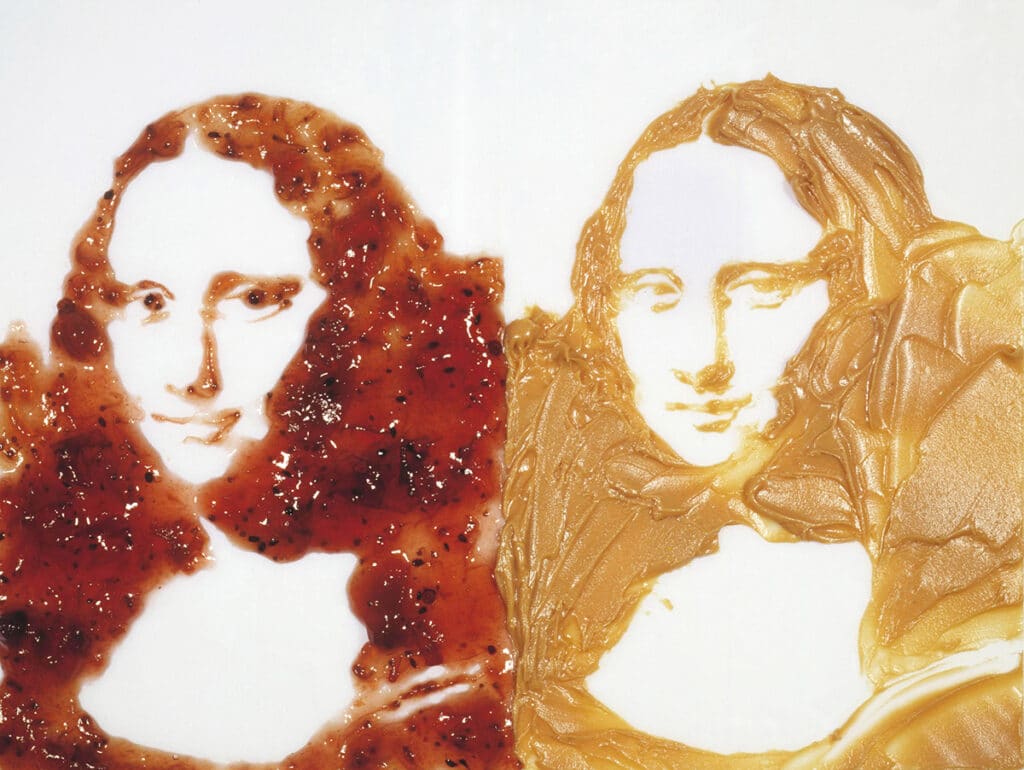
And while his 1999 Double Mona Lisa (part of the After Warhol series) may initially look like an oversized peanut butter and jelly sandwich version of the iconic painting, it’s far more than a humorous visual twist. This work reflects on consumer culture and the reinterpretation of cultural icons. By using a perishable medium like peanut butter and jelly, Muniz highlights the fleeting nature of the physical artwork, preserved only through the photograph that remains.
Classroom Ideas:
- Dialogue
Provide a few materials for students to brainstorm symbolic connections and meanings. For example, sugar can represent sweetness, and garbage can represent waste. Gain material ideas with the 50 Natural and Recycled Materials Resource in FLEX Curriculum. - Artmaking
Students choose an everyday material and create a work that connects to the material’s meaning. After, have your students write an Art Materials Reflection, also from FLEX.
4. Soap (Meekyoung Shin)
If you stumbled upon an ornate soap sculpture near a public bathroom sink, would you actually use it? For Korean artist Meekyoung Shin, that’s exactly the kind of question she hopes to spark. Soap has been her signature medium, offering a playful yet thought-provoking twist on artmaking.
Shin takes this everyday, practical material and transforms it. From grand, large-scale sculptures to intimate, functional works, like those in her Toilet Project, you’ll never look at soap the same way. In this ongoing series, she invites the public to wash their hands with her soap sculptures, making the gradual wear and tear an intentional part of the artwork’s evolution.
After months of use, these once-intact sculptures—now softened, shaped, and marked by countless interactions—have found their way into exhibitions, including Asia NOW at the Monnaie de Paris. The erosion becomes a kind of time capsule, echoing the way ancient sculptures survive into the 21st century, carrying traces of the lives and hands that touched them.

Classroom Ideas:
- Dialogue
Talk about the concept of impermanence in art and how some works are designed to change, alter, or wear away over time. - Artmaking
Provide bars of soap for students to carve simple reliefs. Use the FLEX Curriculum Resource, Soap Pattern Practice, for design planning.
5. Stuffed Animals (Mike Kelley)
We’ve all had a stuffed animal at some point in our lives, and we often remember them with a deep sense of nostalgia. Artist Mike Kelley tapped into that feeling in one of his exhibitions, where he arranged stuffed animals on blankets. After receiving an unexpected response from the public, Kelley decided to take the concept a step further.
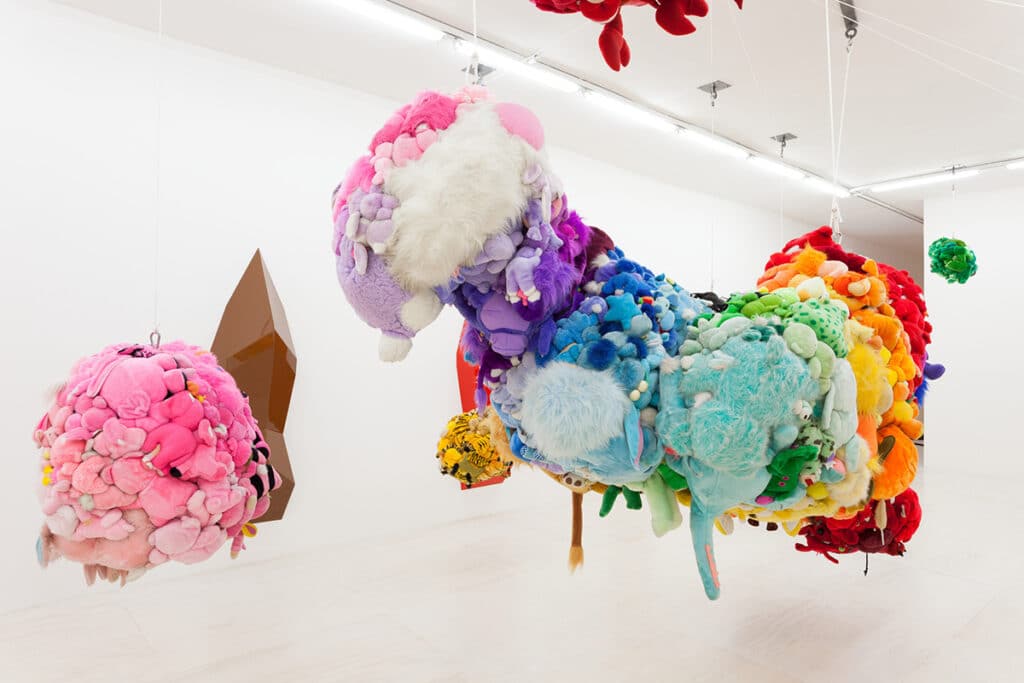
In his work Deodorized Central Mass Satellites, he deconstructed stuffed animals, stitched their faces together, and hung them from the ceiling. The exhibition featured 13 “stuffed animal satellites,” each spraying a different scent. While the plush toys naturally evoke nostalgia, Kelley added smell, which is a powerful trigger of memory, to deepen the experience.
Classroom Ideas:
- Dialogue
Write about a favorite memory, but break it down by the different senses. For instance, students will remember what they touched, smelled, and tasted. - Artmaking
Students bring in a childhood object, such as a toy, photo, or other knick-knack, to inspire a mixed-media work. Use the Five Senses Still Life Lesson Plan in FLEX Curriculum to guide the process.
6. Seashells (Anna Chan)
Originally a jewelry artist, Anna Chan discovered a new calling from the shore. Like many during the 2020 COVID-19 pandemic, she explored fresh creative outlets, often while taking her young daughter to the beach to collect colorful seashells. The shells are more than simple treasures and whimsical depictions of nature and wildlife. They send a powerful message raising awareness for endangered species.
She began treating the beach like her art supply store, carefully selecting shells and sand to repurpose into visual messages. Though she had long worked with metals, wax, stone, and clay as a jeweler, she found a deeper satisfaction in shaping sand and arranging seashells. Using sand as a sculptural base, she works by touch and intuition—an instinctive process fueled by her and her daughter’s shared love for nature.

Classroom Ideas:
- Dialogue
Discuss sustainability in art and how working with natural materials can change the way we value and protect the environment. Use FLEX Curriculum’s Types of Sustainability Resource to prompt critical thinking. - Artmaking
Go on an inspiration walk with your students to connect with nature. Collect organic objects like leaves, stones, and branches to arrange into a temporary artwork.
7. Tortillas (Joe Bravo)
Note: Adhere to your district and school’s food and allergy guidelines. If you notice a student who appears hungry or is experiencing food insecurity, promptly reach out to your administrator and professional school counselor to ensure the student receives support and resources.
Do you ever look at your morning breakfast taco and think, “I could make art out of this?” That’s exactly the thought that crossed Chicano artist and muralist Joe Bravo’s mind during a college painting assignment. Bravo didn’t have the means to buy a canvas, so he saw the breakfast tortilla in front of him as an opportunity to create.
Thirty years after turning in that assignment, the story still lingers in people’s minds. What began as a resourceful solution evolved into an artistic approach that tackles social and political narratives, often addressing Latino culture. Over the years, he has refined his process. From mastering details by timing the perfect flip on the stovetop to custom manufacturing 24-inch tortillas to discovering the right varnish to preserve his pieces, Bravo’s dedication to experimentation shows.

Classroom Ideas:
- Dialogue
Discuss how Bravo connects heritage and food through his choice of material. Brainstorm other surfaces that can be used as a canvas, including items from students’ cultural backgrounds. - Artmaking
Make symbolic paintings on paper “tortillas” using pre-cut circles. If available, you can also provide real tortillas! Use the Symbolism in Art resource from FLEX Curriculum.
8. Tires (Yong Ho Ji)
Korean artist Yong Ho Ji found inspiration in an unconventional material—tires. As a sculptor and 3D modeler, he recognized the potential in this widely used resource. After carefully designing and constructing a base for his sculptures, he layers strips of recycled tires to create large-scale animal figures. While his primary focus is on animals and predators, he also explores hybrid creatures, crafting between fantasy and reality. Tires are also a symbol to raise awareness about ecological issues, the ethics of genetic modification, and the impact of cultural waste.

Classroom Ideas:
- Dialogue
Describe the texture of his sculptures using descriptive language after watching the animated What is Texture? Video in FLEX Curriculum. - Artmaking
Design and draw a custom hybrid animal using an unconventional texture.
9. Food (Sandy Skoglund)
Note: Adhere to your district and school’s food and allergy guidelines. If you notice a student who appears hungry or is experiencing food insecurity, promptly reach out to your administrator and professional school counselor to ensure the student receives support and resources.
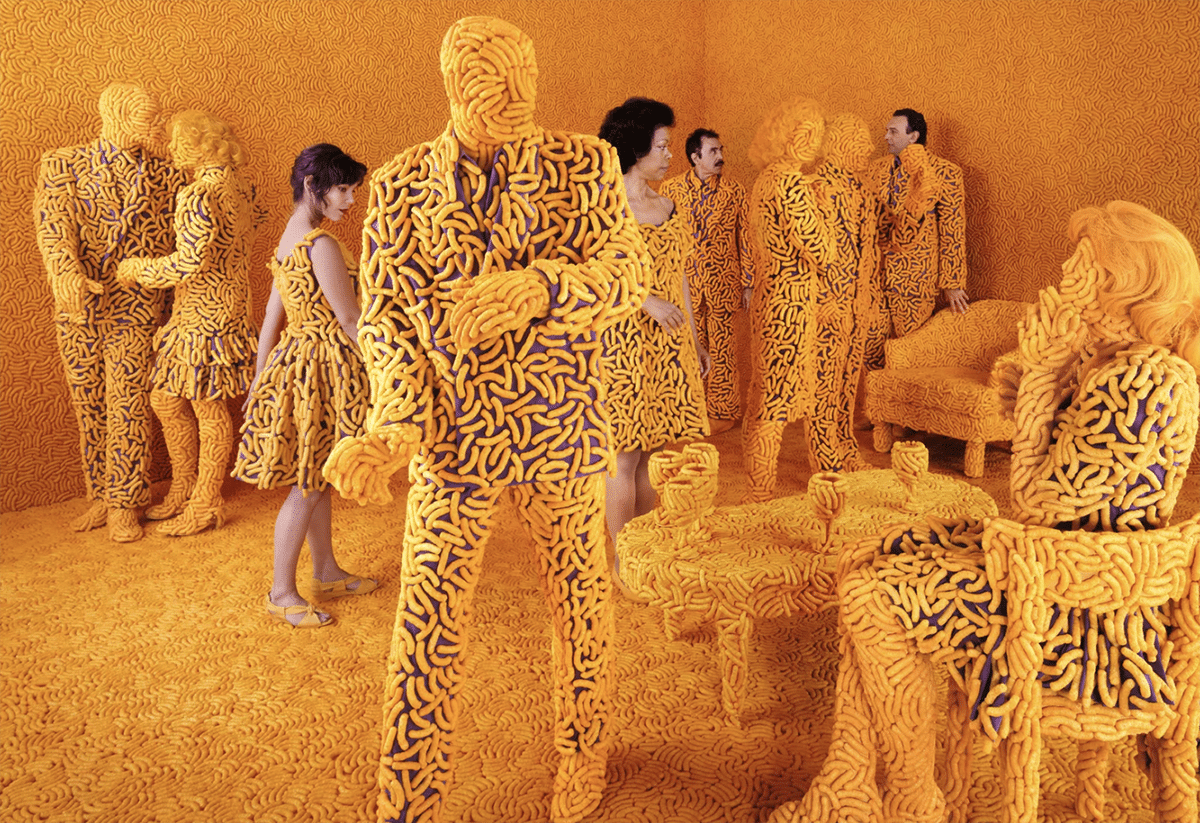
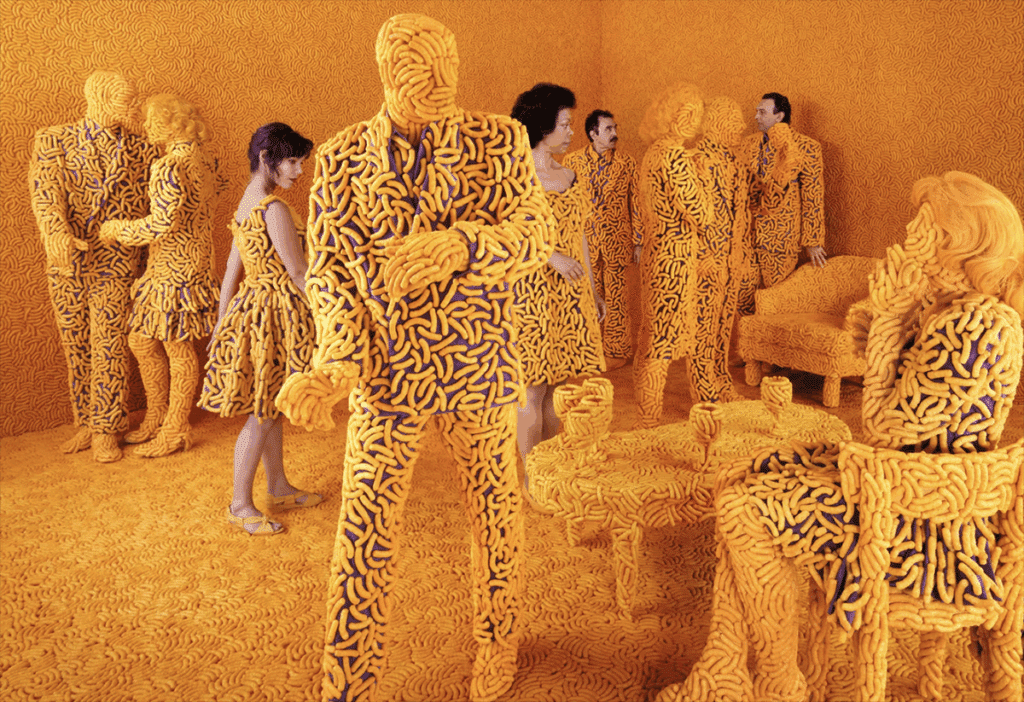
Sandy Skoglund is an American photographer known for her surreal and visually striking installations that feature unusual juxtapositions, repetition, and vibrant color. While her photographs often make viewers pause, her installations—like The Cocktail Party featuring cheese puff snacks—create a similarly captivating effect.
Skoglund also experiments with other unusual, everyday foods such as bacon, eggshells, and popcorn. These materials create a sense of familiarity and connection with the audience. Both her photography and installations share similar themes of repetition, color, and an open-ended invitation for the viewer to interpret the work in their own way.
Classroom Ideas:
- Dialogue
Read Skoglund’s artist bio in FLEX Curriculum. Then, chat about whether the final photograph or the photographed installation is the “real” artwork. - Artmaking
Do an artist remix! Students will take one of their artworks and upload it to an AI image generator. Using prompts, they will see what their artwork would look like, created out of an everyday food item.
As art teachers, we see opportunity in the world around us, and we want our students to see the potential in everything, too. These artists will not only surprise your students but also inspire them to consider unusual materials. In addition, they’ll think about deeper themes like cultural identity, sustainability, and nostalgia. By engaging with these materials and ideas, you’ll spur students to create artwork with greater meaning and purpose. Expand what’s possible and build stronger connections with these unexpected materials this year!
What are some unusual or unexpected materials you’ve seen in student artwork?
Share a student favorite artist we missed!
To chat about unusual art materials with other art teachers, join us in The Art of Ed Community!
Articles and podcasts are opinions of professional education contributors and do not necessarily represent the position of the Art of Education University (AOEU) or its academic offerings. Contributors use terms in the way they are most often talked about in the scope of their educational experiences.