
The longer you have been in the art classroom, the more you experience change. There are always new initiatives, new students, and new slang. No day, week, or school year is ever the same, and it can feel dizzying trying to keep up. We love teaching art, so how do we keep ourselves grounded in this ever-changing landscape?
Refresh your art history with the five artworks below—and gain tips to stay grounded as an art teacher.
Art history is invaluable when it comes to learning how to stay centered so your students can thrive. It doesn’t just provide content for your curriculum. Because art history is also history, it offers wisdom. See how artists work, communicate, and push boundaries to center yourself in the lessons they provide.
1. Tap into humor to keep having fun as an art teacher!
Rene Magritte’s work, The Treachery of Images, is a visual joke about expectation. Magritte paired a realistic painting of a pipe with the phrase, “Ceci n’est pas une pipe,” meaning “This is not a pipe.” It’s clever and mischievous because Magritte pairs a serious tone and style with a cheeky message. It’s a philosophical punchline that makes the viewer question what reality really is.
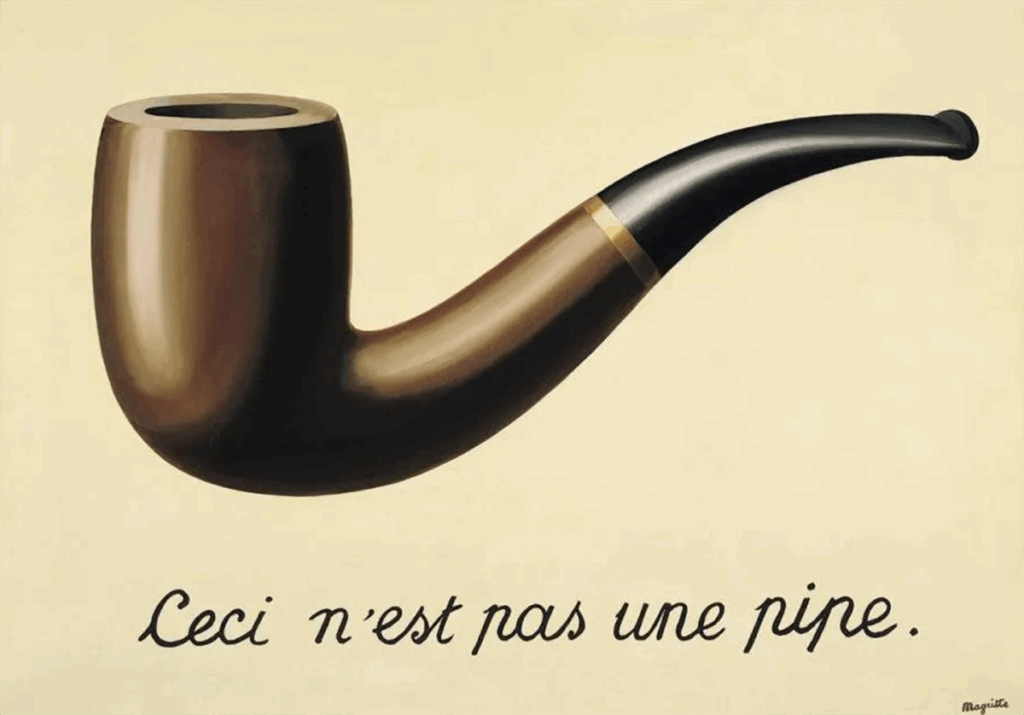
Magritte reminds us not to forget to have fun! You fell in love with art, and your love and humor will help students fall in love with art as well. Slow down and joke with your students. Connect what they are learning to everyday experiences to create a joyful environment. When students get comfortable, they’ll vocalize deeper wonderings and questions like Magritte, leading to more risk-taking in their art and lasting learning.
2. Lean into your individuality to make your teaching uniquely yours.
More than 7,000 figures make up the terracotta army from Qin Chi Huang’s mausoleum. Within each of these figures, there are distinct facial features, hairstyles, expressions, armor, clothing, posture, and body proportions. This feat reflects a cultural understanding that even within a whole, each individual has a unique presence, role, and story worth capturing.
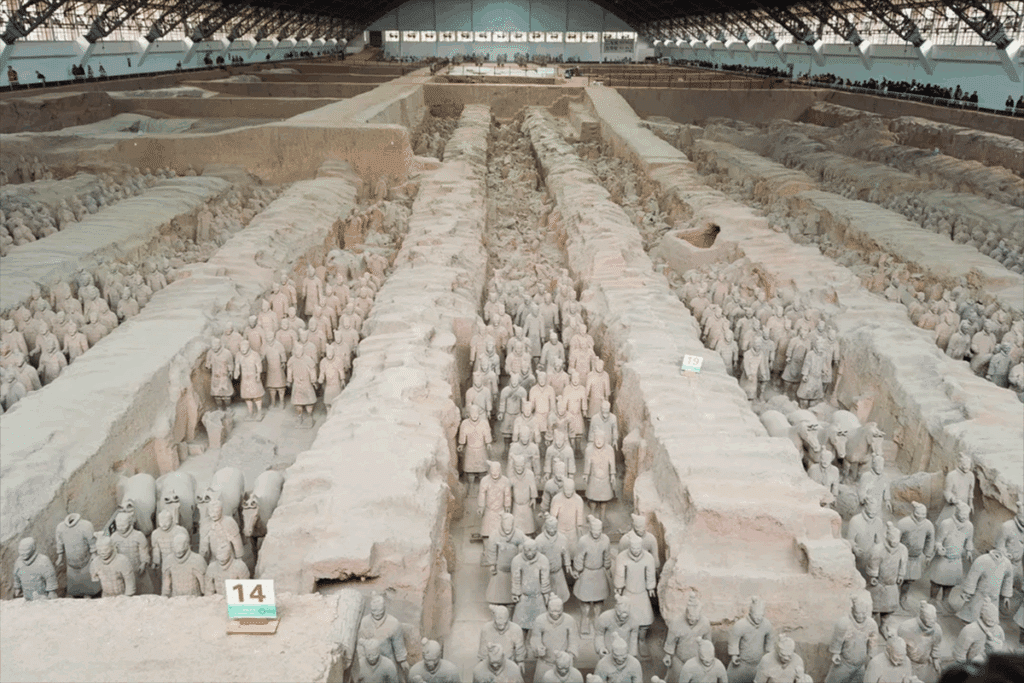
As the landscape of art education continues to evolve, it is important to stay connected to your own growth as an artist, educator, and person. Social media makes it so easy to compare our art rooms, student work, and teaching style to other art teachers. However, when you identify what you’re gifted at, who your favorite artists are, what art supply most excites you, and more, you gain peace and confidence.
Your students thrive when they know you’re being authentic, because it models for them what it looks like to be themselves. Students bring distinct personalities, preferences, and stories that deserve to be honored. You can support your students through intentional instructional choices so they can discover their individuality and grow into mature adults and creative artists.
Here are some practical ways to nurture your students’ individuality:
- Offer choice in subject matter.
Giving students options allows them to connect projects to their interests and experiences. They can expand their passions further and share them with others. - Provide options in materials or processes.
When students have space to explore what they like and dislike, or how to do something on their own, they become invested. This boosts ownership and problem-solving skills. - Encourage multiple solutions to the same prompt.
Open-ended assignments reinforce that there is no single “right” answer. This can take a load of pressure off, especially for students who think they need to depict things in a certain way. - Celebrate process and experimentation over perfection.
Focusing on growth, risk-taking, and reflection helps alleviate the burden of failure. Failure is an inevitable and valuable part of learning, and helps them discover who they are as people, students, and artists.
3. Respond with empathy to foster understanding.
Tracey Emin openly expresses vulnerability in I Want My Time With You. This giant public sculpture greatly contrasts with the deeply personal, emotional statement. This piece evokes yearning, longing, and a desire for connection, especially in a crowded environment, like a train station. Everyone knows what it’s like to miss someone or wish for more time with someone. Art draws us together in shared human experiences and reminds us that we are not alone.

While our roster each year will change, our students’ emotions and experiences will always be something we can connect with them on. Use art from others and artmaking opportunities to spark rich discussions that explore emotions. When students can identify emotions in artwork, it helps them recognize, express, and reflect on them in their own lives.
Here are tangible ways to explore emotion through art history and student artwork:
- Analyze emotional themes in historical artworks.
Ask students to identify emotions present in artworks from different time periods and cultures. Then, compare and contrast how similar feelings are visually expressed by various artists. - Use emotion-based prompts.
Invite students to create artwork inspired by an emotion (such as joy, fear, or longing) rather than a specific subject matter. Emphasize personal interpretation to encourage meaningful connections. - Connect student work to historical examples.
Pair studio projects with artists who conveyed emotion intentionally so students can see how other artists communicate feelings through visual language. Highlight artworks that express mixed or conflicting emotions to show that layered feelings are both normal and worthy of artistic exploration. - Incorporate reflection and discussion.
Encourage students to write or discuss the emotions behind their work. If rapport and the class climate allow, provide opportunities for students to share their reflections with others and listen to their peers’ thoughts.
4. Celebrate your growth as an artist and an educator!
After her divorce from Diego Rivera, Frida Kahlo painted this portrait, Two Fridas, showing two versions of herself. On one side, she appears wounded, and on the other, she looks empowered. Although her personal identity has been split and re-stitched, she is embracing these two versions of herself equally. It shows personal growth, resilience, and healing through her willingness to reconcile conflicting parts of herself.
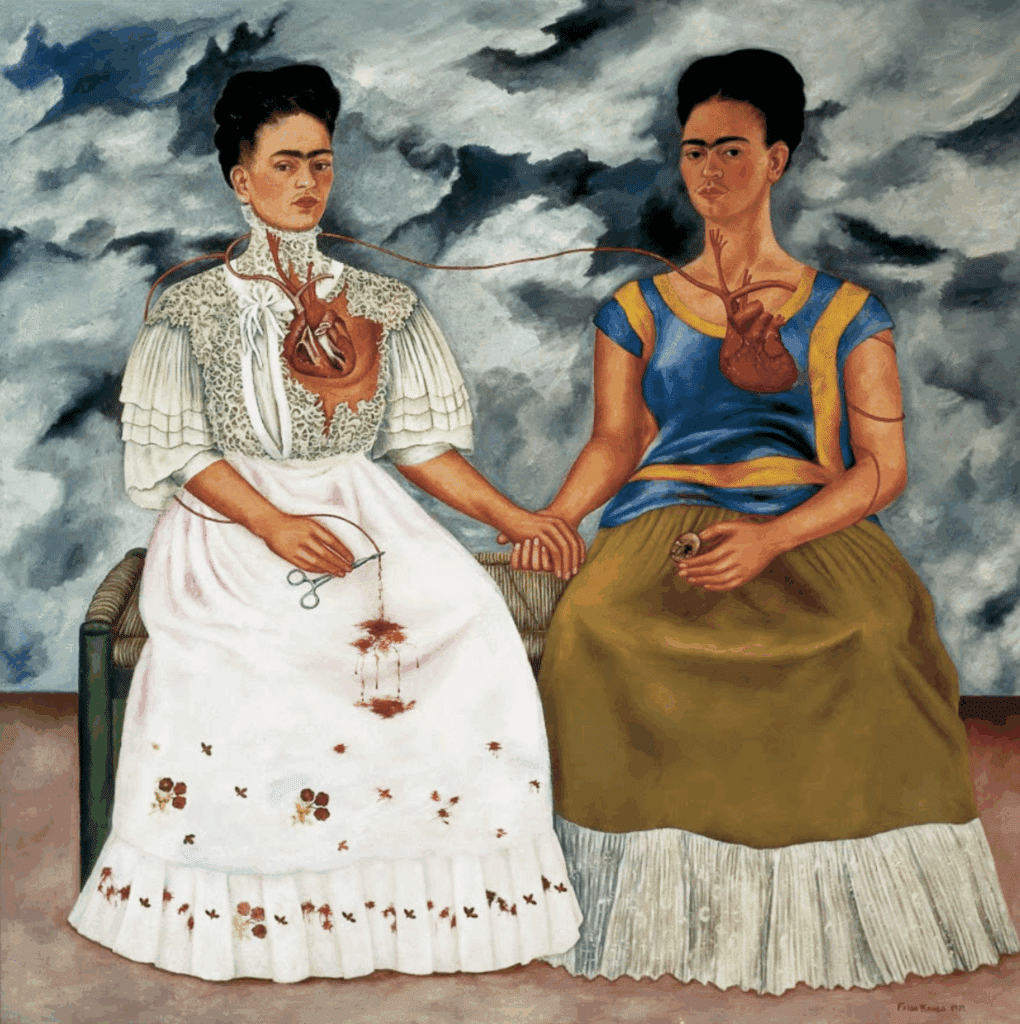
Reflect on where you started as a first-year art teacher and celebrate how you have grown to become who you are now. You’ve tried many teaching approaches, juggled different initiatives, curated an archive of resources and lessons, and decorated your art room. You’ve put the time, energy, and resources into many trials and errors to learn that professional and personal growth are rarely linear.
Like the dual figures in Kahlo’s self-portrait, you and your students hold multiple identities that merge together to shape who you are. For you, honoring multiple identities can look like noting each one: art teacher, lifelong learner, mentor, artist, sibling, and parent. Embrace balance by intentionally filling all of your buckets and celebrating when growth transcends them.
Support your students as they navigate their own growth. Make your encouragement loud as you celebrate their wins and affirm all stages (even the struggling ones!) of their artistic journey. In their artwork, require thumbnail sketches and multiple drafts to normalize the revision process. Provide activities to build their confidence and artistic voice.
5. Listen closely to your students to build respect.
In the painting The Banjo Lesson, Henry Ossawa Tanner depicts a heartwarming teaching moment. The man is attentive and responsive to the child, who is laser-focused on practicing a specific skill. The concentration of both figures indicates that learning is occurring for everyone through careful observation. This highlights how communication (especially listening) between teachers and students should flow both ways.

There are many ways to listen to students—even if they’re shy and not forthcoming with feedback. It may seem obvious, but ask them for their opinions! Ask about project ideas, behavior expectations, classroom decor, and your grading system. Allow multiple avenues for collecting answers, ranging from verbal to anonymous submission, to encourage honesty. You can also simply observe their reactions and engagement levels, and make adjustments accordingly. When students know you’re truly listening, mutual respect increases.
Art history offers a rich collection of lessons, especially for art teachers. It is filled with moments where artists model listening, growth, individuality, and many other qualities that lie at the heart of a grounded, student-centered art classroom. When engaging with art history, consider it not only as a chronological timeline, but as a record of approaches, ideas, and possibilities for your teaching practice and life.
Share your favorite artwork from art history and the lesson it taught you.
What tools keep you grounded in the ever-evolving world of art education?
To chat about lessons from art history with other art teachers, join us in The Art of Ed Community!
Magazine articles and podcasts are opinions of professional education contributors and do not necessarily represent the position of the Art of Education University (AOEU) or its academic offerings. Contributors use terms in the way they are most often talked about in the scope of their educational experiences.