
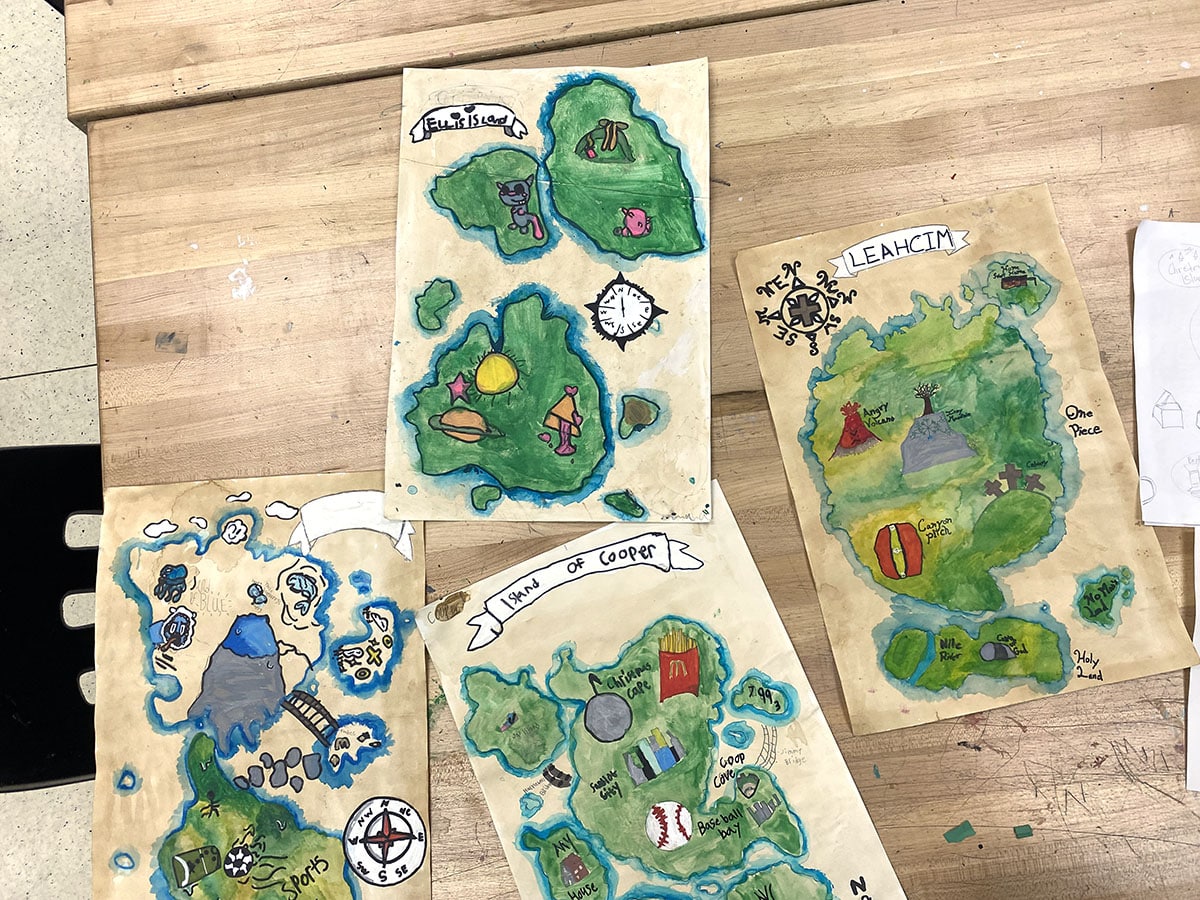
“Wow, he’s so talented! Some kids just have it.” We’ve all heard phrases like this from colleagues, administrators, and parents in reaction to our students’ artwork. It’s meant as a compliment, but it reveals a larger challenge in art education. The belief that “some kids are just talented” lingers quietly in art classrooms. It shows up when one student finishes confidently while another erases through their paper, hesitates as they look at their peers’ work, and then asks, “Is this good?” after every mark.
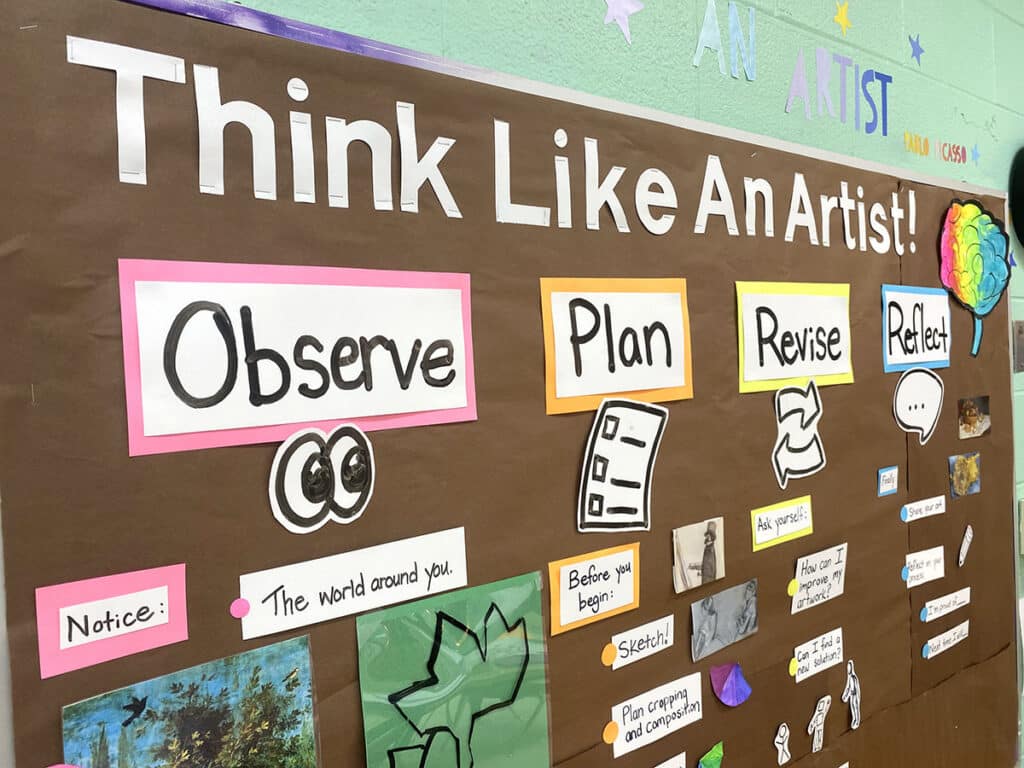
When we only display the final artwork, talent can look effortless. Students internalize the idea that “perfection” is the only thing that matters. The revisions, uncertainty, and cognitive work disappear. As teachers, we know artists make decisions, test ideas, abandon plans, and pivot constantly. All of the invisible work is where thinking and growth happen! Let’s make the process visible so we can celebrate learning and make it accessible for all students.
Make learning visible: dig into practical strategies to elevate process and effort over product and perfection in your art room.
Artmaking is a thinking process.
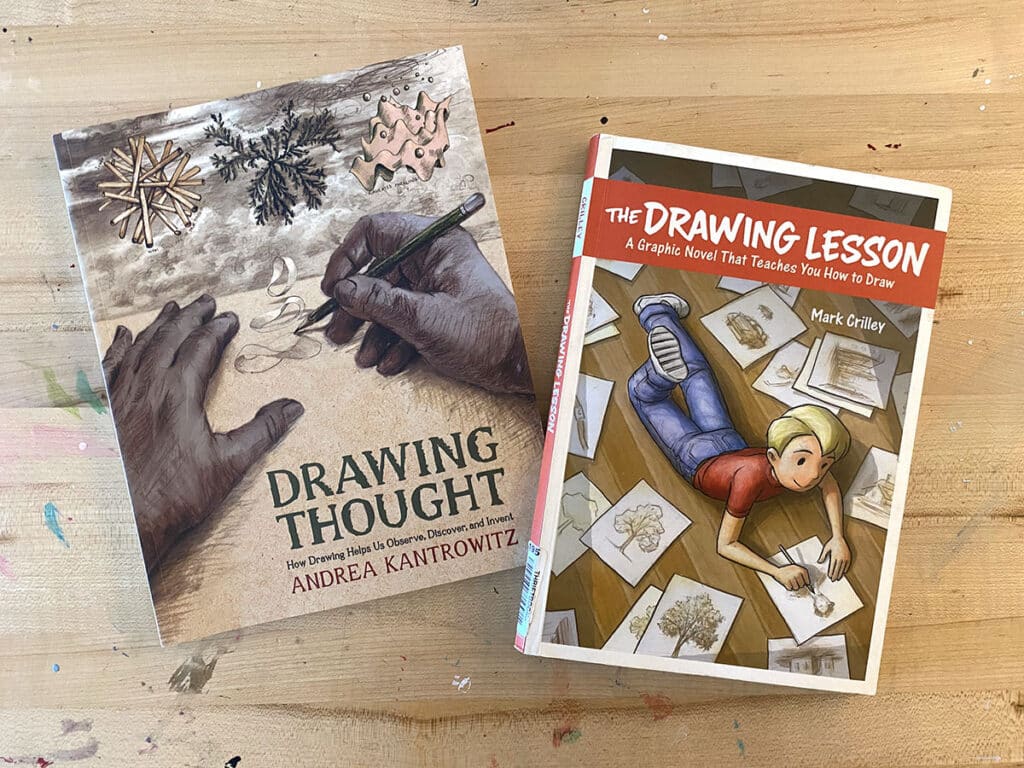
Every mark an artist makes represents a decision. In that sense, creating a drawing is less about decoration and more like solving a problem. Just as chess players rely on patterns and tested strategies, artists develop thinking habits that guide their choices on the page. Andrea Kantrowitz’s book, Drawing Thought, reframes drawing as a cognitive tool rather than merely a representational one.
Drawing is for EVERYONE… It’s not just a way of representing things that already exist… It’s a way of constructing ideas and observations…
In her study of several professional artists beginning from blank pages, she identified five consistent cognitive actions that appear regardless of style and materials:
- Locate: Plot placement of key elements.
- Extend: Create open-ended marks that indicate relationships.
- Connect: Link separate elements to form a larger whole.
- Reinforce: Refine, and add detail and emphasis.
- Revise: Evaluate the drawing as a whole and repeat any desired previous steps.
Making art is more than putting marks on paper; the process shows false starts, abandoned ideas, strategic changes, and hours of productive struggle. It’s a complex thinking pathway that shows remarkable consistency across individual artists and captures valuable artistic habits and art education outcomes, such as persistence, reflection, and revision.
Likewise, two nearly identical artworks can represent dramatically different learning processes. The final product shows what students made. It does not always show how they grew. If the learning remains invisible, it’s harder to teach and assess intentionally.
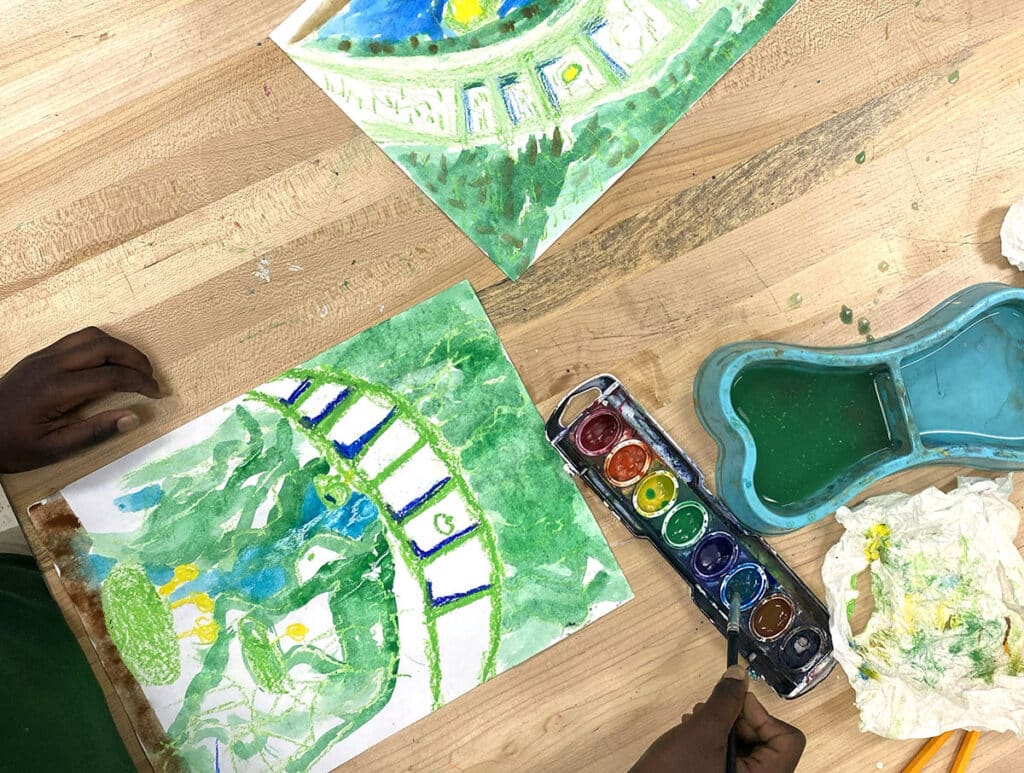
Who benefits most when thinking is visible?
Does the effort to explain, highlight, and celebrate the process really matter? It does! Especially when we think about equity in the art room. If we only celebrate polished results, the students who already feel confident or naturally skilled tend to shine. But when we make the process visible, we begin teaching in a way that reduces misunderstanding and opens the door for every student to succeed.
The real “magic” of artmaking isn’t effortless talent. It happens when time, work, and an understanding of the process come together. When students see how to make decisions and how artists think, they begin to see that improvement is attainable for them, too.
Visible learning especially helps:
- Students who lack confidence.
- English Language Learners.
- Students who believe they aren’t “artistic.”
- Students who rely heavily on teacher approval.
Strengthen your entire art program with visible learning.
Making learning visible doesn’t just benefit students—it’s also a powerful tool for advocacy. The cognitive work that goes on in the art room is often overlooked with the mentality that art is the fun class! While it is a fun class, it’s fun because it engages students’ brains in new ways. When others can see the thought, effort, and intellectual demands behind the artwork, everyone benefits.
When you display the process:
- Parents see growth, not just “pretty art.”
- Administrators see rigor and cognitive demand.
Show the process with:
- Revision photos alongside finished work.
- Student quotes describing decisions.
- QR codes linked to short reflections.
- Visible charts of thinking actions near art displays.
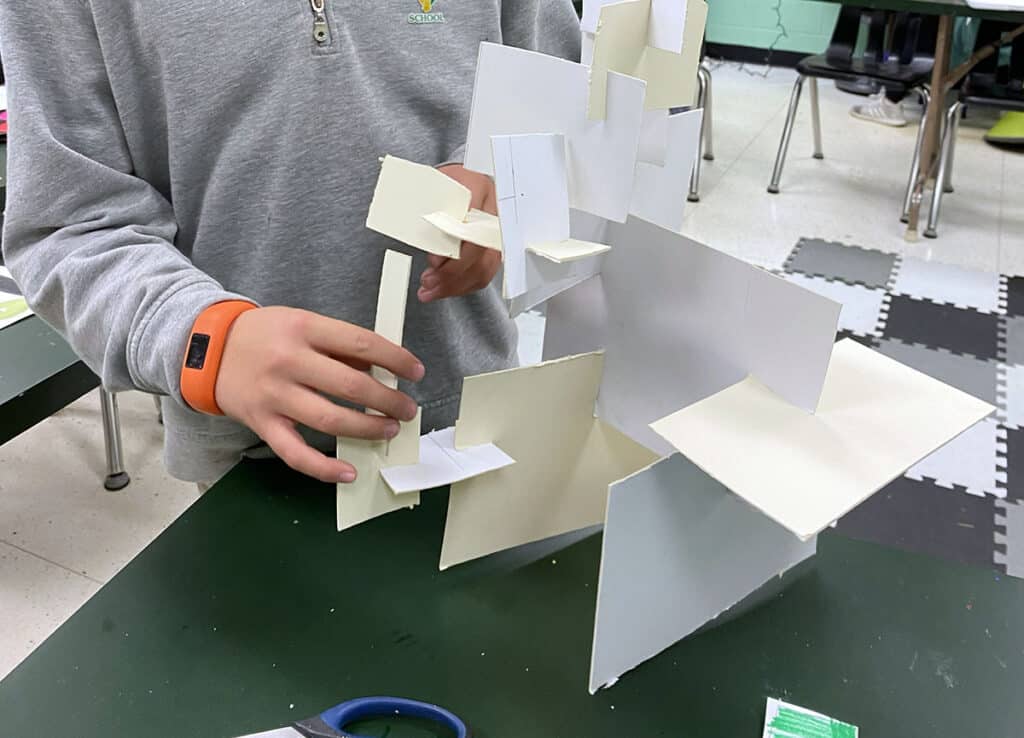
What changes when learning is visible?
Are there long-term benefits for students when we make invisible thinking visible? If learning how to make art truly builds neural pathways, do students change their habits, behavior, and approach to artmaking in the long term? While research in this field is ongoing, Harvard University’s Project Zero has some answers. Their project on Making Learning Visible generated a substantial pedagogical framework.
Research shows that when thinking is visible:
- Students revise more.
- Risk-taking increases.
- Speed no longer equals success.
- Feedback becomes actionable.
- Students shift from “Is this good?” to “What can I improve?”
- Students move from seeing themselves as “students in art class” to seeing themselves as artists.
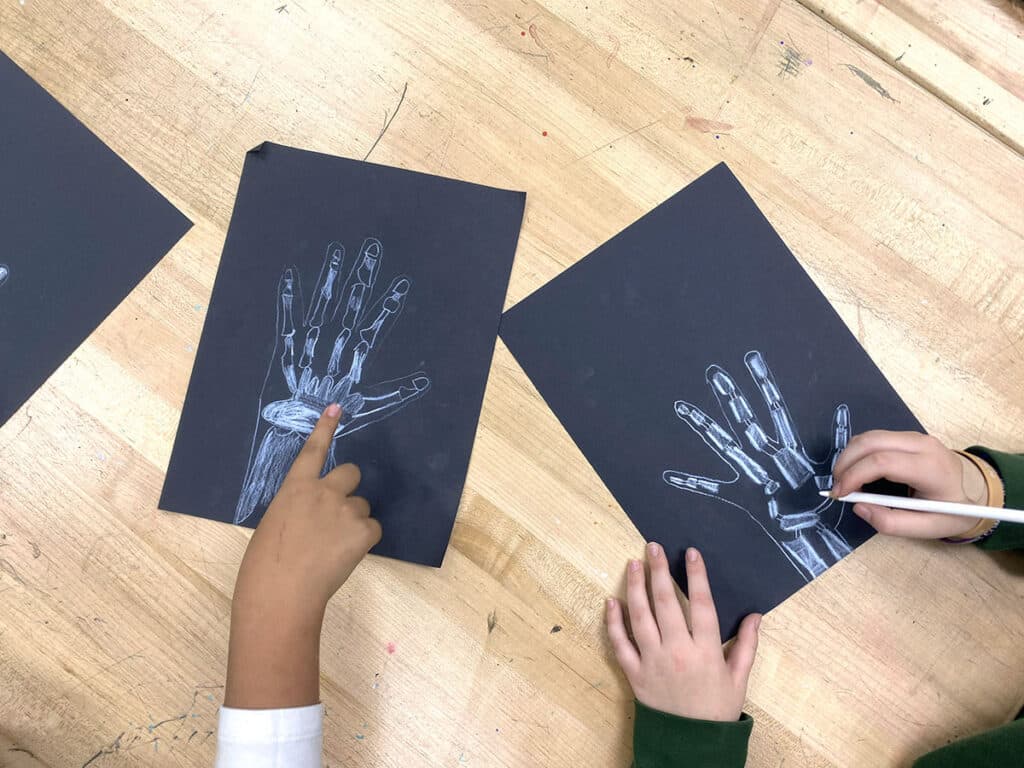
Try practical ways to make learning visible.
Because your students already do the work in your class, it doesn’t take much to make this visible for everyone else. Often, a simple shift in language or taking 30 seconds to share something with your wider team can make a world of difference!
However, if promoting change excites you and you are eager for more, be an active participant in art education research. Get involved with The Art of Education University’s Center for the Advancement of Art Education (CAAE) and use your insights to shape future practices.
Here are simple and sustainable strategies to try:
- Process Snapshots:
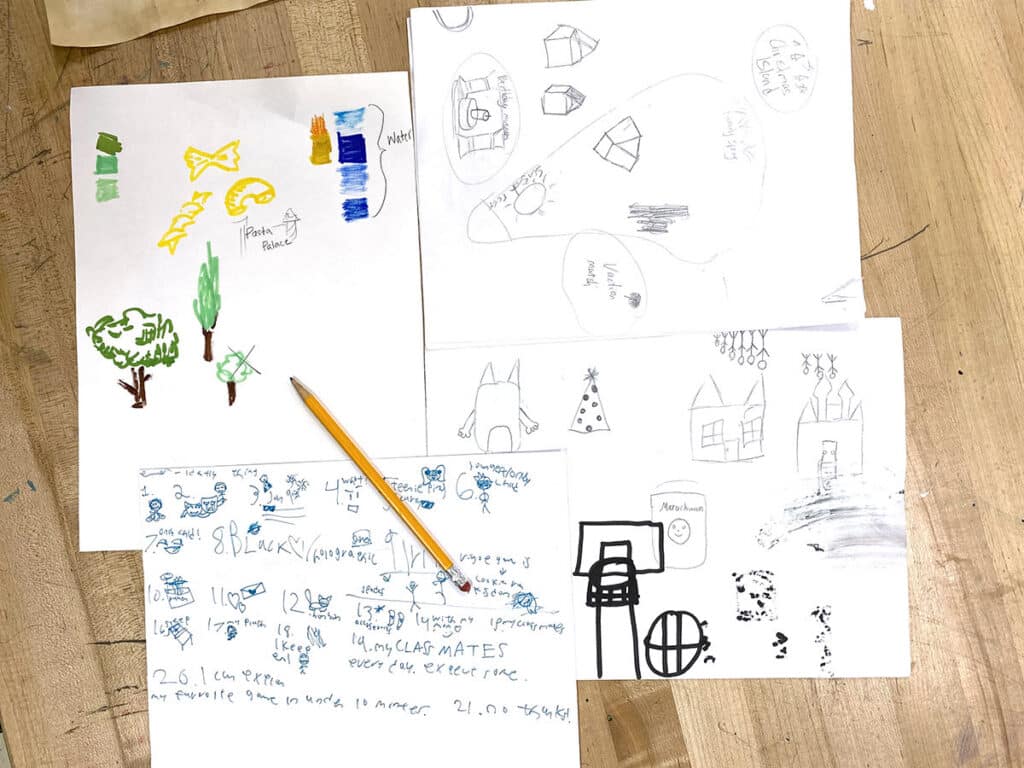
Once per semester, students photograph the beginning, middle, and end stages of their artwork. Write one sentence about what changed from each stage. - Process Artifacts:
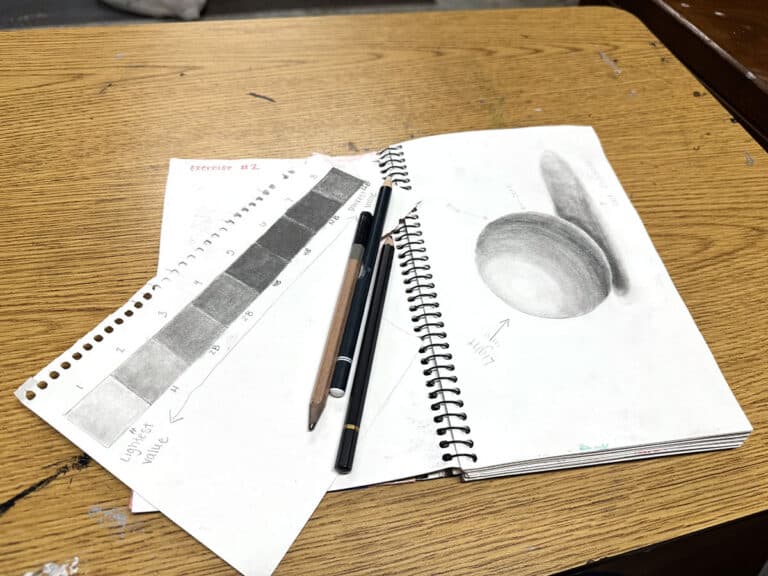
Students choose a sketch, color swatches, or thumbnail drawings to accompany their final pieces. - Process Charts:
Post visible thinking actions (like Locate, Extend, and Revise) and reference them during instruction. - Two-Minute Thinking Conferences:
During work time, ask, “What problem are you solving?” or “What did you revise?” - Decision Critique Tags:
Provide sticky notes labeled “I revised…” or “I changed…” and attach them to each artwork.
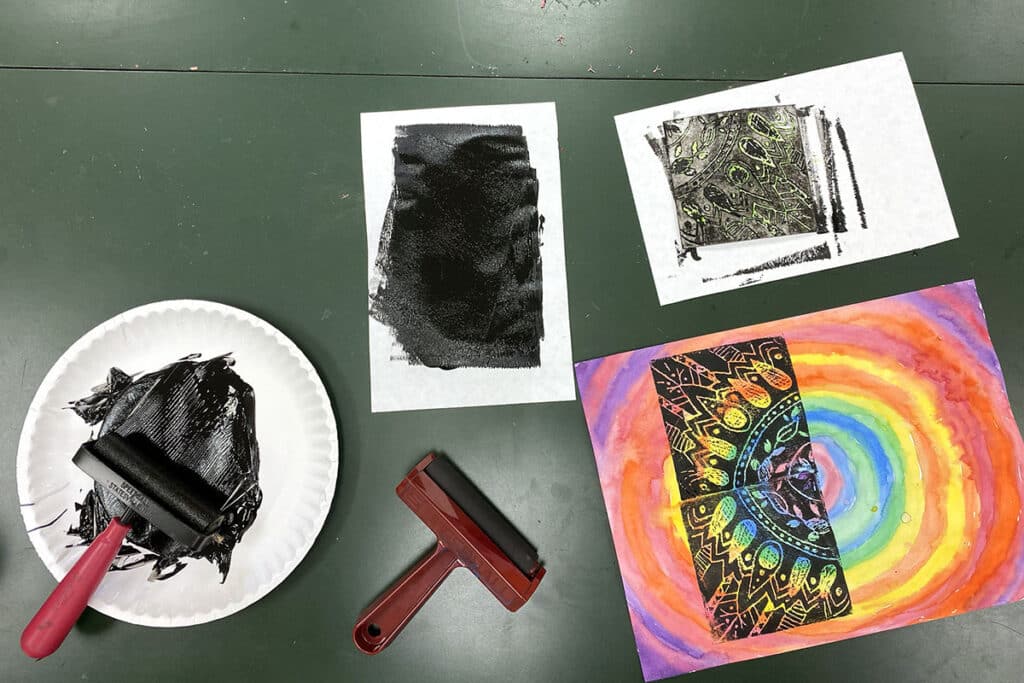
The artwork students create is only part of the story—it’s the visible result of a much deeper thinking process. When we intentionally highlight the decisions, revisions, and problem-solving, we shift the narrative from talent to growth. This helps all students see that creativity is attainable and reinforces to stakeholders the rigor of what we teach every day. As we elevate process over product, we empower students to take risks, reflect, and truly believe they are capable artists.
What is one small shift you will make tomorrow to make student thinking more visible?
How do you share your students’ thinking processes with others?
To chat about making learning visible with other art teachers, join us in The Art of Ed Community!
Magazine articles and podcasts are opinions of professional education contributors and do not necessarily represent the position of the Art of Education University (AOEU) or its academic offerings. Contributors use terms in the way they are most often talked about in the scope of their educational experiences.