
Flowers are one of the most familiar subjects in art, but also one of the most endlessly reinvented. They’re deeply rooted in culture, meaning, and art history for centuries. But what makes the flower such a powerful and lasting subject? Let’s take a look at old favorites, new friends, and contemporary art where flowers continue to have a big impact today. Find fresh entry points for teaching famous artists and motifs, all while empowering students to follow their artistic voice.
It’s time to bloom in the art room with flowers across traditional, global, and contemporary art history, and with 20 flower drawing prompts for all levels.
Revisiting Favorites
Waterlilies
We are all familiar with Claude Monet’s paintings, but did you know about his house and his move toward abstraction? Visit Monet’s garden online with your students. Monet didn’t just observe nature—he designed it. He worked with gardeners to create a vista where the garden, his bridge, the water, and the sky filled his view. Monet’s Giverny is an example of preserving an artist’s space to help us better understand the artistic process.
Eventually, his huge Waterlily series became his culminating work. Monet followed his artistic voice and developed his own way of seeing and painting the world. When faced with criticism, Monet responded by expanding his vision and “going big” in scale and ambition. Keep Monet in mind when you introduce abstraction or Color Field Painting.
Sunflowers
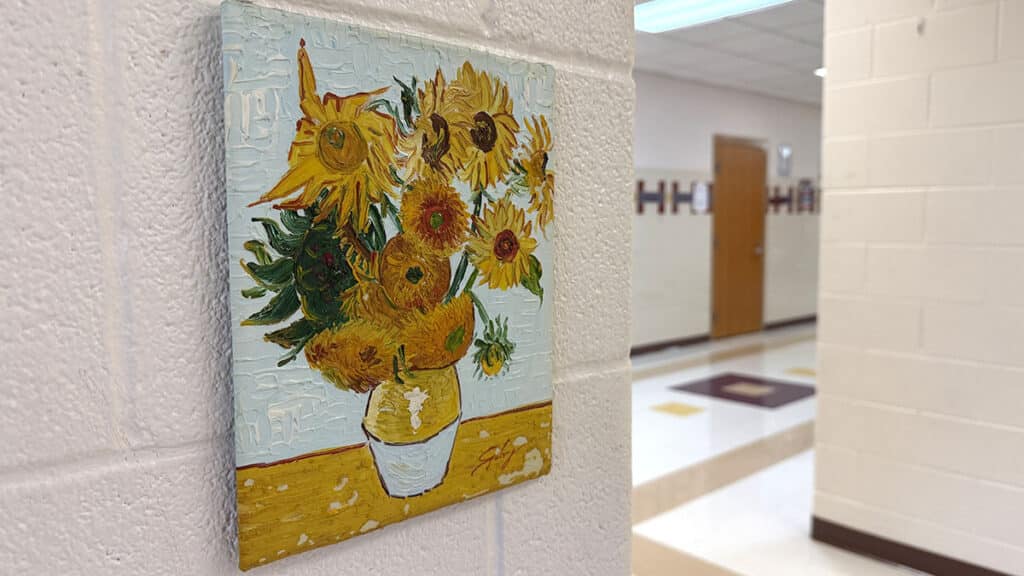
Review Vincent Van Gogh’s iconic Sunflowers series and Starry Night with your students, including his sketchbook process. Nature was a muse for Van Gogh, and he enjoyed doing observational drawings of flowers and trees. His letters to his brother Theo also include incredible drawings and explorations. Encourage students to keep an active drawing practice, observing from nature whenever possible.
Still Lifes
You probably know Jan ‘Velvet’ Brueghel and Van Rijn, but are you familiar with Rachel Ruysch and Clara Peters? As recent research, exhibitions, and books reveal, these artists were there all along, shaping the development of European art along with their male counterparts. While women were often not allowed to work in studios alongside men or to paint nudes, they could paint still lifes, flowers, and domestic interiors. Ruysch and Peters’ painted highly detailed floral still lifes for wealthy merchant households.
Explore gardens with these flower prompts:
- Draw an imaginary garden with a pond and water lilies.
- Draw the sky of Starry Night over your own flower field or garden.
- Draw flowers that feel like they are moving.
- Draw an overabundant vase of flowers, with insects on the petals.
Ideal Motifs
Tiles
The use of floral motifs in Islamic art is highly stylized across sacred and secular contexts, including calligraphy, ceramics, textiles, objects, and architecture. Inzik tiles from Turkey feature abstracted floral designs, embellished with flourishes and patterns. They’re a colorful tool to demonstrate abstraction, motif, pattern, repetition, and symmetry.
Architecture
To Frank Lloyd Wright, nature was essential to his architectural forms, from Falling Water to the Roby House. The focus on honoring natural landscapes was essential to the Prairie School style, named for the vast grasslands. The flower motif is integral to many of his homes, appearing in details like decorative tiles and stained glass.
Textiles
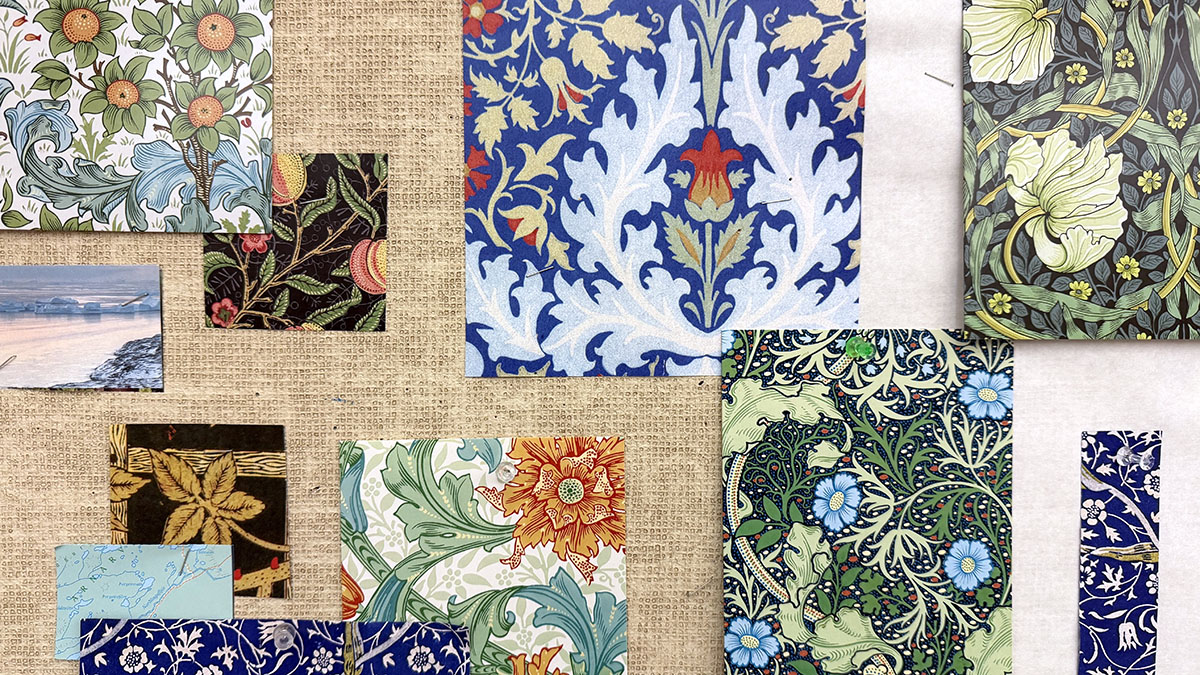
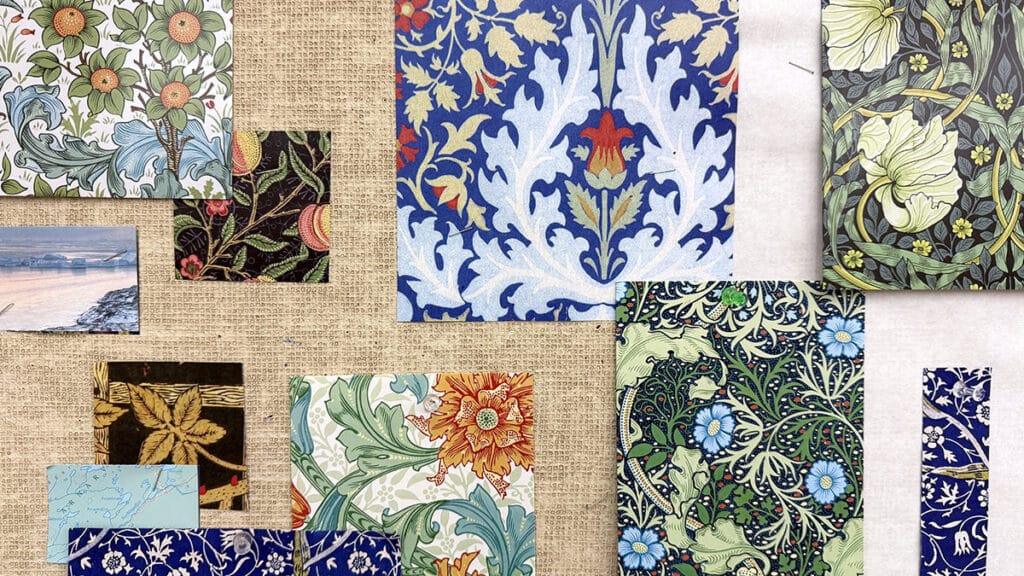
William Morris’ work is having a moment in today’s design world! Morris is known for his 20th-century textiles and wallpapers that depict highly organic yet complex floral motifs. He was a key designer in the Arts and Crafts Movement. A utopian idealist, Morris believed we should surround ourselves with handmade objects of beauty.
Explore motif and pattern with these flower prompts:
- Draw a repeating flower pattern to fill a circle.
- Draw flowers in a row.
- Draw a symmetrical vine covered with flowers.
- Draw a pattern using alternating flowers and leaves.
Symbolic Blooms
In Chinese art, flowers are much more than decoration. Flowers such as the crab apple, hibiscus, jasmine, and lotus carry symbolic meanings. For example, crab apples can represent good luck, hibiscus can represent wealth, jasmine can represent purity, and lotus can represent unity. The meanings are not set in stone, and they depend on context.
Because the symbols are fluid, they continue to fuel artistic expression today, shifting meaning over time. Contemporary artists such as Ah Xian, Li Long, and Lia Xiaofang use materials like porcelain and cloisonné in unexpected ways, honoring the past while experimenting with new forms and ideas. The exhibition Monstrous Beauty: A Feminist Revision of Chinoiserie at the Metropolitan Museum of Art invites curiosity about how European interpretations of Chinese art shaped ideas of femininity.
Explore symbols with these flower prompts:
- Draw your state, province, or national flower.
- Draw your birth month flower.
- Draw a piece of sports equipment, such as a soccer ball or skateboard, with a flower pattern.
- Draw a flower logo that reflects your own fictional company.
Flower Power
Peace
Enter Flower Thrower by Banksy. This iconic image shows a protester throwing flowers instead of a weapon, transforming an act of conflict into a gesture of peace and resistance. Banksy’s work uses flowers as a symbol to challenge ideas about violence and protest. It echoes earlier moments in history, including Marc Riboud’s famous photograph of a young protester holding a flower toward armed soldiers.
Climate Change
Rebecca Louise Law plants incredible installations all over the world using local communities to “scale up” her impact. Law organizes large groups of volunteers who grow, harvest, dry, and assemble flowers. Through careful planning, dedication, and a shared vision, everyone learns more about how consumerism affects the climate.
Politics
Diego Rivera harnessed the significant meaning of flowers in Mexican culture. While many of his Calla Lily paintings seem to glorify the flower and the hardworking sellers, The Flower Carrier hits differently. The flower vendor, bending under the weight of the flowers, also symbolizes Rivera’s political views on the unjust pressure placed on laborers.
Explore flower power with these flower drawing prompts:
- Draw a flower-covered heart.
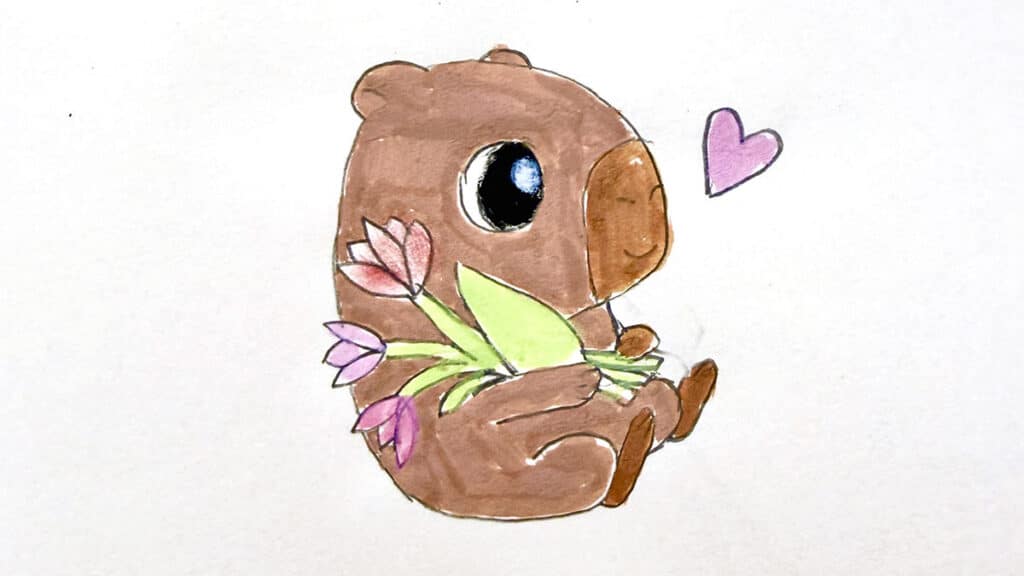
- Draw one animal holding flowers for peace.
- Draw a flower growing out of a sidewalk.
- Draw a flower-powered car.
Floral Obsession
Beauty
Benjamin Lanford creates rich digital prints of his lifelong obsession: flowers! His work combines large-scale digital prints stitched together on canvas. Lanford’s subject matter includes trees, flowers, and other aspects of nature, particularly in the Hudson Valley. He explores our perception of beauty and our experience of awe.
Appreciation
Georgia O’Keeffe’s flowers are an essential part of her legacy as a founder of abstract painting. She invited people to see flowers in new ways. She stated, “Still—in a way—nobody sees a flower—really—it is so small—we haven’t time—and to see takes time, like to have a friend takes time.”
Time
Contemporary artist Tiffanie Turner shows just how far you can take paper as an art form. Trained as an architect, Italian crepe paper spurred on her passion. Like O’Keefe, she obsesses over how people truly see things we take for granted. Her morphing flowers prompt conversations around how beauty fades and decays.
Explore scale and impact with these flower prompts:
- Draw as many details as you can in one flower.
- Draw a flower with personality.
- Draw a flower with superpowers.
- Draw a flower that is bigger than a house.
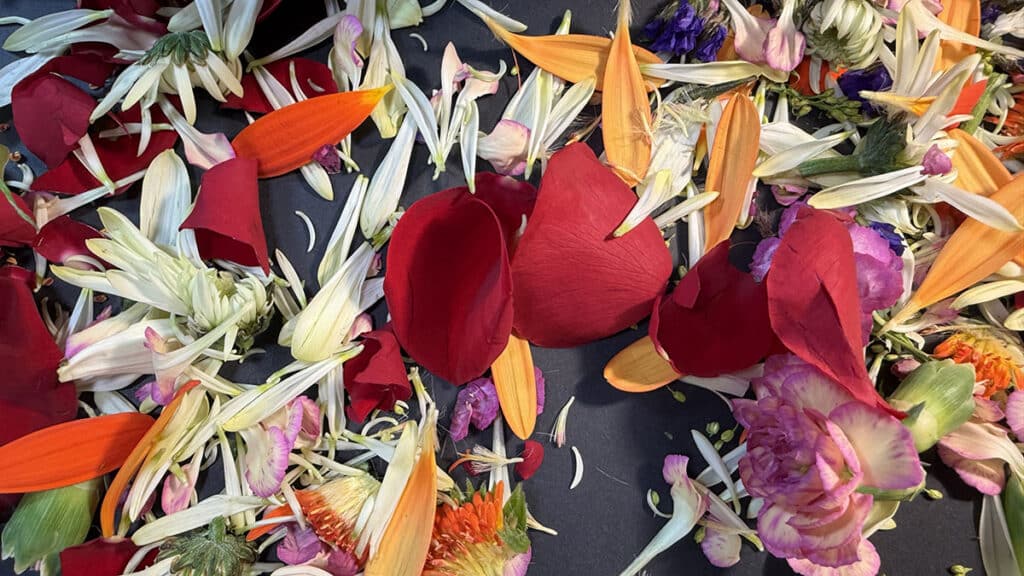
Flowers never go out of style in art because they are endlessly flexible, familiar, and full of possibility. Flowers have staying power! For students, flowers are more than something to copy from a vase. Instead, they are a springboard for thinking like an artist. Florals encourage students to slow down to observe, play with transformation, and turn simple forms into meaningful visual statements. Use flowers to invite curiosity, experimentation, and creativity to bloom at every level in your art room this spring.
How do you prompt students to look at an object or subject matter in fresh and varied ways?
What iconic floral artworks did we miss?
To chat about flowers in art history with other art teachers, join us in The Art of Ed Community!
Magazine articles and podcasts are opinions of professional education contributors and do not necessarily represent the position of the Art of Education University (AOEU) or its academic offerings. Contributors use terms in the way they are most often talked about in the scope of their educational experiences.