
If your school year is feeling stale and students are starting to look glazed over, try infusing funny art history stories in your current lessons. Laughter is the best way to breathe new life into learning! Plus, it’s a guaranteed way to hook their attention and make art history stick. Humor has a remarkable way of inviting curiosity, especially with a subject that often feels overly formal, like history. Use the stories and art project ideas below to make connections that feel human, relatable, and wonderfully silly!
Make humorous art history connections your students will enjoy with these six stories.
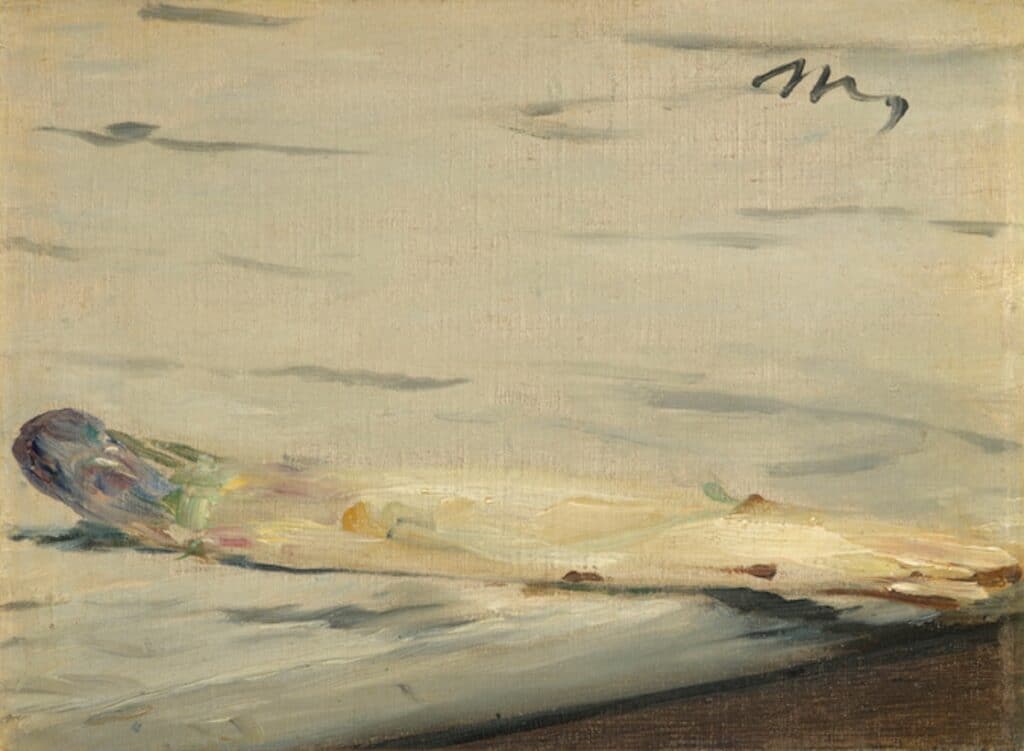
1. L’Asperge, Édouard Manet
Édouard Manet sold his painting A Bunch of Asparagus to Charles Ephrussi for 800 francs. But surprisingly, Ephrussi decided to pay Manet 1,000 francs! Manet, known for his little quips and pranks, decided he needed to even the scales. Manet thought Ephrussi needed an extra asparagus to make up for the 200 extra francs. So, Manet painted L’Asperge and sent it to Ephrussi with a note saying, “There was one missing from your bunch.”
Manet painted this work just for the pleasure of the joke. His approach to the piece was free and spontaneous, demonstrating his skill for capturing a subject quickly. Manet was known among friends for sending small, still-life paintings as gifts to show his affection.
Make connections by infusing this story into art lessons that:
- Turn art into a gift.
- Teach still-life drawing or painting.
- Fine-tune painting techniques.
Get back into an observational drawing practice with the Monochromatic Still Life Lesson from FLEX Curriculum. This project is perfect for students in grades 3-5 to learn about proportion, basic painting techniques, and monochromatic color schemes. Download the step-by-step plan that includes resources such as an animated video to introduce still lifes, the 10 Subjects for an Interesting Still Life anchor chart, and the Understanding Scale and Proportion reference sheet. Give this lesson a try—with some asparagus!
2. Love is in the Bin, Banksy
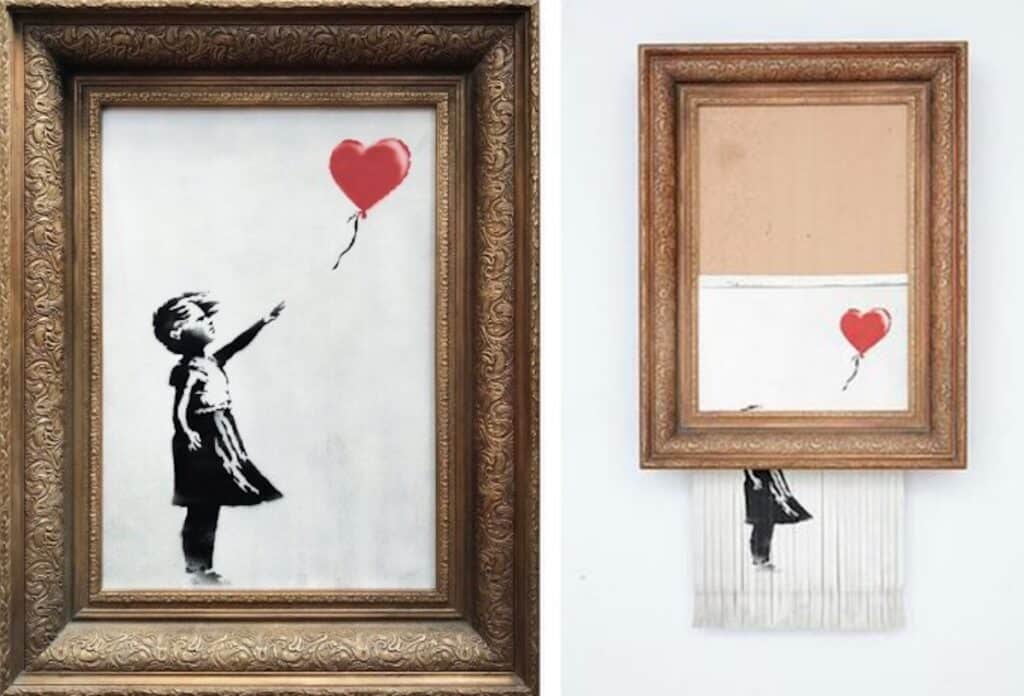
Banksy is a renowned English street artist known for his worldwide presence, satirical imagery, and art pranks. He has a distinctive stencil technique and often goes against the grain of the art world. In 2018, Banksy waited until his work Girl with a Balloon went to auction. Right when the gavel fell, the painting self-destructed!
Questions immediately began circulating as audience members in person and watching globally watched the self-destructing artwork. However, Banksy put those questions to rest in a single Instagram video, explaining his plans. He built a shredder into the frame to turn the artwork into a piece of live performance art. What a prank to pull over the whole art world!
Tell this story when you are doing an art lesson on:
- Stencil prints.
- Doodling and literacy.
- Street art.
One easy way to show Girl with a Balloon is to distribute the FLEX artist bio of Banksy. This student-facing handout includes an image of the aforementioned artwork, a short list of famous works, and a brief history. Download the resource immediately or bookmark it for later!
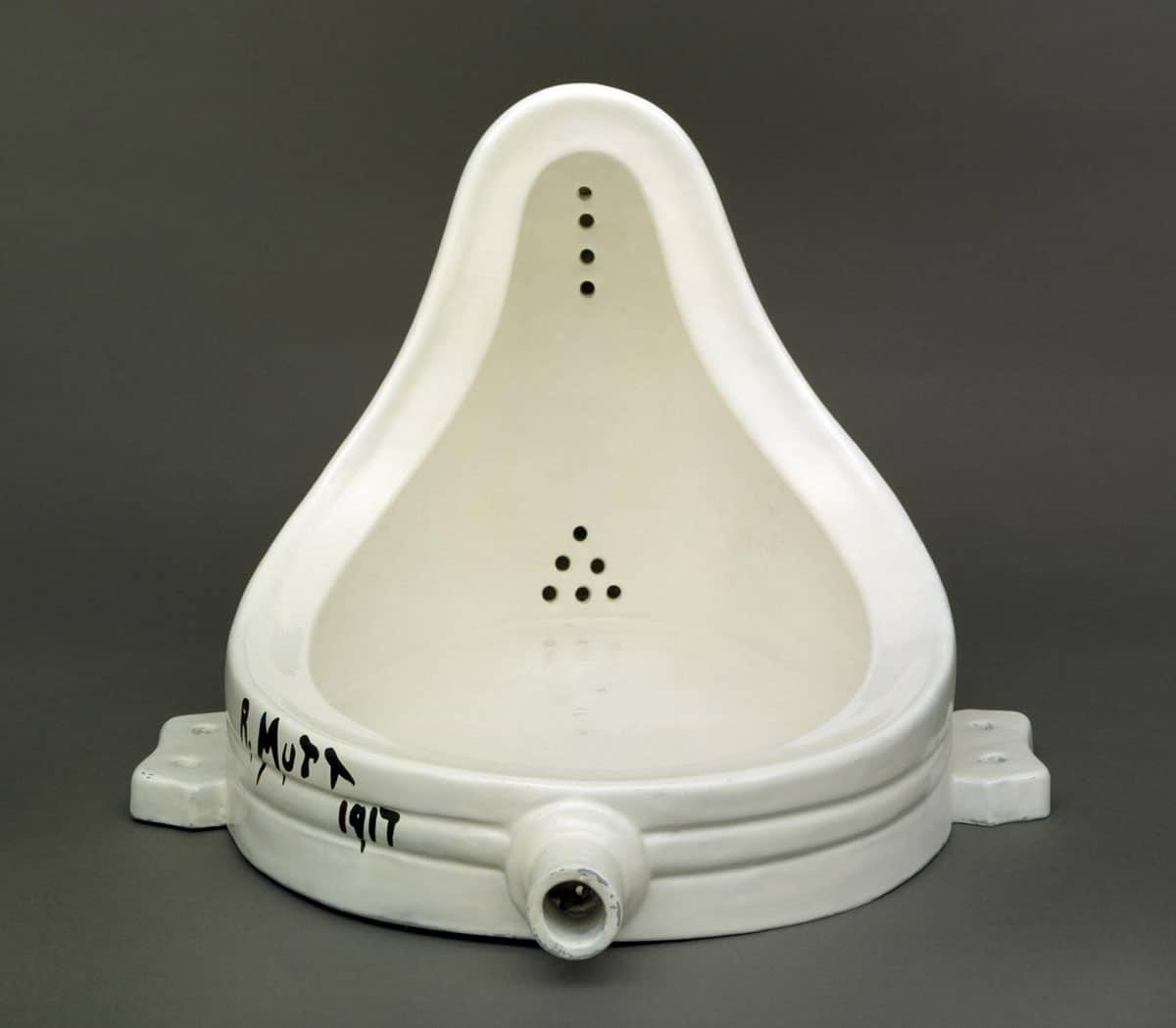
3. Fountain, Marcel Duchamp
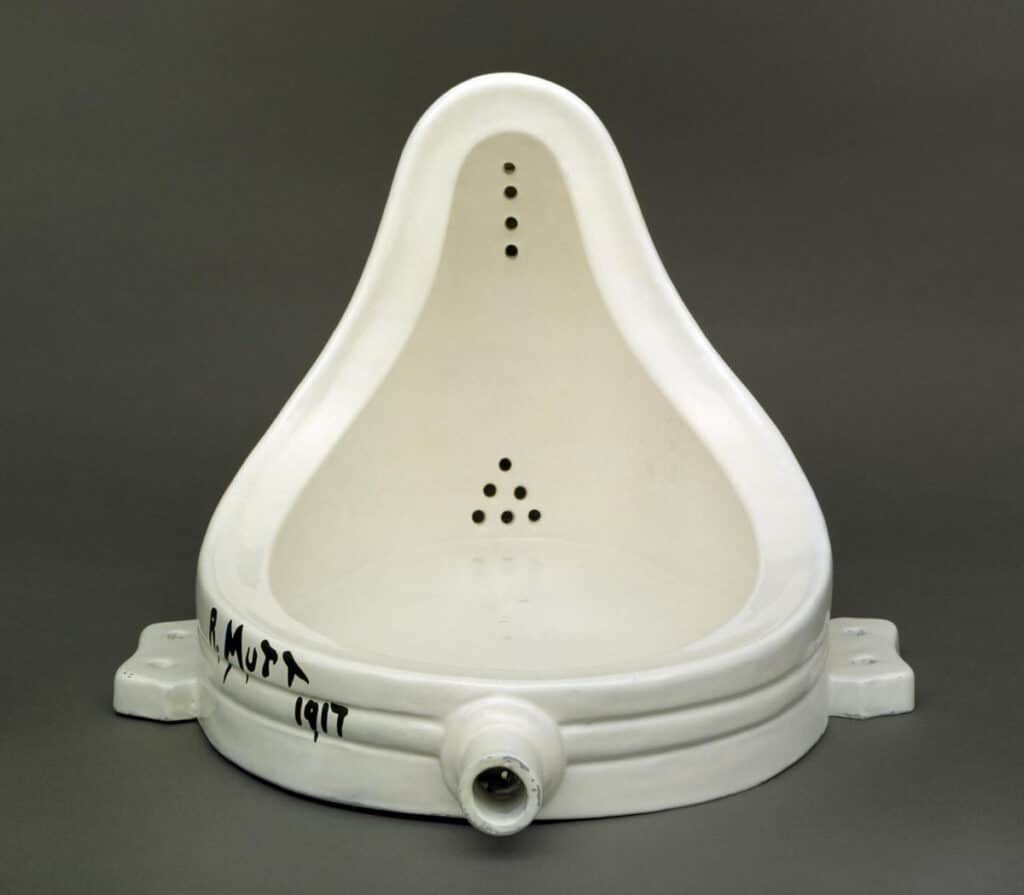
Marcel Duchamp is a French artist associated with Modern Art. He made huge contributions to 20th-century painting and sculpture. Duchamp’s goal was to make art the mind could appreciate, rather than solely the eyes, which led to the launch of Conceptual Art.
In 1917, Duchamp submitted what he called a Readymade sculpture for exhibition. He took a urinal, turned it on its side, and wrote, “R. Mutt 1917” in black paint. The Society of Independents (of which he was a member) organized and hosted this exhibit. They denied Duchamp’s entry, even though they encouraged all artists to participate. As a form of protest for the injustice, Duchamp resigned from the group.
Use this anecdote as an attention getter when you are doing an art lesson on:
- Art with everyday items, like fruit and veggie prints.
- Recycled sculpture.
- Aesthetics and the value of art.
Encourage students to push their own boundaries with the Opposite Ends Collage Lesson in FLEX Curriculum. Students will explore opposing themes through contrasting visual elements. Not only will they learn foundational collage concepts with resources like Collage Vocabulary, but they will also dig into deeper ideation with the Mind Mapping graphic organizer.
4. School of Athens, Raphael
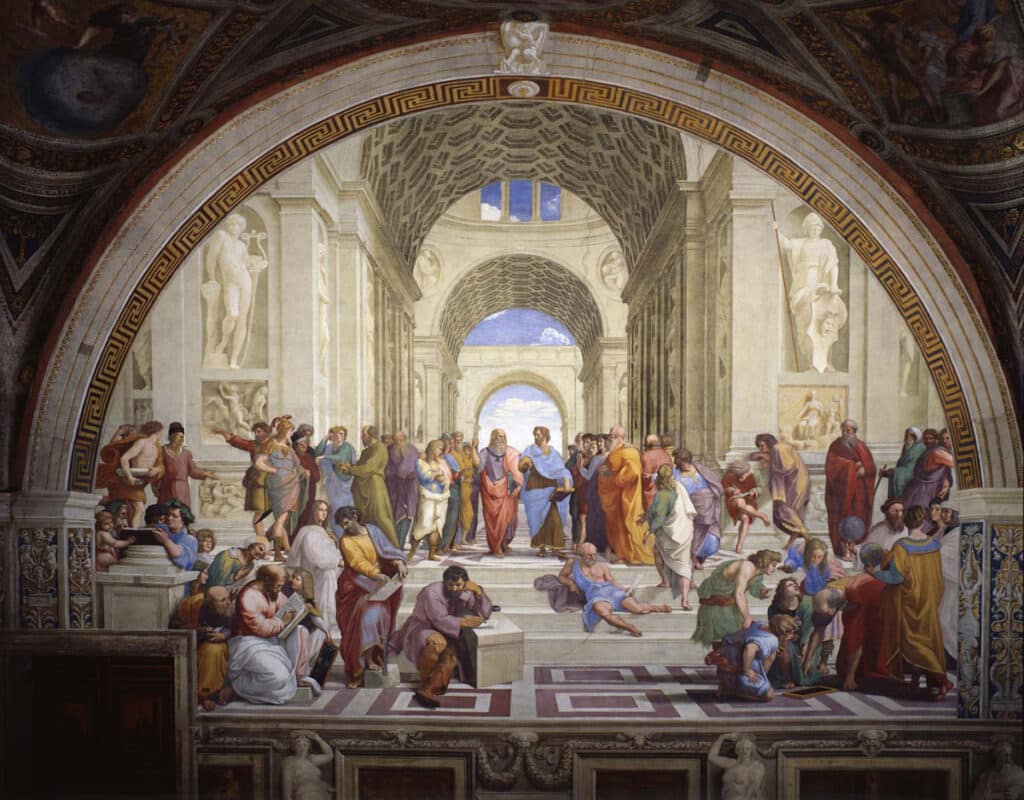
During the High Renaissance, Raphael painted the Raphael Rooms in the Vatican Palace in Rome. There are four frescoes in total, each displaying a different area of knowledge: Law, Theology, Poetry, and Philosophy. His Philosophy Room, The School of Athens, includes one of his most famous frescoes.
Raphael divides the composition into two. There are liberal arts scholars on the left studying the intangible, ideal, and theoretical, while math and sciences on the right focus on practical and empirical truth. The greatest minds throughout history, separated by generations, are all included in this fresco. Plato holds his book, Timaeus; Aristotle, his book, Nicomachean Ethics; and Diogenes relaxes on the stairs.
It all looks very grand, important, and intellectual. But, look closely because among the most brilliant minds from history, Raphael snuck himself into the painting! He portrays himself as very unassuming, hiding in the shadows. Did he want to cement his place in history among the geniuses?
Hunting for Raphael in the painting is a fun game for any art lesson on:
- Perspective or architecture.
- Figures and portraits.
- The Classics and traditional approaches to art.
Try one-point perspective without the pressure of figure drawing and portraiture with the Impressionism in Perspective Lesson in FLEX Curriculum. This 1-2 class period project invites students to create depth through perspective techniques and explore how brushwork impacts texture and mood. Notable resources include the What is Perspective? animated video for K-12 and the worksheet, Creating Depth in a Scene Using Perspective.
5. Self Portrait with Saskia, Rembrandt
In the age of superheroes and anime adventures, it’s fun to imagine yourself as different characters! Throughout history, people dreamed up different characters and played pretend. Rembrandt, an artist of the Dutch Golden Age, enjoyed playing dress up with his wife, Saskia. Rembrandt is rocking a historical plumed beret tilted at a jaunty angle. His outer layer is a spectacular fur-trimmed overcoat. Saskia is wearing an outdated, old-fashioned veil. Rembrandt produced around 75 self-portraits, showing himself in a variety of imagined roles, including a soldier in historic armor, a ragged beggar, a stylish courtier, and even a saint!
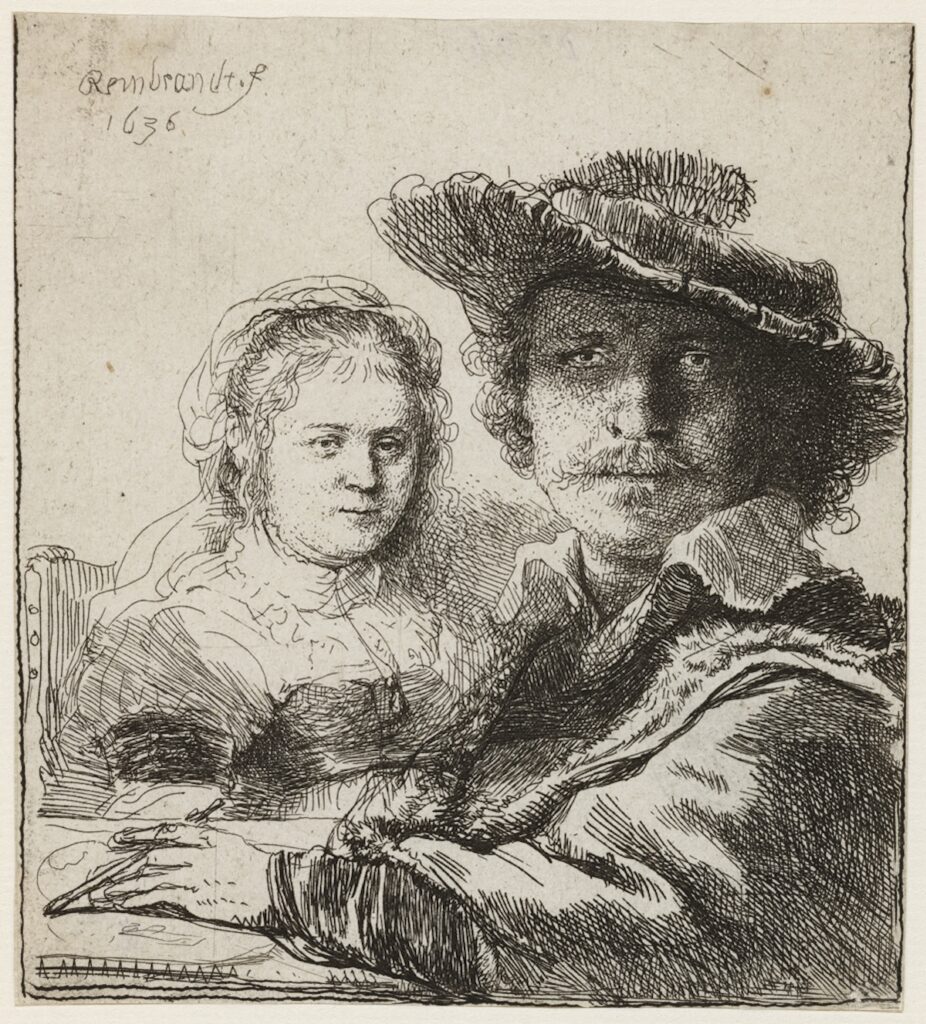
Show the many sides of Rembrandt with an art lesson about:
The Characters with Expression FLEX Lesson is a fun starting point for exploring how characters convey emotions. Students will design their own characters while demonstrating colored pencil techniques such as hatching, crosshatching, and burnishing. Meaningfully wrap up the unit with assessment resources such as Gallery Walk Basics and Gallery Walk and Critique Feedback.
6. Jowo Rinpoche
In the year 641, there was a Chinese princess named Wencheng Gongzhu. She was engaged to Emperor Songsten Gampo. A part of her wedding dowry (a gift to her fiancé) was a larger-than-life-size image of Buddha Shakyamuni. While there are many Buddha images today, this large example, known as Jowo Rinpoche, is particularly important in Tibet.
You can see Jowo Rinpoche today in the Jokhang Temple in Lhasa, Tibet. Centuries ago, during transportation, they dropped this very large, very heavy sculpture! It was so unbelievably difficult to pick the sculpture back up that they decided to just leave it there. It’s sitting on a throne of gold and jewels, surrounded by a temple they built around it.

This silly story about a too-heavy sculpture fuses perfectly with art lessons about:
- Historical figures.
- Artifacts and ancient works.
- Large-scale sculptures.
Bring large-scale sculptures to your youngest artists on a more manageable scale with the Sculpture Park Art Lesson in FLEX Curriculum. Students will discover digital sculpture parks and then create their own with found objects. Guide conversation with the Elementary Art Talk and Sculpture Art Talk reference sheets, and the What is Sculpture? animated video.
Humor reminds students that art—and the artists behind it—is full of personality. When you weave in these lighthearted stories, you’re not just teaching history, but you’re also building connections, curiosity, and confidence. Keep leaning into laughter to spark deeper engagement and retention long after the lesson ends.
What are other funny ways you capture students’ attention using art history?
What role does humor play in your teaching?
To chat about silly art history with other art teachers, join us in The Art of Ed Community!
Articles and podcasts are opinions of professional education contributors and do not necessarily represent the position of the Art of Education University (AOEU) or its academic offerings. Contributors use terms in the way they are most often talked about in the scope of their educational experiences.