
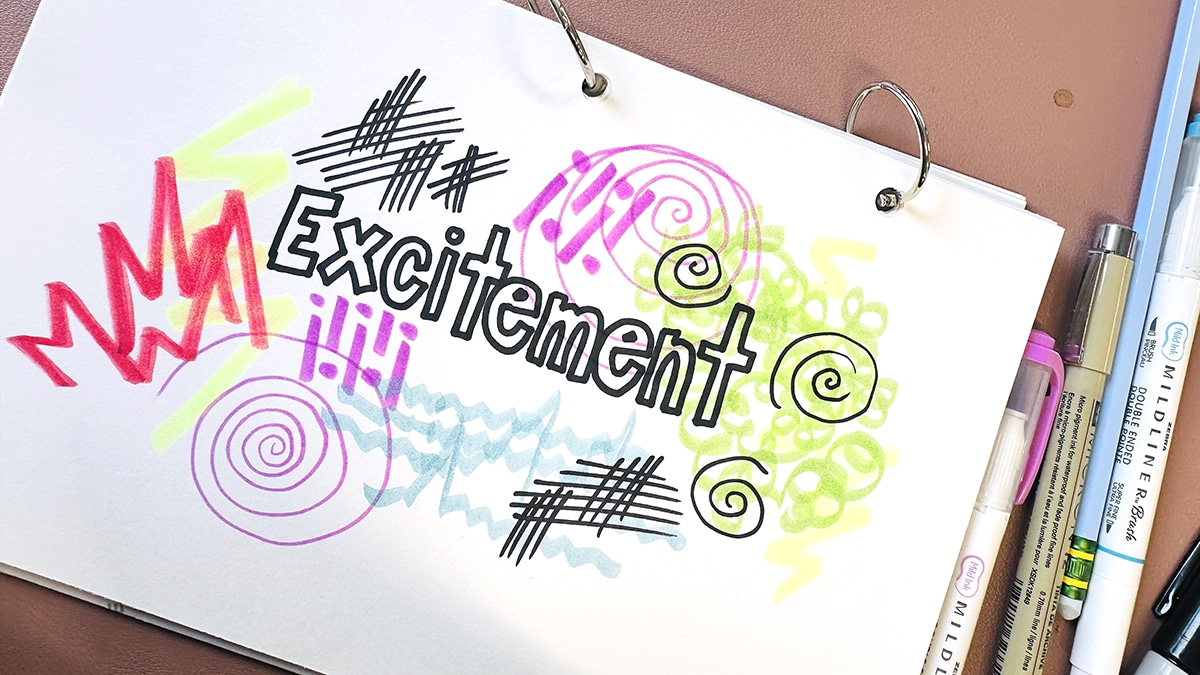
When we think about literacy, the first images that come to mind are often bookshelves, novels, essays, and students huddled over highlighters. But literacy isn’t only about text. At its heart, literacy is the ability to make meaning, process information, and communicate ideas effectively. In the art room, literacy comes alive in a surprising way through doodling. When students doodle during class, it doesn’t always mean they’re disengaged. Often, it can be a sign of deep thinking. Let’s explore how doodles can transform your art classroom through intentional activities and fascinating artists.
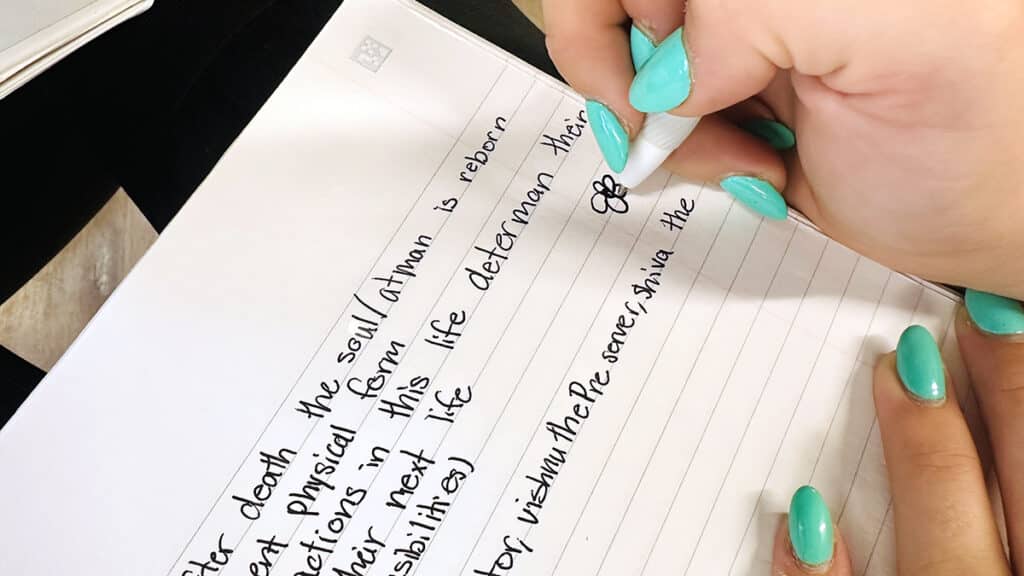
How is doodling a literacy superpower?
Doodles strengthen memory.
People who doodle while listening to information remember nearly 30% more than those who don’t. Why? According to psychologist Jackie Andrade in a 2009 study, doodling keeps the brain alert. Instead of zoning out, the brain maintains just enough activity to encode information. In the classroom, this means students sketching during a read-aloud or lecture are often more engaged than peers who sit still with “quiet hands.” Those margin flowers and zigzags aren’t distractions; they’re anchors!
Doodles improve comprehension.
Think about how much easier it is to remember directions with a map instead of only text. This is supported by Allan Paivio’s Dual Coding Theory, which suggests that people learn best when they combine words and visuals. Doodles function like a personal “map” of information and turn abstract language into concrete images.
Doodles connect text to emotion.
Doodles often carry emotional weight, which Neuroscientist Mary Helen Immordino-Yang says helps learning stick. Quick sketches of hearts, dramatic shading, bold marks, or playful icons can cement information by making it more meaningful. In practice, this can look like students sketching a stormy scribble when a story reaches conflict, or doodling stars next to a line that resonates with them personally.
Doodles activate the whole brain.
Doodling activates multiple regions of the brain at once, such as the areas involved in visual processing, motor skills, and executive function. In other words, doodling helps integrate how students see, feel, and think all at once. This integration is the very essence of literacy!
What are seven art room strategies that really work?
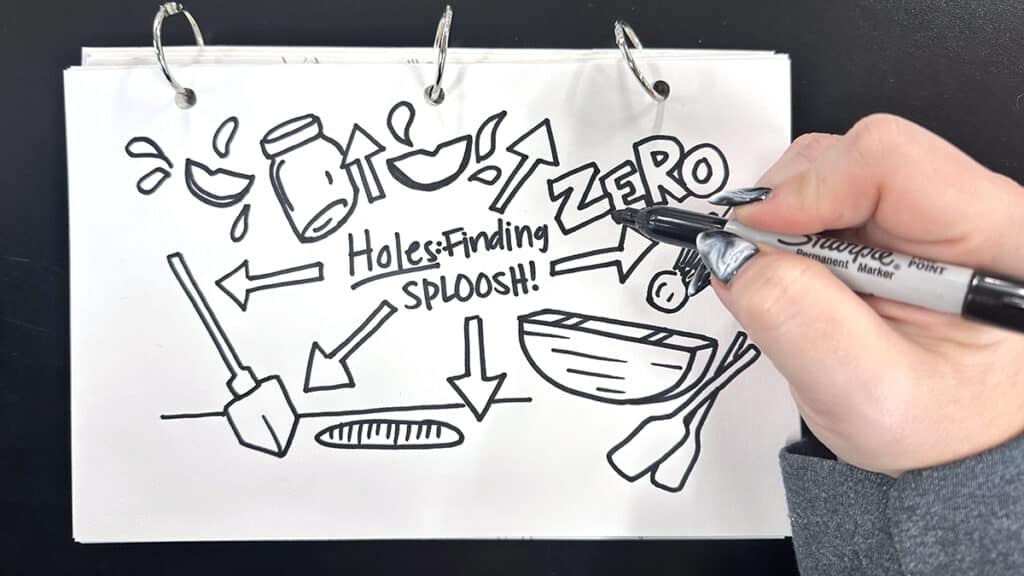
We know that doodling is more than just a relaxing activity—it makes learning any topic or content area more meaningful. However, knowing how to merge doodling with intentional activities in the art room can be a challenge. Let’s take a look at seven strategies and artists to move our doodlers beyond the margins into powerful meaning-makers.
1. Symbolic Illustrations
After a short reading, prompt students to create a doodle illustration in the style of Keith Haring. His iconic bold outlines and repeating symbols make drawing really approachable for students who may feel anxious. Encourage students to think of symbols that carry powerful messages to highlight key details. Add a “symbol key” where they can explain what each doodle means.
Literacy Connection:
Using map keys or legends allows students to practice interpreting symbols, make connections, and expand vocabulary.
2. Doodled Quilt Blocks
No matter what grade level you teach, all students enjoy a good picture book! Read one of Faith Ringgold’s books to your students and highlight how she combines text and image to create story quilts. If you have time, provide a prompt for students to compose their own short stories, too. Students design a doodled quilt block that illustrates a short written phrase, quote, or caption from the earlier story activity. Consider objects or icons to doodle that will best represent the main conflict, theme, or emotion. To display, put the doodled quilt blocks together physically or digitally to form a collaborative classroom story quilt.
Literacy Connection:
Synthesizing large sections of text into one image pushes students to distill the heart of a story and extract broad themes and ideas.
3. Interconnected Doodle Surfaces
Show students Mr. Doodle (Sam Cox)—and they’ll be hooked! Mr. Doodle fills entire surfaces with mesmerizing interconnected doodles. Cover a table or floor with butcher paper or bulletin board paper. Read a short story or FLEX artist bio aloud. In small groups, students will cover the whole paper with woven doodles as they listen. Include characters, settings, and major events in doodles that spiral out like a web or even cover the paper from side to side. Each group will quickly present their work to the class, using their doodles as prompts to retell key details.
Literacy Connection:
Students practice summarizing and sequencing by visually organizing a story’s elements.
4. Scribbled Feelings
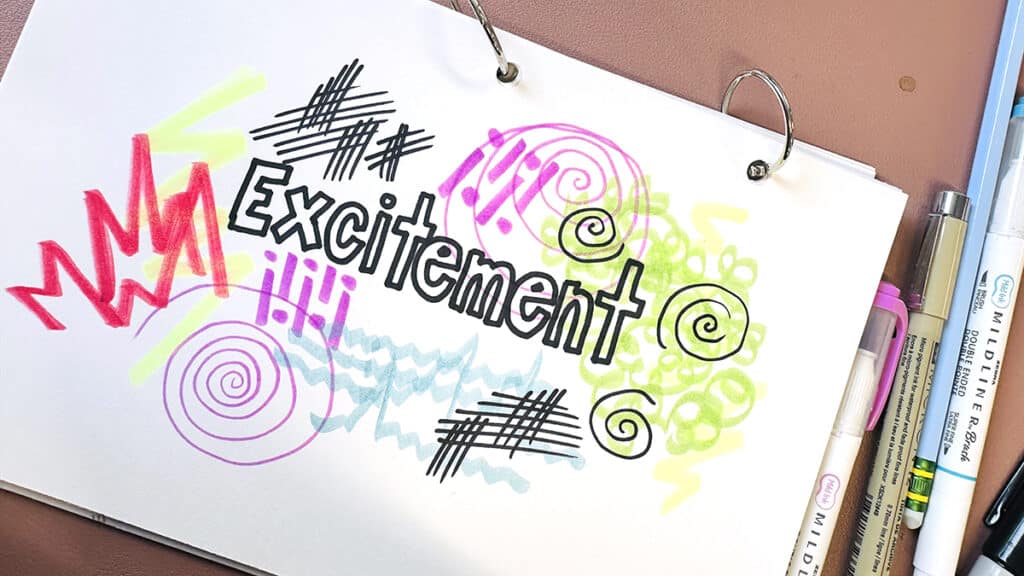
At our core, we all love scribbling because it’s freeing and satisfying. Cy Twombly’s recognizable scribbles blur the line between writing and drawing and turn markmaking into emotional language. Play a passage of an audiobook or read aloud a particularly emotional scene. Instead of writing, students respond with expressive marks—fast, chaotic lines, looping scribbles, or soft shading. Ask students to add one keyword or phrase from the text in or around their drawing. Compare several students’ doodles of the same passage. Discuss what emotions came through for them and how their marks captured them.
Literacy Connection:
This is great inference practice where students translate the text’s tone into a visual and emotional response.
5. Modeling the Messy
Break the ice with Lynda Barry, an artist known for celebrating “bad drawings.” While you or a student reads aloud, demonstrate how to doodle as you listen. Draw quick sketches of characters, underline or star words, and add arrows to show connections. Show students that it’s okay for doodles to be messy because it’s not about technical drawing skill but about processing information. Reiterate that doodling is more than drawing—it’s a tool to learn and remember. Then, invite students to doodle along with you in real time! Compare and contrast how everyone portrayed the same information.
Literacy Connection:
By modeling, you normalize doodling as a literacy tool and give students permission to think in images.
6. Picture-Poem Doodles
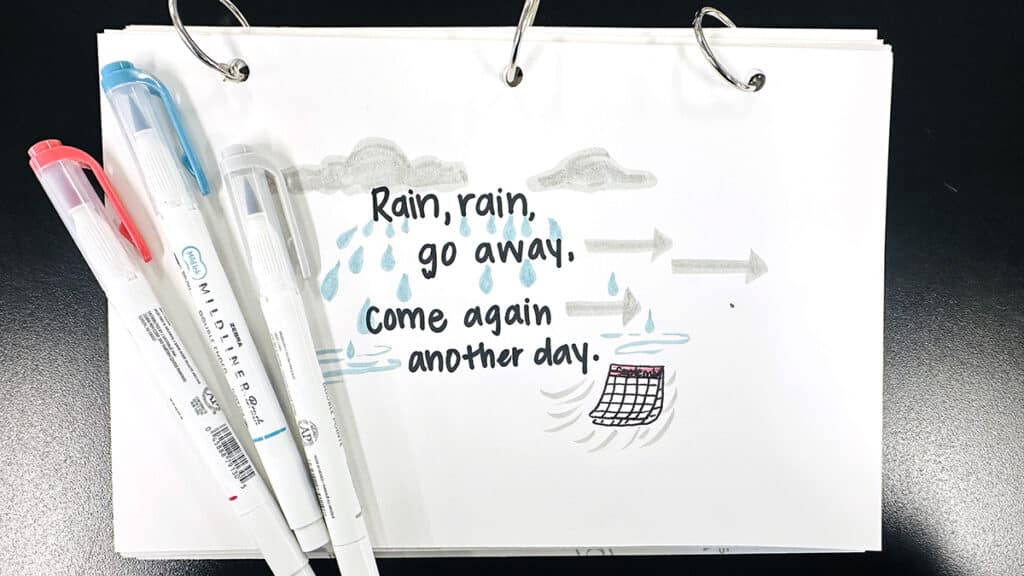
Choose a short poem or have students write their own. Instead of illustrating the poem literally, doodle around the poem and within the text to enhance the meaning. Students can also experiment with composition and shape. For example, a poem about rain can have droplet doodles falling from each line of text. Display the poems and host a fun poetry “open mic” day in lieu of a formal critique. A great poet and illustrator to incorporate is Shel Silverstein. His poetry and doodles show how word and image can amplify each other in a magical way.
Literacy Connection:
Students explore figurative language by adding symbolic doodles that deepen the poem’s message.
7. Visual Wordplay
A great brainstorming activity before a longer project or a quick activity to review art vocabulary is to play with words. Give students a single vocabulary word, theme, or phrase from a text, like freedom, identity, or conflict. Challenge them to doodle the word in a way that visually expresses its meaning. For example, they could fracture the letters and add a lot of negative space in between to convey conflict. Bring in Saul Steinberg, who is famous for turning words into whimsical drawings and doodles into surreal commentaries. For older students, tie in propaganda posters, memes, or street art, all forms of wordplay they see every day!
Literacy Connection:
This reinforces vocabulary through both visual and textual representation, prompting students to make more meaningful connections.
Doodling is more than an idle distraction—it’s literacy in action! When students doodle, they translate and connect text to memory, imagery, and emotion. This transforms reading information into something much more meaningful. Reframe doodling not just as a side activity, but as a central tool for teaching literacy. Bring in artists who doodle in unique ways and try activities to level up ideation, record information, create deeper connections, and have fun! Celebrate all kinds of literacy by encouraging students to doodle their way through stories to make sense of the world around them.
Who is your favorite artist who doodles?
Which doodling activity are you excited to try this semester?
To chat about doodling and literacy with other art teachers, join us in The Art of Ed Community!
Magazine articles and podcasts are opinions of professional education contributors and do not necessarily represent the position of the Art of Education University (AOEU) or its academic offerings. Contributors use terms in the way they are most often talked about in the scope of their educational experiences.