
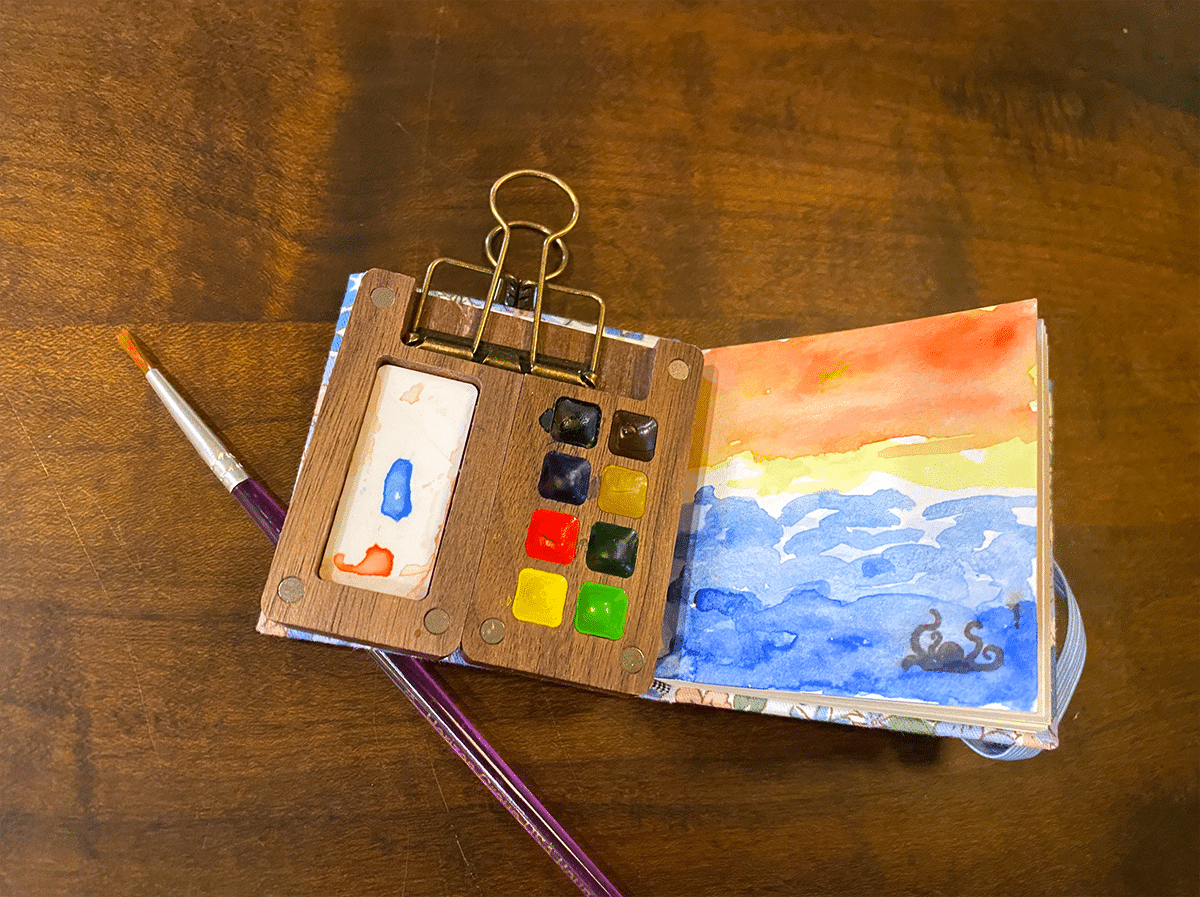
As art teachers, we encourage students to take creative risks, experiment with materials, and trust the process. We remind them to “draw every day,” and say things like, “Creativity is a muscle!” Yet after a full day of teaching, or even during a summer break filled with family, travel, curriculum prep, and appointments, it can feel almost impossible to make space for our own artistic growth.
The good news is that your creative practice does not have to be large, polished, or time-consuming to make a difference. Even if you don’t feel like you have time or space for your own art practice, tiny routines can help you stay connected to your identity as an artist. A pocket sketchbook, five-minute material experiments, playful collage, or an exciting new supply can become a small act of creative maintenance. These moments remind us that we are not only facilitators of creativity; we are artists who continue to learn, experiment, grow, and find joy in the process.
Maintain your own creative spark with these 10 sustainable grab-and-go creative routines.
1. Make a tiny daily drawing.
Grab a blank calendar page, set a timer for five minutes, and draw something small enough to fit on one day of the month. Give yourself a creative parameter for each calendar page, such as filling the page with different patterns, drawing 30 different birds, or depicting only objects from your backyard. Lower the stakes—the drawing does not need to be good or finished, just exist. Whatever you choose, seeing the month fill up day by day is great motivation to make it a lasting habit.
Grab-and-Go Materials: Calendar page and one drawing material
Connect to More: Join AOE every July for Mini Masterpieces, a daily artmaking challenge just for art teachers.
2. Limit yourself to one color.
Pick one color and make a drawing, painting, or collage using only that color family. Try a blue pen, red colored pencil, green watercolor, brown ink, or gray marker. Limiting the palette removes decision fatigue and helps you focus on value, shape, line, and composition.
This routine is especially good when you feel mentally tired, because fewer choices can make it easier to get started. Switch colors every day, and see how long it takes to work through the whole spectrum (or a set of 50, 75, or 100 colored pencils).
Grab-and-Go Materials: One pen, marker, colored pencil, or paint color
Connect to More: Try FLEX Curriculum’s Monochromatic Animal Portraits Lesson with your class (or for yourself!)
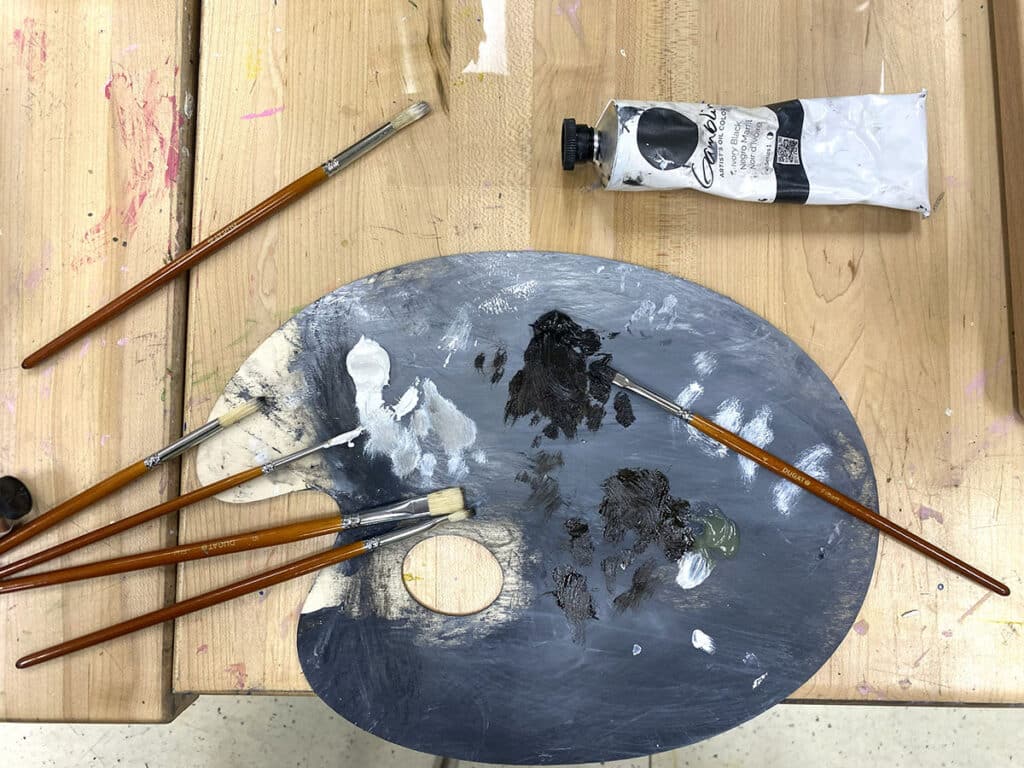
3. Create a mini master copy.
Get out your magnifying glass, and choose a tiny section of an artwork you love. Copy only that part: one hand, one eye, one fold of fabric, one tree, one corner of a room, or one color relationship. Keep the study small and quick. This routine reconnects you with artists who inspire you without requiring a major master copy. It can also sharpen your observational skills and remind you of the kind of art that personally feeds you.
Grab-and-go materials: Postcard, art book, or printed image, and sketchbook, pencil or watercolor
Connect to More: FLEX Curriculum’s Self-Portrait Remix Lesson is a great way to help students look closely and connect with the history of portraiture.
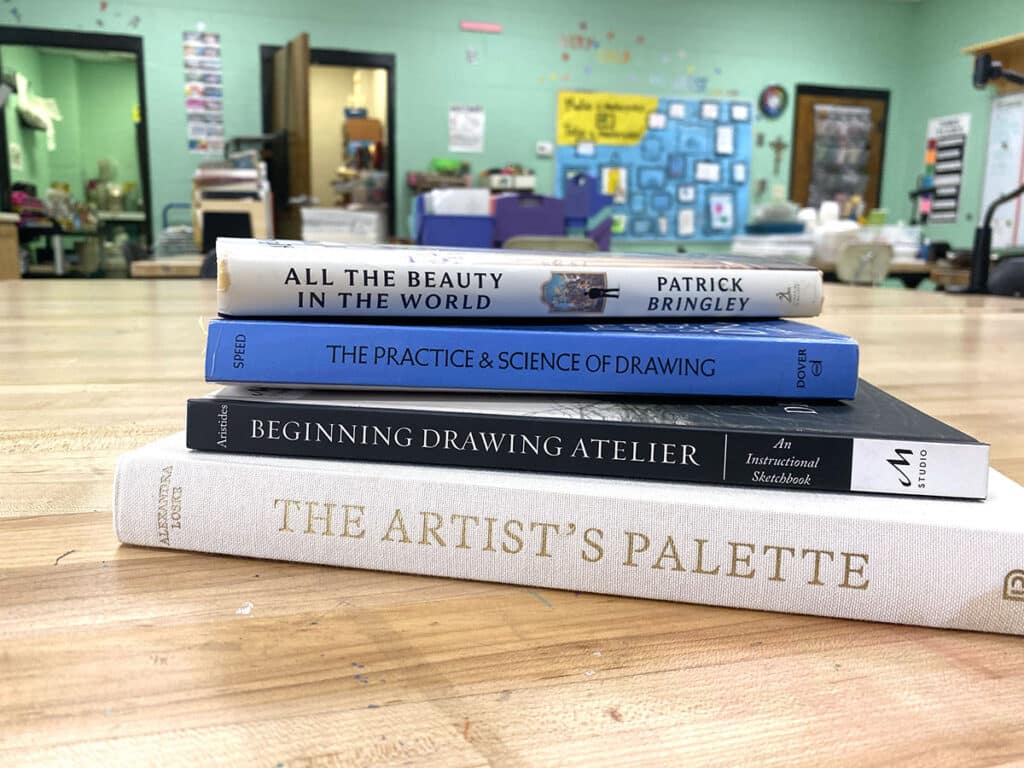
4. Keep a waiting line sketchbook.
Carry a pocket sketchbook and pen in your purse, pool bag, car, or backpack. Use it during moments when you would normally scroll: waiting in line, sitting at camp pickup, sticking around for an appointment, or arriving early somewhere. The routine is simple: before reaching for your phone, make one mark, doodle, pattern, contour drawing, thumbnail, or visual note. Set your lock screen to a photo of your sketchbook for an extra reminder.
Grab-and-Go Materials: Sketchbook, and pen or pencil
Connect to More: Save this free resource of 100 sketchbook prompts for the next time you or your students need something to draw.
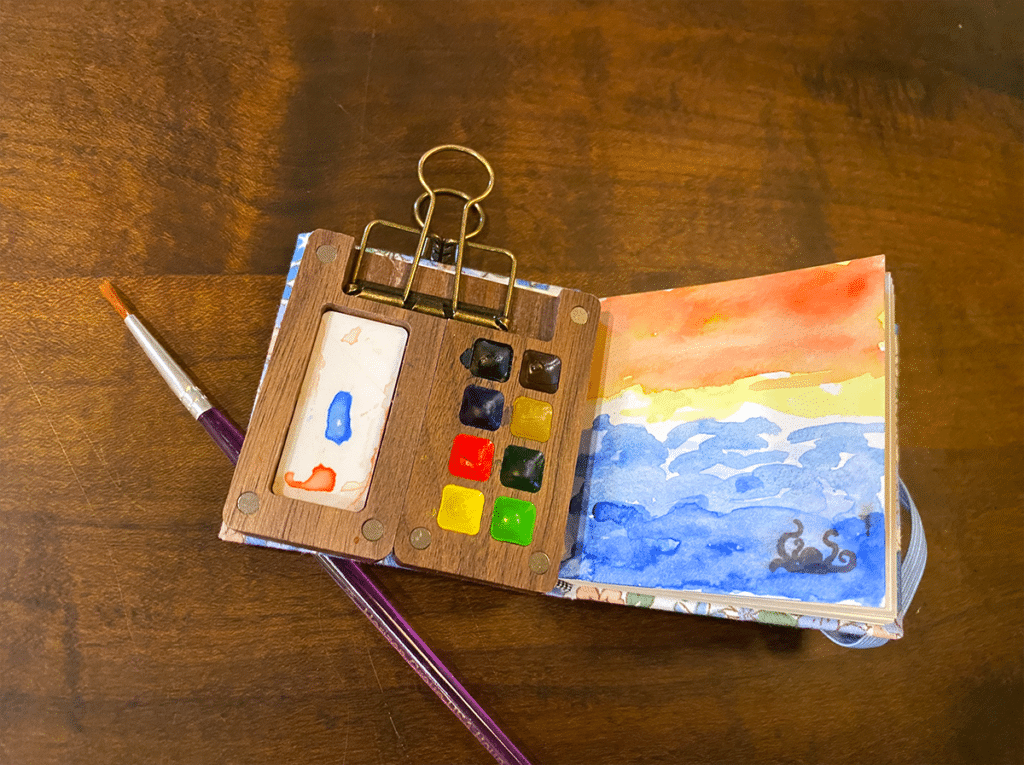
5. Try a $5 supply of the month.
Once a month, buy one small, inexpensive art supply. Treat yourself to a new pen, marker, brush, glue stick, pastel pencil, mini sketchbook, roll of washi tape, or tube of watercolor. Then, spend five minutes a day testing it. Make swatches, marks, textures, doodles, tiny studies, or combinations with supplies you already own. The novelty keeps things fresh without requiring a big investment.
Grab-and-Go Materials: One new material each month
Connect to More: For more ideas, check out this list of fifteen supplies to try this summer.
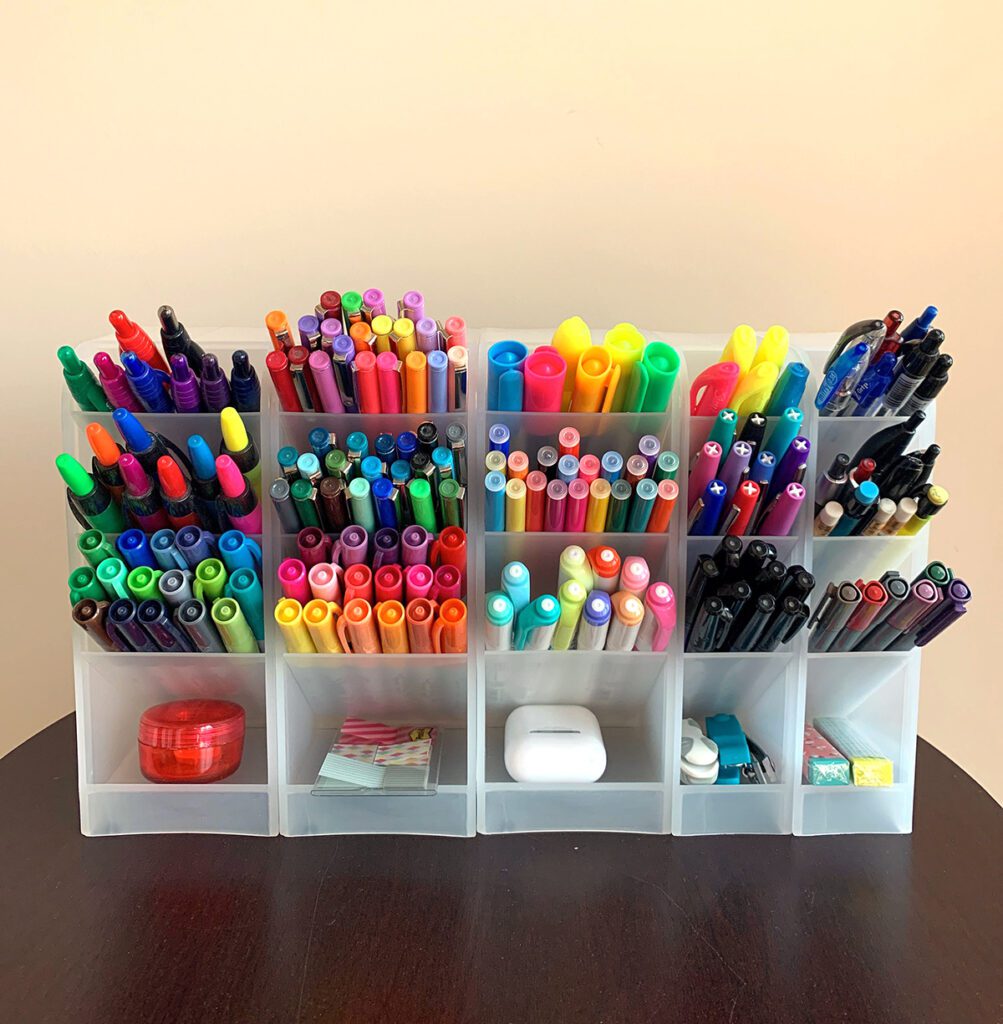
6. Set up a tiny creative tray.
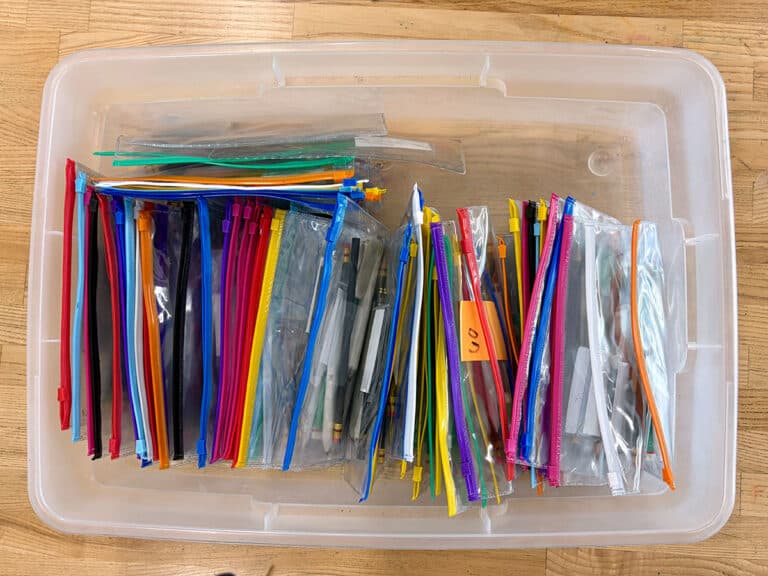
Create a small tray, pouch, basket, or box with low-mess materials such as pencils, colored pencils, a glue stick, scissors, paper scraps, watercolor cards, or a travel palette. Keep it somewhere visible and easy to grab. This is less about a specific project and more about removing friction. When the materials are already gathered, it becomes easier to make something while dinner cooks, during a slow morning, or while your own kids are coloring.
Grab-and-Go Materials: Any accessible supplies
Connect to More: Refresh your toolkit with ideas to boost creativity with minimal supplies.
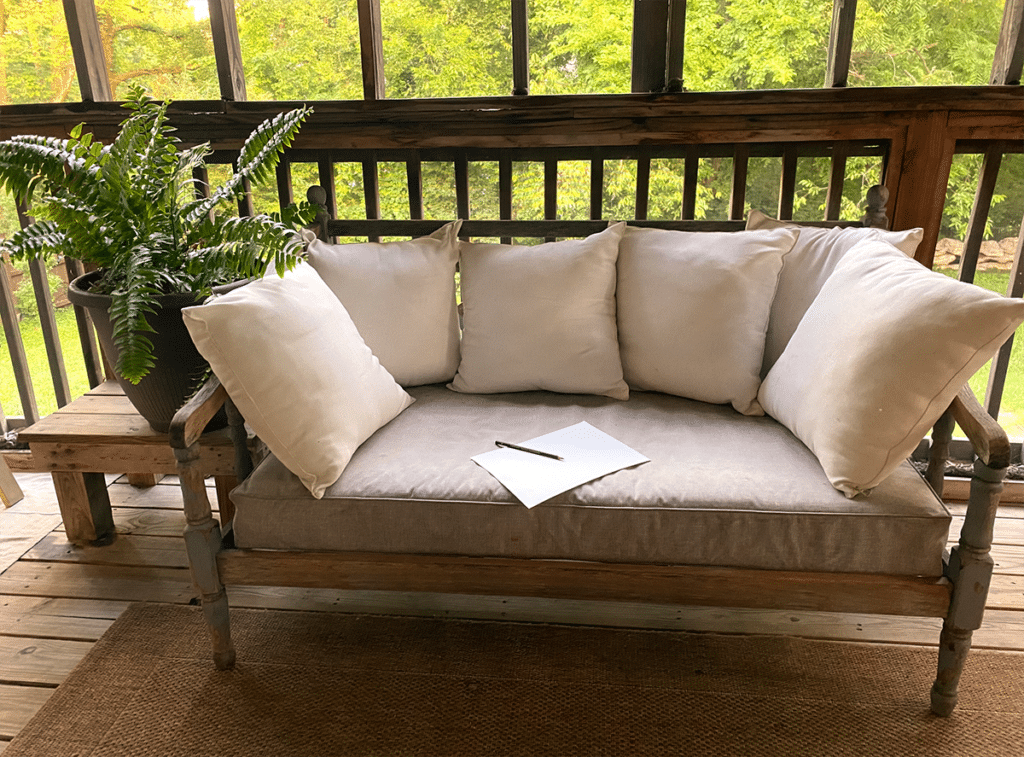
7. Declare a porch residency.
Choose one ordinary summer spot like your porch, backyard, driveway, kitchen table, balcony, or favorite chair, and declare it your “residency.” Spend ten minutes there a few times a week observing, sketching, writing ideas, collecting colors, testing materials, or making tiny studies. If Monet can make twenty-five paintings of haystacks in different lighting, weather, and croppings, your porch holds just as much potential for inspiration. Calling it a residency makes it playful, but it also reframes your ordinary environment as a place worthy of artistic attention.
Grab-and-Go Materials: Sketchbook and pencil
Connect to More: Kick off your residency with a podcast on rediscovering your artistic identity.
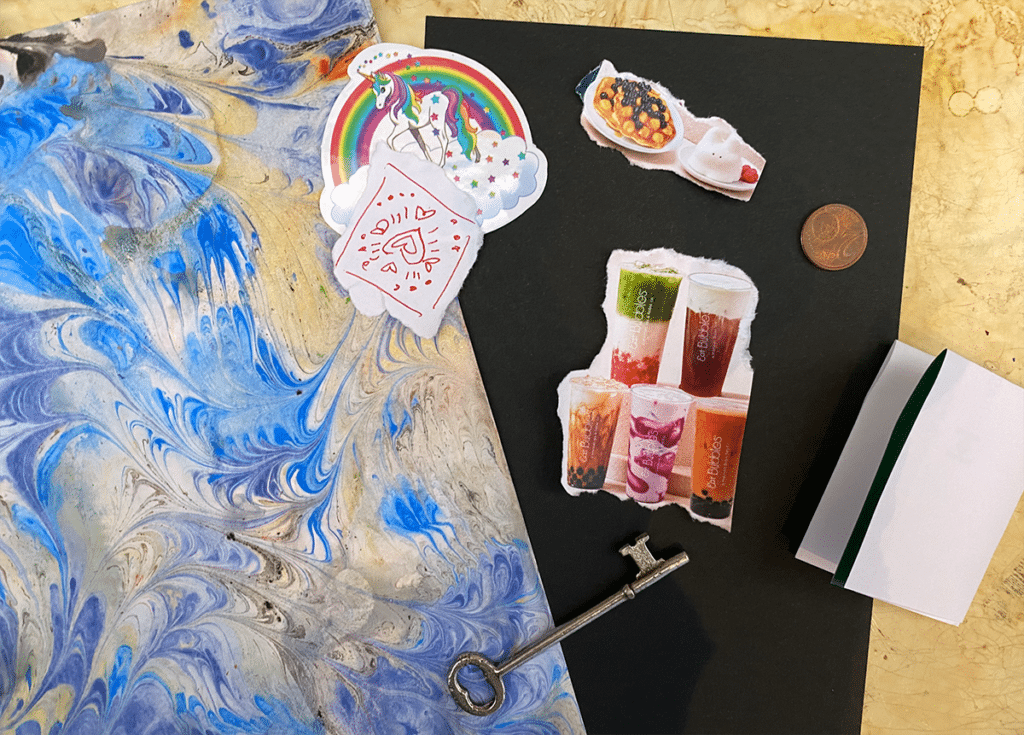
8. Make a souvenir collage.
Instead of buying souvenirs, make tiny ones! Save receipts, maps, candy wrappers, takeout menus, brochures, parking passes, grocery lists, fruit stickers, or packaging from summer outings. After a day trip, errand, or vacation moment, choose three scraps and turn them into a postcard-sized collage. The results are often more specific, personal, and memorable than a polished photo.
Grab-and-Go Materials: Scraps from your daily life and adhesive of choice
Connect to More: The Curating from the World Around Us Lesson in FLEX Curriculum is a great way to bring these concepts to your students.
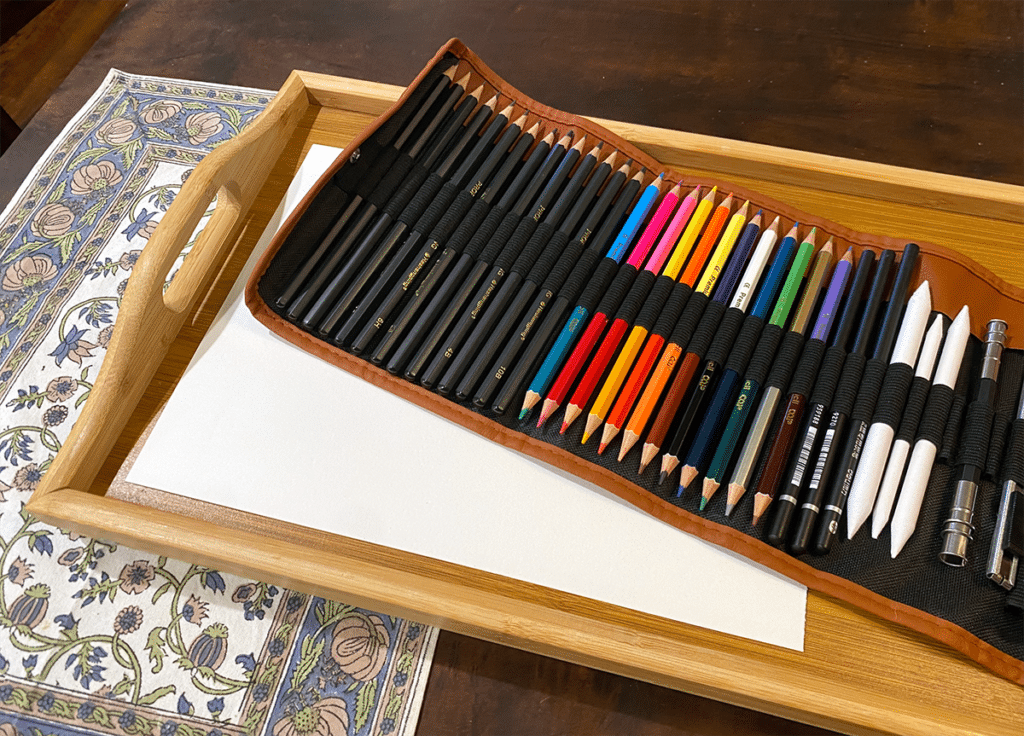
9. Use your phone as an artistic lens.
Create a phone album of your summer photos, not for family snapshots, but as images you collect for aesthetic qualities. Each day, take one photo of something visually interesting: shadows on the floor, a strange object arrangement, a grocery store display, a pool reflection, a cracked sidewalk, a pile of towels, or an accidental color palette. At the end of the week, choose one image to sketch, paint, collage, or write about.
Grab-and-Go Materials: Phone
Connect to More: Level up your photography lessons with our top tips for your students.

10. Pair art with an existing daily anchor.
Attach a tiny creative action to something already in your day. For example, after morning coffee, draw one sketch. After watering plants, take one daily photograph. After lunch, make one tiny collage. After putting the kids to bed, add one mark to a page. Tell yourself, “After I do this regular thing, I will do one tiny creative thing.” This makes creativity feel like part of your rhythm rather than just another task.
Grab-and-Go Materials: Any art supplies paired with your daily routine
Connect to More: Tap into creative play for yourself with fun strategies and quick activities.
Creative routines work best when they are simple, sustainable, and fit into the life you already have. Choose one idea to try first, keep the materials accessible, and set a realistic goal. Whether you carry a pocket sketchbook, test a new supply, or document visual inspiration, tiny routines can help you maintain your creative practice in a manageable way. Over time, these habits can keep you connected to your own artmaking, both during the busy school year and throughout summer break. Try one out this week—great artwork can start from the smallest of creative sparks.
What do you do when you feel like you’re in a creative rut?
How do you find ways to make creativity sustainable and accessible, especially during the school year?
To chat about creative routines with other art teachers, join us in The Art of Ed Community!
Articles and podcasts are opinions of professional education contributors and do not necessarily represent the position of the Art of Education University (AOEU) or its academic offerings. Contributors use terms in the way they are most often talked about in the scope of their educational experiences.