
Art teachers tend to be pretty independent. We manage our own spaces and make countless decisions every day, so sharing a classroom can feel frustrating. You and your future roommate may not agree on everything, but you can prepare for the transition, establish shared expectations, and create a space that works for everyone. You may even discover that you love sharing an art room and can’t imagine going back!
Create a shared art room that you and your colleague love, using the considerations and tips below.
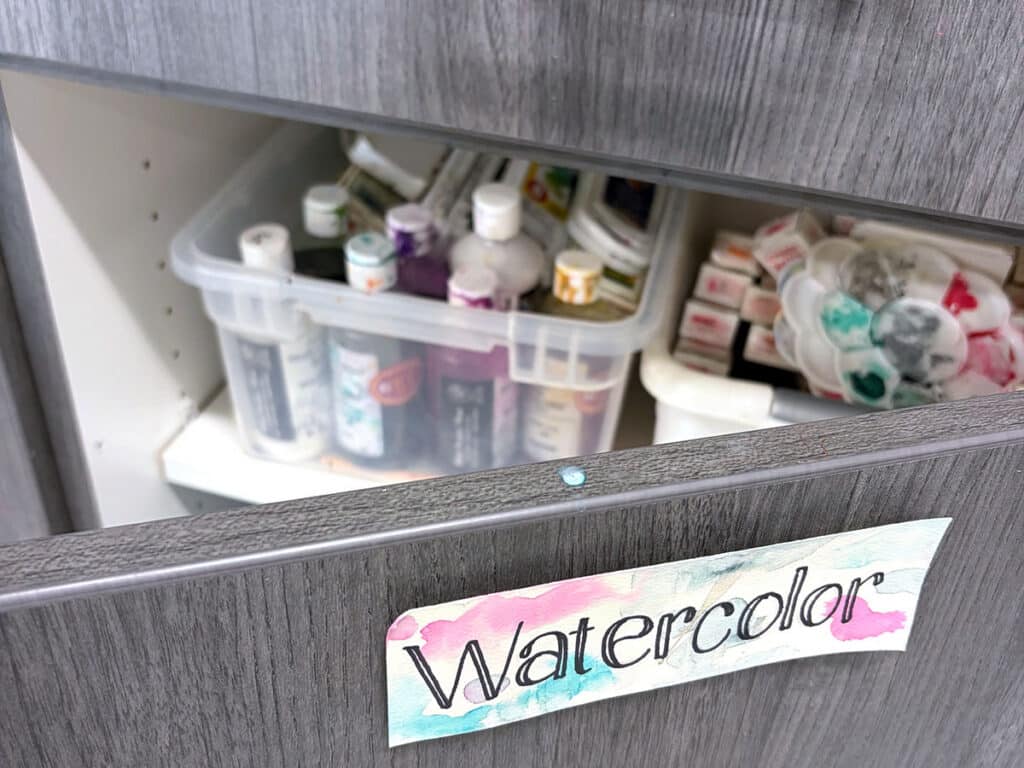
Appreciate the benefits of sharing your space.
Many art teachers are the only ones in their building, so having two of you (or more) in one school is a teaching situation to celebrate! Plus, the art room has so many moving parts with equipment, tools, and supplies. Having a partner to bond over the highs and lows of the profession, collaborate with, and divide the workload with is invaluable.
Sharing a space with another art teacher gives you a built-in colleague who can:
- Partner with you to design curriculum
- Cover your class when you need a bathroom break
- Bring different strengths, skills, and perspectives
- Help troubleshoot art-specific challenges
- Learn and plan with you
- Answer the phone while you teach
- Give you reminders
- Celebrate your students’ joy and growth with you
- Talk about art with you
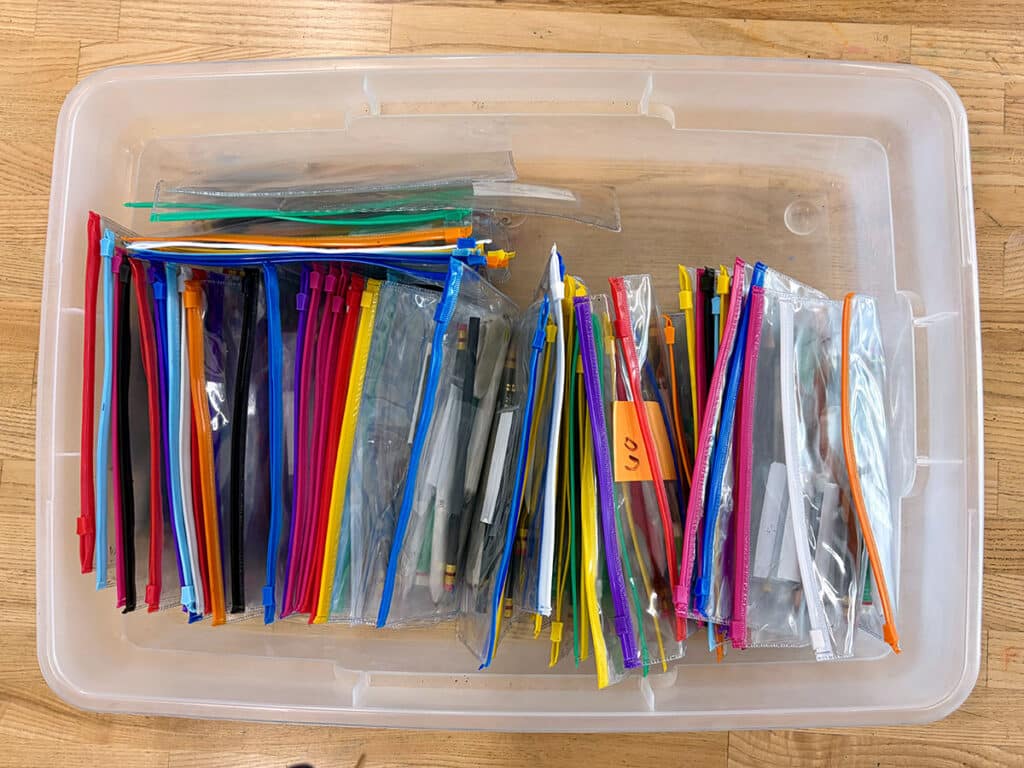
Create an atmosphere that works for both of you.
A peaceful art room that invites students into creative flow and synergy with your colleague takes more than organization. From sights to sounds to smells, there are so many small decisions that cultivate the art room atmosphere of your dreams. Make sure you and your coworker are on the same page with as many of these selections as possible to eliminate friction later. Ensuring your shared space is comfortable for both of you will nurture mental health, mood, energy, and connection.
Here are a few areas to discuss and agree upon before sharing a space:
- Temperature
- Air fresheners
- Lighting
- Student voice volume
- Social battery
- Background sounds
- Personal spaces
- Decorations
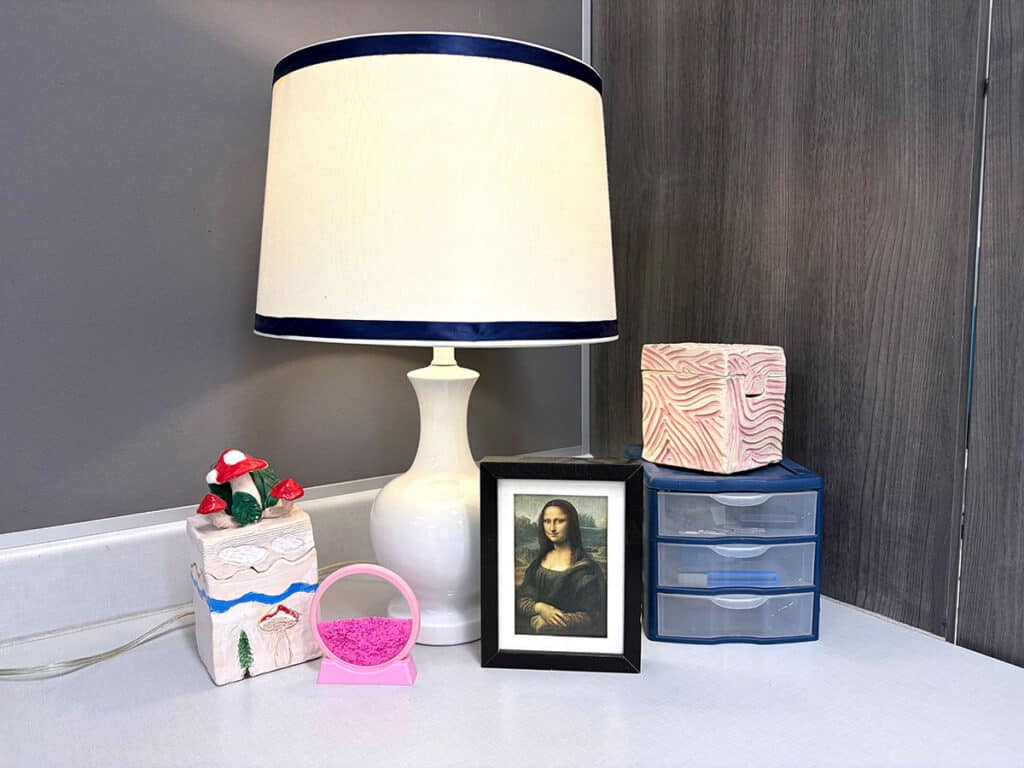
Agree on core classroom management systems.
Sharing an art room doesn’t mean you have to have the same teaching style. However, having some core systems and expectations in place will keep things running smoothly. The more consistency your students have between teachers and the more aligned you are with your fellow art teacher, the easier it will be to focus your time and energy on instruction and artmaking.
Student Expectations
Unless you’re co-teaching, you can decide the bulk of student expectations on your own. When it comes to common areas and shared materials, it’s a good idea to have a game plan ahead of time that you both will teach your students and enforce. Whatever you decide, make sure it’s clearly posted for all to see and reference.
Consider collaborating on core student expectations by answering these questions:
- What are each teacher’s desk areas, and are they off limits?
- Will students need permission to get their own supplies?
- Are students allowed in closets and kiln rooms?
- What is the hall pass system?
- Can students roam between spaces and work in different areas?
- How should students clean and return supplies?
Personal Expectations
It is important to check in with one another regularly to reassess how things are going and see if you need to make any changes. One way to ensure this happens is to set up a recurring weekly or monthly meeting with an agenda. The agenda keeps your conversations brief and focused. Meeting consistently prevents minor things from building up into deeper resentments and creates a dedicated space for what can be awkward chats.
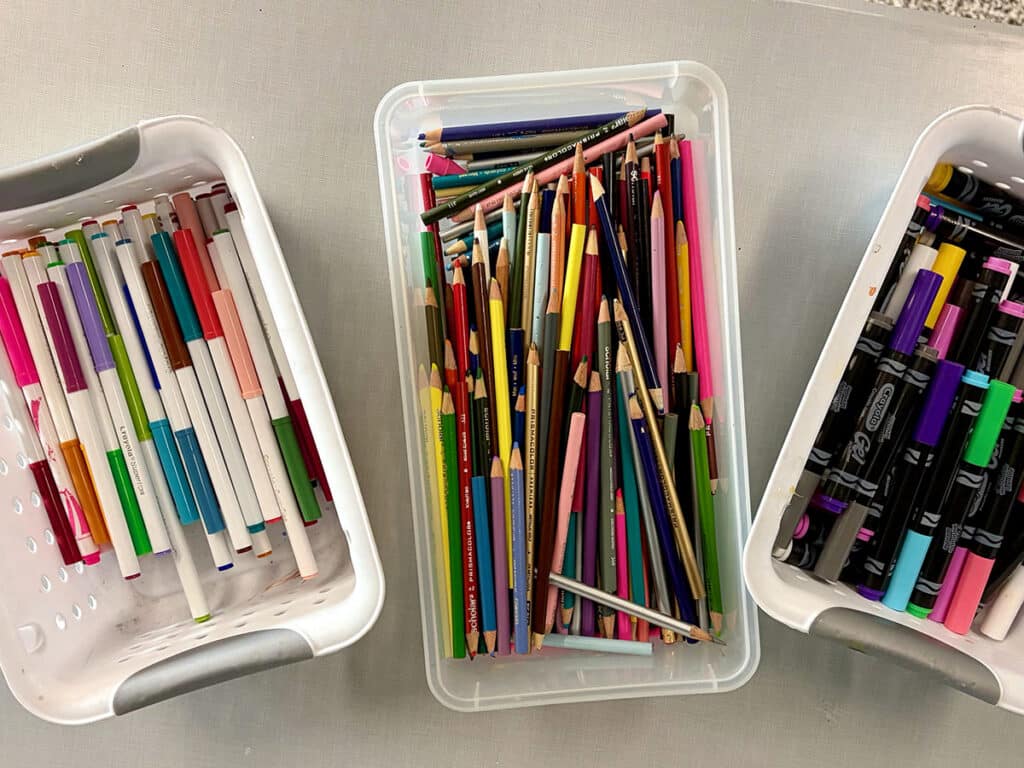
Establish guidelines for managing shared art supplies.
You and your fellow art teacher each have distinct skills. Lean into what you’re each best at to divide and conquer responsibilities! One of you can take on supply orders and inventory, while the other can manage technology needs and digital files. This allows each of you to do what comes naturally and is most enjoyable to you, which is most sustainable.
Try a shared spreadsheet to track supplies and orders. This allows each of you to see the information, and you can easily sort by tab or column. Also include the company name, item number, and direct link to make ordering a breeze!
To guide initial conversations, watch the Pack Routines for Managing Supplies in PRO Learning together. These short professional development videos outline how to track and order supplies for a wide range of media. Then, discuss the questions below about how you will store, order, and use supplies.
Storing Supplies
- Where will common storage spaces be?
- What supplies and tools will you share?
- Where will individual storage spaces be?
- How will you organize materials? (e.g., by unit, media, zone, etc.)
- How will you label supplies and storage spaces?
- Will you store bulk supplies elsewhere?
Ordering Supplies
- How will you track supplies that are running low?
- Will you track supplies physically (e.g., in a folder or on a clipboard) or digitally (e.g., in a spreadsheet)?
- Where will you order supplies from?
- How will you divide the budget?
- What quantities of each item will you need?
- Who will order the supplies?
- Who will put the supplies away?
Using Supplies
The supplies you use will depend on what lessons you teach and when you teach them. It’s helpful to share your curriculum maps and timelines with your colleague and see where there’s overlap. There may be units where you want to align materials, such as when everyone is doing Clay Week. Alternatively, there may be times when you want to take turns with a specific medium, so you have enough space to store large or wet projects. You can discuss the big picture before the school year starts, then check in during your routine meetings.
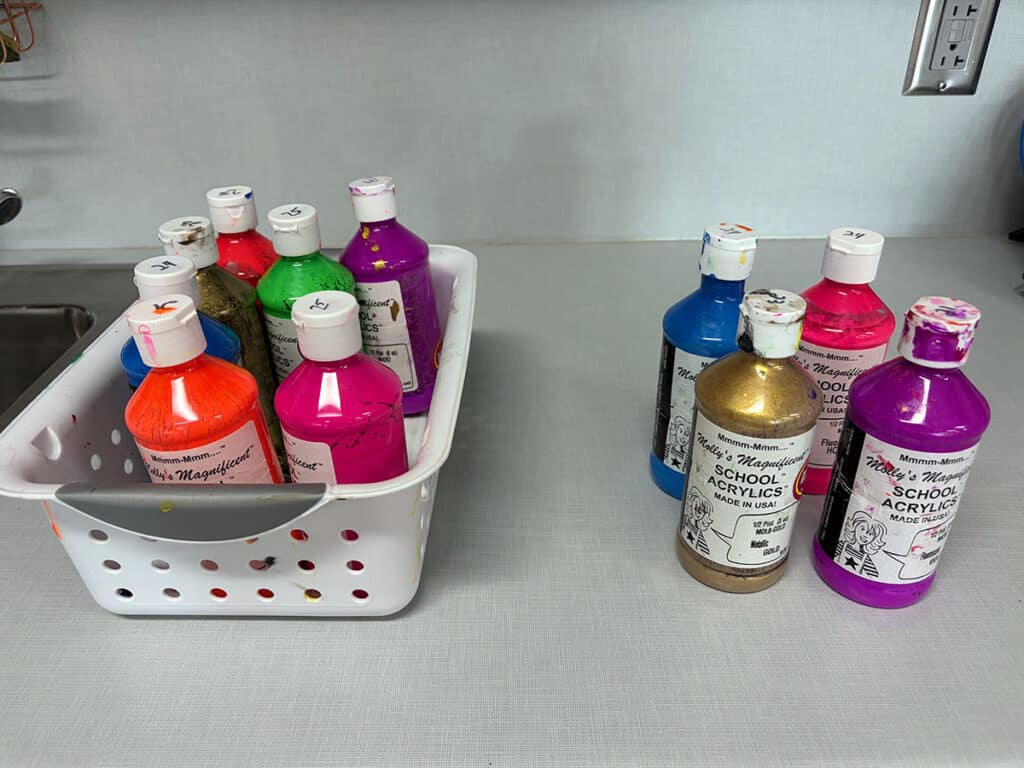
Getting to work with another art teacher is a dream! While it can be a little more work to figure out at first, you will quickly learn to leverage each other’s strengths and collaborate on art room norms to create an amazing creative environment. Don’t underestimate the small stuff—meet regularly to touch base on details like how many white acrylic paint tubes to order, and who needs the drying rack tomorrow. With open communication and a willingness to adjust, sharing a space can become incredibly supportive and rewarding for you, your coworker, and your students!
What is the best part of sharing your art classroom that other people may find surprising?
What was one challenge in sharing a space that you overcame?
To chat about sharing an art room with other art teachers, join us in The Art of Ed Community!
Articles and podcasts are opinions of professional education contributors and do not necessarily represent the position of the Art of Education University (AOEU) or its academic offerings. Contributors use terms in the way they are most often talked about in the scope of their educational experiences.