
Art teachers are uniquely positioned to take on leadership roles across schools, communities, and the field of art education—not because of a title, but because leadership is fundamentally a mindset. Every day, you navigate creativity, collaboration, problem solving, and relationship building. These are core skills that define effective leadership across the board.
Discover how you are already uniquely qualified to take on leadership roles in art education!
Do you sometimes have the desire to give back? Or perhaps you feel like there’s something more out there for you and your career. If this is the case, you are probably feeling the “leadership itch.” The good news is that there are leadership opportunities for you that are natural extensions of what you already do every day for your students.
1. You are a visionary.
You spend your days guiding students through complex creative processes that require them to break down the finished goal of their artwork into individual components. From concept development to final execution, you constantly balance vision with logistics, intention with adaptation, and creativity with structure. This ability to zoom out while also paying attention to detail is the same skill set required for strategic leadership and organizational planning.
You do more than simply assign projects; you:
- Inspire ideas
- Motivate learners
- Guide students through uncertainty and change
- Prepare exhibitions
- Manage timelines
- Coordinate resources
- Support multiple types of learners
This translates from the classroom to the boardroom by:
- Casting vision
- Managing various delegated tasks
- Communicating expectations clearly
- Navigating challenges collaboratively
- Guiding a group toward meaningful outcomes
- Supporting diverse team members
2. You are a risk-taker.
Unlike disciplines with clear right answers, art class lives in uncertainty. You deliberately design learning with unknown outcomes, fluid solutions, and experimentation. Every time you introduce a new medium, technique, or open-ended prompt, you model how to move forward without guarantees. Teaching students to engage in a productive struggle builds resilience and adaptability. These are both traits of effective leadership and learning agility, or knowing what to do when you don’t know what to do.
Art teachers practice risk-taking daily by:
- Trying out a new curriculum
- Piloting an unfamiliar tool
- Normalizing failure as part of the process
- Improvising when supplies run out
- Reworking lessons when students struggle
- Pivoting when creative directions shift
3. You are a facilitator.
Art teachers are facilitators of meaningful dialogue. Through critiques, discussions, and reflective practices, you teach students valuable skills about productive conversations. In art class, students learn to listen carefully, ask thoughtful questions, and respond with respect.
Communication is key in the art room in many different ways:
- Helps students build confidence in expressing their ideas
- Encourages students to portray a theme in numerous ways
- Shows students how to find multiple solutions to a visual challenge
- Allows students to share constructive feedback
- Prompts students to engage with curiosity and inquiry
In leadership roles, these same skills translate directly into:
- Hosting effective meetings for staff or professional learning communities
- Planning collaboratively with other art educators or cross-curricular professionals
- Managing conflict resolution with your team so that multiple perspectives feel heard
- Creating environments where other team members feel comfortable proposing ideas and taking intellectual risks
- Reframing institutional challenges like scheduling conflicts or policy changes
4. You are emotionally intelligent.
You work at the intersection of personal expression, identity, and vulnerability every day. Emotional intelligence is the ability to recognize and understand emotions. This is key to supporting students as they express themselves and their identity in your classroom through their artwork. You create spaces where students can share ideas and explore who they are and who they want to become.
Being emotionally intelligent allows you to:
- Build trust
- Support all learners
- Show you care
- Be intentional about how you approach certain topics
- Encourage consideration of multiple perspectives
This soft skill translates specifically to emotionally intelligent leadership by:
- Creating a trusting team
- Navigating difficult situations with empathy and awareness
- Supporting staff needs with flexibility
- Guiding with compassion, grace, and respect
5. You are an advocate.
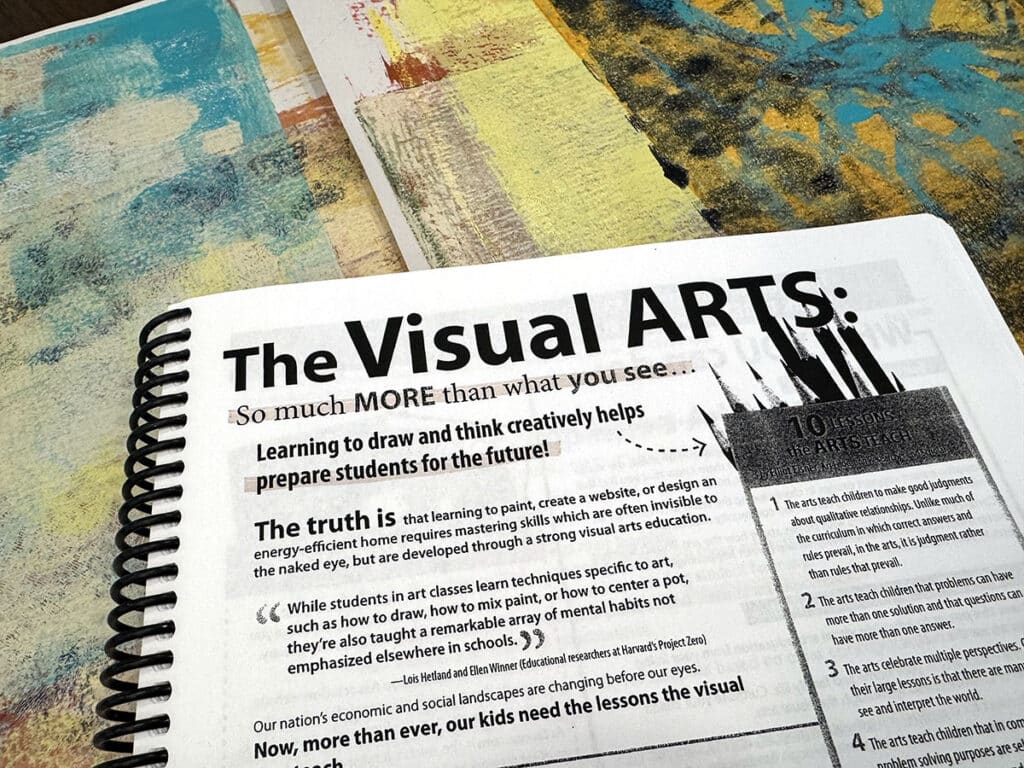
The Center for the Advancement of Art Education, along with growing narratives around arts leadership, affirms what many already know: artist-educators are natural innovators, advocates, and changemakers. Art teachers already advocate by necessity for funding, supplies, and resources. Because the arts are often questioned by those outside the field, we have a list on standby that explains why they matter.
With limited arts funding and frequent program challenges, you regularly:
- Engage in strategic communication
- Build coalitions to protect and grow your program
- Showcase student work
- Communicate the process, growth, and impact behind student work
These core advocacy skills are foundational to strong leadership when:
- Standing up for colleagues
- Bringing together various groups of partners
- Communicating impact using data, stories, and visible outcomes
- Equipping and supporting your team
6. You are reflective.
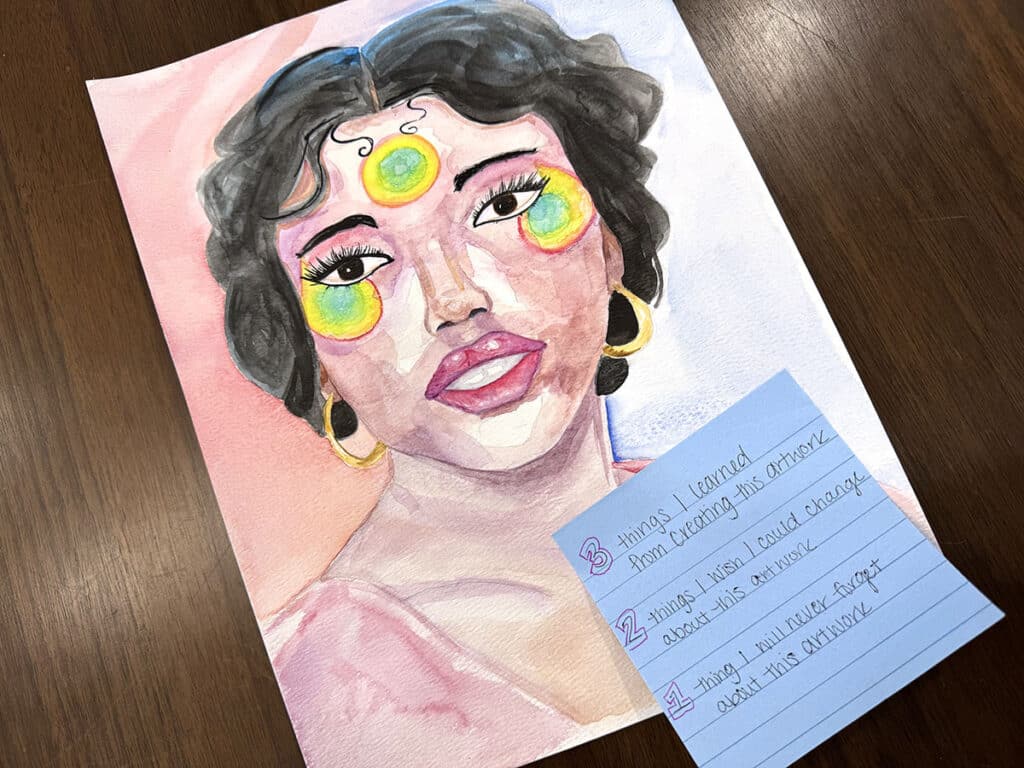
Reflecting on your own artwork is natural, as is the drive to cultivate the same habit in your students. You regularly engage in self-assessment, analyze instructional practices, and revise your teaching to better meet student needs. You realize that artists and teachers are always open to growth and making changes. Likewise, a reflective leader consistently examines their strengths and blind spots, as well as their thinking, actions, and impact, to lead effectively and responsibly.
You model reflective practices for your students and demonstrate:
- Continuous improvement
- Open-mindedness
- Passion for learning
- Growth mindset
This skill is foundational in leadership when:
- Revising leadership practices
- Inviting feedback
- Modeling accountability
- Leading with passion and openness
Use your skills to drive change you’re passionate about with these reads:
- How to Become an Art Teacher Leader and Drive Meaningful Change
- 6 Small Steps to Tap Into Art Teacher Leadership
- 3 Ways to Step Into a Leadership Role in Your School Community
- How to Become a Highly Specialized Expert in the Art Education Field
- 4 Ways to Become an Art Teacher Leader
The question is no longer if you are a leader, but how you will step up to lead using the skills you already have as an art teacher. In your classroom, you cast vision, navigate uncertainty, facilitate dialogue, lead with empathy, advocate with courage, and reflect with intention. These aren’t just teaching skills—they’re real leadership skills. You don’t need to leave the classroom to lead; you simply need to recognize the strength and impact you already carry.
In what ways are you surprised to discover that you’re already a leader?
What other skills would you add to this list?
To chat about unique leadership qualities with other art teachers, join us in The Art of Ed Community!
Magazine articles and podcasts are opinions of professional education contributors and do not necessarily represent the position of the Art of Education University (AOEU) or its academic offerings. Contributors use terms in the way they are most often talked about in the scope of their educational experiences.