
Let’s be honest—every art teacher has “add more art history” on their bucket list. Between researching, fact-checking, and writing it all out, the process can feel overwhelming and time-consuming. But what if you could have an archive of hundreds of ready-to-use artist bios at your fingertips? That’s where artist bios come in! Plus, there are so many creative ways to utilize them for all grade levels that they’ll stay exciting all year long.

More Art History, Less Prep
Sometimes “adding more art history” to your lesson planning ends up being more of a headache than fun. There are numerous artists and movements, making it challenging to know where to begin. FLEX Curriculum artist bios make this part of planning seamless, saving you hours of prep while maintaining accuracy and depth. More importantly, they help students connect their own artmaking to the work of others, see relevance across content areas, and understand how art is part of a bigger story.
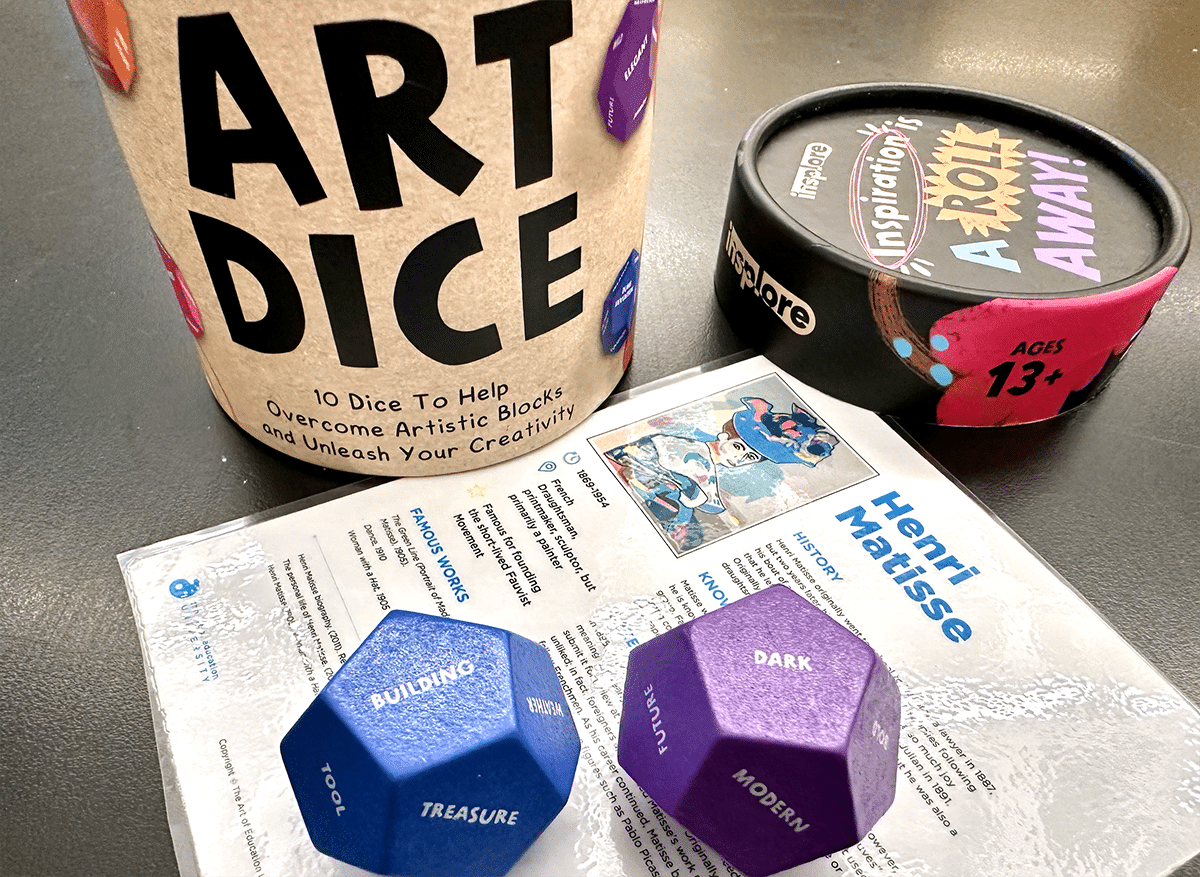
Artist bios are one small part of The Art of Ed’s FLEX Curriculum, a standards-aligned treasure trove of thousands of lesson plans, resources, videos, and more. Artist bios include a short graphic of the artist or their artwork, at-a-glance facts, a brief bio, quotes, and a list of famous artworks. There are hundreds of diverse artists that you can filter by medium, subject, theme, art movement, and more. Additionally, everything is thoroughly vetted and ready to go for the classroom. To ensure you get the most out of this valuable resource, download the FLEX Artist Bio Toolkit and check out the YouTube series, 5 Minutes of Art History, below.
Reading + Writing in the Art Room = Done!
It’s no secret that administrators love to see literacy across all content areas. The good news is that art teachers already have it covered! The artist bios provide accessible, engaging reading passages paired with fun illustrations and ready-made reflection questions. Many bios have a beginner and intermediate reading level available, making it easy to differentiate for your students.
Flexible Implementation
There’s no “right time” to introduce an artist bio—you can use them at any time in your unit! Use them at the beginning, middle, or end of a class period or lesson. Incorporate them into a game or activity. Feature some on an Artist of the Month display. You can even provide an assortment for student-led exploration.
Here are some easy and unexpected ways to use artist bios:
- Guess Who?
Students will describe the artist in their bio to the class, without using the artist’s name. Their peers will guess who the artist is! This is a great review game at the end of a large unit, quarter, or semester. - Annotate the Text
While students are reading their artist bio, encourage them to circle and underline key details with colored pencils or markers. This reinforces both reading comprehension skills and information. - Match the Artist Bio
During a critique or gallery walk, provide students with a “bank” of artist bios that correspond to each student’s artwork. Students will walk around and match the artist inspiration to the student work, using the clues in the bios.
If you still don’t know which artist fits your lesson, that’s okay! Each FLEX Lesson Plan includes recommended artists and artist bios. Additionally, you can always post in The Art of Ed Community and ask for artist suggestions that you can check against the artist bio database.
Get started with these catchy lessons:
- Stencil Projects
Dig into the works of Shepard Fairey or Banksy. - Portrait Drawings
Explore portraits like Frida Kahlo with meaningful symbols and stories behind every artwork. - Surrealism Imagery
Dive into the world of Salvador Dalí for a dreamlike experience.

Artist Remix
Part of the artistic process involves reflection and iteration—artists continually refine and tweak their work to achieve the desired outcome. Encourage students to get into this habit and mindset with an Artist Remix assignment. As students’ planning unfolds, you’ll be amazed by the connections they discover. No matter the artist bio they choose, students will learn to merge their personal ideas with historical influences, strengthening both their technical skills and creative voices.
Get artist bios for your students today!
Here’s how to get started:
- Choose a starting point.
Students pull out an old sketchbook drawing or revisit a past art prompt. - Research with intention.
Using the artist bios, students select an artist to study. To boost confidence, guide them with an art analysis of a famous work by the artist they are researching. Encourage them to look closely at the list of famous works and choose one that resonates with them. - Plan the remix.
In their sketchbooks, students explore the elements of their chosen artist’s style and experiment with blending them into their own artwork. - Create the artwork.
Students create a remixed artwork, merging their subject matter and style with that of their chosen artist. - Take time for reflection.
Use the Compare and Contrast Recreations Resource in FLEX Curriculum to aid in the end-of-project self-reflection. Take time to look at and discuss the starting point piece, their chosen artist’s work, and their final artwork.

Deeper Investigation
Beyond artmaking, students can deepen their learning with a research-based assignment. Provide each student with two artist bios, or let them select their own set. Students can mix and match in exciting ways! They can pair two creators from different time periods, movements, or cultural backgrounds. Encourage them to select at least one artist they’ve never heard of before to spark curiosity.
Students will delve into both artists through additional research, searching for similarities and differences. This assignment strengthens research, analysis, and synthesis skills while building critical connections. It’s perfect for advanced art courses; however, using just the artist bios makes this very approachable for all levels.

Student Presentations
Artist bios don’t just support research and artmaking—they’re also a perfect tool for building presentation and public speaking skills. After all, art is meant to be shared, and giving students the chance to present their learning allows them to practice a lifelong skill in a creative way. To make the process smooth and stress-free, start early by setting up a presentation calendar. Post a large sign-up chart in your classroom so students can choose their dates, see when their peers are presenting, and get excited about the lineup of artists.
One fun approach is to have students present in pairs. This not only encourages collaboration but also allows them to double their learning. Each student individually learns about one artist. After they become experts on their artist, pair them with another student. Both students will figure out what their artists have in common. Then, they must come up with a creative way to present both in a way that matches both artists’ lives, styles, and influences.

Art History Games
Artist bios can also be used for quick, fun activities and brain breaks. Sometimes the best way to connect with artists is through play! This is a great way to sneak in art history in an unexpected way. Use classroom art dice to randomly select drawing prompts. Students roll the dice and read the prompt. Then, they draw an artist bio from a shuffled deck or pile. Students respond with a quick sketch, doodle, or mini-art challenge to the prompt, in the style of their chosen artist.

Whether you’re weaving in literacy skills, remixing past projects, strengthening student research, or just sneaking in a fun brain break, FLEX Curriculum artist bios are a valuable tool that grows with your teaching. Once you start using them, don’t feel like you have to use them the same way every time! Experiment, mix and match, and let your students surprise you with the connections they make. However you choose to bring them in, you’ll be giving your students more opportunities to see, study, and get inspired by the incredible range of artists who came before them. So go ahead—dive into the artist bios and make learning and artmaking more meaningful than ever!
What is one fun and innovative way you use artist bios in your art room?
Who is an artist we should add to the artist bio archive?
To chat about artist bios with other art teachers, join us in The Art of Ed Community!
Magazine articles and podcasts are opinions of professional education contributors and do not necessarily represent the position of the Art of Education University (AOEU) or its academic offerings. Contributors use terms in the way they are most often talked about in the scope of their educational experiences.