
Just like with buildings, learning starts with a strong foundation. Plus, young minds love to build and design at any age level because it’s hands-on, practical, and concrete. What better way to teach the Elements of Art and Principles of Design than with architecture? The Elements and Principles are core to creating art and communicating about art. When students understand these concepts, you empower them to enter the realm of the artist.
Let’s take a look at fun architecture lesson ideas for each grade level to build a solid foundation with the Elements of Art and Principles of Design.
The Elements of Art and Principles of Design
The Elements of Art are the key building blocks to looking at, making, and talking about art. They include Line, Shape, Color, Value, Texture, Space, and Form. The Principles of Design explain how the Elements are used and include Balance, Contrast, Emphasis, Pattern, Unity, Movement, Rhythm, Repetition, Proportion, and Variety. One way to differentiate between them is to compare the Elements to a recipe’s ingredients and the Principles to its steps.
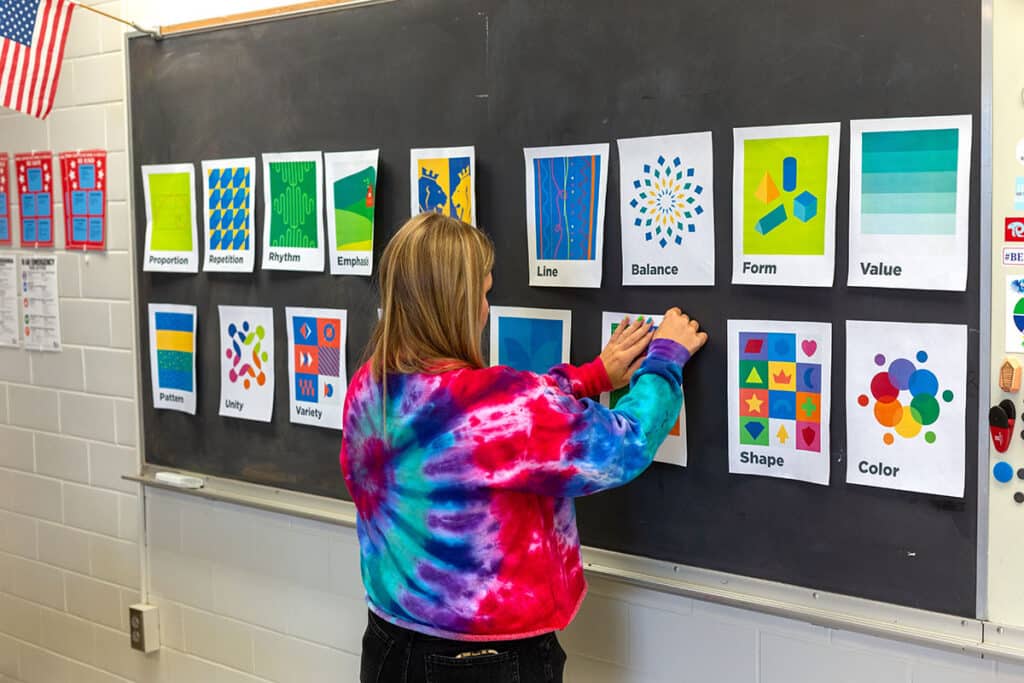
The first step to establishing a solid foundation in your curriculum, instructional practices, and student artwork is to ensure you have a good understanding. Carve out two hours to sketchnote, eat your favorite snacks, and learn how to scaffold the Elements and Principles across grade levels with the PRO Learning Pack, Engaging Students With the Elements and Principles. These short professional development videos also include tons of lesson and activity ideas to teach and review these concepts in authentic ways.
Continue to lay a strong framework for your students with the Introducing The Elements and Principles Collection in FLEX Curriculum. FLEX is a K-12 standards-aligned curriculum full of thousands of lesson plans, handouts, videos, assessments, anchor charts, and more. While all of our FLEX lessons incorporate the Elements and Principles, this specific Collection includes enhanced content. They zero in on deeper, more practical strategies to support grounded, strong artists by introducing and developing crucial art vocabulary.
Maximize your and your students’ learning by pairing these opportunities together. Designed to work in tandem, PRO will build your confidence, while FLEX equips you with immediately usable, high-impact artmaking for students. If you’re not a user, there are easy ways to advocate for your district to provide you with these resources. Connect with us today to kickstart the process and let us guide you through getting the resources you need and deserve!
1. Early Elementary Builders
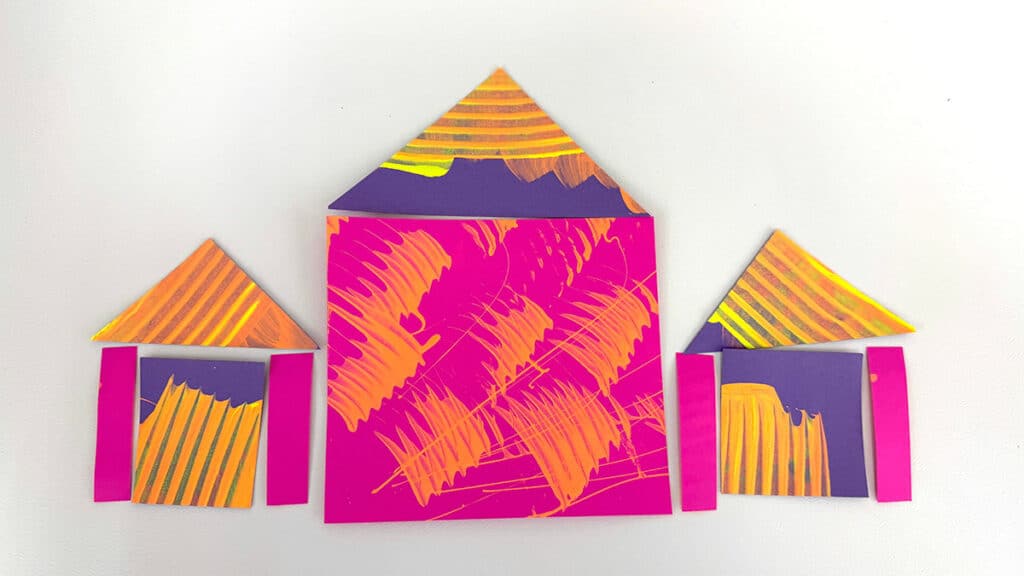
To teach young students the Elements and Principles, create a kit of simple geometric shapes with colorful cardstock, including rectangles, squares, and triangles. This is a great way to use up scrap paper! With younger students, there is no need to cover every single Element and Principle at once. Instead, start with the basic concepts of shape, balance, and color using The Elements of Art (K-2) anchor chart and the Symmetrical vs. Asymmetrical worksheet in FLEX Curriculum.
Introduce each with a simple definition:
- Shape: flat, enclosed areas (such as squares, circles, triangles, and rectangles)
- Symmetrical Balance: when something is divided in half, and it’s the same on each side
- Asymmetrical Balance: when something is divided in half, and it’s different on each side
- Warm Colors: remind you of the heat (such as red, yellow, and orange)
- Cool Colors: remind you of a winter scene (such as green, blue, and violet)
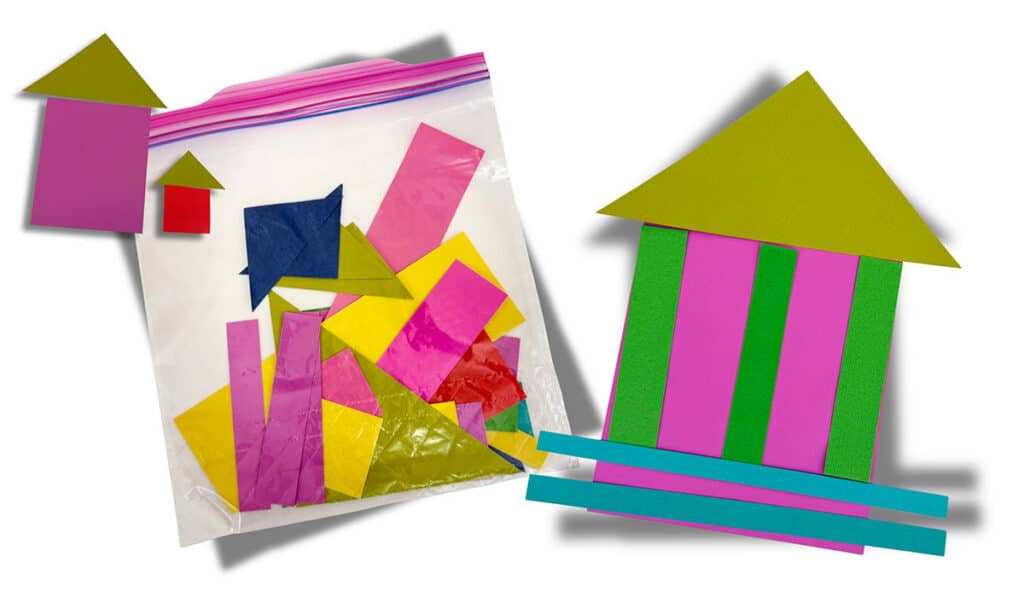
Practice illustrating each concept with the shape kits. Call out prompts for students to demonstrate by copying your building design and then coming up with their own. Once students master the basic concepts, challenge them to add more details by layering shapes to create columns, porches, windows, and doors. Laminate the shapes for reuse, or recycle them into a final collaged structure.
Try prompts like these:
- Show me a triangle!
- Make a symmetrical school.
- Use cool colors to construct a tall tower.
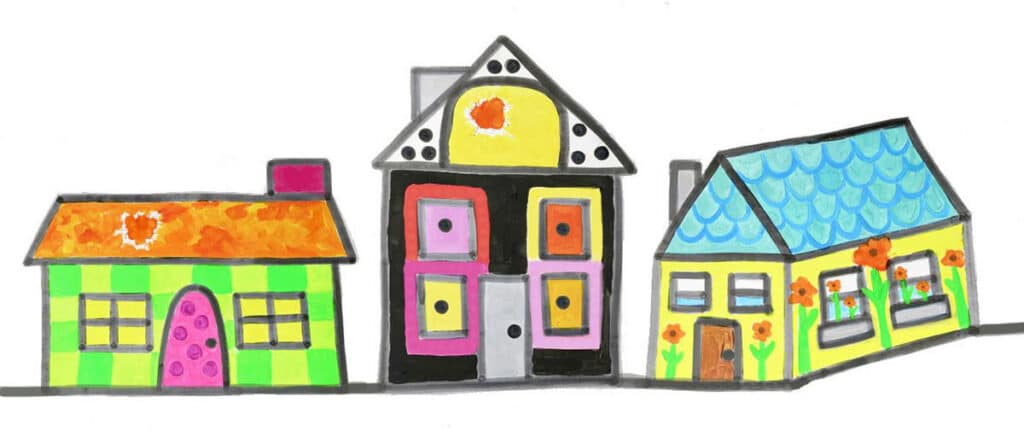
Keep the building going by having students design houses with lines, shapes, colors, and patterns. The My House Is Me Lesson Plan in FLEX Curriculum outlines how to create this artwork using dot markers and tempera paint. It includes step-by-step photos, material lists, NCAS Standards, objectives, and more.
 2. Middle School Designers
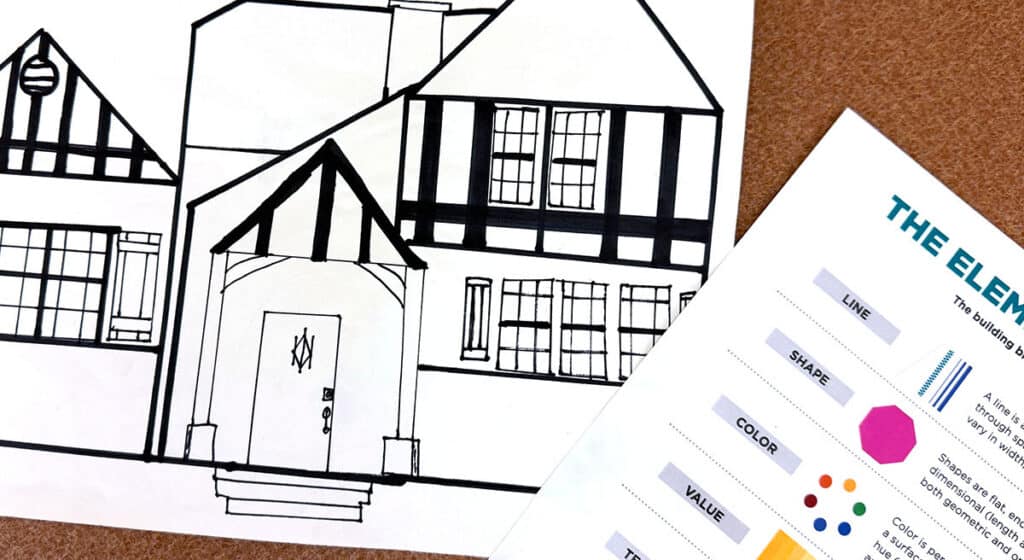
Students in middle school love to draw and design their own buildings! It’s a way for them to include their interests and reflect their personalities. They can also capture a place they’ve visited or a city they’d love to explore one day. Drawing cityscapes is an easy way to introduce and review the Elements and Principles, since they focus on shape, pattern, scale, and proportion. FLEX Curriculum even has animated student-facing videos to help with this!
Here are three ways to generate ideas:
- Dream Your City
Students list everything they saw or would want to see in their ideal city! Time them and see who can come up with the most unique list of 10 features in 60 seconds. - Research Your City
Allow students to browse the web (or provide images) of famous cities around the world. The Iconic Skylines FLEX handout simplifies various architectural styles from around the world. Encourage them to add to their list features they may not have thought of or forgotten. - Analyze Your City
Pull famous artworks that show cityscapes, like Paris Street; Rainy Day by Gustave Caillebotte, Terrace of a Cafe at Night by Vincent van Gogh, or This is Harlem by Jacob Lawrence. Students identify the Elements and Principles of art, along with other city features that will inspire their own work.
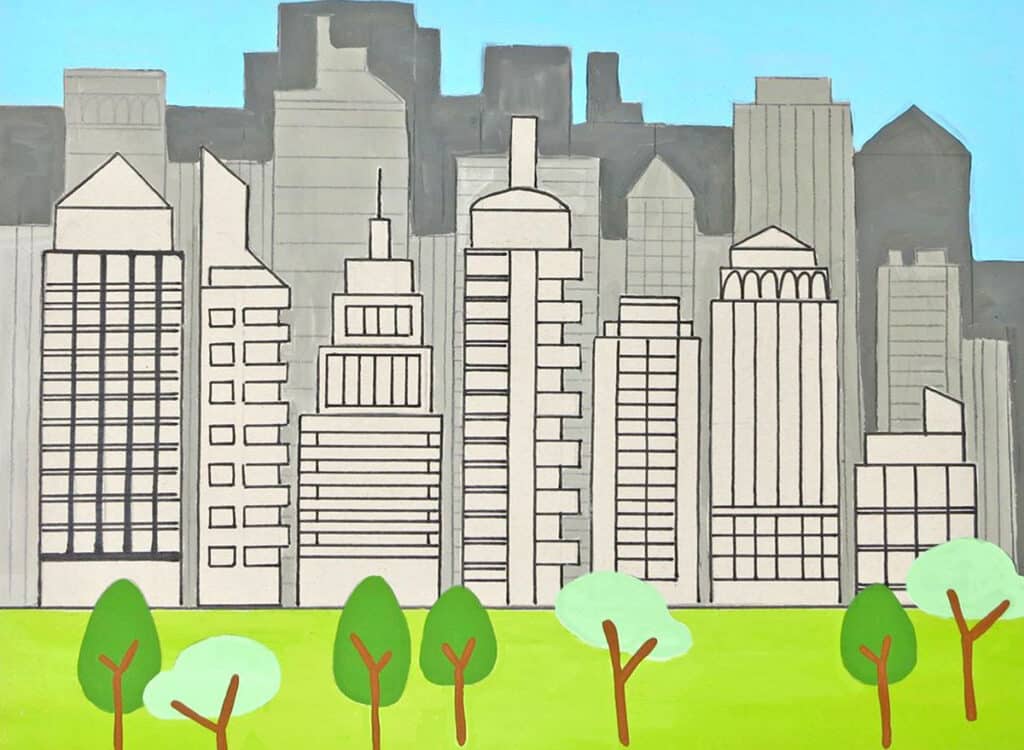
Demonstrate how to overlap shapes to create the illusion of space and depth with the Space: Creating the Illusion of Depth FLEX handout. Prompt students to apply this concept as they design their own cityscape, incorporating personalized features from their brainstorming session. Download the Sleek Skylines Lesson Plan in FLEX to see how to do this with simple gray construction paper, rulers, and tempera paint. It also includes Teaching Strategies, Differentiation ideas, clear process photos, and videos with corresponding question sheets.
Students at this age can really struggle with understanding proportion and scale. Provide them with the FLEX Scale and Proportion sheet to glue in their sketchbooks for easy reference. Simplify their cityscapes to a single layer of buildings, as on the Skyline Silhouettes page, and cut out mini people from magazines and printouts, or stick people drawn on cardboard. Use this as a handy tool to hold up alongside their drawings to gauge proper sizing.
3. High School Architects
For high schoolers, comprehending the Principles of Design can still feel abstract. Architecture is the perfect way to illustrate these concepts in tangible buildings and structures. Plus, students can dig a little deeper into what each concept means. For example, younger students may be demonstrating space as positive or negative, or playing with creating depth, like in the Sleek Skylines Lesson Plan above. Advanced students can explore how the use of space evokes feelings and impacts functionality.
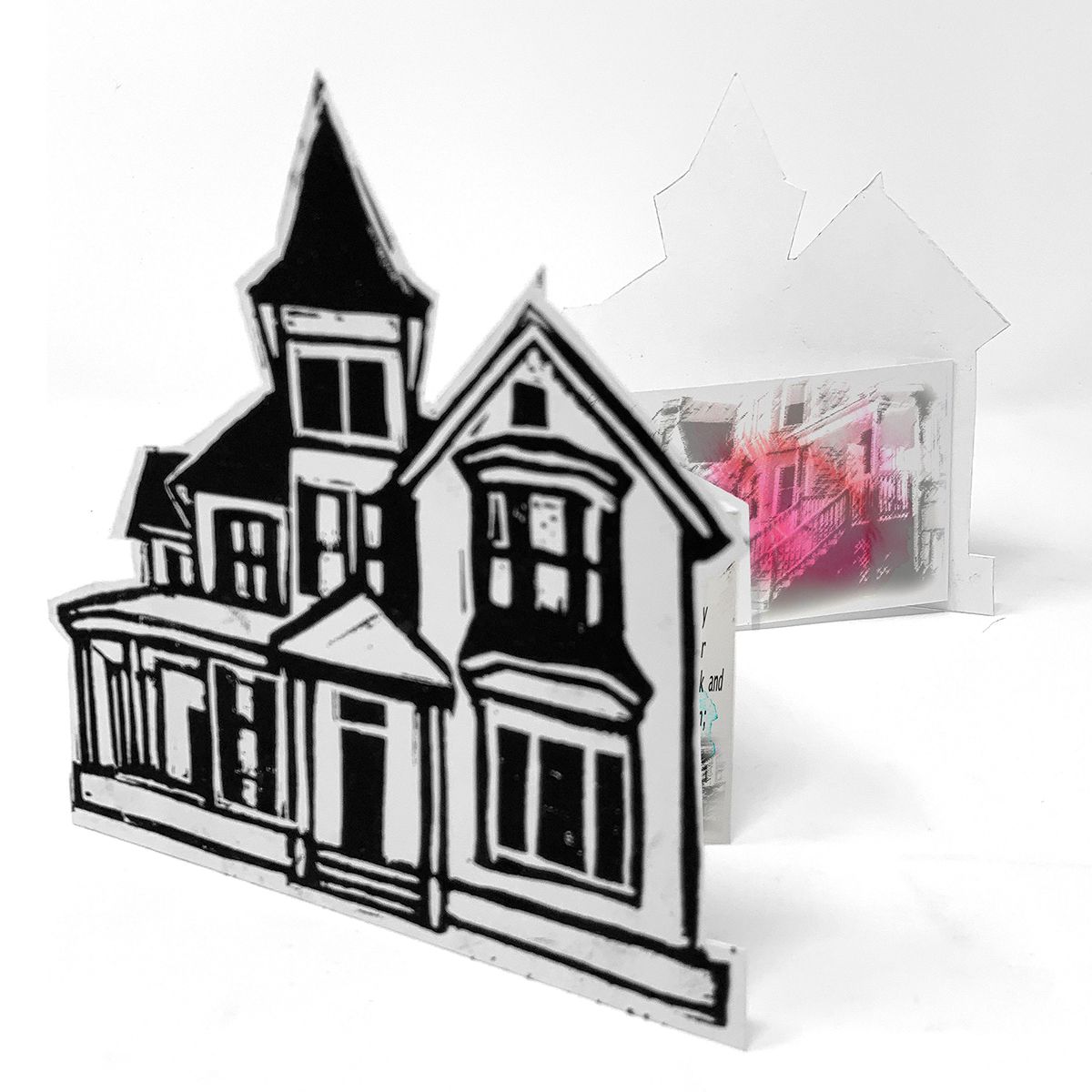
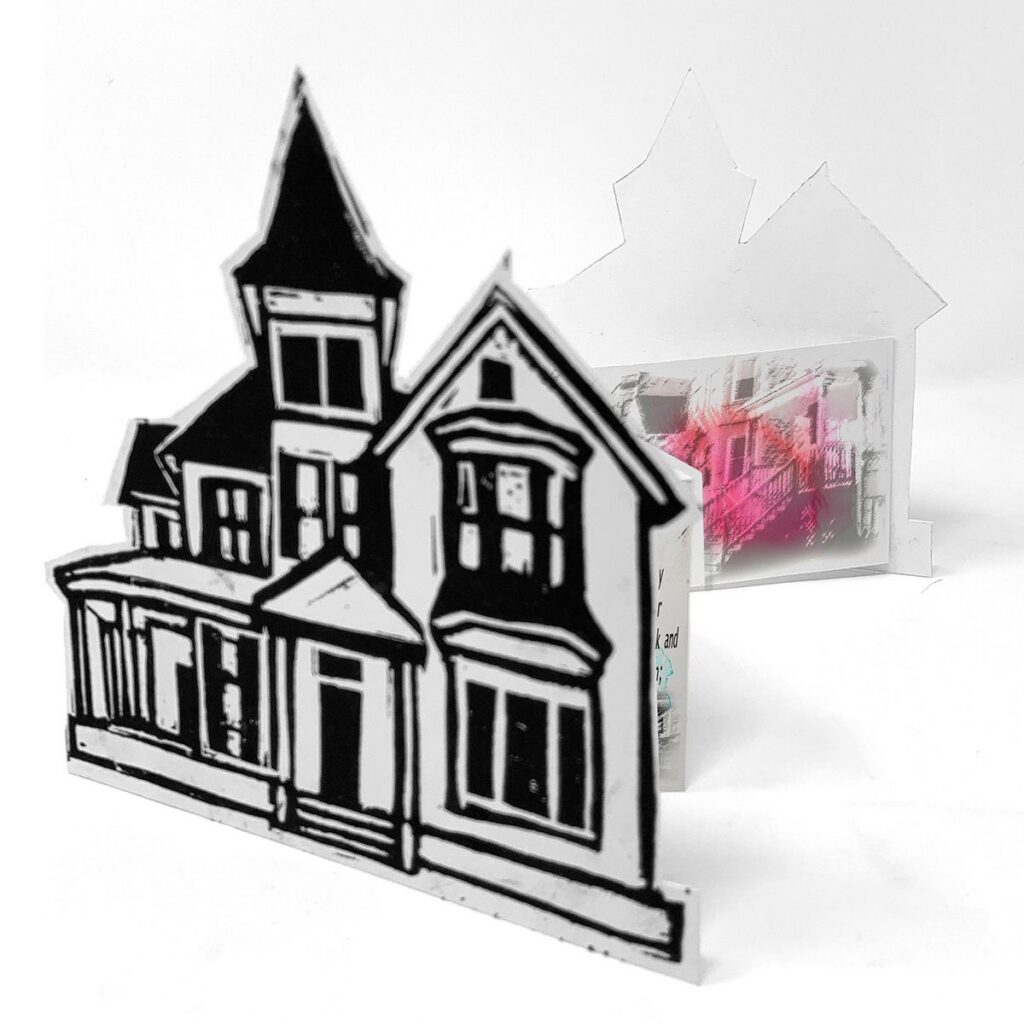
Bring these more conceptual thought processes into a fun printmaking and bookbinding lesson. Bring architectural features and inspiration into a linoleum-block-print cover. Students will create accordion-book spreads that capture the atmosphere and mood of their city. Facilitate ideation sessions where students journal about what they want their city to look and feel like. They can capture these sentiments with writing and color studies.
Ask them questions like:
- What emotions do you feel when you walk down the street?
- What do you smell when you step outside?
- What colors do you see in the sky, landscape, and buildings?
- What is the energy level like?
- What words do you see on street signs, billboards, and advertisements?
Check out the Community Facade Prints in FLEX Curriculum for all the project instructions and resources to implement this lesson with success. Key anchor charts include How to Create an Accordion Fold Book, How to Create a Relief Print, and A Visual Guide to Printmaking. Feel free to make the spreads as abstract or representational, and as imagery- or text-heavy as you desire. The best part is that once the project is complete, you can line up each student’s building book to create a class cityscape!
Confident artists, like solid buildings, require a strong foundation. When students explore the Elements and Principles through architecture, the concepts become more than vocabulary—they become tools for constructing creative ideas with something tangible and customizable. Bolster your own understanding, teaching practice, and curriculum with the strategies in PRO Learning, and get ready-to-go FLEX Curriculum lesson plans for kindergarteners to advanced high schoolers. With the right base in place, both you and your students can build something truly extraordinary!
Which Element or Principle do you struggle with teaching?
Share one takeaway you will add to your existing Elements and Principles toolkit.
To chat about the Elements and Principles with other art teachers, join us in The Art of Ed Community!
Magazine articles and podcasts are opinions of professional education contributors and do not necessarily represent the position of the Art of Education University (AOEU) or its academic offerings. Contributors use terms in the way they are most often talked about in the scope of their educational experiences.