
You’re probably already teaching composition in your art class. You introduce the rule of thirds. You review the Principles of Design. And yet, even after all that… something still feels off. The drawings are careful and detailed, but they’re slightly unbalanced.
So how do we actually teach composition? Shapes, lines, balance, repetition, value grouping… Is composition just everything? And if it is, how are we supposed to teach everything? It’s true, composition is a deep topic. But teaching composition isn’t about imposing strict rules; rather, it’s about giving students the tools to communicate intentionally. Just like we teach technique so students can control their materials, we teach composition so they can control structure.
Bookmark the practical K-12 strategies and activity ideas below to instill composition as a habit and produce stronger artwork.
The Real Problem: Students Are Designing Without Structure
Does the question, “Is it good?” sound all too familiar? Maybe they keep adding to their page, hoping for the best, and aren’t sure when it’s “done.” Composition isn’t necessarily intuitive. While some students may develop a natural sense of balance or emphasis over time, most are making visual decisions based on habit, convenience, or guesswork.
This guesswork often looks like:
- Centered subjects
- Evenly scattered objects
- Nothing touching or overlapping
- No clear value hierarchy
- Awkward croppings
- Accidental tangents
- Flat horizon lines
- Corner suns
These signs aren’t a lack of care or effort, but an undeveloped structure. It’s important for us to meet students where they are and build their understanding incrementally. Composition is layered. When we scaffold concepts at the right developmental stages, we encourage students to take more risks in their artwork over time.
When we explicitly teach students how to analyze compositional structure, we give them more than “tricks.” We give them a:
- Decision-making framework
- Shared visual language
- Clear revision pathway
- Powerful tool for visual storytelling
Another Problem: Composition Is Abstract—Even in Realistic Art
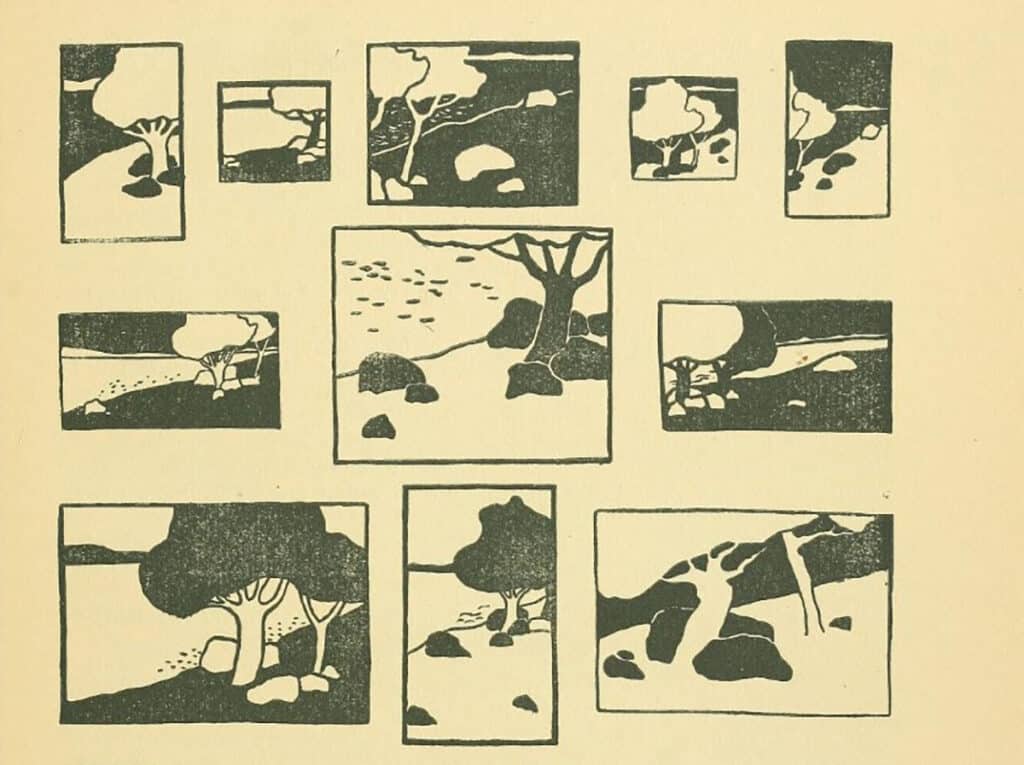
Even the most realistic artwork builds on abstract value and shape design. Arthur Wesley Dow was an artist, author, and one of Georgia O’Keeffe’s teachers. By emphasizing line, notan, and mass, he showed how composition falls apart when students focus only on details without understanding value groupings.
Prompt your students to zoom out and see larger groupings with these exercises:
- Posterize masterworks into 3–5 values.
- Use scribbles, smudges of charcoal, and viewfinders to find interesting compositions.
- Create cut-paper shape arrangements before beginning a drawing.
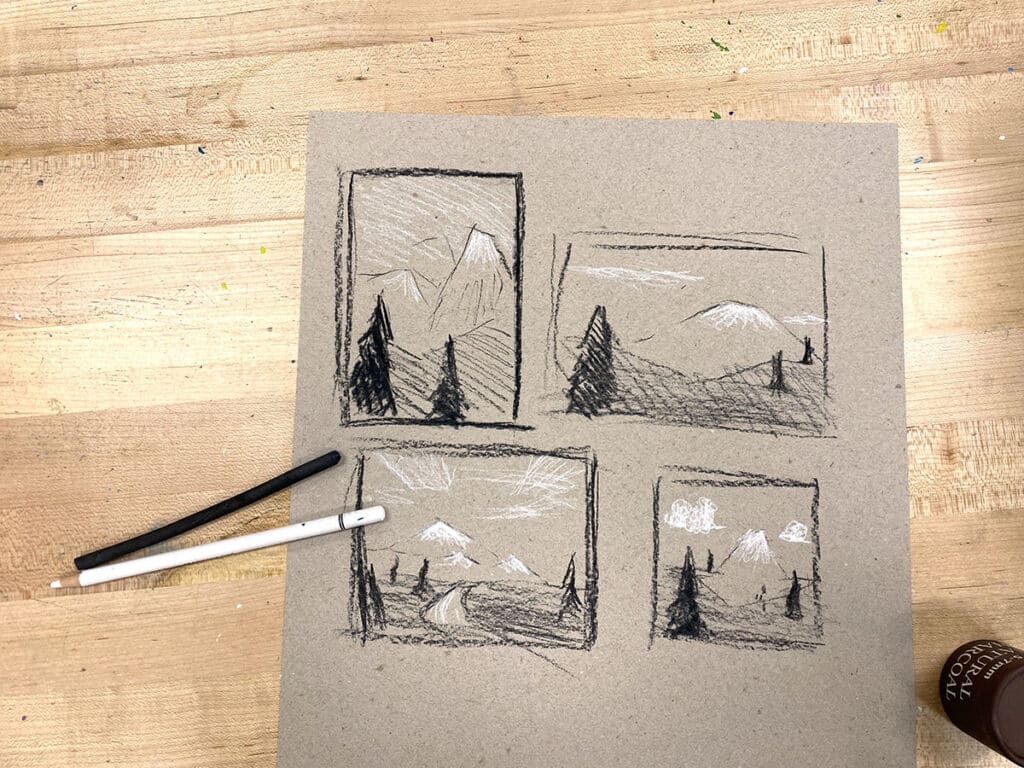
- Require three thumbnail variations before starting final work (upper elementary and middle school).
Add these other helpful manuals on composition to your reading list:
- Composition: A Series of Exercises in Art Structure for the Use of Students and Teachers by Arthur Dow
- Composition: Understanding Line, Notan, and Color by Arthur Dow
- Pedagogical Sketchbook by Paul Klee
- The Painter’s Secret Geometry: A Study of Composition in Art by Charles Bouleau
- Pictorial Composition: An Introduction by Henry Rankin Poore
How to Teach Composition Across Grade Levels
PreK-2:
Teaching composition in art class doesn’t have to wait until middle or high school. In fact, some of the strongest foundations for visual structure can begin in the earliest grades. Young students already respond to balance, movement, and emotion in images—they just need language and guided practice to make those responses intentional. Composition should feel playful and exploratory. Focus on big ideas rather than memorizing formal terminology like “focal point.”
Introduce compositional components and lay a groundwork for your youngest artists with these activities:
- “Calm vs. Exciting” Compositions
Show the book, Exactly You! The Shape of Your Feelings by Sarah Krajewski to spark conversations about shapes and emotions. - One Object
Move one object in a simple design and chat about the emotional shift between the before and after. - Abstract Shape Stories
Read a story illustrated with simple shapes like Little Blue and Little Yellow by Leo Leonni to talk about how simple shapes communicate emotion and relationships. Challenge students to create their own “shape stories” using placement and size.
Grades 3-5:
At this stage, students are ready for more intentional design conversations. They are beginning to understand that composition isn’t about guesswork, but sound critical thinking. They can start using more specific vocabulary, like the Principles of Design, to analyze what works and why. The key is to keep the challenges structured but fun!
Incorporate composition into your next upper elementary art lesson with these ideas:
- 3-Value Studies
Before students begin a painting, have them create small, 3-value tempera or watercolor studies. Limiting the palette and keeping it small stops them from getting distracted by color or detail. - Viewfinder Cropping
Provide simple cardboard viewfinders and explore multiple compositions from the same reference. Require them to sketch at least two different options before committing to a final layout. - Compare and Discuss
Show two nearly identical compositions with subtle differences in placement or balance. Ask students to vote on which one feels stronger, and explain why to build shared visual language. - Cut-Out Game
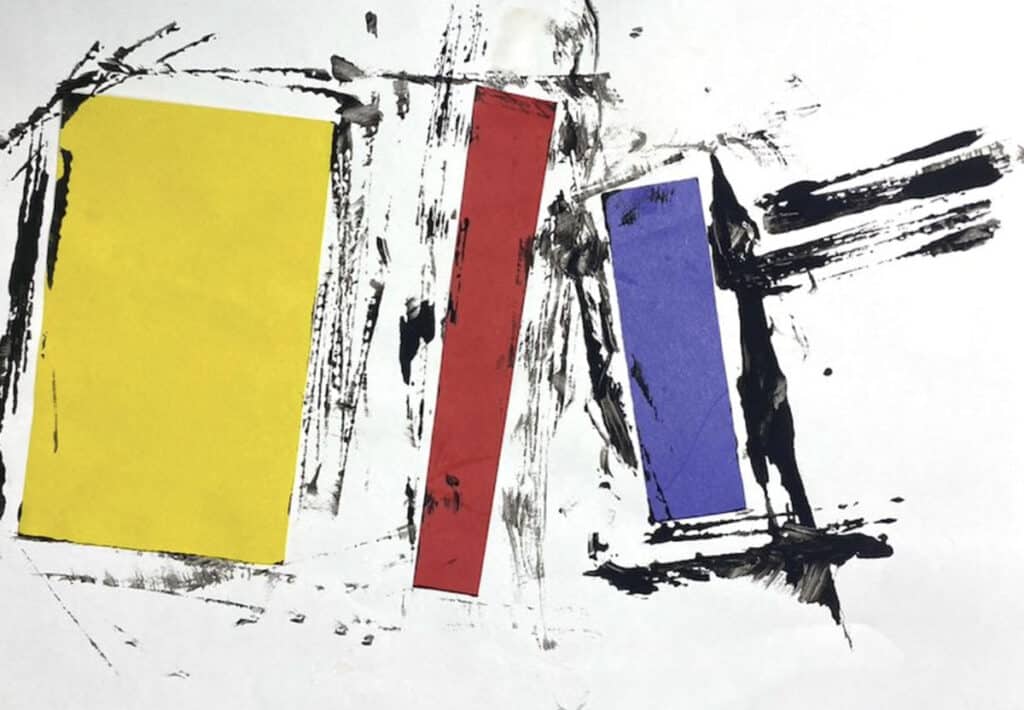
Give every student the same set of cut-out shapes. Challenge them to make the most energetic composition, the most peaceful composition, and more. This shows them how the same materials can create different design choices. - Break the Rules—On Purpose!
After teaching compositional guidelines, prompt students to create the most unbalanced or chaotic composition possible. Naming and exaggerating “mistakes” lowers pressure while reinforcing concepts.
Grades 6-12:
By the secondary level, students are ready to think more abstractly about structure. They can analyze artwork from the past, identify compositional strategies, and thoughtfully apply those ideas to their own work. Show them how composition isn’t a rule to follow but a strategic tool to help convey their concept and message. Rather than treating composition as a quick pre-project reminder, integrate it directly into the entire creative process.
Make a powerful shift in your students’ artistic process and thinking with these strategies:
- Composition-First
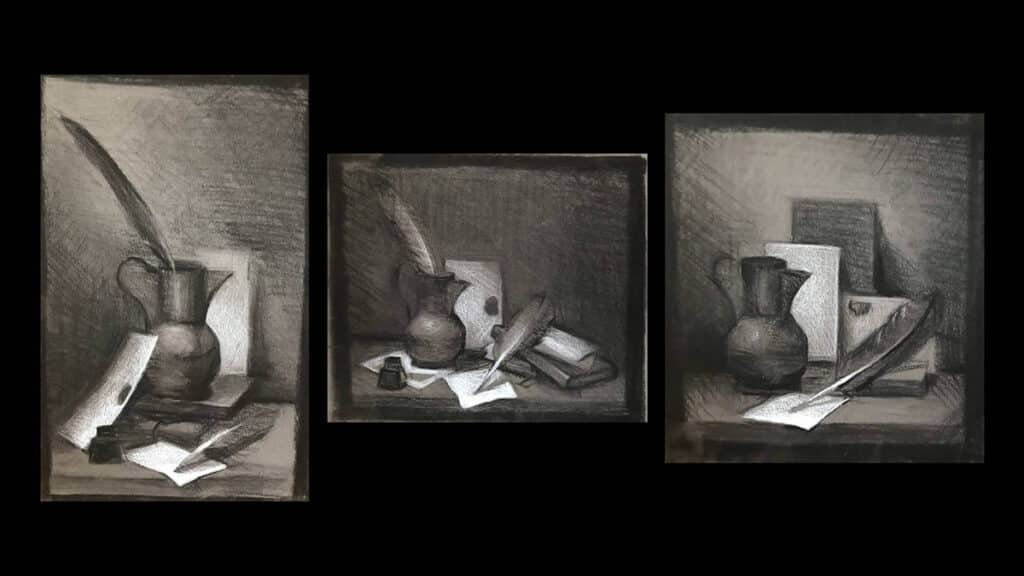
Begin with an abstract value or shape design. Push students to develop a representational image that grows out of that structure. This reinforces the idea that even realistic work has abstract foundations. - Thumbnail Planning
Require 5-7 small composition sketches before students begin a final piece. Limit them to 2–3 values or simplified shapes to keep the focus on structure, not detail. - Tension Points and Tangents
Teach students to scan their work for awkward intersections, near-touches, or distracting edges. Add a structured “composition check” before finalizing a project. - Eye Spy…
Study movie stills or historical artworks and ask what their eye looked at first, what they looked at next, what guided their eye, and so on. This boosts visual literacy and connects composition to storytelling. - Art History Shape Scavenger Hunt
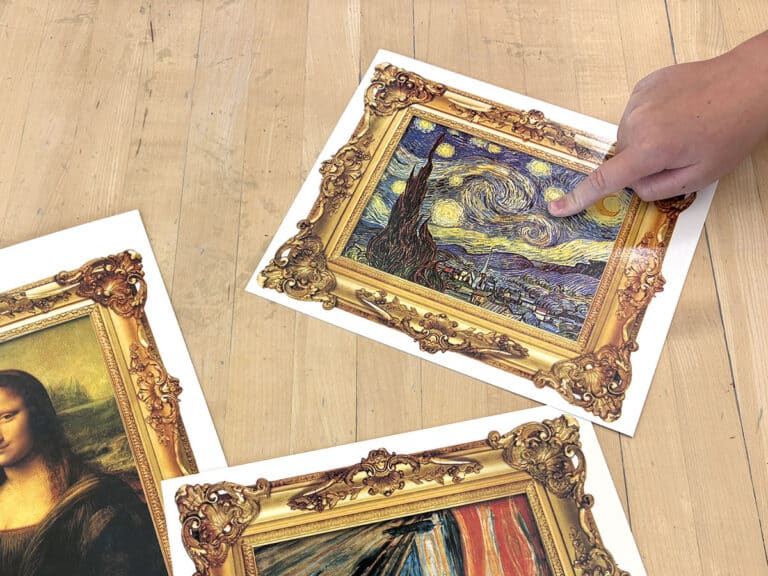
Introduce historical examples for students to find common compositional techniques. For example, Renaissance art typically uses triangular compositions, and Baroque art uses diagonals. This offers clear, concrete structures students can recognize and experiment with.
Level Up: Turn Composition Into a Revision Tool
Checklists are a great tool for helping students remember requirements and concepts. However, when it comes to composition, try reframing your checklist into questions. This moves students away from including things “just because” and encourages them to make more thoughtful choices customized to them and their work. It’s a way to show them that there are infinite ways to interpret, transform, and play with compositional guidelines, and gives them a framework to approach revision.
Include these questions:
- Where does your eye enter the image?
- What is your largest value mass?
- Are any edges accidentally touching?
- What happens if you crop 10% off one side?
- What if we add/remove an element?
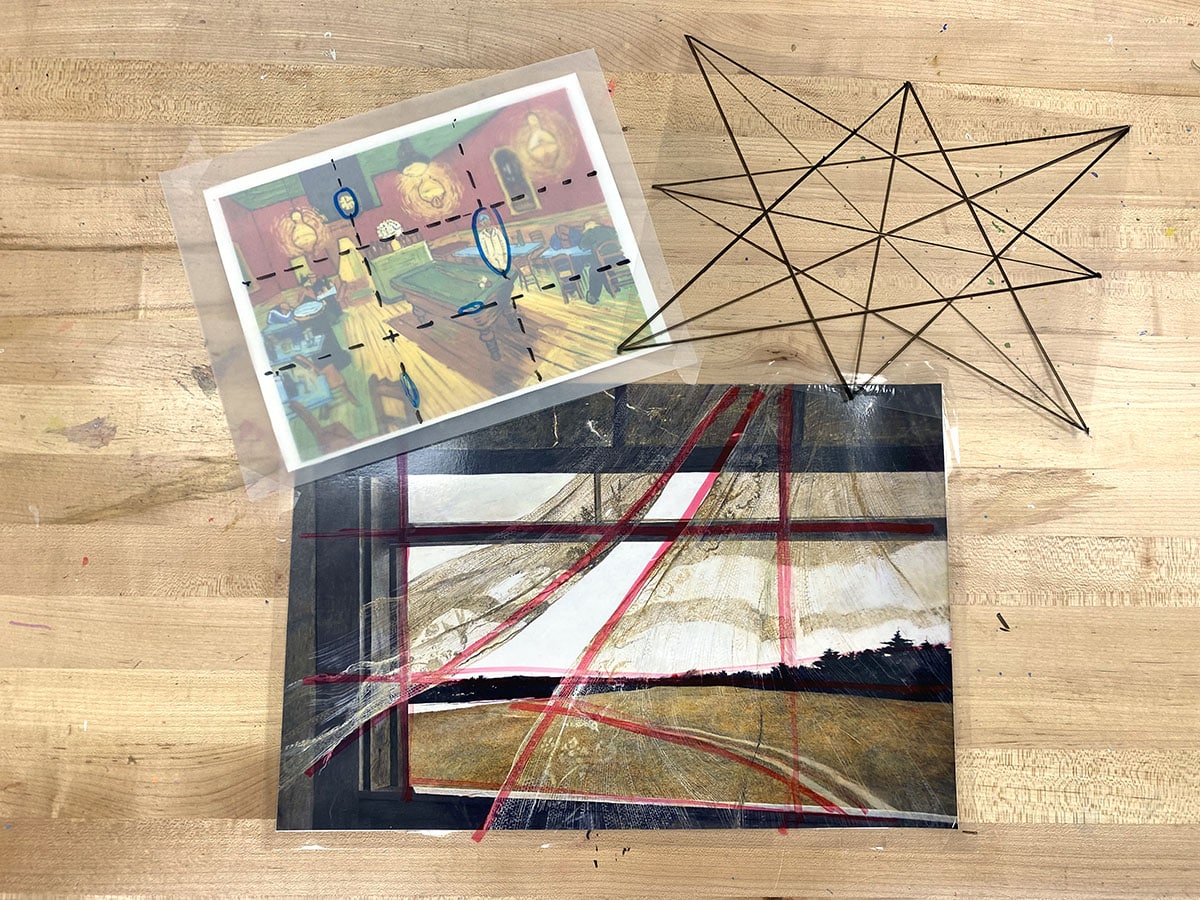
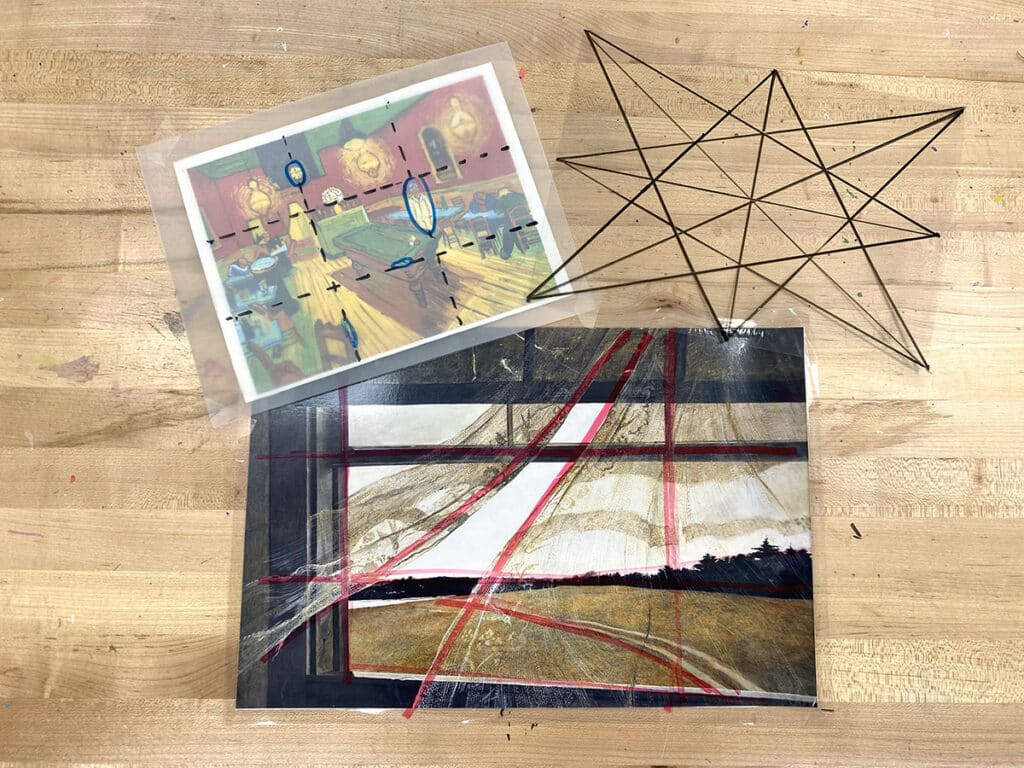
- What happens when you use tracing paper or acetate overlays to play with value grouping, directional lines, or the focal path?
A Twist: Composition in Three Dimensions
Now you may be thinking—this is all fine for drawing and painting, but what about sculpture? The good news is that the same concepts (and tips) apply to 3D design! When students begin working in three dimensions, they’re still organizing visual elements, only now those elements exist in space. Instead of arranging shapes on a flat surface, they’re arranging forms that must hold together from multiple angles. Students must now think about how the eye travels around an object, not just across a page.
Make structure even more visible with these tips:
- Plan With Maquettes
Have students create small models to test arrangement and proportion before committing to a final piece. - Rotate and Evaluate
Build in structured pauses where students turn their work and analyze it from all sides before finalizing. - Notice the Negative
Help students notice that empty space inside and between forms is just as important as the forms themselves. - Prompt Direction
Ask questions to get them moving and looking at their work from all sides and angles. For example, ask how their sculpture changes when viewing it from above or below
“Where does your eye move first from this angle?”
“What changes when you view it from above?”
“Does one side feel heavier or more active?” - Display and Lighting
Provide practical considerations such as location and lighting. Both of these greatly influence compositional decisions and help students think like exhibiting artists.
When students learn to see the foundation beneath their images, they stop guessing and start designing. They begin to make intentional choices, solve visual problems, and revise with purpose. Composition shifts from something abstract and overwhelming to something visible, teachable, and empowering. By teaching composition as a flexible framework rather than a fixed set of rules, we give students the confidence to clearly communicate their ideas. Start small, stay consistent, and layer the learning. Over time, your students will produce balanced, purposeful work that reflects real artistic thinking.
How do you currently teach composition in your art class?
What compositional challenges do you see in your students’ artwork?
To chat about teaching composition with other art teachers, join us in The Art of Ed Community!
Articles and podcasts are opinions of professional education contributors and do not necessarily represent the position of the Art of Education University (AOEU) or its academic offerings. Contributors use terms in the way they are most often talked about in the scope of their educational experiences.