
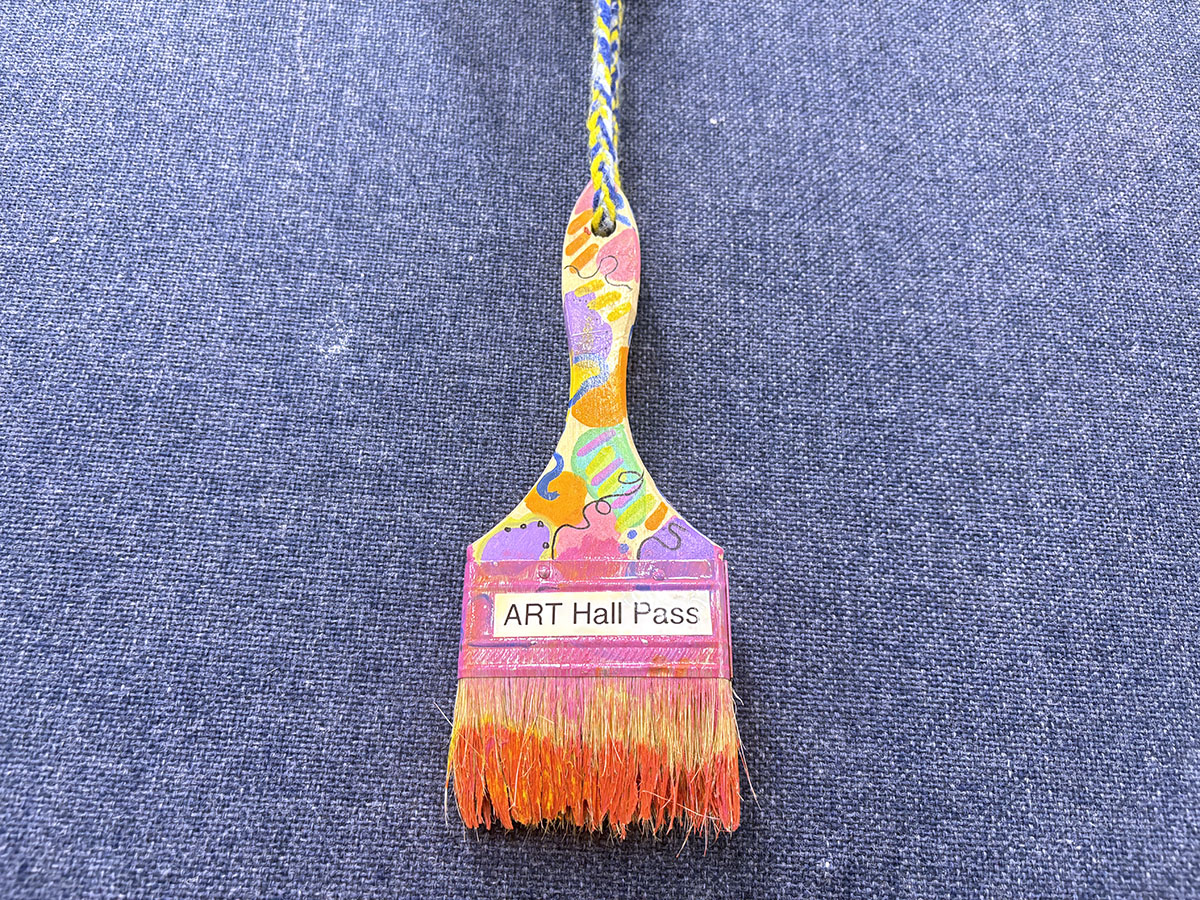
One of the best parts of being a high school art teacher is the relationships you build with students over their four years. However, students get comfortable—fast. While this is great for artmaking and taking risks, it can also mean they know how to push your buttons. Balance your professionalism and relatability without sacrificing rapport and energy by establishing clear, kind boundaries.
Save your art teacher energy by establishing and following these five crucial boundaries.
1. Decide your availability.
The art room is our favorite place to be in the building, so it should come as no surprise that students don’t want to leave either! While we take pride in being the best hangout spot, we often wear down faster without student-free breaks. Before the school year begins, consider your availability boundary. This determines when students have access to you and your classroom so you can get time to reset and sustain your energy.
The art room is a working studio, and the way you allow students to use it will shape their view of the importance of visual art. Plus, your availability should support student learning and prioritize those currently enrolled and on the schedule. By stating when your art room is open and what its purpose is, you are also sharing when it’s closed and what’s not tolerated.
For example, you may post “Open Studio Hours” where students may drop in with permission during a lunch period, before school, or after school to make progress on their body of work. Open Studio Hours could be 7–7:30 am, 11–noon, and 2:30–3 pm. Put these in a clear, accessible spot both inside and outside the art room.
Consider in advance what you will say if a student comes in outside Open Studio Hours or is not making art. Having pre-planned statements makes it easier to confront and redirect students, helping you stick to your boundaries. Being verbally upfront with students will protect the purpose of your art room and the quality of your relationships with them.
Try these statements:
- Hey, it’s good to see you this morning! Unfortunately, we need the space for my Art 2 class right now, but you’re welcome to come back at 11 if you’d like to work on your project.
- I’m glad you want to hang out here today. We need the space for students who are actively working on projects. You’re welcome to stay if you want to pull yours out and show me your progress before you leave!
2. Decide your professional relationship boundary.
Art teachers are some of the most recognizable people in the school. Maybe it’s our colorful clothing, creative hobbies, or expressive personalities. Whatever the reason, our approachability makes boundaries that much more necessary. However, being approachable doesn’t mean you need to say “yes” to everything. You can still spark and maintain strong, warm relationships with students with clear expectations and consistency.
For instance, you can show students you care by learning about their interests while keeping topics and language suitable for school. Be cautious about oversharing personal information and redirect as many conversations as possible back to what they’re learning in the classroom.
Try the Share, Ask, and Redirect Model with these three steps:
- Share: I tried a new recipe this weekend!
- Ask: What’s something new you did?
- Redirect: How can we incorporate that into your sketch here?
3. Decide when you’ll make exceptions.
High school students constantly ask for small exceptions, like changing seats or wearing headphones. While one exception may seem harmless, repeated exceptions can unintentionally create a new expectation. Plus, they may seem minor, but after responding to them all day, you’ve made dozens of additional decisions. Protect your art teacher energy and proactively make your decisions rather than scrambling under pressure. Students may experience disappointment in the moment; however, over time, your consistency will build trust and reliability.
Learn your district and school’s policies before students begin asking for exceptions. Decide ahead of time where you will be flexible and where you will draw the line. After all, every classroom has moments that call for flexibility, but not every request deserves an exception.
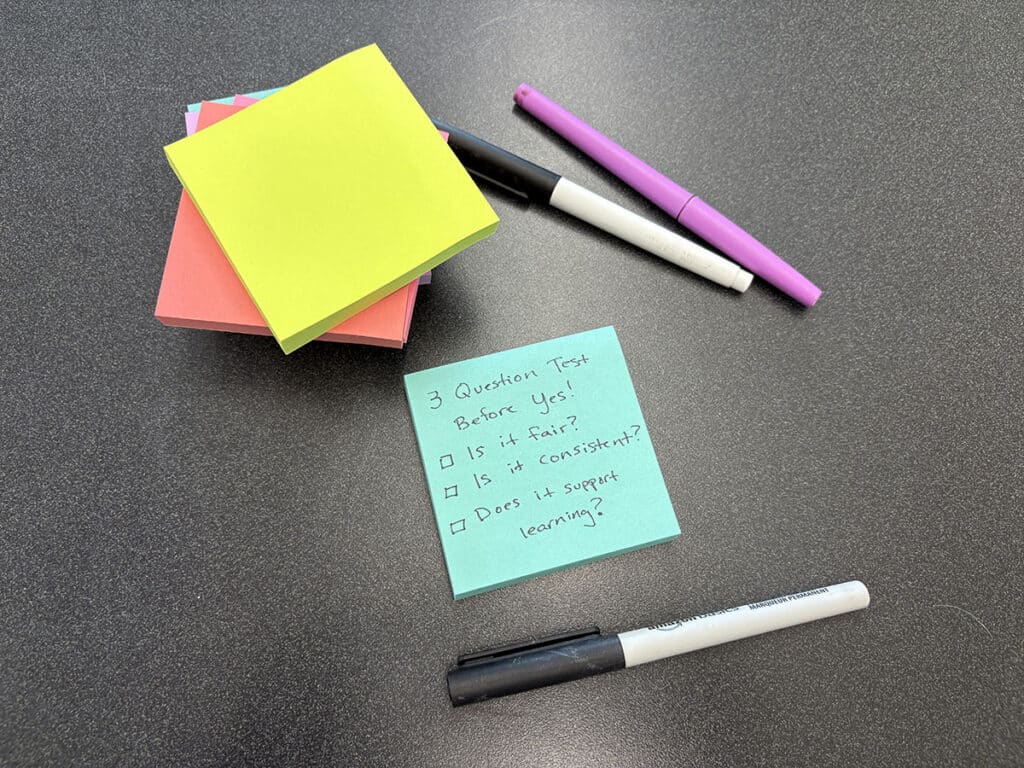
Try the “Three Question Test Before Yes:”
- Is it fair?
- Is it consistent?
- Does it support learning?
4. Decide how you will respond to pushback.
Sometimes saying “no” is only half the challenge. The next difficult step is when negotiations happen. High school students are learning to be independent thinkers and will ask questions or seek more information. When students say things like “But other teachers let me do it….” or “Why not?” it may make you question your answers. Think through how you’ll respond once you’ve made a decision, so you’ll be confident in the moment.
Try these phrases to stand by your decisions:
- I’m going to stick with our classroom expectation.
- I know that’s disappointing, but my answer hasn’t changed.
- I’m going to use the same expectation for everyone.
- Let’s keep this conversation classroom-appropriate.
- I’ll consider that for the future, but for today, let’s do this.
5. Decide on your communication boundary.
Have you ever checked your email in the morning to get a dozen emails from one student demanding an immediate response? Students typically get answers with the click of a button, and you’ll have to teach and remind them that you’re human and have other commitments outside the art room. Reinforce that you’re happy to help, but give clear parameters for how and when students can connect with you.
Try these ideas to protect your mental energy:
- Remove your school email from your phone
- Schedule away messages for long breaks
- Set office hours as part of your signature
- Add communication expectations to your syllabus

Draw the line this school year by defining your boundaries with high schoolers before problems arise. Healthy boundaries don’t damage relationships—they protect them. Instead of becoming stricter, become more intentional with the “why” behind your expectations and more confident in upholding them. When you spend less energy on correcting behavior, everyone has more time to be creative!
What boundary do you wish you had had when you first started teaching?
Which boundary do you find your students always testing?
To chat about how you draw the line in high school with other art teachers, join us in The Art of Ed Community!
Magazine articles and podcasts are opinions of professional education contributors and do not necessarily represent the position of the Art of Education University (AOEU) or its academic offerings. Contributors use terms in the way they are most often talked about in the scope of their educational experiences.