Paint is one of those magical art media that instantly hooks students! Yet it can also become one of the most frustrating media to teach because of the amount of mess and cleanup involved. The longer paint sits, the harder it is to clean up and the more likely it is to create an even bigger situation, like stained clothes or a clogged sink. Fortunately, there are many tricks to keep your studio space sparkling, so you can prioritize the actual paintings rather than the paint.
Focus on these three key areas for tricks to keep your painting classroom looking like new all year long!
There are three main areas to consider when creating with paint. First, there’s the counter where students will be pouring paint, then the tables where they use it, and finally the sinks where they clean up.
1. Countertops
Whether you have countertops or a materials table, this is the first crucial area to clean and keep tidy. Places where all students can access supplies can get messy fast! Fortunately, we have several tricks up our art teacher sleeves that will prevent both stress and mess.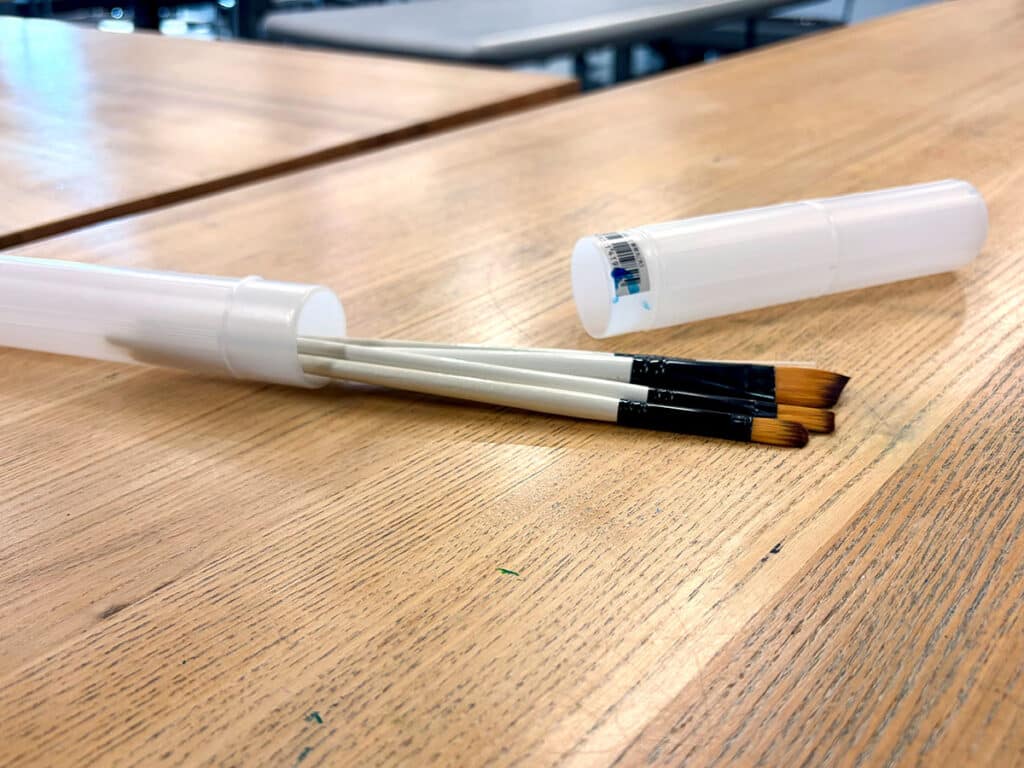
Try these tricks to keep your countertops clean:
- Store paint bottles in small plastic tubs.
Grab a few inexpensive or repurposed bins and organize your pint-sized bottles by color or color scheme. This allows you to quickly set out or remove colors based on each class’s project. The bins also keep upside-down bottles from falling over, so you can squeeze every last drop out! - Provide brush tubes for each student.
Purchase brush tubes or order bulk cases of travel toothbrush holders from the dollar store. Each student is responsible for their own brushes for the paint unit, semester, or year. Students can get right to work at the beginning of class because it’s one less thing to wait in line for. Plus, it really discourages students from leaving brushes in the sink. - Color-code your brushes.
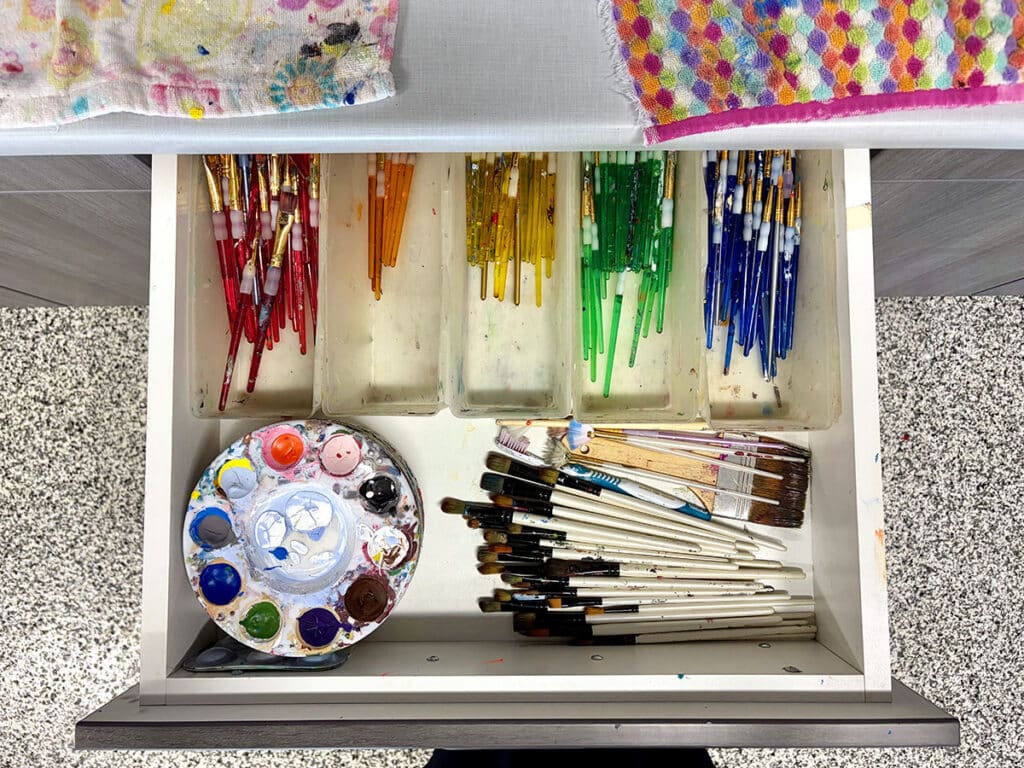
Purchasing and storing brushes by color helps manage excess brushes. It’s much easier to tell a student to grab a “red brush” than the “one-inch flat brush” in a pinch.
2. Tables
We’ve gotten the paint from the counter to the tables, so now it’s time to keep it off the tables! Streamline trips to the sink with preventative steps to keep your tables looking super clean through to the end of the year.
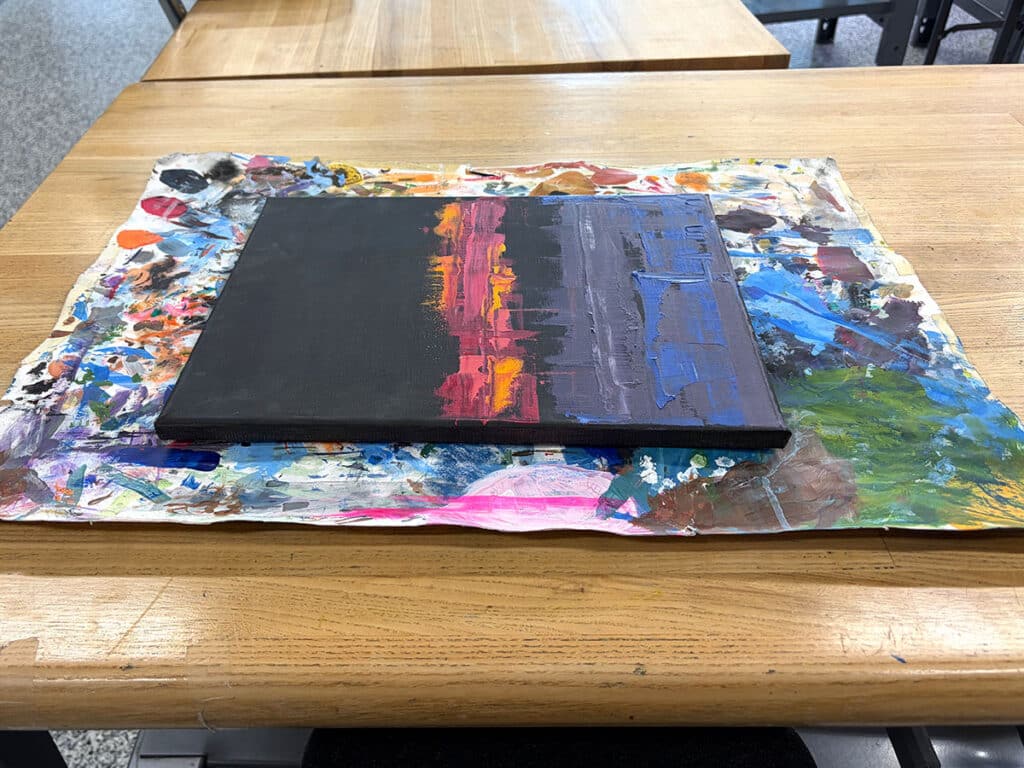
Try these tricks to keep your tables clean:
- Cover workspaces with placemats.
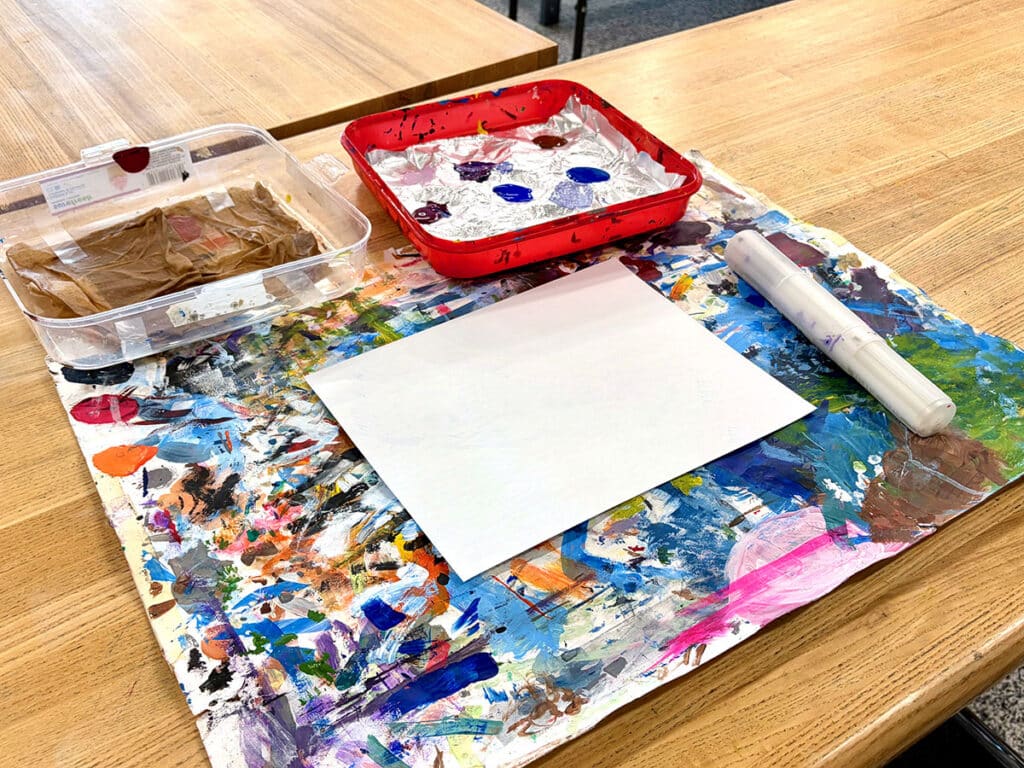
Create a class set of “placemats” or “messy mats” for easy cleanup. These are one-time purchases or DIY projects that will last for years and years. Use 24×36 inch cardstock paper and laminate it so it’s easy to wipe down. If you have larger paper, doubling the size gives even more structure and space for students to carry lightweight work on top to and from their table. If you have the budget, easels are also a great way to keep paint off the tables! - Ask for half-used paper towel rolls.
To avoid running out of paper towels, some custodians will take rolls that aren’t quite used up yet and leave them on the counter. Ask the custodial team to save them for you and place them at each table. That way, each table will have emergency paper towels for accidents, and there will be less traffic to and from the sink zone. - Cover paint palettes with foil sheets.
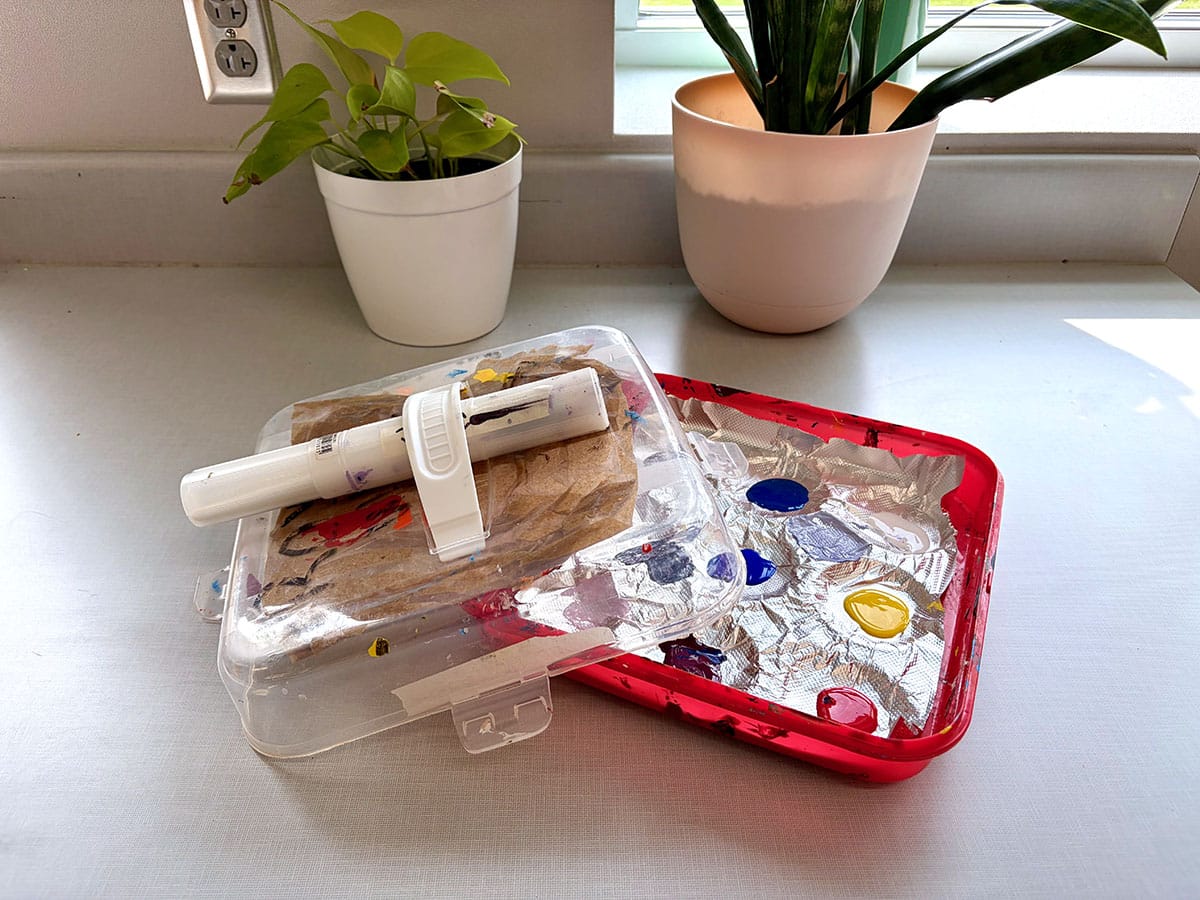
Store specially mixed acrylic paint colors for days using precut foil sheets, as shown in the video below. Dollar-store muffin-carrying cases with lids and damp paper towels, or ice cube trays with lids, also help keep paint fresh. Eliminate scrubbing stacks of palettes by having students pre-line their paint palettes with a piece of foil or plastic wrap—when they’re done, they just fold up and toss in the trash! - Encourage students to reuse paper towels.
This one may sound silly, but if you train your students to reuse paper towels, it will conserve your supply and reduce traffic jams. Show students how to dip their existing paper towel into their paint cup to wipe up tabletop smears or scrape large globs of paint off their palettes into the trash.
3. Sinks
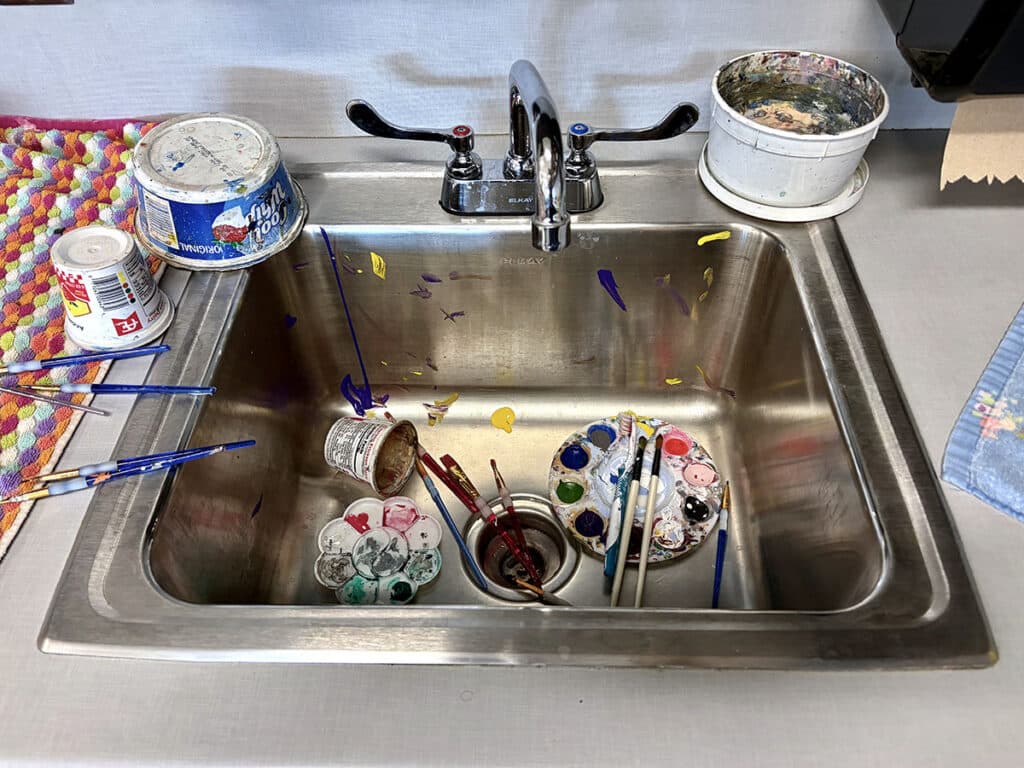
Every art teacher wants at least one sink in their art room, but once you have one, they can quickly become the bane of your existence! Having strong, effective systems in place is imperative to keeping the sink area tidy and functional. If you’re struggling with your sink zone, focus on keeping paint out of the sink in the first place! Encourage students to work in smaller batches and to save excess paint in containers or scrape it directly into the trash can.
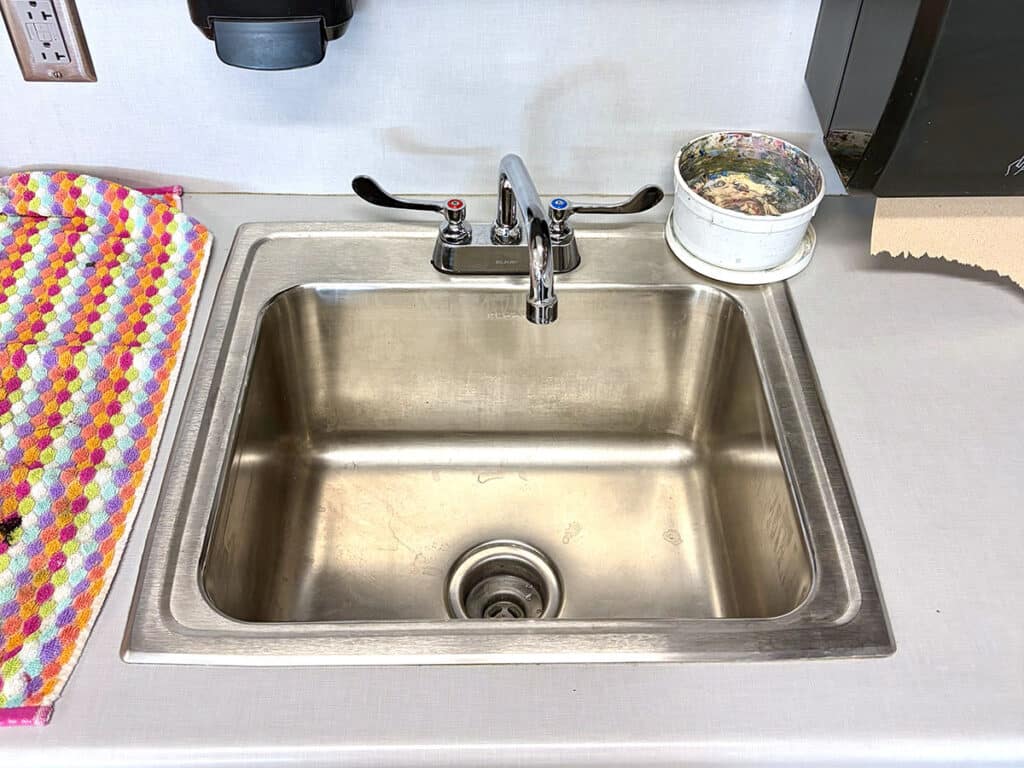
Try these tricks to keep your sinks clean:
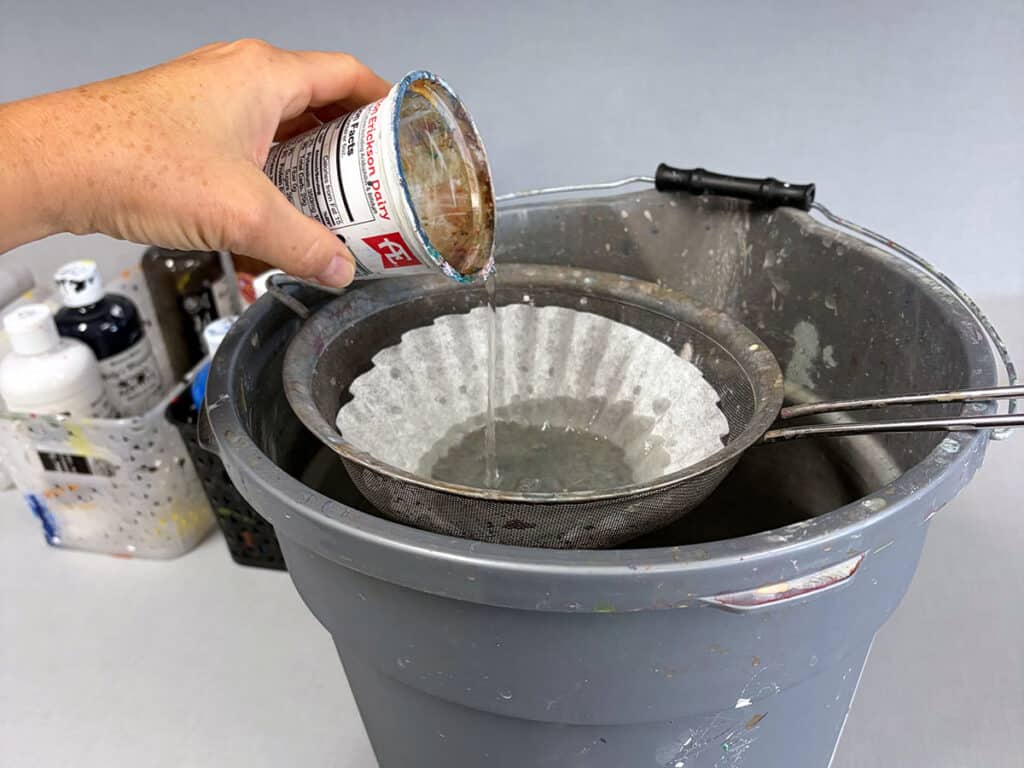
- Use a water bucket and a coffee filter to prevent clogs in the drain.
Save your sink from getting splashed and clogged with paint. Have students wipe off excess paint onto a paper towel before submerging their brush in their water cup. At the end of the period, pour the water cups into a coffee filter positioned over the bucket. The filter will catch all the large paint blobs! Carefully dispose of the water directly into the drain or outside. - Hoard old towels!
Old towels are essential for every art room. Use them to dry palettes, cups, and brushes, or just keep them handy for spills. You can collect these from friends and family, or parents and colleagues. If they get really messy, you won’t feel bad tossing them! - Separate watercolor supplies.
Generally, acrylic and tempera have similar enough characteristics, so you can use the same paint palettes and brushes for both. Watercolor, India ink, and oil paint are very different, and it’s helpful to have separate supplies if you have the storage space and budget. Organize your various paint types with coordinating tools in separate bins, cabinets, or carts. This makes it easy to switch between media from one class to the next, keeps cleanup manageable, and preserves the integrity of each medium.
Paint is messy by nature, but it’s also a really engaging medium to teach to students! While no system is perfect, having a few tricks in your art teacher bag can prevent a lot of headaches, stress, and cleanup. Take the time to teach simple routines to streamline traffic flow and maximize studio time. Small habits can make a meaningful difference, equip students with greater independence, and allow you to focus on the joy of painting.
How do you keep paint out of your sinks?
Share your best tricks for keeping painting stress-free and mess-free!
To chat about more paint tricks with other art teachers, join us in The Art of Ed Community!
Articles and podcasts are opinions of professional education contributors and do not necessarily represent the position of the Art of Education University (AOEU) or its academic offerings. Contributors use terms in the way they are most often talked about in the scope of their educational experiences.