
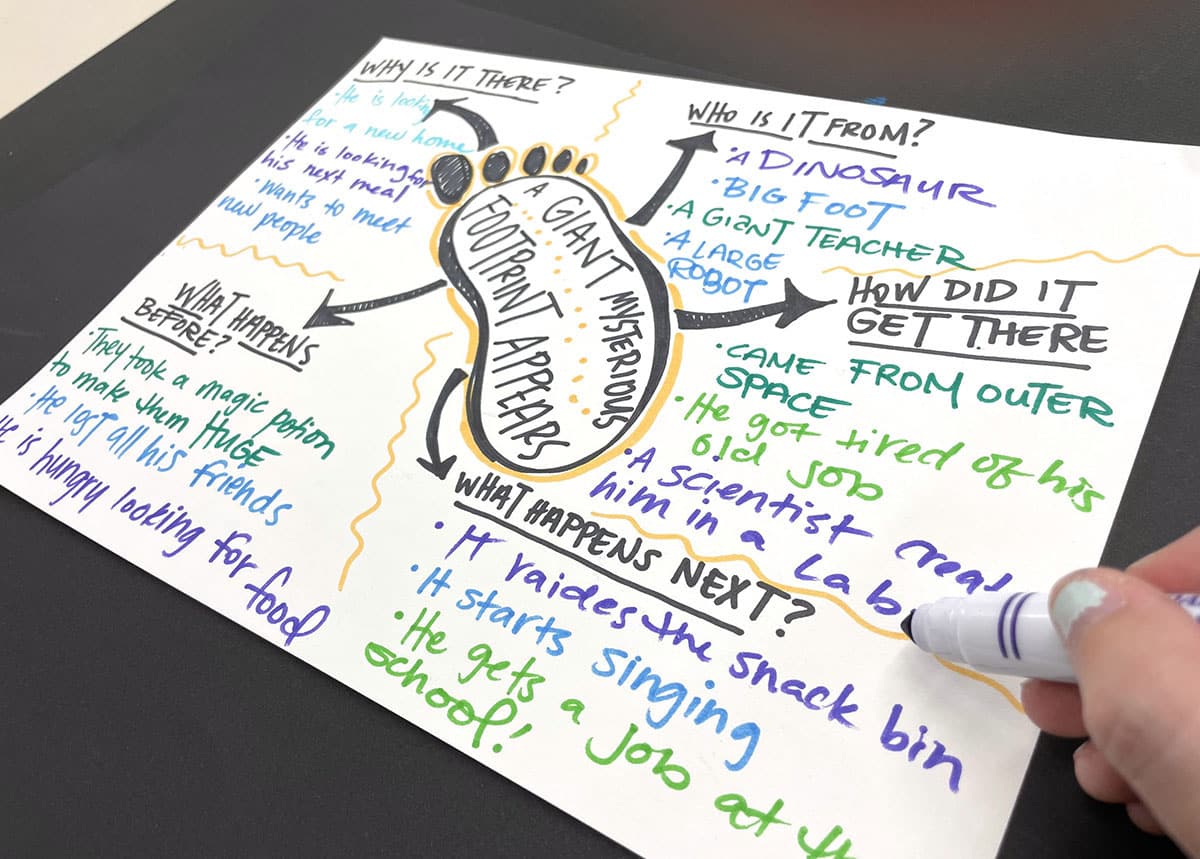
One of the most familiar problems we hear from students in the elementary art room is, “I don’t know what to draw.” It’s usually not a lack of creativity; they simply haven’t developed strategies for generating and developing ideas. At the elementary level, they’re still building the creative problem-solving skills they use to plan, make decisions, and explore different solutions. When they’re unsure or stuck, it’s easy to look to the teacher for an answer.
Instead of telling students what to draw, teach them strategies for nurturing original ideas through brainstorming. Brainstorming improves the overall fluency, flexibility, and originality of students’ ideas. As they gain confidence with ideation, they can take greater ownership of their artistic process. Do brainstorming exercises as quick warm-ups, sketchbook activities, or brain-break games.
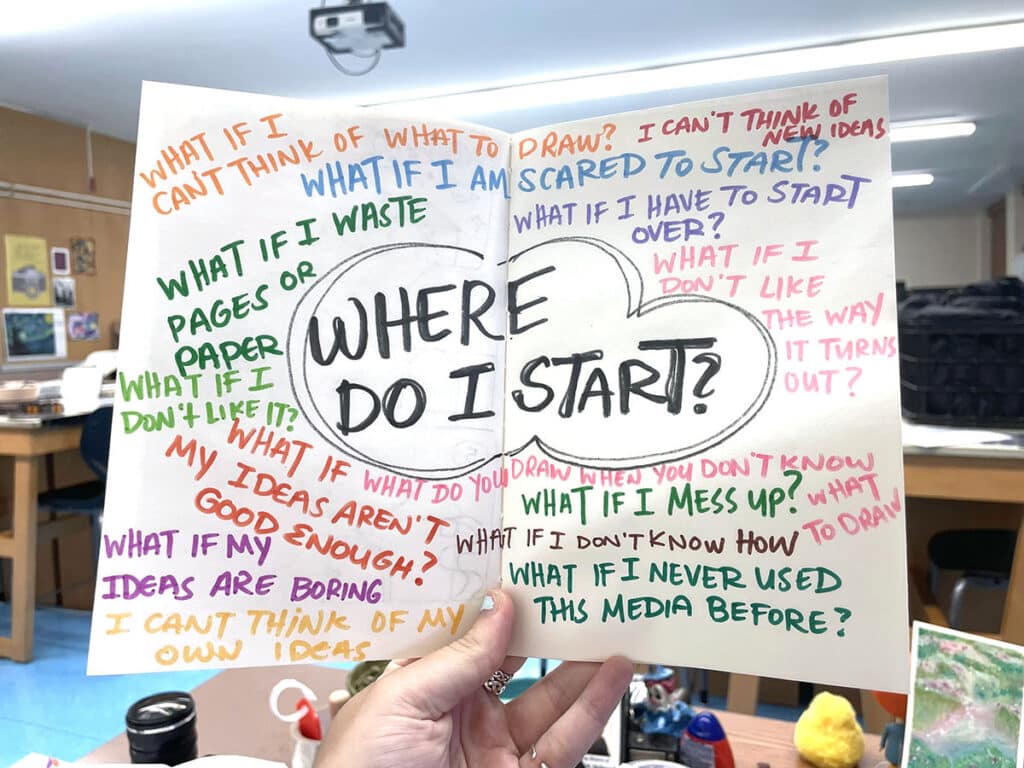
Try these six activities to help students move beyond their first idea and explore possibilities!
See some of the activities included in this article (or variations of them) in action. Sketchbooks 101 is an AOE YouTube series featuring elementary art teacher Nylah Khan and high school art teacher Crystal Dunn. Each teacher takes you through several classroom-tested brainstorming activities you can use to elevate ideation and sketchbook practices.
1. Idea Ladder
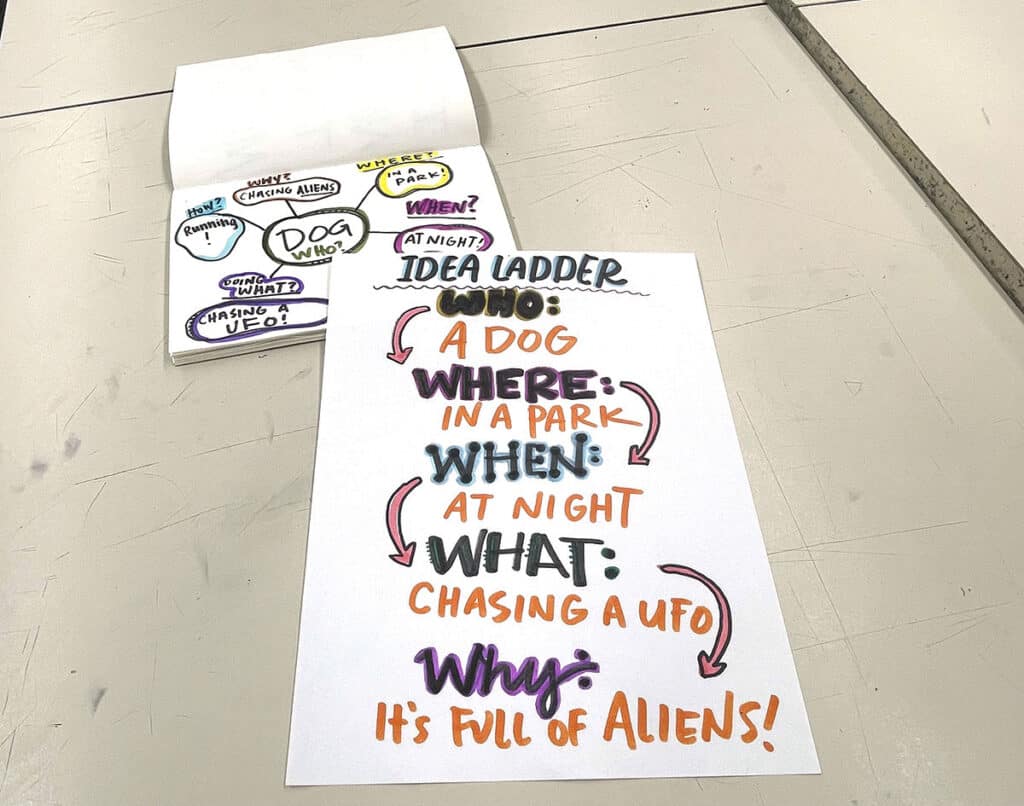
Sometimes a student doesn’t need a brand new idea—they just need help figuring out what could happen next. Use an Idea Ladder to take an ordinary idea and turn it into something a bit more unexpected. Start with a basic thought and prompt students to ask the 5 W’s (who, what, where, when, and why) to gradually add more detail. Students will often surprise you with the direction they take once they realize there isn’t one expected answer!
Here’s an example:
- Who? dog
- What? dog chasing a UFO
- Where? dog chasing a UFO in a park
- When? dog chasing a UFO in a park at night
- Why? dog chasing a UFO in a park at night because it’s full of aliens
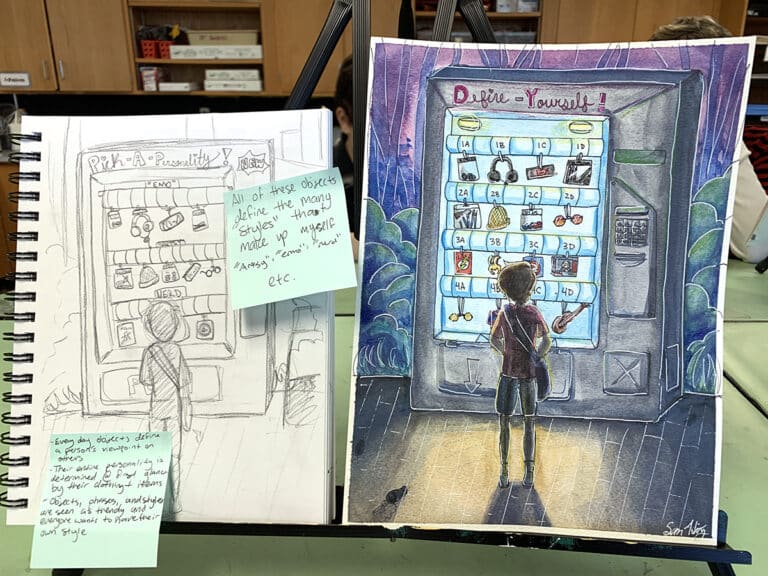
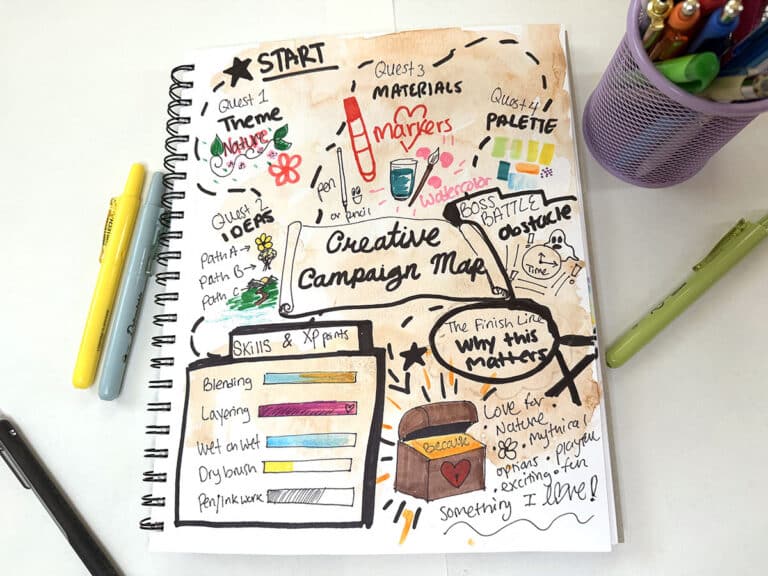
Students can record each step in a sketchbook or use a Think Sheet or Creative Mind Map from FLEX Curriculum to document their thinking. These resources help students see each step and recognize how a simple budding idea can become more specific and complex with thought and detail.
2. “What If?” Sketch
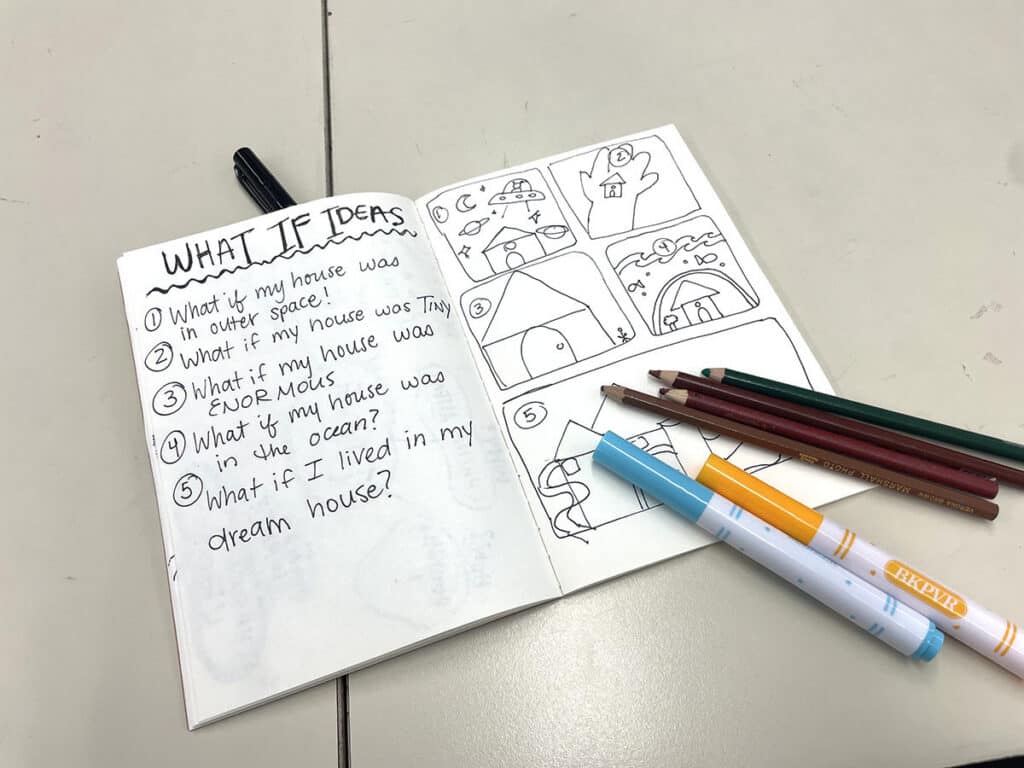
Similar to the Idea Ladder, this activity requires students to ask as many “What If?” questions as they can. Asking the same question naturally pushes students to get more creative with each answer. It also allows them to get wild and dream before making commitments on paper.
Let’s look at an example about a house:
- What if the house could move?
- What if it were tiny?
- What if it were enormous?
- What if it were in outer space?
- What if animals lived inside it?
3. Idea Mutation
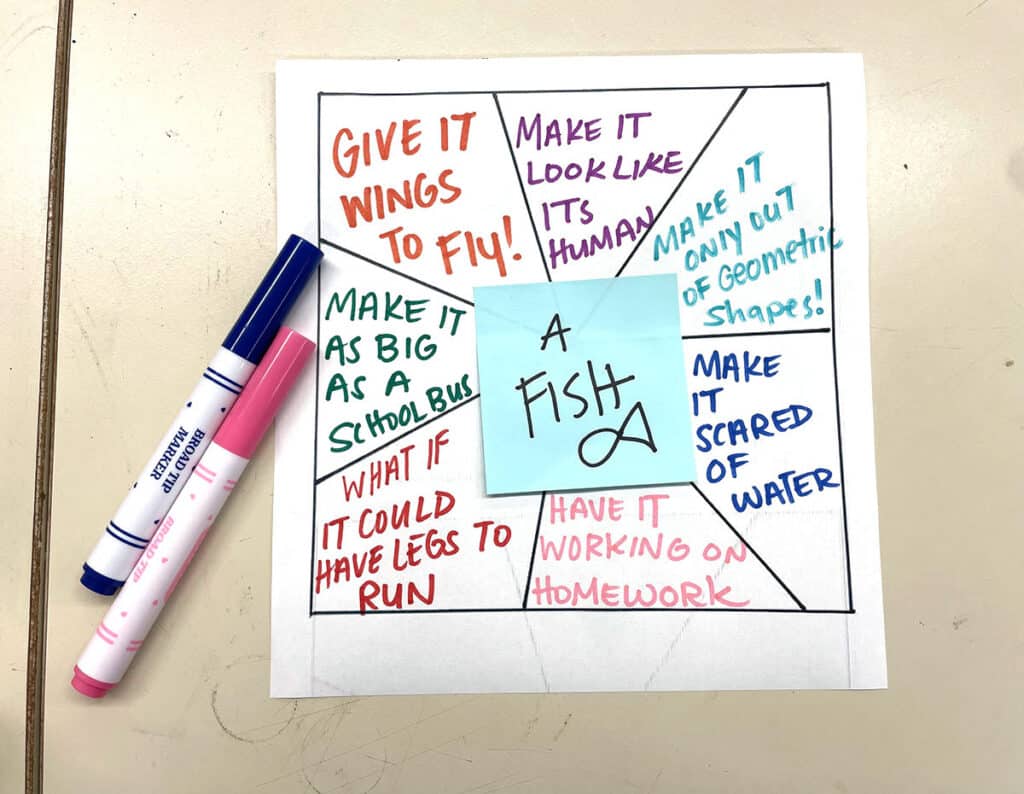
This is another activity to further push original ideas. As students sketch their idea, throw them a curveball by adding a specific characteristic or requirement they must incorporate every 5 minutes. This challenges their creativity and willingness to take risks, as they must commit without overthinking. At the end, ask them what idea emerged that surprised them!
Try these mutations:
- Make it underwater
- Set it in the past or future
- Make it only out of organic shapes
4. Idea Mash-Up
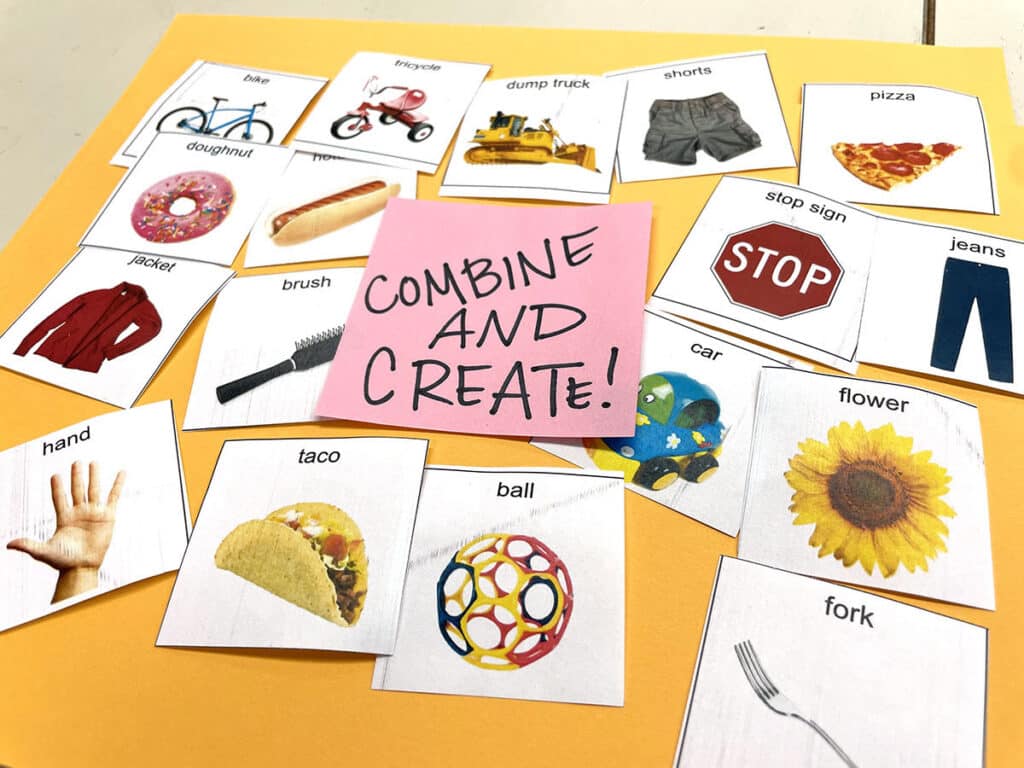
Some of the most interesting ideas happen when two things that don’t normally belong together suddenly meet. In this strategy, give students two unrelated words, images, or objects to combine. For younger students, provide picture cards instead of written words for them to work from. Then, have them create three completely different versions of their pairing.
For example, Airplane and an Ice Cream Cone can become:
- An airplane could take the shape of an ice cream cone.
- An ice cream cone could fly like an airplane.
- An airplane could deliver ice cream.
- An airplane could slowly drip into melted ice cream.
5. The “Wrong” Idea
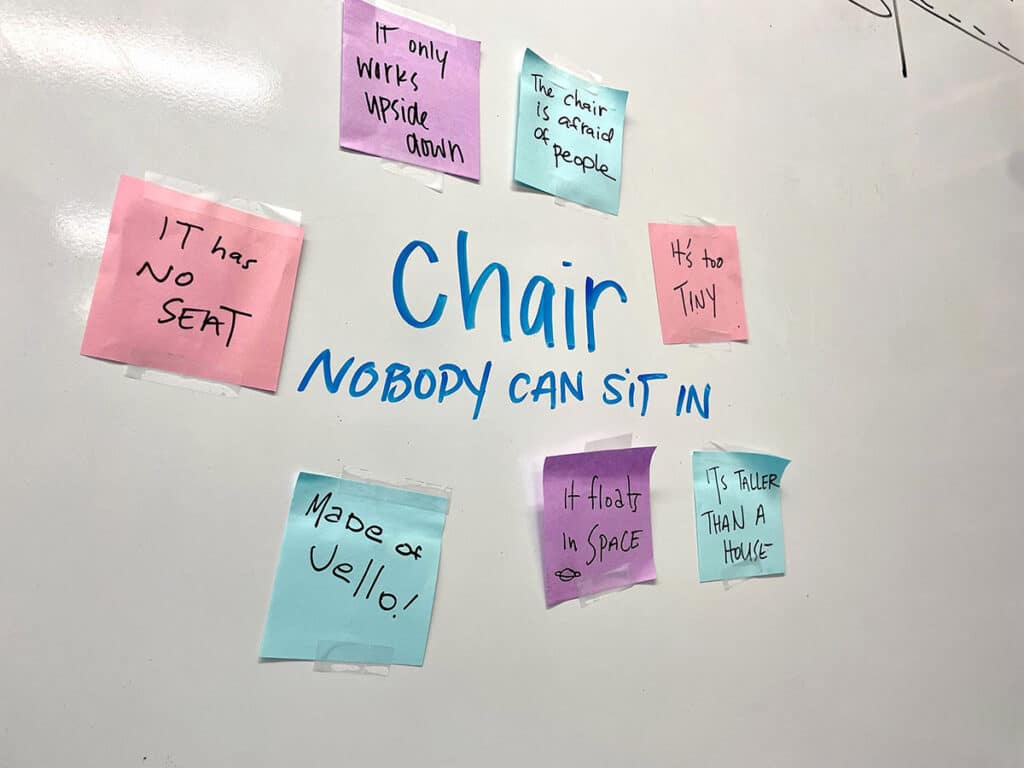
This activity is very freeing because you’re asking students to make mistakes on purpose. Provide a prompt that encourages them to come up with the silliest, strangest, or most unexpected answer they can imagine. Examine the final sketches and discuss what makes them “wrong” and what would happen if this existed in real life.
Start with these “wrong” prompts:
- Draw a chair no one can sit in.
- Draw a fish with legs.
- Draw a dog that doesn’t like being a dog.
6. Collaborative Idea Challenge
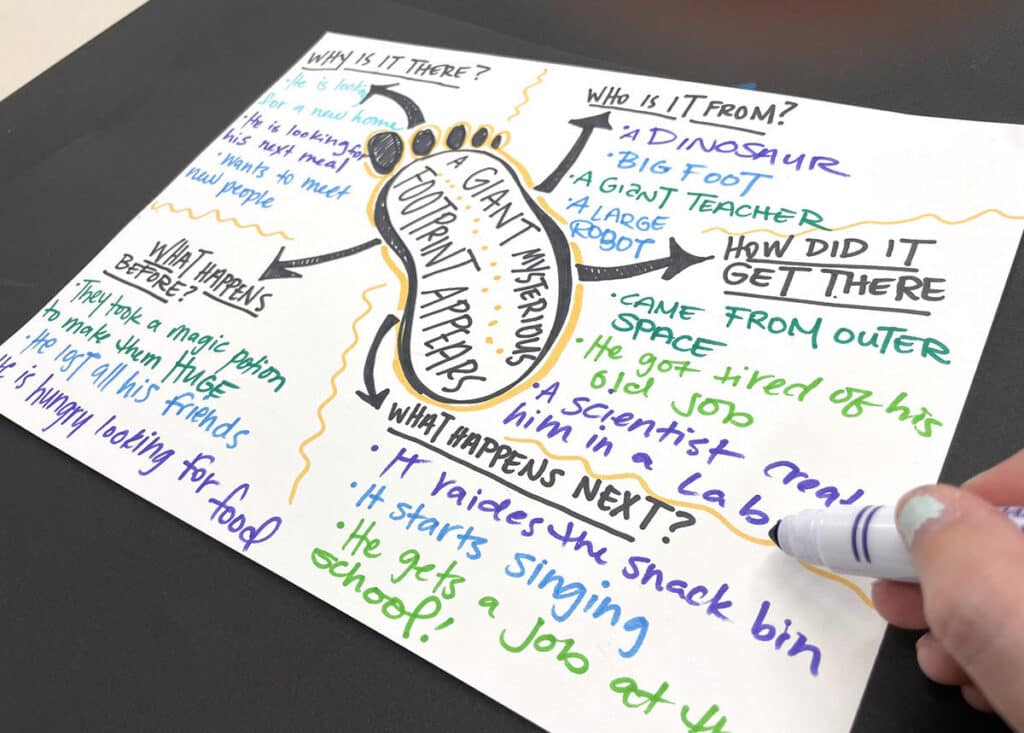
Two heads are better than one, so give small groups story prompts to brainstorm together. Allow five minutes for groups to generate as many possibilities as they can. Each group takes turns sharing their ideas. If answers repeat in other groups, everyone lightly crosses them out. The group with the most unique and non-repeated ideas wins!
Introduce a fun prompt like the ones below:
- You find a tiny door hidden inside a tree. What’s behind it?
- You find a giant footprint in your art room. What made it, and where did it come from?
- One morning, you wake up and discover that one color has completely disappeared from the world. What happened?
Turn it into an individual extension by drawing the following:
- What came before?
- What happens next?
- Where does this take place?
- What would make this more unexpected?
When a student says, “I don’t know what to draw,” it doesn’t mean they have no ideas. Usually, they don’t know what to do with the idea they have. Brainstorming and idea generation are teachable skills you can incorporate into your curriculum with a little structure and a lot of fun. Show students how to be curious, add details, make connections, and build with input. Over time, they’ll realize they have many ideas, and they’ll use the tools you’ve given them to step deeper into discovering their unique artistic voice.
How do you help students push past their first idea?
Which activity will you try the next time your students need a creative starting point?
To chat about brainstorming with other art teachers, join us in The Art of Ed Community!
Articles and podcasts are opinions of professional education contributors and do not necessarily represent the position of the Art of Education University (AOEU) or its academic offerings. Contributors use terms in the way they are most often talked about in the scope of their educational experiences.