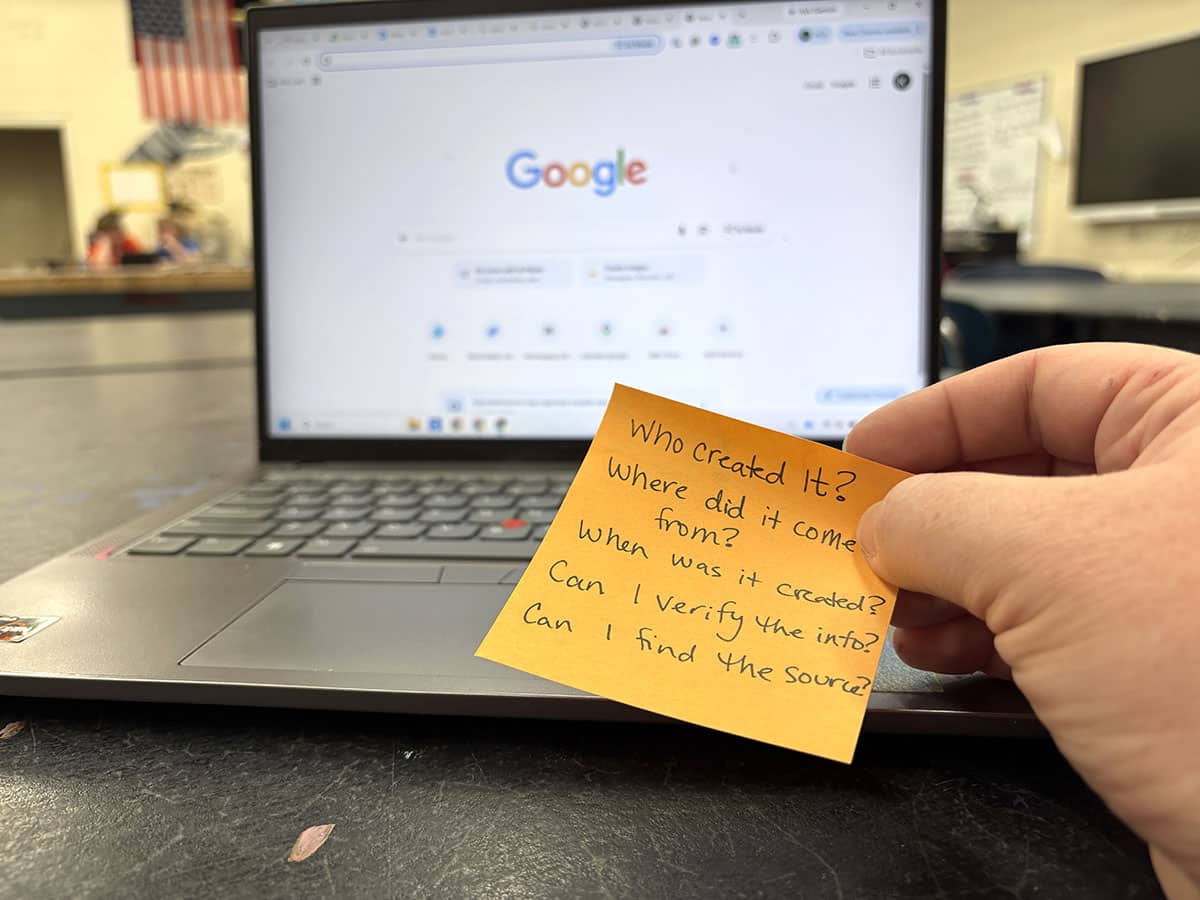
The way students research has changed due to the enormous access to information and AI-powered tools. However, access doesn’t equal knowing how to find, evaluate, and use information responsibly. While research and digital citizenship still matter in the art room, AI adds another layer of complexity. The art room is a powerful place to teach students how to research well and use it to inform their own original ideas.
Use these five practices to help students harvest great ideas from research.
1. Start with your school’s AI and technology policies.
Your first step is getting to know your district and school’s policies. Read over your teacher guidelines and the student handbook for information on AI and acceptable use. Talk with your school’s Technology Coach or Library Media Specialist about approved websites and resources, such as academic database subscriptions.
When introducing the assignment, make your expectations clear before students begin researching. Use the exact language from your school’s policy and explain what students can and cannot use and why. Teaching students how AI tools can affect the information they encounter gives them a sense of purpose and ownership over their learning.
Provide these questions for students to ask themselves before each assignment:
- Can I use AI for this assignment?
- Which databases or websites does my school recommend?
- Do I need to cite AI?
- What information and format do I need to record my sources?
2. Teach students to search beyond the AI overview.
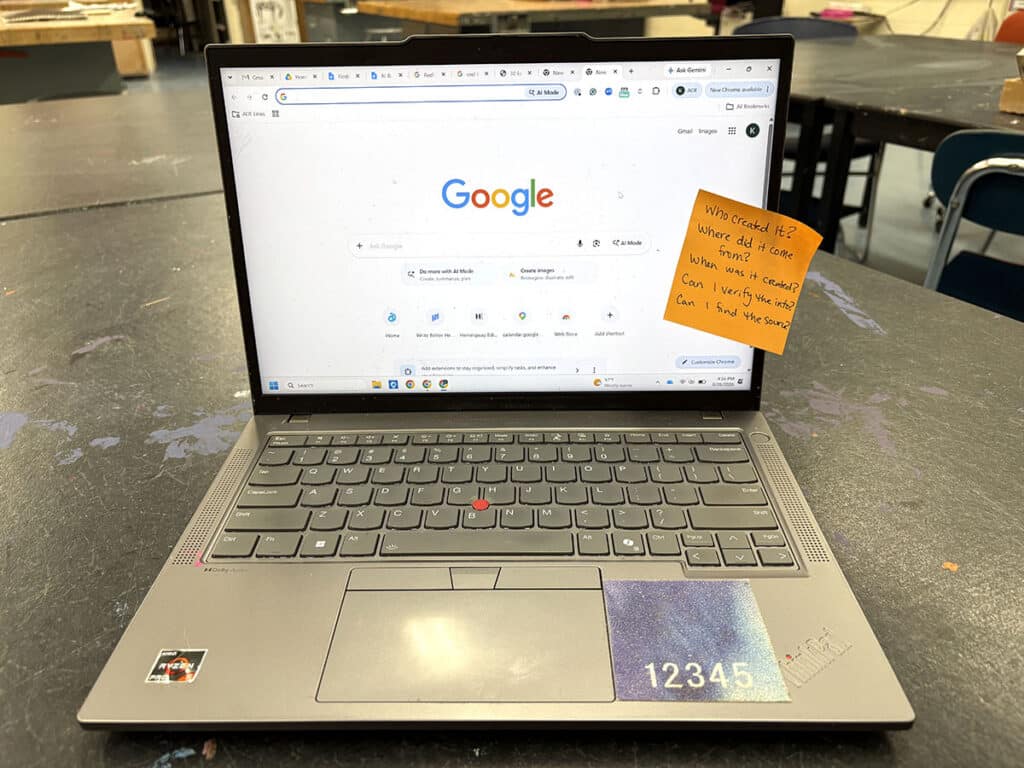
Google searches now include an AI overview at the top of the search results. While convenient for quick searches, students need to understand that a summary is not the same as going to the original source. It may also include commercial, promotional, reposted, or user-generated content. Additionally, it can take statements out of context. Practice analyzing AI overviews, and show students how to open the webpage to confirm the website’s and the information’s validity, and continue their research beyond the summary.
Practice generating key search terms together and demonstrate how to adjust the words or phrases to get different results. Using specific keywords can help them find accurate results with credible sources. It’s also worth spending a little time discussing the different types of sources, the processes they undergo to verify their accuracy, and how to identify them in an internet search.
Differentiate among these credible sources:
- Authoritative sources through a school or public library
- Museum websites
- Artist websites or archives
- University resources
- Academic publications
- Reputable arts organizations
- Primary sources

3. Show students how to evaluate their findings.
Just because it’s online doesn’t mean it’s true! Because many websites do not undergo formal publication or review, it’s important to practice distinguishing trustworthy information from less trustworthy information. Aside from blatantly incorrect information, sites can also feature assumptions, inaccuracies, and bias. Prompt students to become investigators and get curious about their findings.
Teach students to ask:
- Who created this?
- Where did the information come from?
- When was it created?
- Is the creator qualified to make this claim?
- Can I verify this information somewhere else?
- Can I find the original source?
4. Encourage students to harvest ideas worth keeping.
The tendency is for students to copy what they find and present it as their own work. However, finding information is not the same as learning from it. Give students strategies to slow down, process what they have found, and identify what is important. Then, they can make meaningful connections to themselves and their own work.
Ask your Language Arts department which text analysis strategies students already use in their grade level. Applying familiar approaches in their art sketchbooks solidifies research expectations across the board and cross-curricular connections. This also reinforces that these are valuable skills that extend beyond a single subject.
Try these techniques when students are working with text:
- Stop and Jot:
Pause after a paragraph or section and write the most important idea in their own words. - Paraphrase:
Close the original source to avoid copying word for word before writing a summary. - Graphic Organizers or Mind Maps:
Use visual separation of information so students can see what they learned and how different pieces connect.
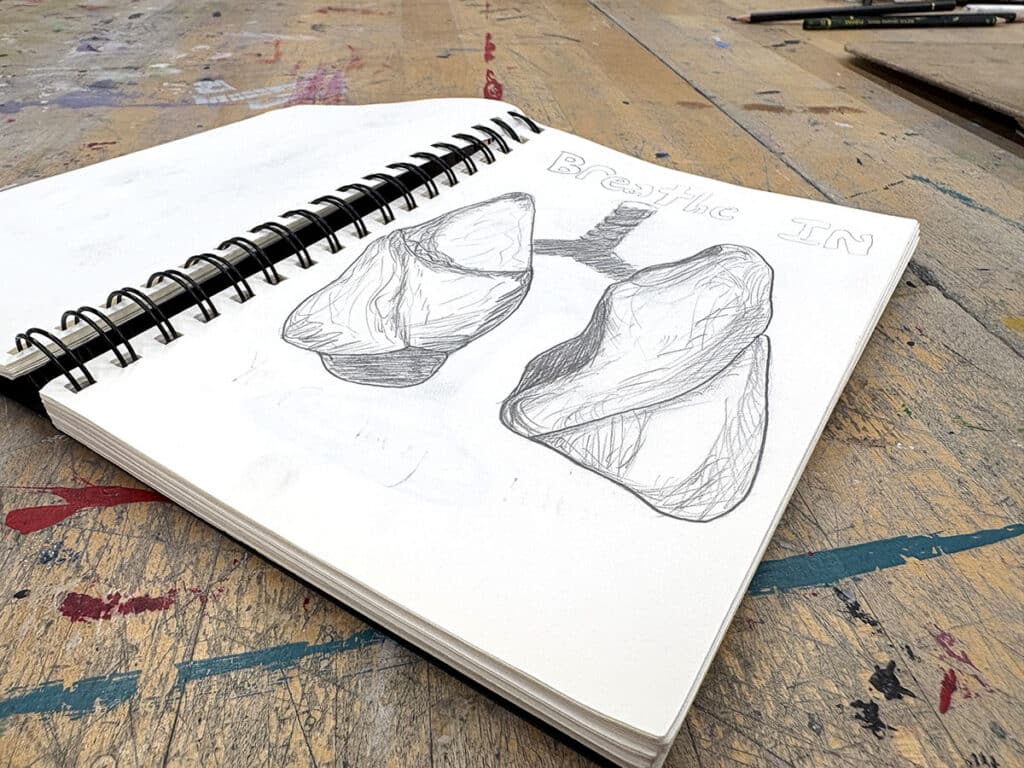
For reference images, challenge students to draw from life whenever possible to get the most accurate details. Students can take their own photos to use later, if needed. If they cannot access the subject matter in real life, they can use an online image. Remind them that the same research skills apply to images as to text.
5. Help students turn research into their own ideas.
In art, the goal of a research project isn’t simply to accumulate facts, but also inspiration! When students connect what they discover to their own interests, questions, and experiences, research can become a starting point for new possibilities. Responsible research means students take what they’ve learned and apply it to their own discoveries.
Move beyond the first idea with these three steps:
- Capture:
Record one idea, fact, image, or question that catches their attention. - Connect:
Relate the fact to something they already know or are interested in. - Transform:
Incorporate the influence into their own work with a quick planning sketch or experimentation page.

The way students find and use information has changed, especially with the rise of social media and artificial intelligence. Having access to information alone does not mean students understand how to be good digital citizens. Research and technology-based activities require intentional discussions, instruction, and practice. The goal isn’t to prevent students from using new tools; it’s to teach them how to use information thoughtfully and turn what they discover into fresh inspiration and original ideas.
How do you help your students to evaluate the information and sources they encounter online?
What research or digital citizenship skill do your students need the most practice with right now?
To chat about research, digital citizenship, or AI in the art room with other art teachers, join us in The Art of Ed Community!
Articles and podcasts are opinions of professional education contributors and do not necessarily represent the position of the Art of Education University (AOEU) or its academic offerings. Contributors use terms in the way they are most often talked about in the scope of their educational experiences.