
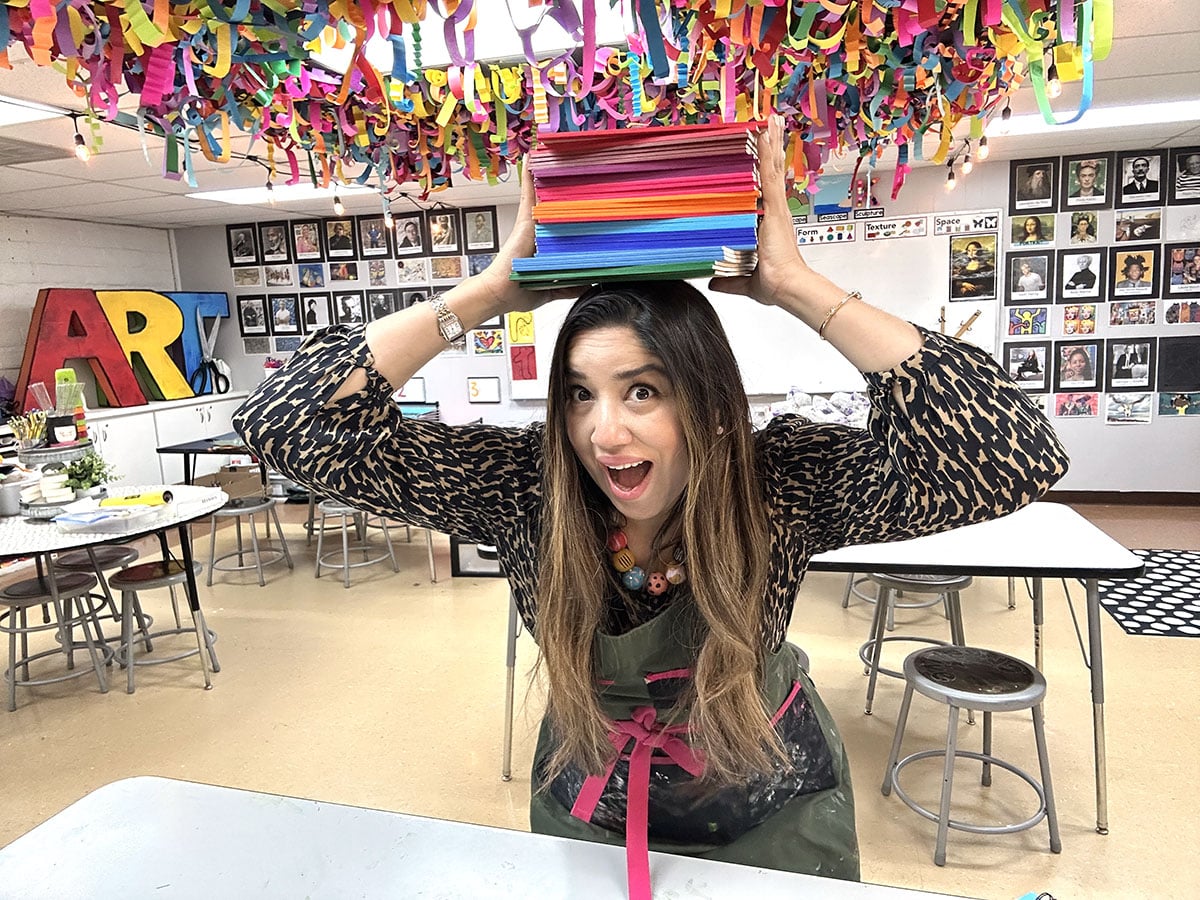
Sketchbooks can be tricky—we know they’re a good artistic practice, but they can easily become extra work for you and busy work for your students without intentionality. No matter what grade level or teaching environment you’re in, there are some challenging situations that many art teachers experience. With a few creative strategies and meaningful routines from other art teachers in The Art of Ed Community, you can help students use their sketchbooks with purpose to develop ideas, take risks, document their thinking, and grow as artists.
Let’s investigate five common sketchbook scenarios with tricks to solve them!
1. I don’t have the budget to buy sketchbooks for my students, and they can’t/won’t bring in their own.
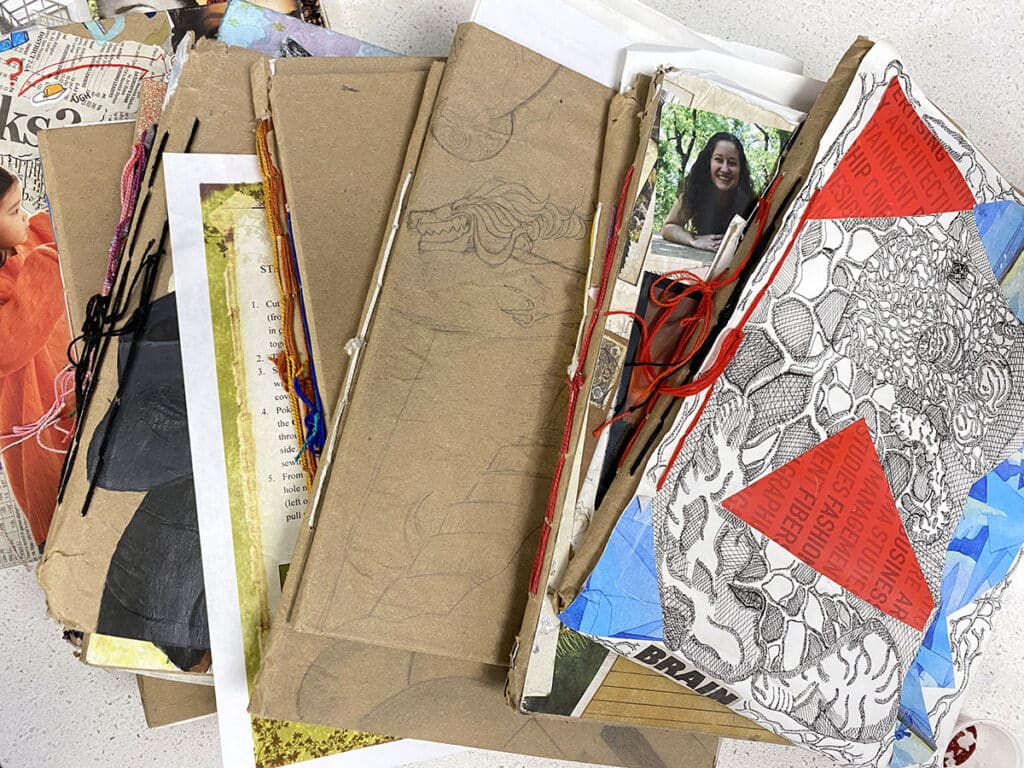
As art teachers, we are experts at making anything from nothing! Teaching your students to be resourceful and make their own gives them basic bookbinding skills and encourages ownership of their supplies. Whether you do a quick stab binding with plain copy paper or use leftover sheets of various drawing papers in three-prong folders like Ashley Moore, there are many options that are free, cheap, quick, and practical. Some larger districts, like Todd Leban’s, even have an in-house printing center, where you can customize your own sketchbooks—you just need to ask!
Get started with the simple and fun ideas tested by art teachers Nylah Khan and Crystal Dunn in the first episode of Sketchbooks 101 below. Make sure you’re subscribed to The Art of Education on YouTube so you don’t miss more top-notch episodes in the series. These two art teacher pros show you how to build better sketchbooks one page at a time, and harness them to transform your students’ artmaking. They cover their favorite art supplies, storage hacks, assessment tips, fun prompts, and so much more—you won’t want to miss it.
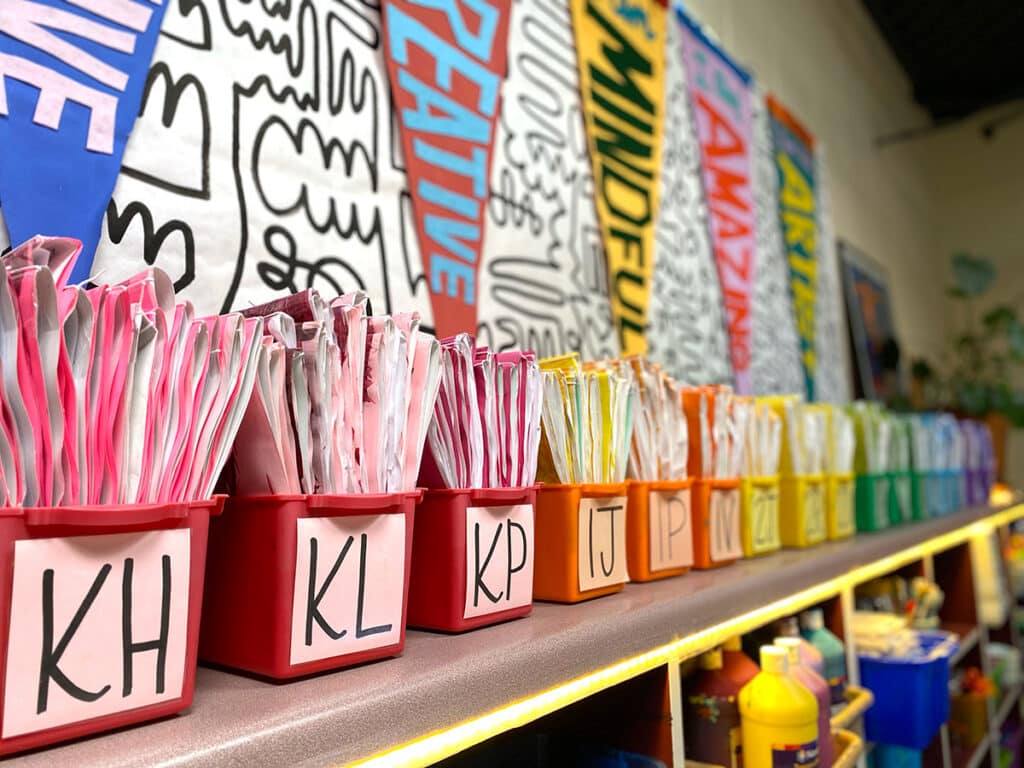
2. I don’t have anywhere to store sketchbooks.
The thought of storing one sketchbook per student (especially if you’re teaching elementary with a roster that’s the entire school population) can seem like you’re wasting valuable storage space. Shifting your mindset from “storing sketchbooks” to “making space for works-in-progress or evidence of learning” may make it easier to give up a little square footage.
Here are four space-saving sketchbook tricks:
- Make pocket-sized, half-page, or thinner sketchbooks, like Sarah Krajewski in the video below.
- Ask elementary classroom teachers to store their class’s box under a table or above a cabinet in their room.
- Slip sketchbooks into each student’s portfolio.
- Use recycled milk crates like middle school art teacher Jackie Jablecki and stack them vertically.
3. I don’t know how to take sketchbooks from glorified notebooks to the next level.
Have you ever flipped through your students’ sketchbooks, only to realize it’s all notes, warmups, and exit tickets? While writing is an important skill, how do you bring more experiences to your students in their sketchbooks?
The first shift is to ensure sketchbooks remain out for the entire class period, even if you don’t have concrete plans for them that day. We often forget what we don’t see, as Keisha Morales talks about in the video below, so having sketchbooks right in front of students will increase the likelihood that they’ll grab them and use them. Get students into a routine of taking their sketchbooks as soon as they walk in and returning them as they leave.
The next shift is to encourage students to write down their ideas or questions in their sketchbooks before bringing them to you. This turns sketchbooks into more of a log, diary, or journal than a teacher-directed book. Let’s say a student asks you if red would look good in their project. Instead of giving your opinion, turn it back to the student with a question or challenge, like, “That’s a great question! Why don’t you try sketching it out with red in your sketchbook and then show me, and we’ll talk about what we see?”
The third shift is to build in assessment. Once a month or once a quarter, ask students to flag their top pages. You can give them a theme or prompt, like “Show me a page that captures a discovery you’re proud of” or “Show me a page that demonstrates trying different color schemes.” Students can mark those pages with a sticky note so you can take a look at them, as shown in the video with Andrea Wlodarczyk below.
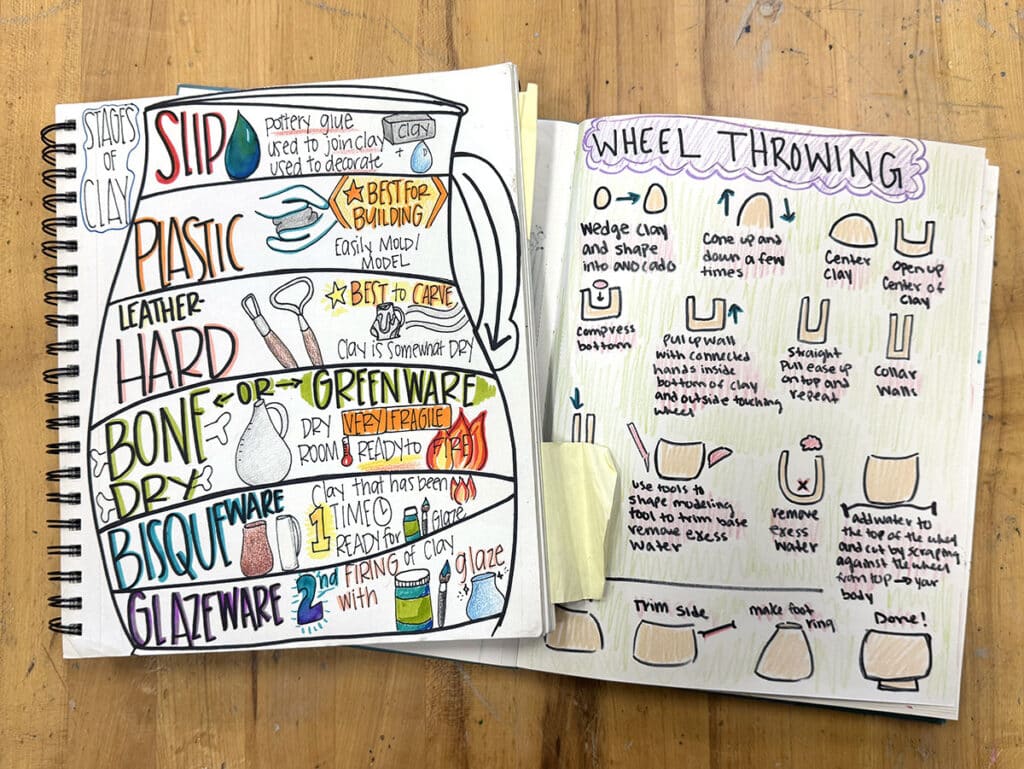
Lastly, you can’t go wrong with illustration! Bring more low-pressure drawing in by doodling while taking notes. For guidance on teaching sketchnoting to your students (even at the elementary level), check out the short professional development videos in the Pack Implementing Sketchnotes in PRO Learning. Not only does sketchnoting reinforce the actual content knowledge, but it also reaffirms a key advocacy message: that communication comes in many forms.
4. I don’t know how to get my students excited to work in their sketchbooks on their own.
Many of us have our own sketchbooks that we love, cherish, and value, but we struggle with getting our students to covet their own sketchbook practice. It may take a bit of creative coaxing, but there are several strategies to get students invested in their own books, no matter their age, comfort level with art, or technical ability.
Try these three strategies to “trick” students into loving their sketchbooks:
- Move beyond “decorating” and make their books truly personal with writing and keepsake photos.
- Curate a Sketchbook Studio Space on a regular rotation, where you set an environment just for sketchbooks with special activities or privileges like low lighting, ambient music, a movie playing in the background, or outdoor sketching.
- Spend one class period filling as many pages as possible with markmaking and washes of color to conquer fear of the blank page.
5. I don’t know how to get my students to bring their sketchbooks back to class.
You start sketchbooks in class, and you’re ecstatic—students look excited to use them! However, the next time you tell students to pull out their sketchbooks, several say that theirs are “at home” or “in their locker.” How do you keep students’ momentum up about their sketchbooks while also making sure they bring them back to class?
Think of how attached students are to their cell phones and consider how we can replicate that feeling with sketchbooks! Something already discussed above is making their sketchbooks intimately personal, so they won’t want to leave them unattended. Along the same lines, if you make them a foundational part of the class and the curriculum, they become a non-negotiable essential.
On a more practical level, have each student make two sketchbooks. The first one is a larger one for class that stays in class. The second one can be pocket-sized, perfect for traveling to their locker, home, or other activities. The smaller portable version allows students to doodle on the go and record or expand on ideas when they get back to class. It’s a win-win for everyone!
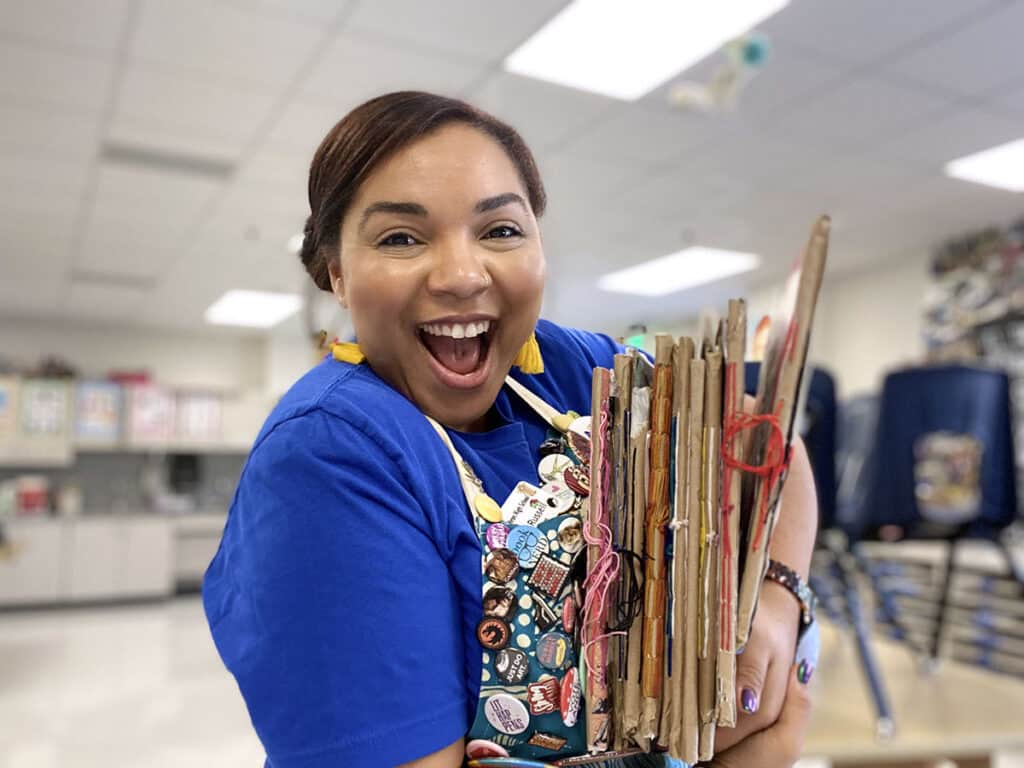
From handbound journals to pocket-sized booklets, the best sketchbook system is one that truly supports how your students learn and fosters their investment. When students see these books as personal spaces rather than another assignment, they are more likely to put forth their best effort. With your guidance and these savvy sketchbook tricks, every student has the opportunity to grow their practice, no matter the challenge ahead!
How do you get your students hooked on using sketchbooks?
What tricky sketchbook situation did we skip?
To chat about your top sketchbook tricks with other art teachers, join us in The Art of Ed Community!
Magazine articles and podcasts are opinions of professional education contributors and do not necessarily represent the position of the Art of Education University (AOEU) or its academic offerings. Contributors use terms in the way they are most often talked about in the scope of their educational experiences.