
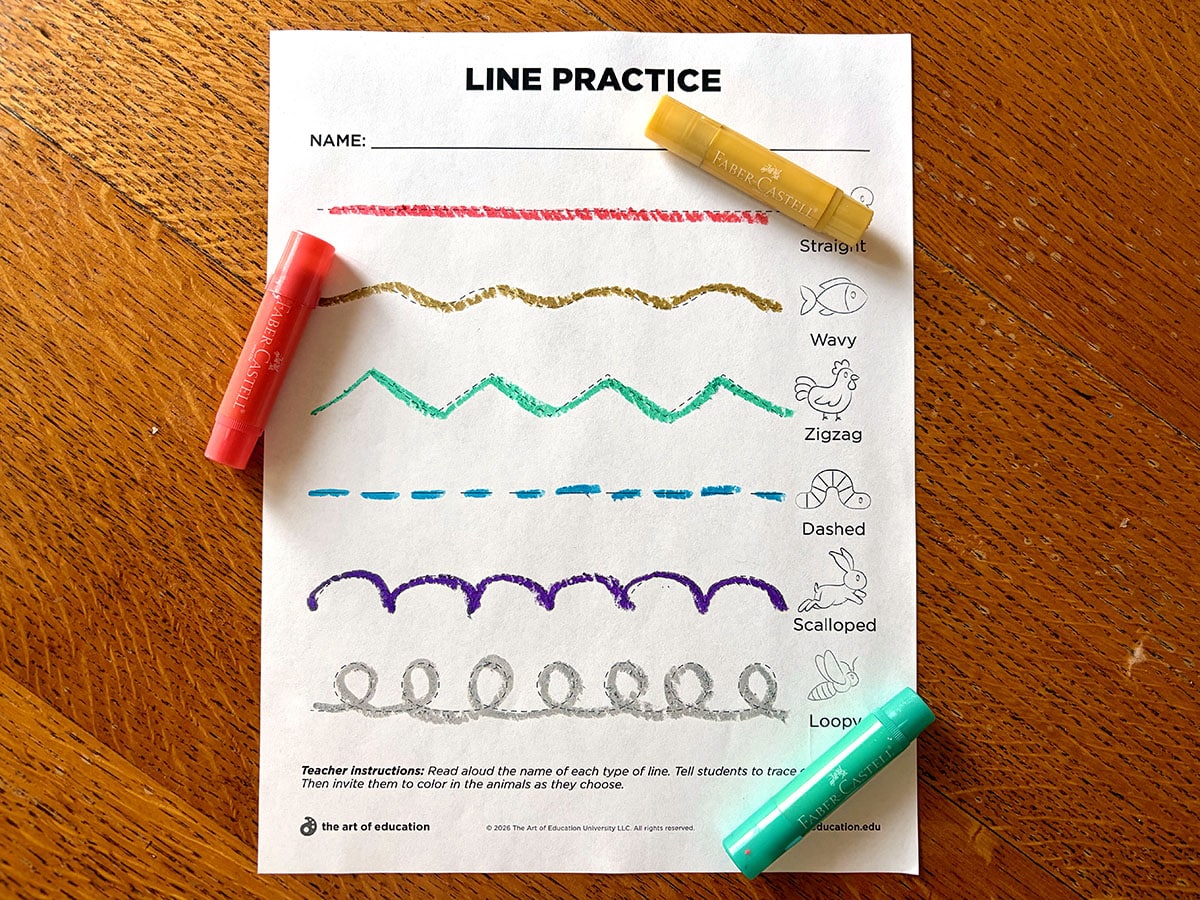
Learning about the Element of Line is often a great starting place for all grade levels. Creating a lesson plan based on Line sounds simple, but there’s more to it than just brainstorming and recognizing different types of lines. Teaching students, in developmentally appropriate ways, how to see and use Line gives them foundational tools for self-expression, creativity, and communication in the language of art.
Get the bottom line on Line with the ideas below—no matter what grade level you teach.
What is Line?
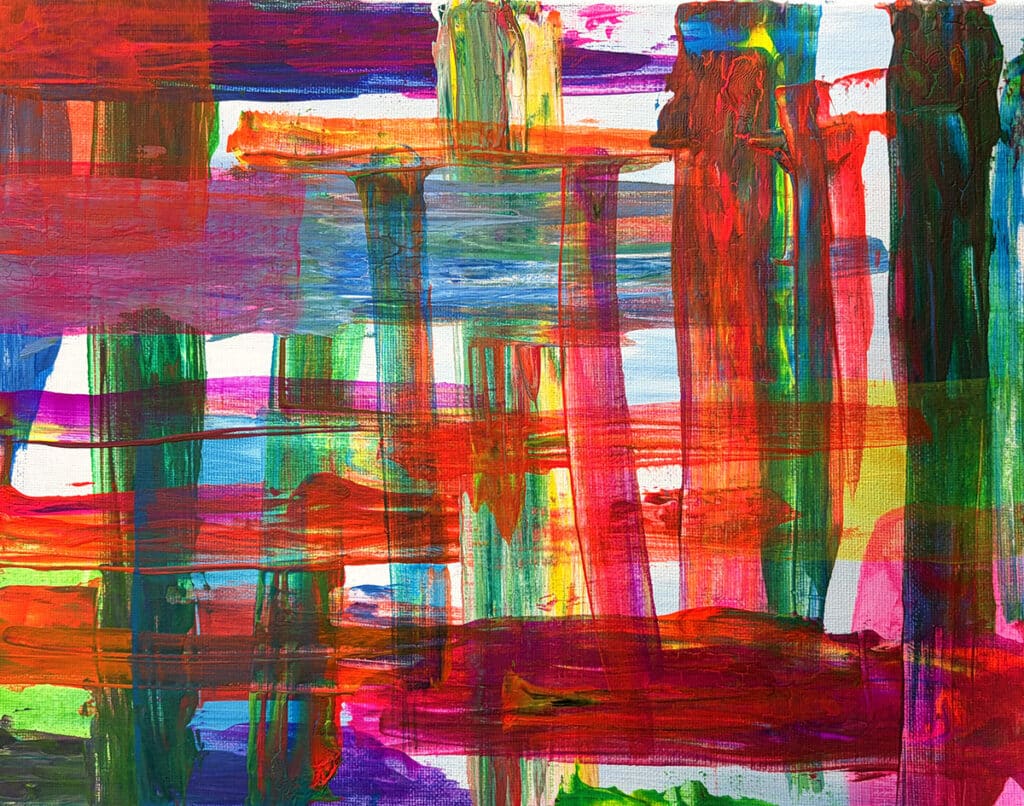
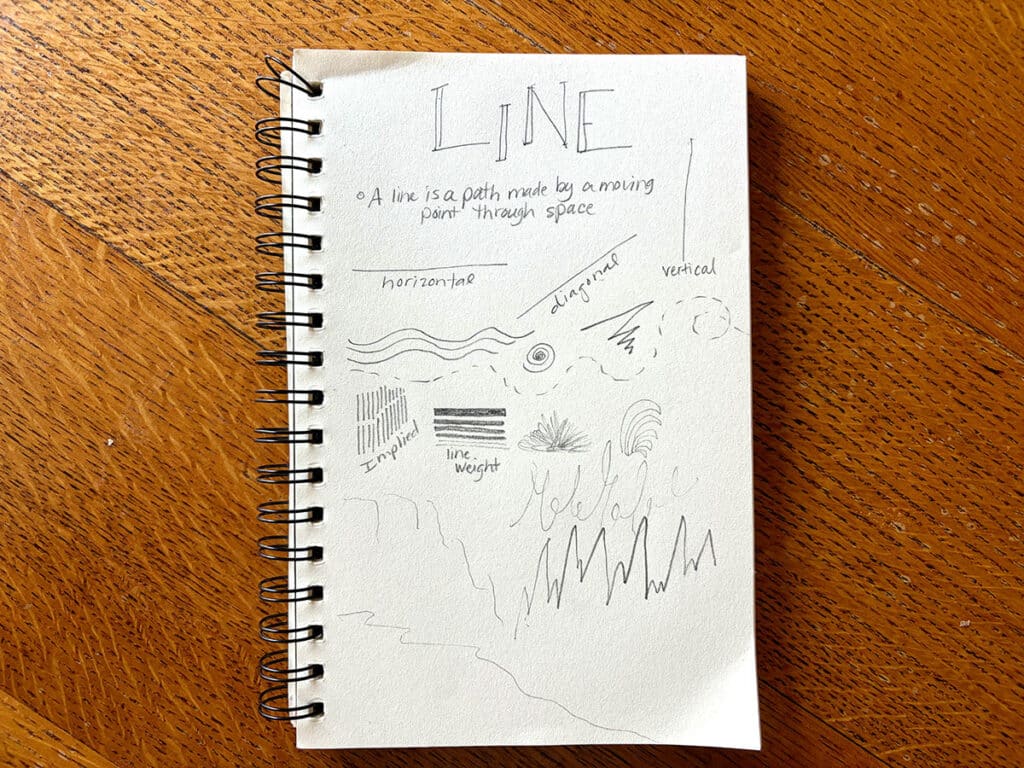
A line is a path made by a moving point through space. It is one-dimensional and can vary in width, direction, and length. Line is an integral part of every artwork from ideation to completion. Plus, equipping students with the language of Line will give them confidence to talk about and write about art.
Because Line is so foundational, The Art of Ed did all of the groundwork for you! FLEX Curriculum is a Visual Arts Curriculum with standards-aligned lesson plans that start at Pre-K and go all the way up to twelfth grade. The FLEX library houses thousands of ready-made resources, including artist bios, step-by-step project photos, reflection handouts, and tool anchor charts. You can meet any curriculum need by searching by topic, like Line, or by grade level.
Check out these FLEX favorites:
- What Is Line? | Beginner Video
- What is Line? | Advanced Video
Early Elementary School
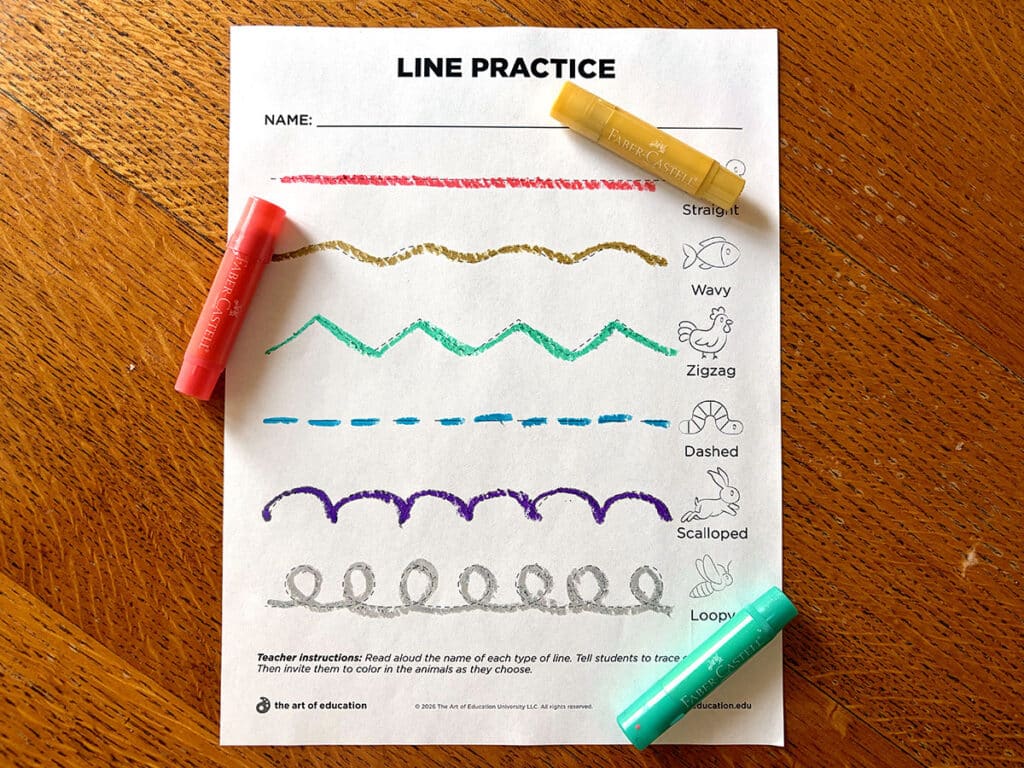
While this is the very first time students will learn about Line in art, they have definitely practiced standing in a line! Early elementary students will benefit from identifying lines in their real-life environment. Physical activity, repetition, and exploration through play are great ways to help students learn at this age.
FLEX Curriculum Connection:
The Line in Everyday Life Collection features three beginner Line lessons, inviting students to experiment with Line and markmaking. Students will illustrate the weather using crayon lines and watercolor resist in the Lesson Painting the Sky.
Try some of these Line ideas for early elementary artists:
- Stand in line and create different types of lines as a class
- Use arms to make various kinds of lines individually
- Draw lines with their finger in the air
- Do a line scavenger hunt around the classroom or while taking a quick walk
- Count how many lines they can find in a nonobjective artwork
- Use ribbon or string to form different lines on their table
Elementary School
Many art materials are still new to elementary students, and introducing media and tools is an opportunity to look at Line in fresh ways. Students love experimenting and are still developing their fine motor skills, so integrate lots of hands-on practice. Repeat vocabulary in many different ways as they are still building their foundational art knowledge. They’re also exploring their perceptions of themselves as artists—whether they’re “good” or “bad” at art, and whether they like it or not—so lean into positive reinforcement as they make lines in abstract and nonobjective styles.
FLEX Curriculum Connection:
Compose fun, whimsical nonobjective projects inspired by Reggie Laurent’s work. Students will use repeated lines, shapes, and colors to create unity with oil pastels in the Line and Shapes of Unity Lesson.
Try some of these Line ideas for elementary artists:
- Manipulate paper strips to create different types of lines for an abstract relief or sculpture
- Outline objects from observation
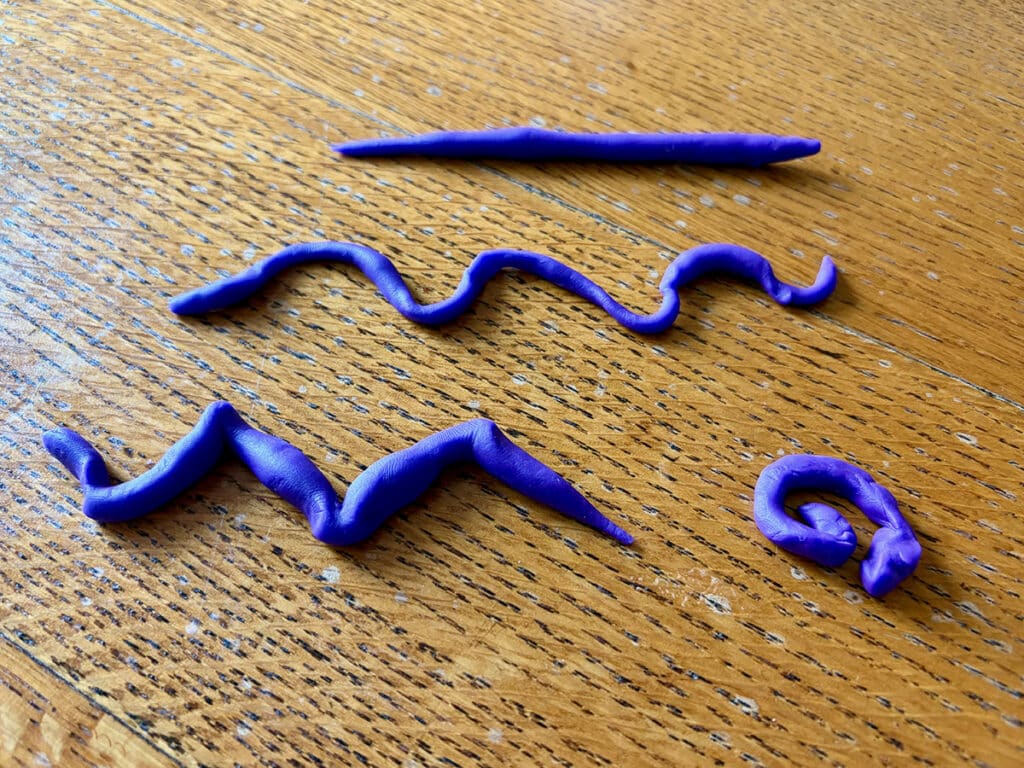
- Use play dough coils to make different lines at their table
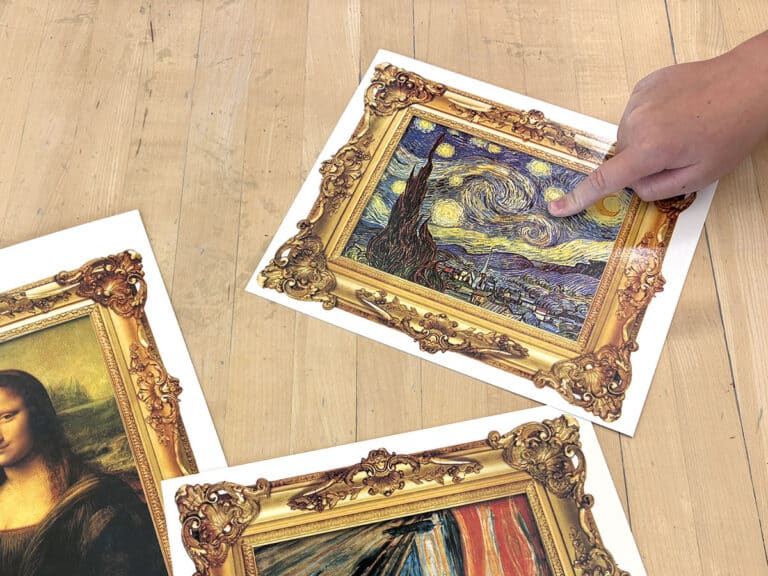
- Trace lines on famous artworks with their finger or a dry-erase marker
- Practice making lines with various brush shapes and sizes
Middle School
Middle schoolers are known for their unpredictability, high energy levels, and need for socialization. They waver between still wanting teacher approval and being “too cool for school.” One way to sneak in learning at this stage and harness their enthusiasm is to play games. Include plenty of opportunities for more depth, independence, and decision-making.
FLEX Curriculum Connection:
Illustrate students’ ideal futures with the View of My Future Lesson. Two-point perspective gives students the structure and formula they need to successfully portray realistic scenes. Plus, it shows them a new way to use Line in art!
Try some of these Line ideas for middle school artists:
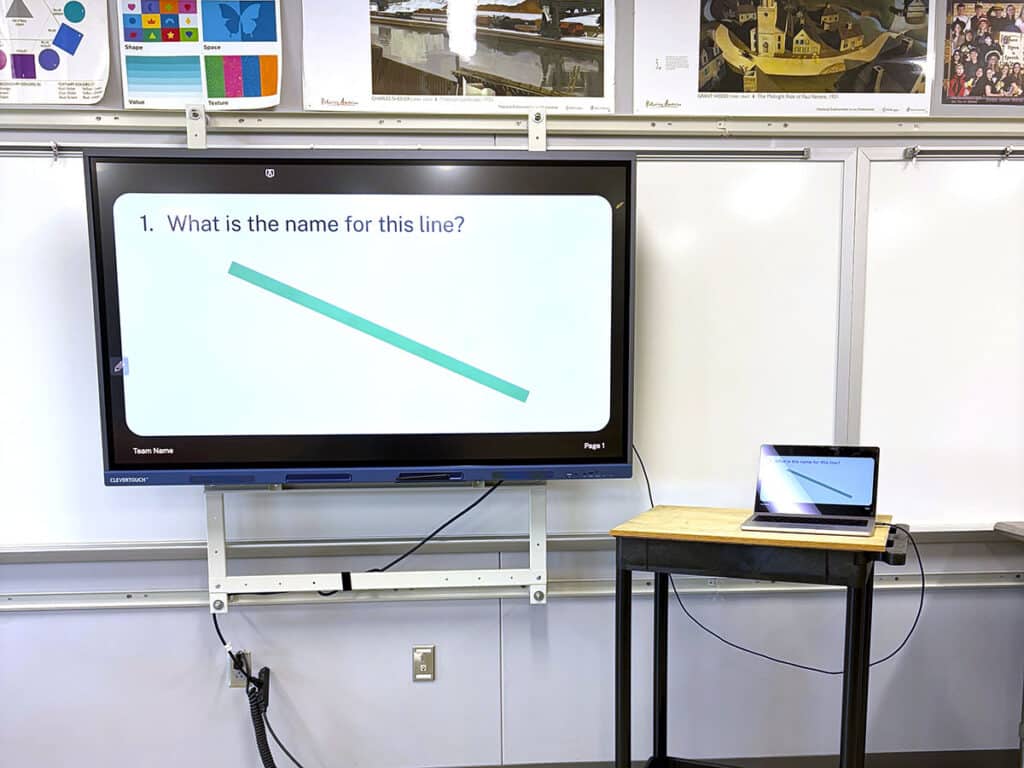
- Use whiteboards to review different types of lines
- Introduce quick, timed blind contour drawings
- Draw their name using one-point or two-point perspective
- Show students how Line can become a drawing technique, such as hatching or cross-hatching
- Distort reality with optical illusions
High School
Our oldest students desire to do their own thing—even in the art room. They often either lean too confidently on their abilities or fear making a mistake. High schoolers have the capacity to explore nuanced ideas, such as how Line can be used in abstract, conceptual, expressive, or aesthetic ways. They’re also practicing higher levels of technical skill and craftsmanship. Continue to explain the purpose of each activity to foster ownership of their learning. Students can also start making longer-term plans and goals, so do activities that prompt them to step back and reflect on whole bodies of work in a portfolio, career, or collection.
FLEX Curriculum Connection:
Prompt students to reflect on their social, cultural, historical, and personal lives to create Abstract Identity Landscapes. They will use Line and markmaking to express mood and movement in their final piece.
Try some of these Line ideas for high school artists:
- Curate their own museum collection based on a type of Line
- Brainstorm a list of 20 adjectives to describe how Line is used in one artwork
- Fill a sketchbook page with an image made of only one type of Line
- Analyze how one artist used Line in their body of work
- Practice creating depth of value with line weight and layered lines
- Write a story based on one expressive Line
- Draw the same object four times with four different types of Lines
Line may be one of the first Elements students learn, but it is never a concept they will outgrow. As students move from playful exploration to intentional markmaking, perspective drawing, abstraction, and personal expression, their understanding of Line grows alongside their artistic voice. Revisit Line often with lots of opportunities to explore in developmentally appropriate ways. Students will build confidence, strengthen art language and skills, and see how much possibility exists in a single line.
What is your go-to Line lesson?
What is your favorite art material to use when teaching Line?
To chat about teaching Line with other art teachers, join us in The Art of Ed Community!
Articles and podcasts are opinions of professional education contributors and do not necessarily represent the position of the Art of Education University (AOEU) or its academic offerings. Contributors use terms in the way they are most often talked about in the scope of their educational experiences.