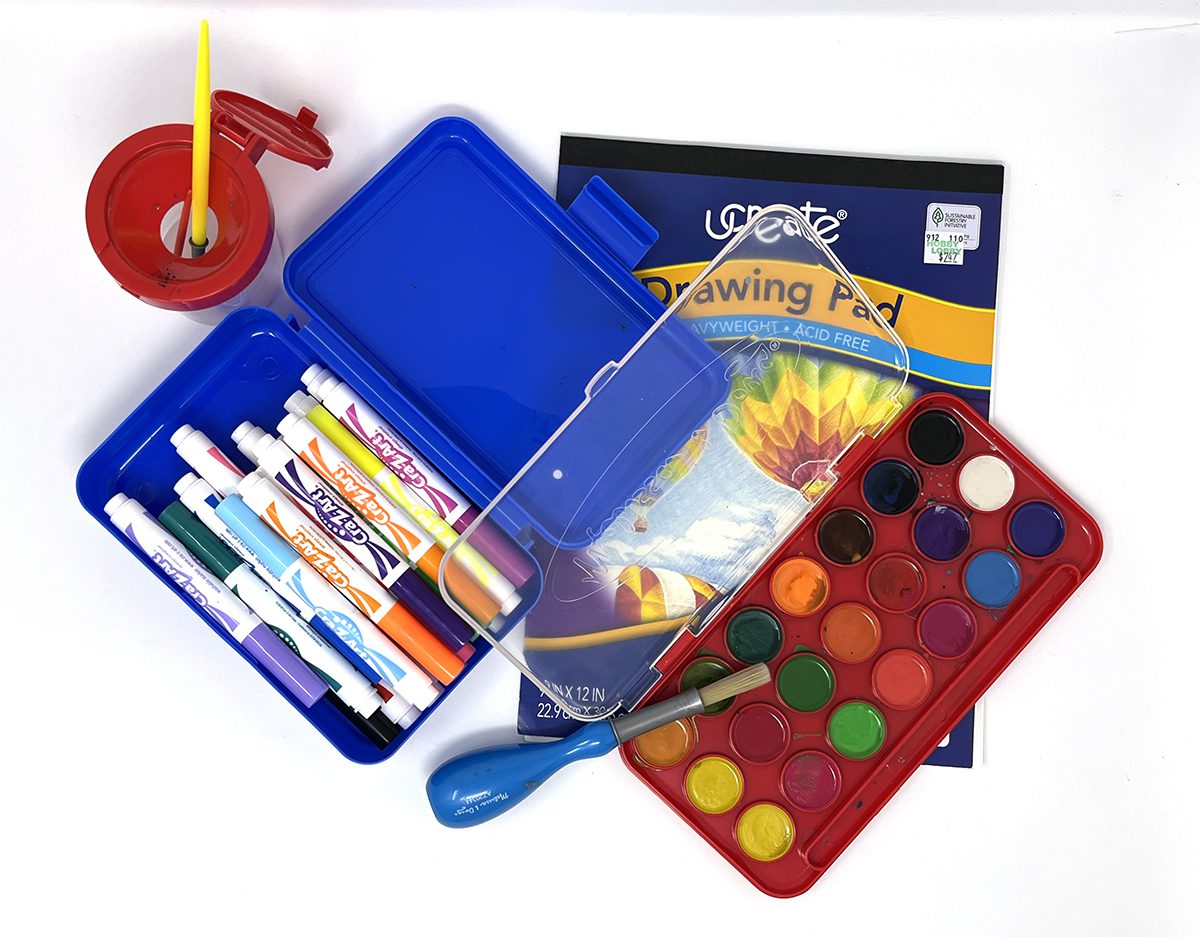
Teaching for Artistic Behavior, or TAB, is more than exploration and choice; it’s a guiding framework for cultivating the artist within. TAB art rooms focus on the student as the artist. The goal is for students to develop their own practice, create personally significant work, progress through ambiguity (especially in the age of AI), reflect on their work, and create intuitively.
Discover practical ways to use stations guided by TAB’s principles.
TAB Stations
Students feel more connected to their learning, each other, and their work when they own their process. In a world where there are often too many choices, a TAB-guided station can give students the mental break they need to truly focus on the content and artmaking. Often confused with centers, centers generally focus on open-ended media or tool exploration, whereas stations focus on completing a short, specific task or activity. Both can be portable, rotating, or grab-and-go, depending on your needs.

Practicing as an Artist
The key to improving any skill is to pursue ongoing inquiry and curiosity. For artists, play and trying new things are so valuable! Carve out time for students to let loose and skill-build to boost confidence.
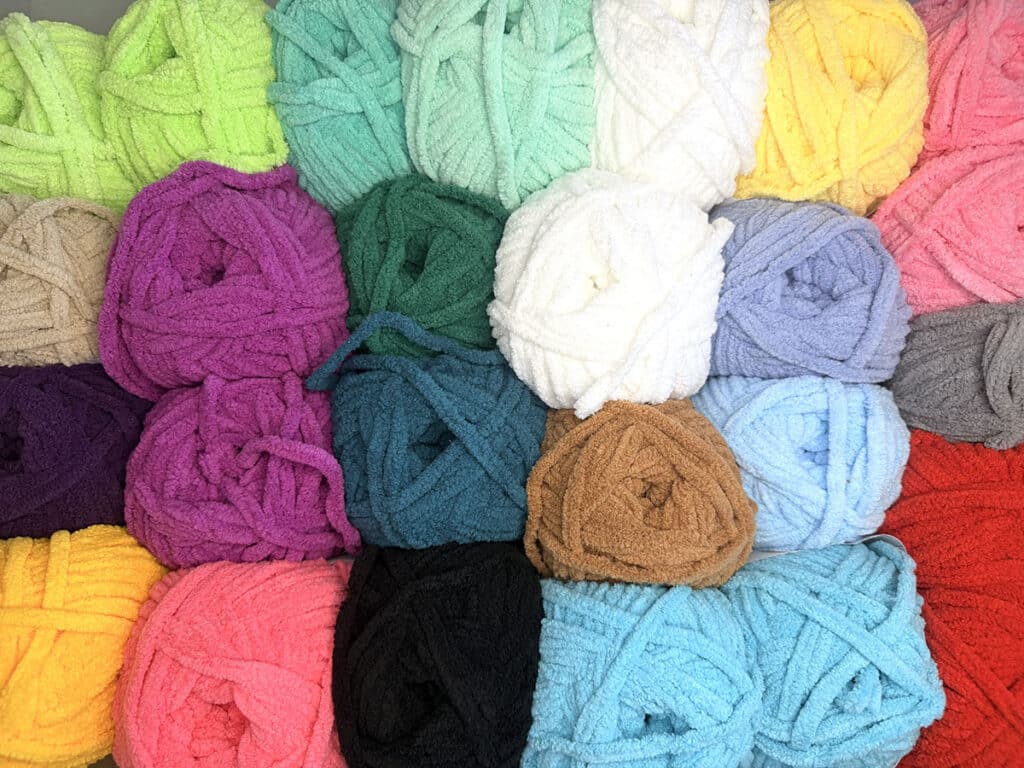
Fibers and textiles offer a super engaging medium for students to play with. The materials are very tactile, and students can easily manipulate them in a variety of ways, making any fibers station perfect for play. Try a Textile Collage station where students create a composition out of fabric and yarn scraps. Introduce a prompt, like: Piece together a geometric collage or Make a landscape of your favorite season. Provide instructions on how to do basic embroidery stitches, and your students are all set!
Are you new to Fiber Arts? You can also expand your horizons through hands-on play with the AOEU Studio: Fibers Course. Discover intricate techniques for weaving with yarn, creating original fabric inspired by cyanotype, and crafting mixed media work using textile collage and embroidery.
Creating Meaningful Art
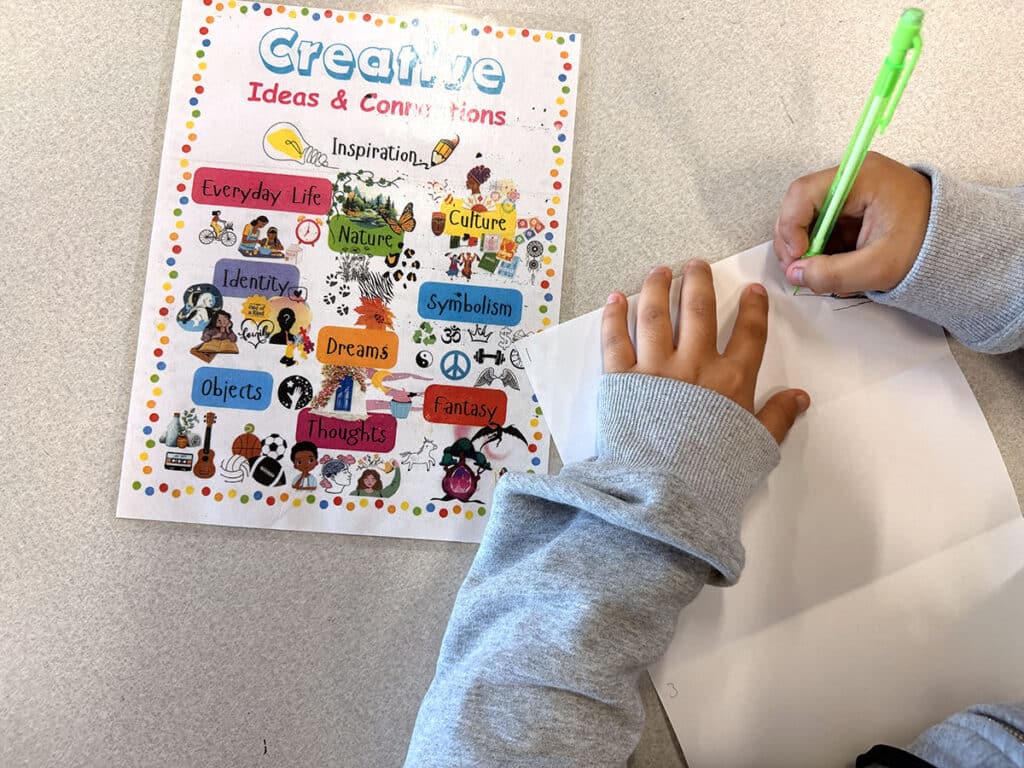
In the TAB art room, the student is the artist and the art room is their studio. While exploring materials, tools, and processes is fun, it takes another step to turn those experiments into meaningful artwork. Add opportunities for students to incorporate what’s important to them through small-group work and prompts that guide deeper thinking.
Station Ideas:
- Rotating Art History Bins:
Print artworks dating from prehistoric times to contemporary for students to examine and interact with. Students will sketch one of their previous artworks, reimagining it in another historical art style to tie influence with interest. - Themed Boxes to Spark Inspiration:
Fill a bin with pictures, objects, and items that revolve around a central theme, and let students explore and try to identify the connection. Students will take inspiration and show the same connecting idea in their own artwork. - Journal Reflection Prompts:
To get ideas flowing, give students time to journal before they create their artwork. Use prompts that work in real settings, like: Draw one thing that felt good today, or Draw one part of your life you once overlooked but appreciate now. These entries can serve as the foundation for their next artwork.
Processing Ambiguity in the Age of AI
A wealth of information surrounds students today. Remind them that it’s okay not to have all of the answers. Rather than running to AI or the internet to resolve an issue, find a new idea, or research a new topic, push them to be present with others and practice contemplation and wonder. Guide them through this process with intentional inquiry-based stations.
Station Ideas:
- Pondering Planned Palettes:
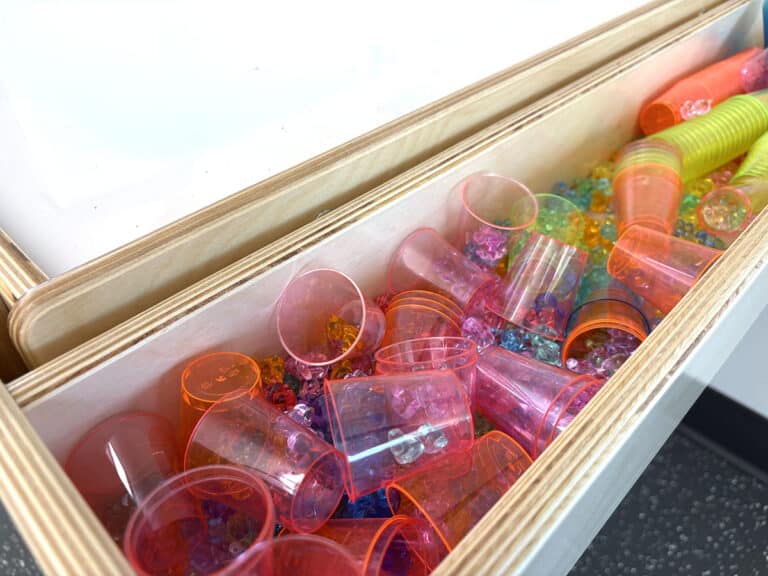
Fill a bin with color swatches, mixed fabrics, and old marker caps for students to build two or three different color schemes. Use tracing paper to apply those color schemes to basic sketches of their compositions. Encourage students to chat about and reflect on how each color palette works—or doesn’t. Remind them that there’s no real wrong answer for the final decision. - What If:
Add What If scenarios to a bin for students to draw and discuss at their tables. For example, you can have slips that say: What if you couldn’t use your favorite material to finish this artwork? What if your art had to be edible? What if you had to use your non-dominant hand to finish your artwork? Take it one step further by challenging students to answer the What If question with their final artwork! - Curious Compositions:
Prompt students to consider other composition layouts and choices. Provide compositional books and references for students to examine before creating alternate thumbnails. - Artist Inspiration:
Provide a fully charged electronic device so students can research an artist who explored their theme. Place in the bin approved museum and artist websites and pre-printed Artist Bios. Students create a Venn diagram in their sketchbooks to compare and contrast their work with that of their famous artist.
Reflecting and Evaluating with Intention
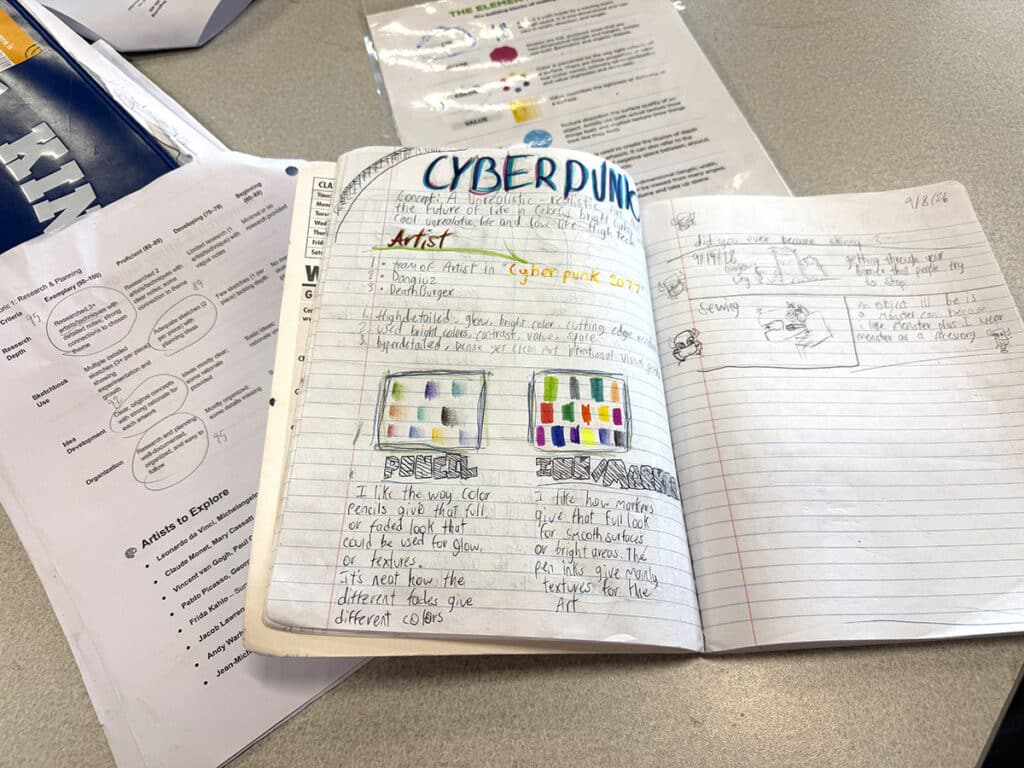
Calibrate creativity with mid-process peer feedback. Young artists need peer support not only for creative pursuits, but also for social-emotional development. These reflection breaks can be both quick and effective using small-group stations.
Give students a couple of minutes to work through one of the station activities below on their own before sharing out with their groups. Once each group completes its discussion, you can decide if they move to another station or return to their artwork. Include key vocabulary at each station and on the board for easy reference. Use the foundational terms in the FLEX Curriculum Glossary to print ready-to-go packets!
Station Ideas:
- Mid-Project Rubric Look:
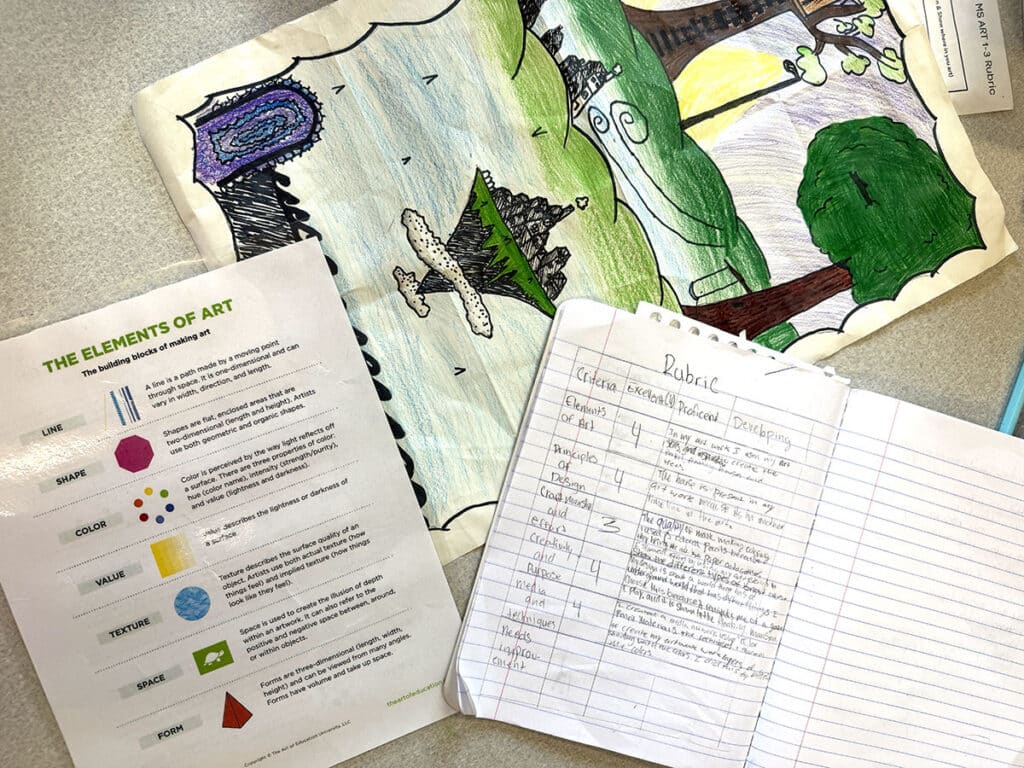
Include a few laminated project rubrics and thin dry-erase markers in the bin for students to self-assess their artwork. This is a great opportunity to reinforce what students are excelling at and what they need to refocus on.
- Blank Space:
Add Fill It, Frame It, or Leave It decision cards for students to hold up. Students share what they plan to do with any remaining blank space in their artwork and how they came to that decision. They can also justify using negative space, too! - Vibe Check:
Provide sentence-stem cards such as I wonder… or I notice… Students ask a peer in their group what they think their artwork is about. This tells the artist whether they’re on track with communicating their idea, message, or intention. - Sweet Success:
Place sheets of gold star stickers for students to award themselves and each other. Describe one thing they did well, whether it’s a visible portion of their artwork, how they made something, or part of their ideation or creative process. Not only does this share wins, but it can inspire others. - Define the Transformation:
Prep a fully charged electronic device for students to pull up in-progress photos. Identify one unexpected mark, mistake, or moment during the creative process that changed their original idea. Reframe any challenges as discoveries that shape their artwork and themselves as artists for the better!
TAB stations are flexible tools for any art room. They help students build skills, make meaningful choices, and work through creative roadblocks. By intentionally pairing individual reflection with peer sharing, you support students’ independence and create a curriculum that meets every artist’s needs. Start with a few quick and simple stations and watch your students’ artistic agency blossom!
Tell us which TAB guiding principle is most important to you as an art teacher and why!
Which of the stations above are you most excited to implement in the studio?
To chat about TAB with other art teachers, join us in The Art of Ed Community!
Articles and podcasts are opinions of professional education contributors and do not necessarily represent the position of the Art of Education University (AOEU) or its academic offerings. Contributors use terms in the way they are most often talked about in the scope of their educational experiences.