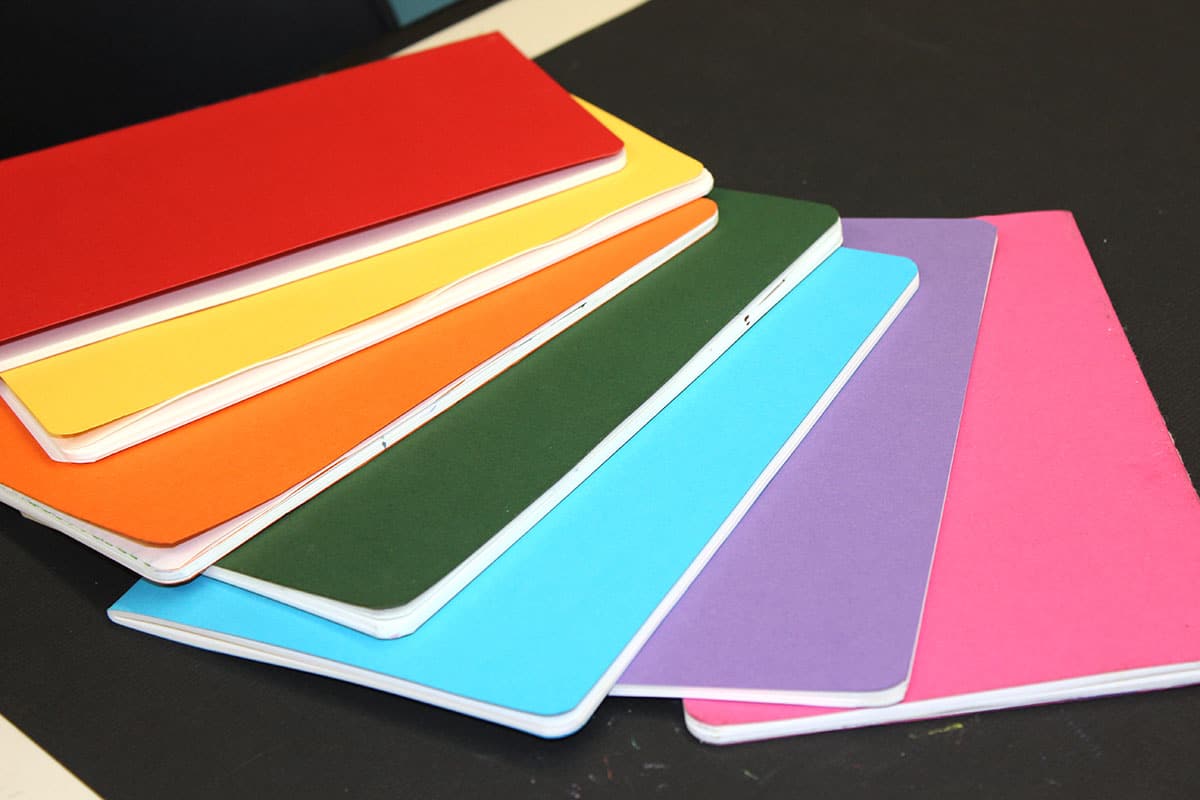
There’s something intimidating about a brand-new sketchbook page: it’s clean, open, and full of possibility! However, for some students, that possibility can feel more like pressure. They may stare at the page and wonder, What should I draw? What if I mess up? What if my idea isn’t good enough?
We call this “Fear of the Blank Page” or “Blank Page Syndrome.”
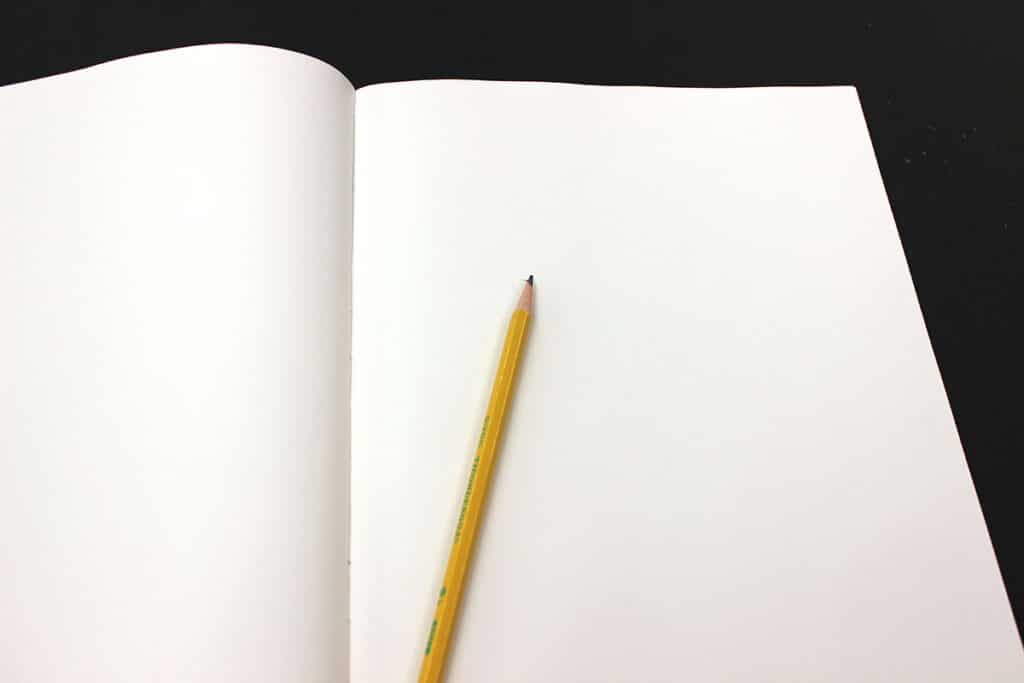
This isn’t just a challenge for students! Artists of all ages can feel the pressure to make every sketchbook page look polished or “right.” Sketchbooks are spaces for creative experimentation, reflection, and risk-taking. Research on secondary art classrooms even describes a culture of “neatness anxiety,” in which students become more concerned with how their sketchbooks look than with their function and purpose.
So, what can we do when students don’t know where to begin? Instead of giving students another prompt or asking them to come up with the “perfect” idea, give them something to do immediately. One of the most valuable skills students can develop is not always knowing what to make, but knowing what to do when they don’t know what to make. Everyone has to start somewhere; the first mark doesn’t have to be the right one—it just has to be a beginning.
Save these six strategies for practical, low-pressure ways to make the first mark when a blank page feels overwhelming.
1. Set a goal or intention.
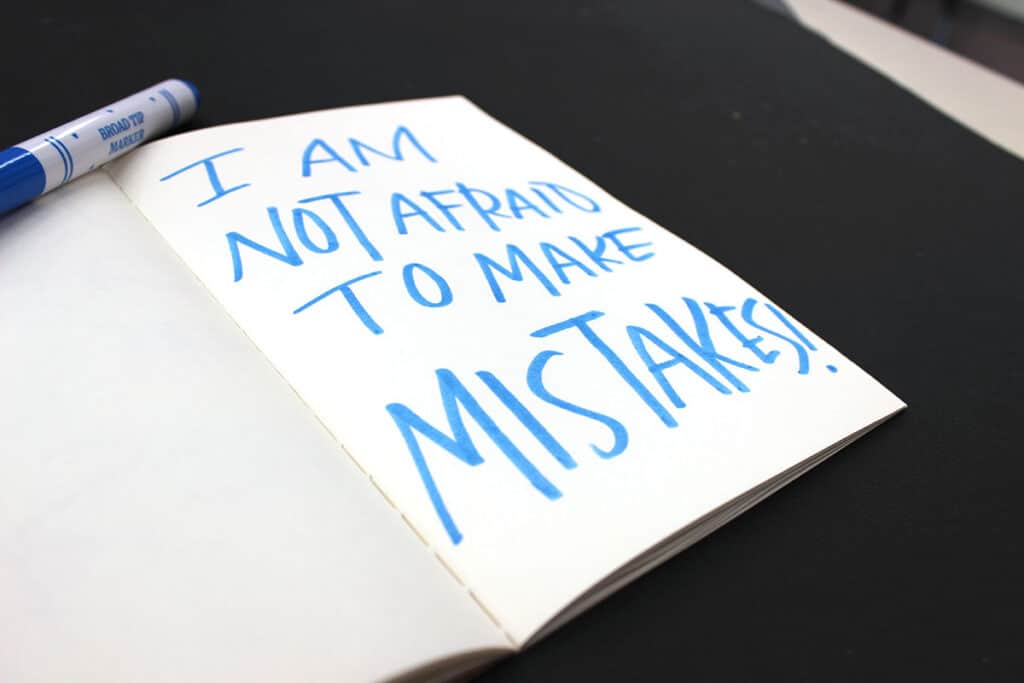
Students write a class goal or personal intention directly on their blank sketchbook page. For example, students can write, I am not afraid to make mistakes across their sketchbook spread. Students can also create their own intention, such as, I will use the entire page for my artwork to remind them what they are working toward. Giving students a goal can make sketchbook work more purposeful.
Next, students turn the written intention into the first layer of their spread. They cover the words with layers of drawing, painting, patterns, or other media until the writing is no longer visible. Not only does this add meaning to the page, but it also gets them started immediately and adds depth through layering.
2. Break up the routine.
Students can get stuck because they approach a blank page the same way every time. They often open to a fresh page, pick up a pencil, and start in the middle. While routines can be helpful, breaking a familiar pattern can give students a new way to start a page. Try giving students a simple rule that changes where or how they begin.
Try these three simple ways to change how students begin:
- Start at the end.
Instead of drawing at the beginning of the sketchbook “in order,” students flip to the very last page and begin there. This small change can make a familiar sketchbook feel new! - Work from the outside in.
Students often begin in the middle of the page. Challenge them to start with a border, background, pattern, or texture that fills the page instead. Once they’ve made marks, they can respond to what they’ve created and add their work on top. - Rotate the sketchbook.
Change the page orientation by 90 or 180 degrees. This rotation helps students see the space differently and prompts them to consider new compositions.

3. Tear and repair.
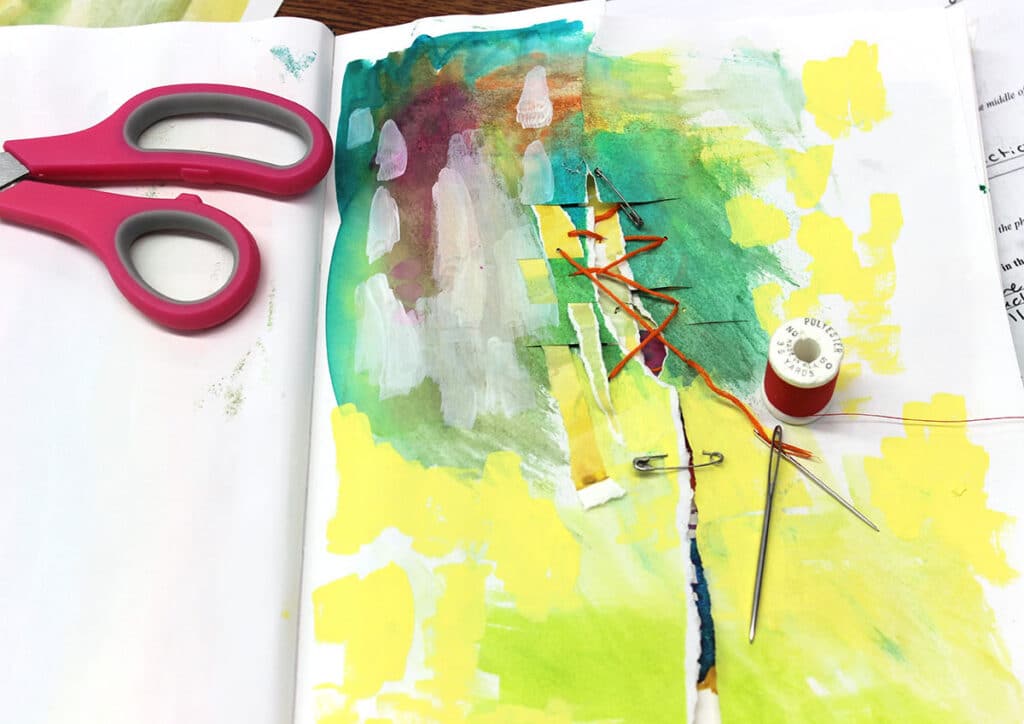
If the thought of making a mistake is what keeps students from starting, give them permission to make one on purpose. For this strategy, students tear a page in their sketchbook and then figure out how to put it back together in an out-of-the-box way.
Students can weave strips of paper back together, sew across the tear with thread, or layer pieces of the page over one another. They can cut or punch holes in the page and incorporate those openings into their artwork. Encourage them to use the “mistake” in their final page for a creativity boost. For example, a hole might become a window, the center of a flower, a portal, or an opening revealing something beneath.
4. Set a timer and start with play.
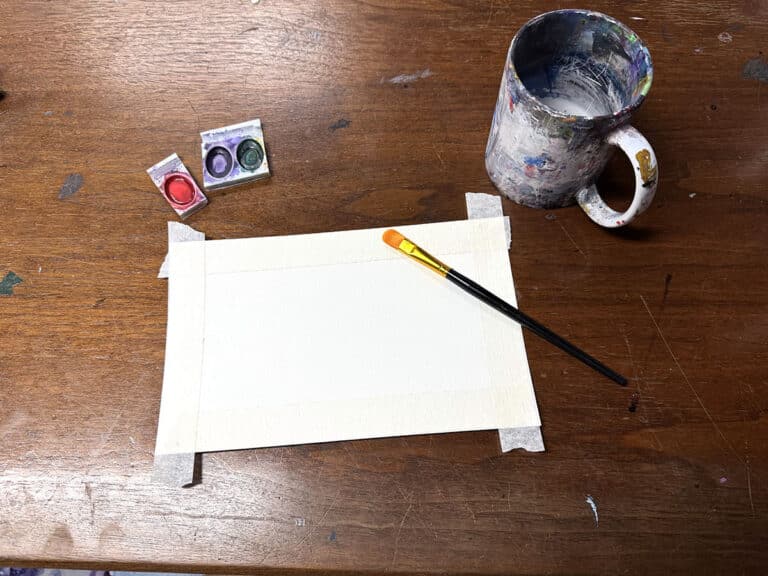
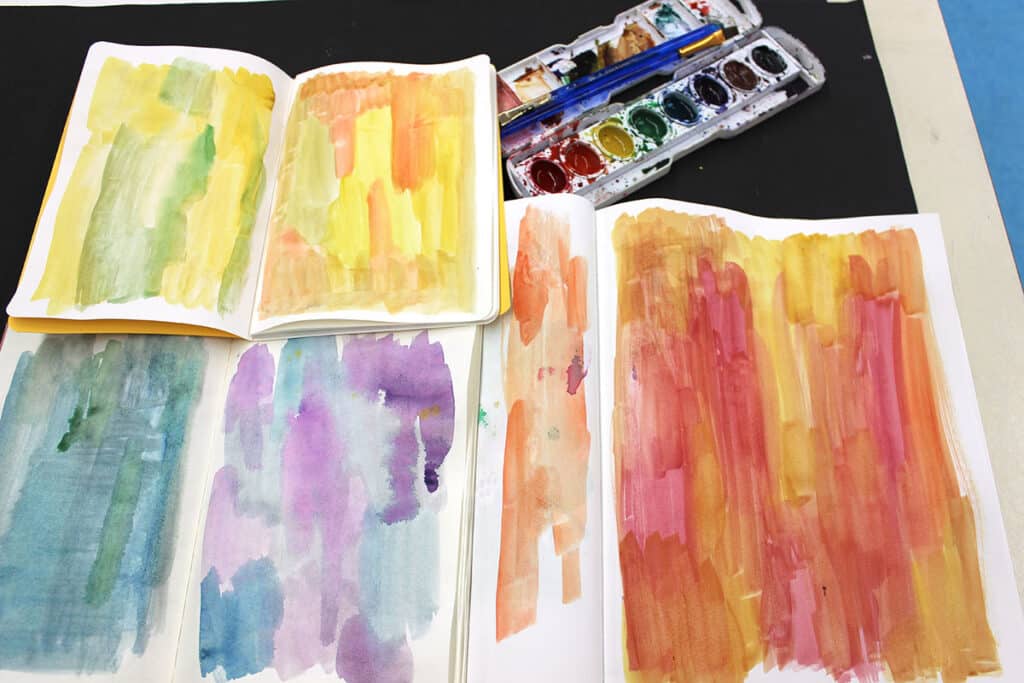
Often, students don’t need another idea—they just need permission to play. Taking away the pressure to create a finished artwork can make it easier for students to begin experimenting. Set a timer for five minutes and challenge students to play with scribbles, lines, textures, and marks using materials on hand. If you’re already in a watercolor unit, challenge students to fill as many pages as they can with washes, using different colors, opacities, and techniques.
5. Run a Sketchbook Swap.
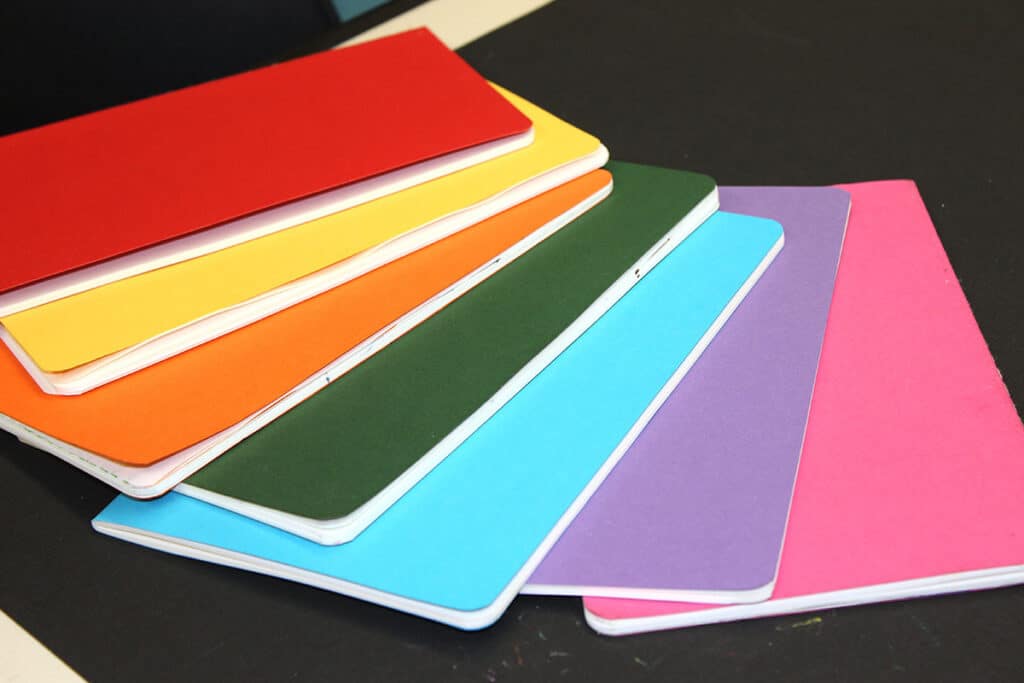
Sometimes the best way to get past a blank page is to let someone else make the first mark with a sketchbook swap. Instead of facing a completely blank page, peers can respond to an existing mark, idea, or composition by adding a new element or material. Establish a simple rule: Build upon your partner’s marks rather than erasing or removing them. Return the sketchbooks and let students run with their new marks and suggestions!
6. Revisit old sketches.
A blank page isn’t the only place where a new idea can begin. Students can flip through their sketchbooks and revise unfinished, forgotten, or old artwork. Sometimes a previous idea has possibilities that students couldn’t see the first time they drew it. Encourage them to continue an unfinished drawing, turn an old mistake into something new, or combine elements from two previous pages into one new idea. As they turn the pages, they can ask themselves, What else could this become?
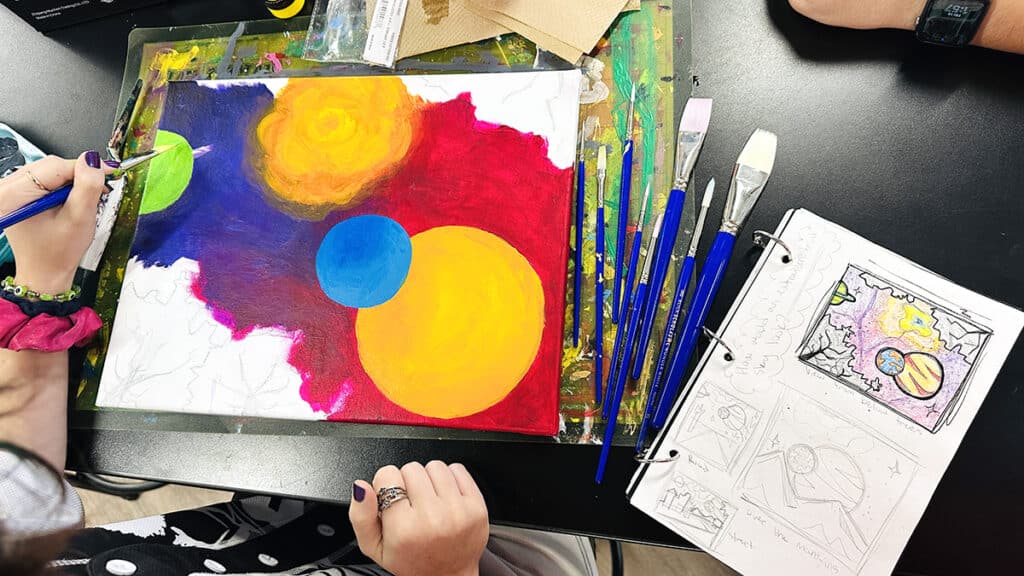
A blank sketchbook page doesn’t have to be something to fear. Instead, it can be an invitation to experiment, make mistakes, and discover new ideas. Whether students start by setting an intention, changing up their routine, collaborating with a classmate, or revisiting an old sketch, each strategy gives them a concrete way to move forward and foster confidence. When students learn that they don’t need to know exactly where they’re going before they begin, the blank page can become a place of possibility rather than pressure.
How do you help students feel confident making the first mark?
What fears prevent your students from creating freely?
To chat about overcoming the blank page with other art teachers, join us in The Art of Ed Community!
Articles and podcasts are opinions of professional education contributors and do not necessarily represent the position of the Art of Education University (AOEU) or its academic offerings. Contributors use terms in the way they are most often talked about in the scope of their educational experiences.