
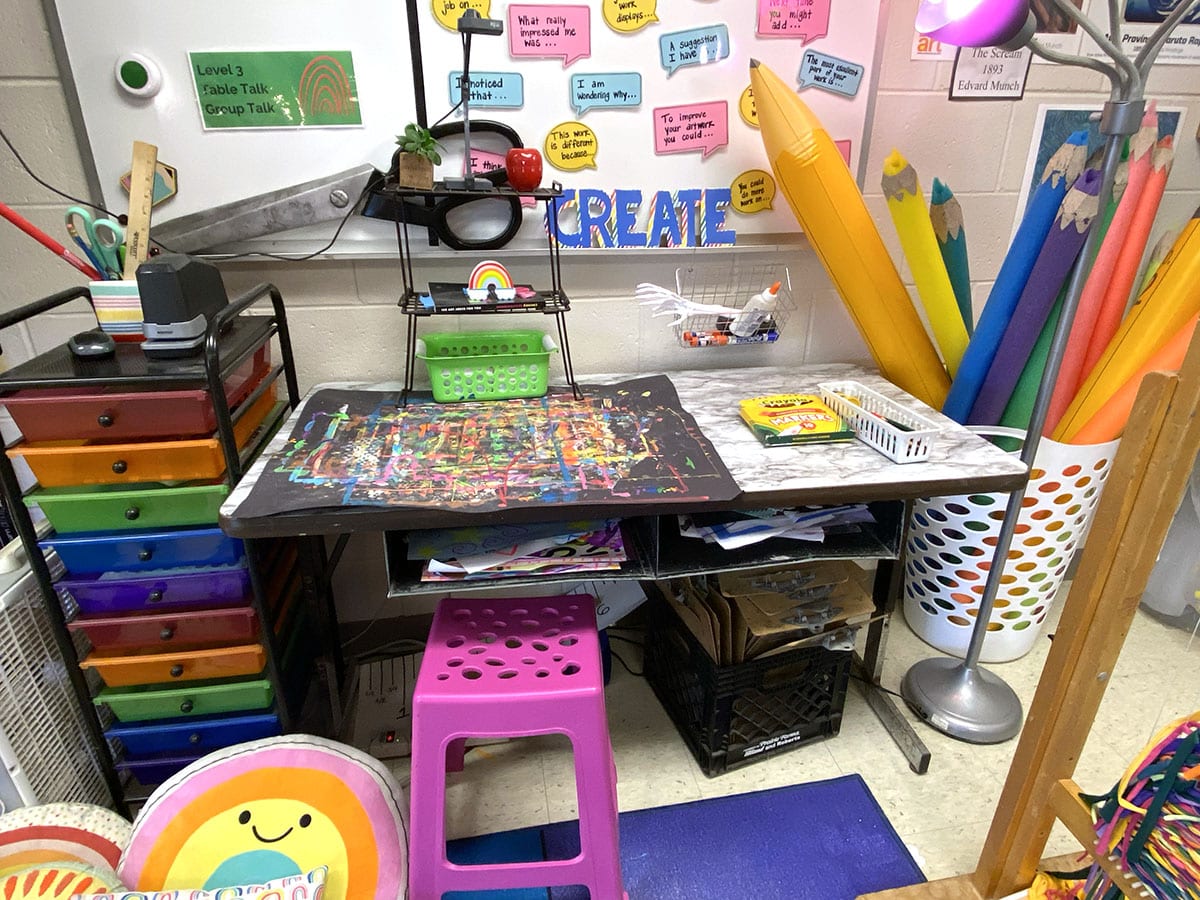
You stepped into your “new to you” art room for the first time. The previous art teacher’s name is in the dusty textbooks, on labeled tools, and on signed artwork samples. You wonder, What was this art teacher like? Will this be my name one day? If you want others to remember you for more than a dusty name, you want to leave an art education legacy! Unlock how through fostering creative leaders—a ripple effect that will shape the future for years to come.
Leave a legacy in art education you’re proud of and nurture creative leaders with the keys below.
The word legacy can sound really intimidating and weighty! You may be wondering how you could possibly focus on a decade or two in the future when you’re underwater in the daily tasks now. Investing in creative leaders doesn’t necessarily mean adding to your workload. It’s about shifting priorities early to develop student ambassadors and advocates who will share responsibility and help your art program grow.
Unlock who your future leaders are.
Our society celebrates student leaders who are confident and charismatic: they shout out answers, perform in front of the class, and raise their hands for every opportunity. We center learning on group work, collaboration, and the new “Groupthink.” On the outside, it looks like we’re engaging excited, ready-to-learn students who are strong communicators.
The Key:
Did you know you may be looking for student leaders in the wrong places? Yes, the outgoing and outspoken student will be fantastic, but creative leaders often lie below the status quo. Many of our “artistic” creatives are quiet and thrive when they have space to think and work independently before coming together. Don’t miss out on these strong, compassionate, and careful thinkers! With intentional instructional strategies and activities, you can coach these students to make the leap from shrinking to leading.
Empower your quiet students to contribute with these ideas:
- Challenge students to write down and compose their thoughts before sharing out loud
- Provide independent work time where students can spread out and sit alone
- Structure group work so there’s independent work time followed by time to come together
- Allow more peer-to-peer or pair-share groupings over whole class or large groupings
- Invite students over for one-on-one check-ins with you
- Limit the number of stations and choices so the environment is calmer with less stimuli
- Carve out time for Silent Studio (without music!) as a reprieve from the loud world around them
Fostering creativity and creative thinking is essential now more than ever. In a world where AI and technology can “think” for us, students may have fewer opportunities to practice questioning and developing ideas on their own. Yet creativity remains a highly valued skill in the workforce. The art room is a powerful place for students to practice the creative thinking they will need in their future lives, in other classes, and in their careers.
Unlock a specific time to develop your student leaders.
The school day flies by, and before you know it, you’ve already stayed after school, it’s past time to go home, and you still have a pile of artwork to grade. Even for students, time is the most valuable commodity. So many students juggle schoolwork, jobs, friendships, family activities, and extracurriculars. When can everyone find the time to build this legacy?
The Key:
Restructuring your day (during contract hours!) will help you maximize your time and energy at both home and school. If your district or school offers a stipend to sponsor after-school activities, consider an afternoon Art Club or National Art Honor Society. If not, look for blocks of time you can invest in your students during the school day. Maybe it’s 3o minutes before school starts, during a school-wide study hall or homeroom, or during a lunch period.
If you’re struggling to find a time to schedule a meeting during the school day, enlist support. Take a few minutes to dream and plan what you’d like your student leadership development to look like. If you present your plan to your administration in advance, they are very likely to go the extra mile to make accommodations. It’s often worth it for them to move your planning period if it will positively change the school’s culture.
Whenever you decide to meet, gather ideas and even more insider keys from The Art of Education’s YouTube series, Art Club Unlocked. Elementary art teacher Jessica Stuver and secondary art teacher John Szablewski show you how to boost your program, develop the next generation of creative leaders, and leave a lasting mark on your school and community. Don’t miss a tip in this six-episode mini-series by making sure you’re subscribed and have your notifications turned on.
Unlock lesson ideas and activities that grow leadership skills.
When we hear “leadership art lesson,” we probably think of big service-learning projects like a community mural. Or maybe adding a serious presentation component after an art project to practice communication skills. Because the term leadership carries weight, we often correlate it with increased prep, more involved projects, community connections, and larger-scale artwork.
The Key:
Leadership art lessons don’t have to start from scratch or be more elaborate. Focus on intentionally modeling specific skills and providing an encouraging space for students to practice them. Tweak your existing lessons and activities to hone ideation, resilience, and reflection. These are core skills, like creativity, that technology cannot replace.
Integrate these activities into your curriculum:
- Make time for brainstorming exercises
- Practice communicating ideas visually, and not just through speaking or writing
- Celebrate the positives when students make mistakes and hit roadblocks
- Incorporate reflection into every stage of the artistic process, and not just at the end of a project
- Ask students to provide project feedback to you, the teacher, and to future students who will do the project next year
- Invite graduates to come back and make art with current students

Unlock confidence with real-world roles.
Classroom jobs are great—they encourage ownership and responsibility in the art room. They give students opportunities to practice task completion, communicating expectations, and peer accountability. Jobs like Art Supply Collector and Sink Monitor help keep the art studio tidy and the class running smoothly. However, they can become mundane chores that are difficult to sustain beyond the first semester.
The Key:
Research shows that linking classroom learning to real-world situations strengthens connections and motivation. Try tying classroom jobs to actual professional leadership titles to add importance and authenticity to each student’s work. Adjusting the language we use in the classroom with simple shifts in job titles can also reframe how students see themselves, their skills and giftings, and their futures. With each official title, be sure to provide clear responsibilities, opportunities for decision-making power within the scope, and space to practice.
Make the switch to studio titles like these:
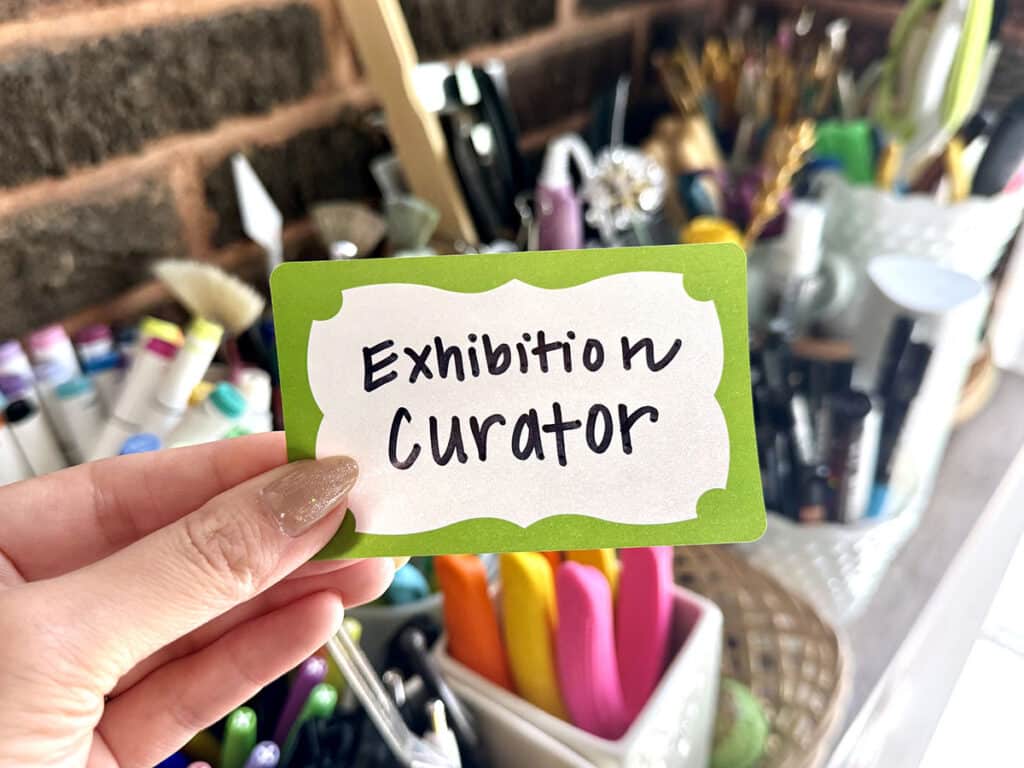
- Exhibition Curator: This student leader oversees hallway displays, rotating artwork, and art labeling.
- Materials Manager: This student leader oversees art supply inventory and organization, and tool maintenance.
- Community Outreach Coordinator: This student leader oversees connections with other school departments and clubs to share news, ask for donations, and brainstorm future partnerships.
- New Member Mentor: This student leader oversees the welcoming of new students to class routines and can also assist with catching up students who are absent.
- Art Room Historian: This student leader oversees the documentation of individual and class discoveries through photos, videos*, and writing.
- Social Media Lead: This student leader oversees the capturing of photos and videos* to create posts or short-form content for the district’s, school’s, or class’s social media page(s).
- Project Manager: This student leader oversees the timeline of each art project from start to finish to ensure everyone meets milestones and deadlines.
- Advocacy Ambassador: This student leader oversees sharing good news, celebrations, and requests to the district and school’s announcements, administration team, and PTA/PTO.
*Note: Follow district and school policies regarding student cell phone use, taking/using photos and videos, and social media.
Your art teacher legacy doesn’t have to be dust-covered and buried in your art room long after you’re retired. Your contribution to art education will live on in the students who find their voices and take creative risks under your guidance and mentorship. Start small this year by shifting your focus to student leadership, and trust the ripple effect. The art room you shape today, in even the smallest terms and exercises, can empower creative leaders for years to come.
What excites you about building art room advocates?
How has this article reframed your vision for your teaching philosophy, practice, and curriculum?
To chat about unlocking creative student leaders with other art teachers, join us in The Art of Ed Community!
Articles and podcasts are opinions of professional education contributors and do not necessarily represent the position of the Art of Education University (AOEU) or its academic offerings. Contributors use terms in the way they are most often talked about in the scope of their educational experiences.