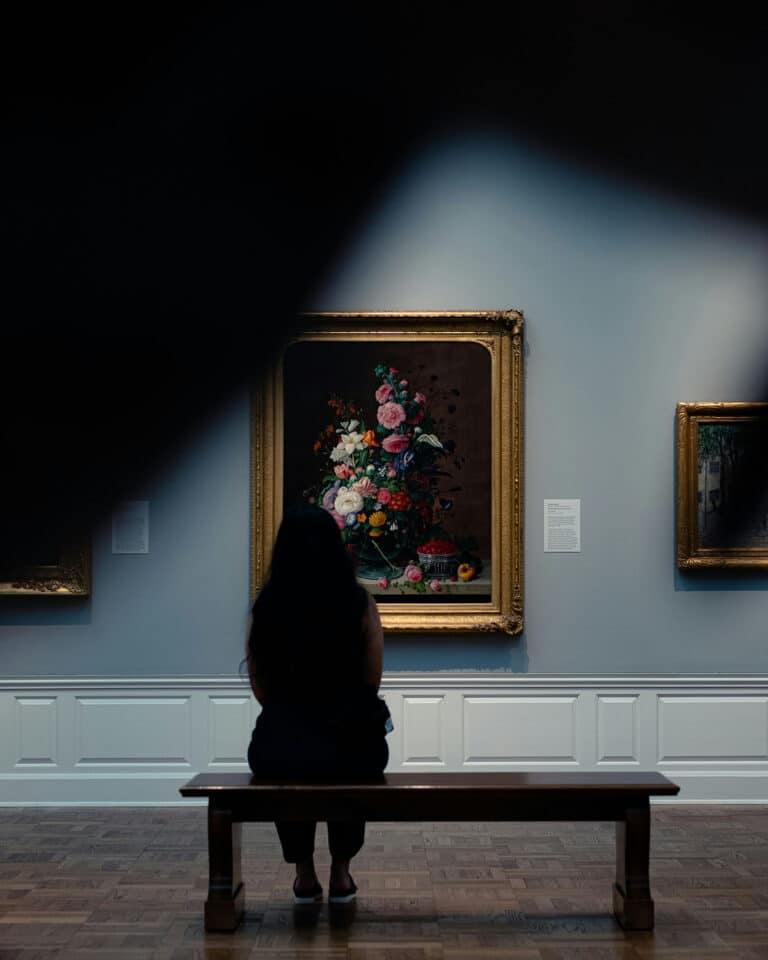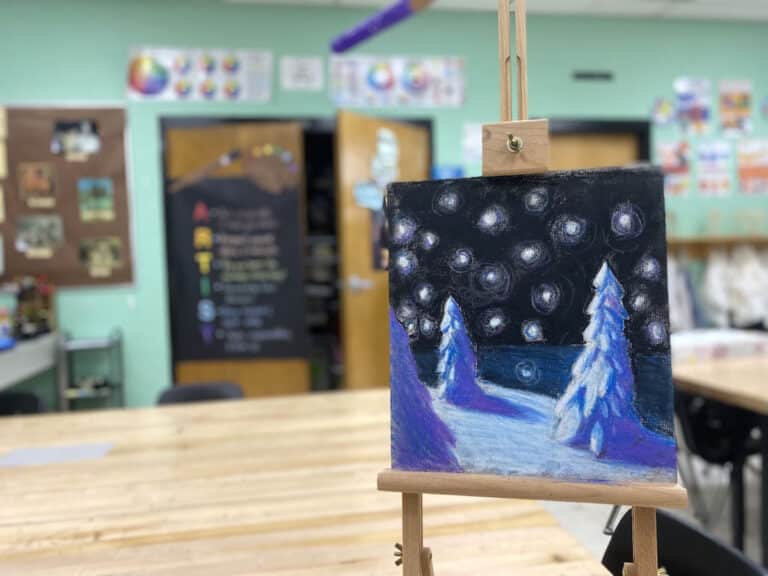

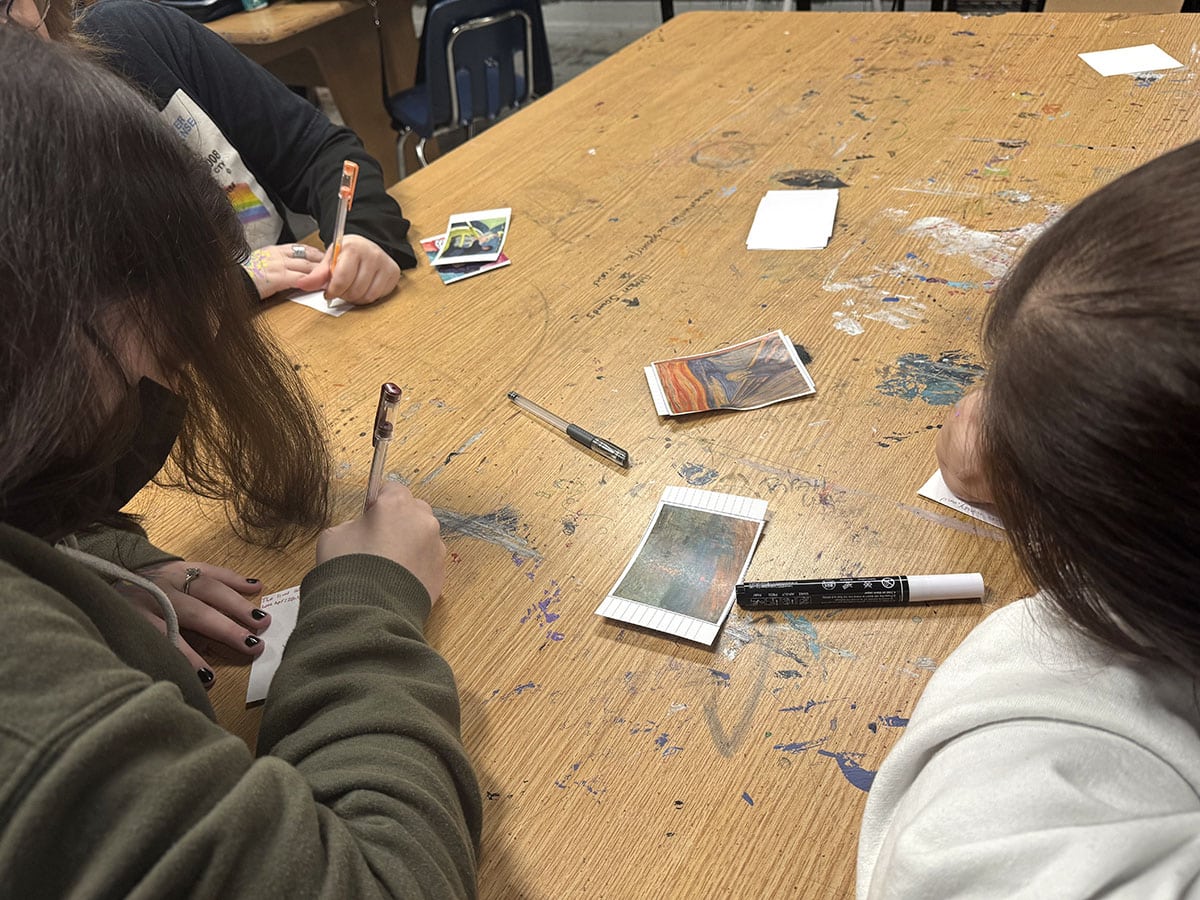
We’re art teachers because we love creating art—and looking at art. Art history can sure fire us up! But how can we ignite that same curiosity and passion in our students? Analytical thinking (especially when it comes to art) doesn’t usually come naturally to students. Dig into these simple tips and fun activities perfect for any grade level. Learn how to break down analysis skills, teach art analysis, and celebrate art in your art room this year!
Guide your students through art analysis with approachable, engaging activities for each stage of the Gradual Release Model.
Gradual Release Model
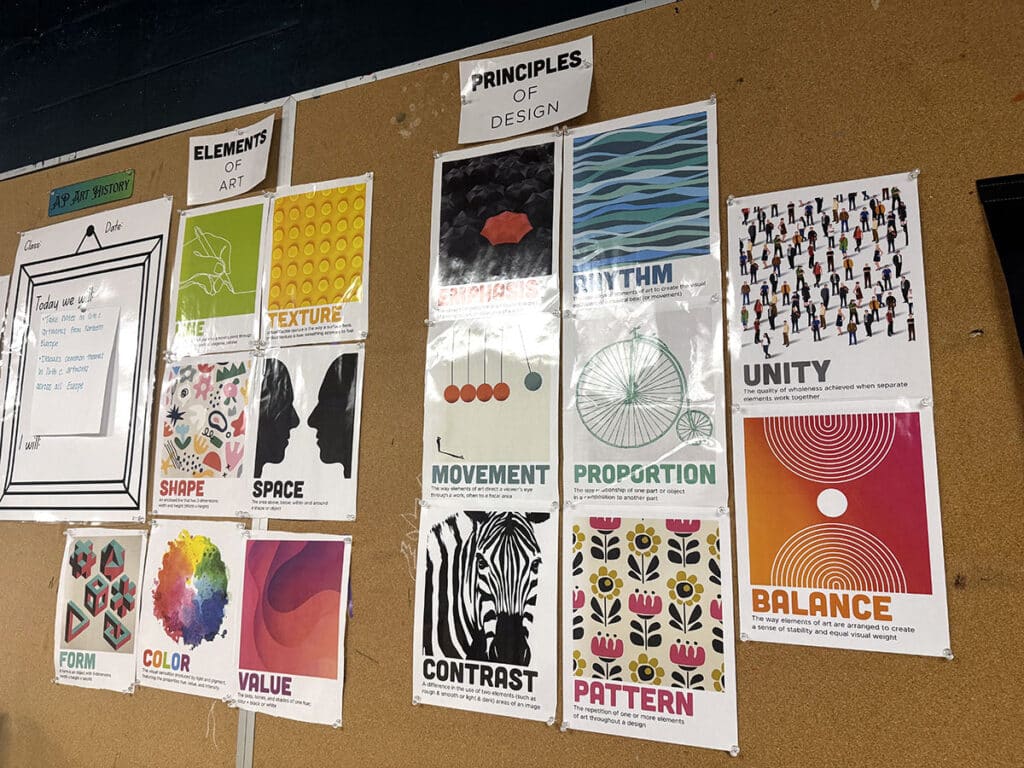
Prevent glazed eyes and overwhelming confusion by starting simple and easy. Break down art analysis into its most basic components: the Elements of Art and the Principles of Design. Ensure your students have a clear understanding of each, and provide easily accessible visuals that students can refer to at all times.
Once you have a foundation of shared knowledge, use the Gradual Release Model’s four steps to break down complex concepts and processes:
- I Do
- We Do
- You Do Together
- You Do
“I Do” Analysis Activity
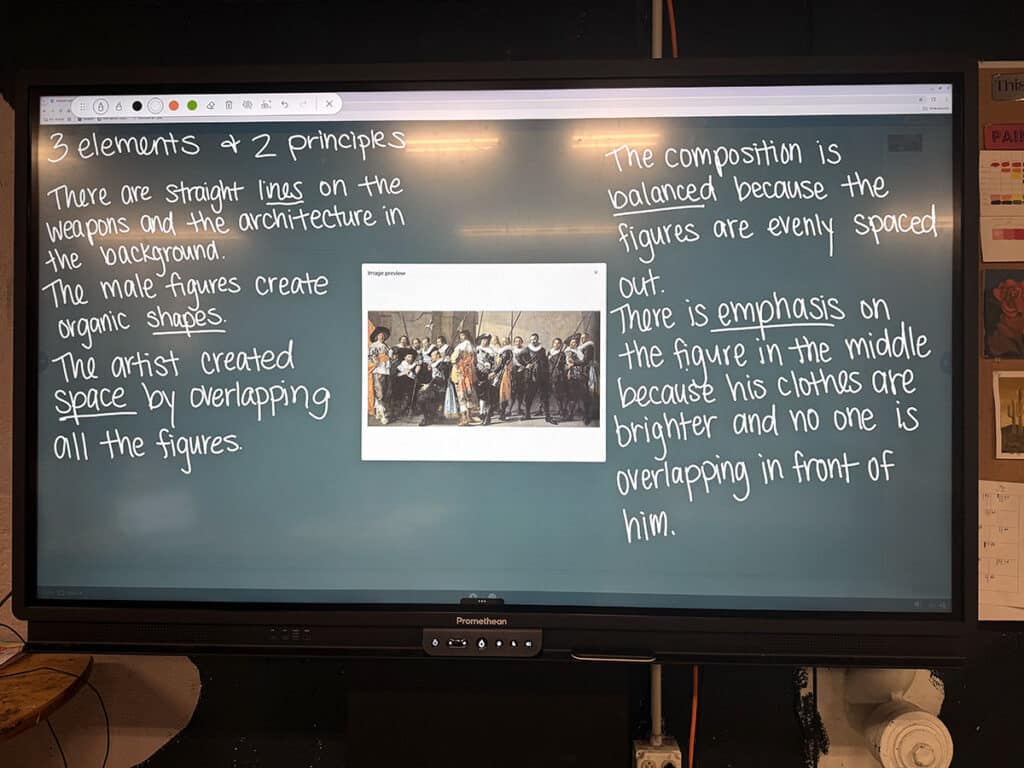
When introducing art analysis to your students, start off by modeling it yourself. Talk your students through how you would analyze an artwork, narrating the process similarly to how you would narrate a technical demonstration with art media.
Choose an artwork that has a lot going on, such as A Sunday on La Grande Jatte by Georges Seurat or School Studies by Horace Pippin. Project the artwork so that all students can see it. Provide examples of the Elements and Principles in the artwork: where you see them and specific, descriptive adjectives for each.
Adjust this process as needed based on your student age group. Keep it brief so students grasp the concept of analysis. You may need to start in sections, with a couple of minutes here and a couple of minutes there.
Once students get more comfortable, give them a task such as writing down your analysis or repeating your analysis to a partner. Writing reinforces information, keeps them accountable for listening to you, and gives a tangible example to reference in the future.
“We Do” Analysis Activities
At this point, students have a basic understanding of art analysis and can practice it in a guided whole-group lesson. This is the time when students develop their knowledge through practice and group collaboration.
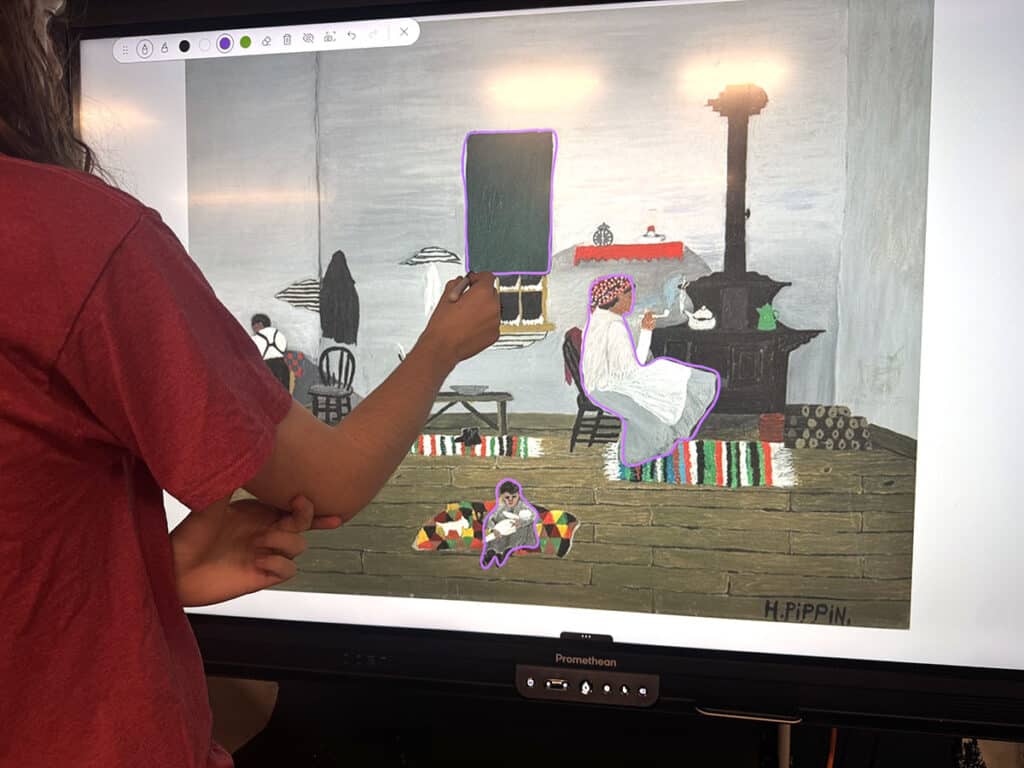
Invite students to come to the artwork on display. Students take turns identifying where they see each Element and Principle, using specific, descriptive adjectives for each. Encourage students to “phone a friend” when they need help identifying examples or generating adjectives.
Get the ball rolling with questions such as:
- What is the focal point?
- What stands out to you first and the most?
- Why does it stand out?
- What are other things pointing to it?
- Can you use your finger to trace these paths of movement?
- How would you describe these paths of movement?
Verbally affirm any correct answers. Even if they’re wrong, encourage them with any positives they’ve shown in their participation, such as, “That’s a great observation!” Analysis can be intimidating and nerve-racking, so you want to build your students’ confidence. Continue coaching all students by asking follow-up questions to encourage them to think more deeply.
For a student who says, “I see the color red,” here are some questions to prompt their critical thinking:
- Where do you see the color red?
- How else would you describe the red you see?
- Do you think the red is balanced? Why or why not?
At this point, you probably notice that students will default to the same descriptive words over and over again. (“It’s cute,” “It’s smooth,” or “It’s rough.” Sound familiar?) Make a list of “Secret Words” that students are not allowed to use. This will force students to come up with alternatives that may end up being more specific and enhance their analysis.
Analysis Hunt
A spin on the above activity is to frame it as a scavenger hunt. Using different-colored markers, students “hunt” for Elements and Principles in a displayed artwork. Students will circle or trace the Element or Principle and describe it.
For example, if they identified Color, Line, and Shape in Piet Mondrian’s Broadway Boogie Woogie, they may describe the Colors as bright and primary, the Lines as precise, straight, horizontal, and vertical, and the Shapes as small, crisp squares and rectangles.
Fan-n-Pick
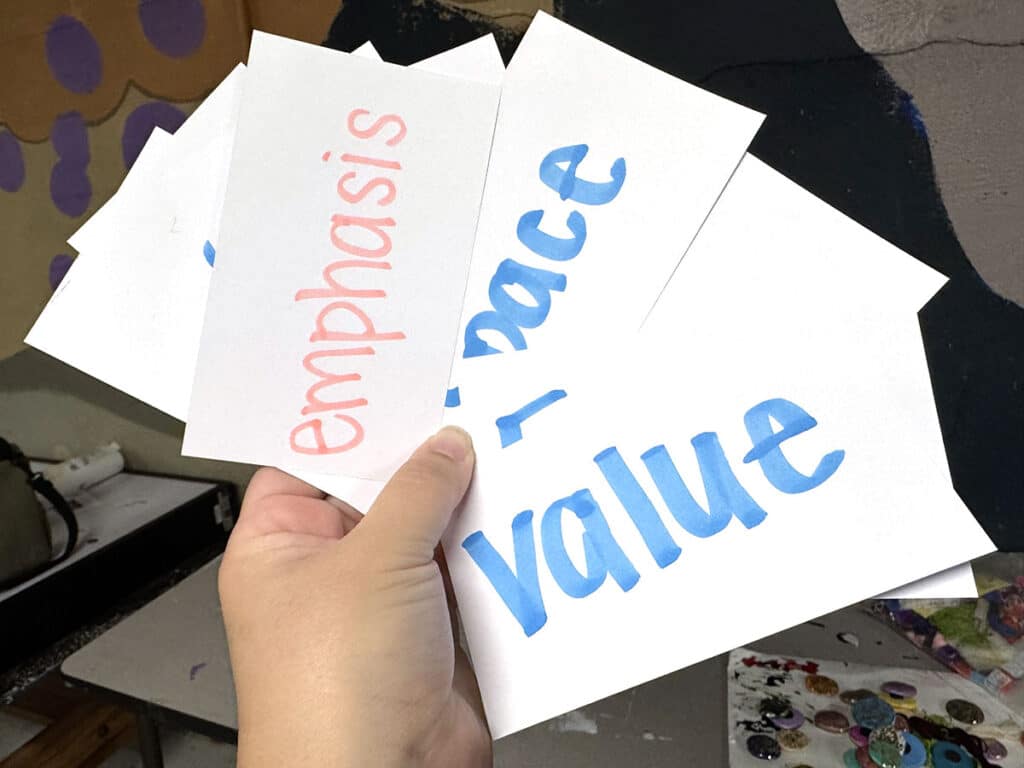
Before the activity, prep a set of cards with an individual Element or Principle on each. Alternatively, you can download the Elements & Principles Card Games in FLEX Curriculum to save time.
Walk around to the students, fan out the cards, and say, “Pick a card, any card.” You can also select a student to walk around with the cards. Each time they pick a card, that is the element they will analyze in the displayed artwork. Students read the Element or Principle and say where they see it, with three adjectives to describe it.
“You Do” Together Analysis Activities
When students are ready to level up their analysis skills again, consider ways to step back and let students lead together. Keeping it collaborative continues to build communication skills and confidence. Since students are familiar with the overall process, they can put their energy into deeper thinking and connections. At this stage, your role is to continue facilitating dialogue through coaching questions and encouragement.
Apples to Apples
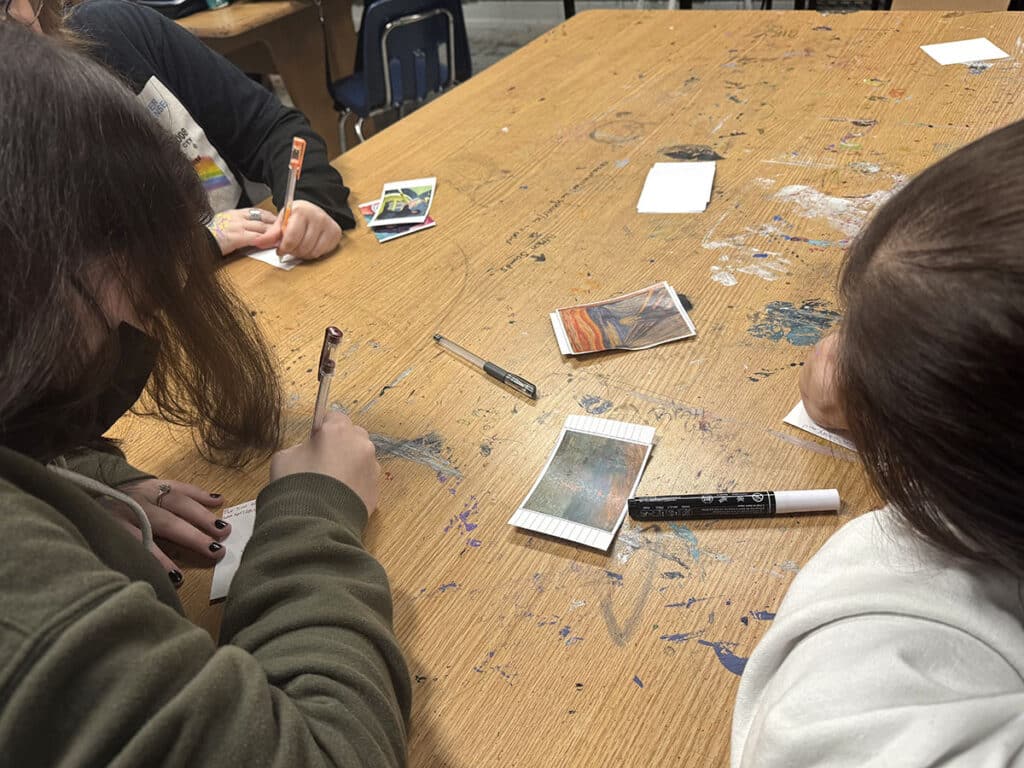
Create or purchase sets of cards featuring different artworks. Break students up into groups of 4-5. Each group will get a set of cards, a stack of small paper, and writing utensils. Choose a student to start the game as the “Judge.” The Judge chooses a card, shows it to the group, and then selects an Element or Principle to analyze. The rest of the group will individually write their analysis of that Element or Principle on a slip of paper, as in-depth as possible.
Students pass their analysis papers to the Judge, who then reads the different answers aloud. The Judge chooses the strongest analysis and awards the artwork card to the winner. The person to the right of the Judge becomes the new Judge, and the process repeats. At the end of the game, whoever has the most artwork cards is the winner.
Brushstroke Breakdown Bash
Students research and find one artwork they enjoy. If you are in a specific unit, you can provide parameters, such as “Find one French Impressionist artwork from 1870-80.” Next, students browse through everyone’s chosen artworks with a gallery walk. Facilitate a brief discussion to identify the Elements and Principles in each. Students will use the conversation to inform their vote for the Brushstroke Breakdown Bash.
Here are some example awards students can vote for:
- Perfectly Poised Prize for symmetrical balance
- Lean but Legendary Award for asymmetrical balance
- High-Drama Queen for contrast
- Spotlight Superstar for emphasis
- Total Vibes Award for harmony
Round Table
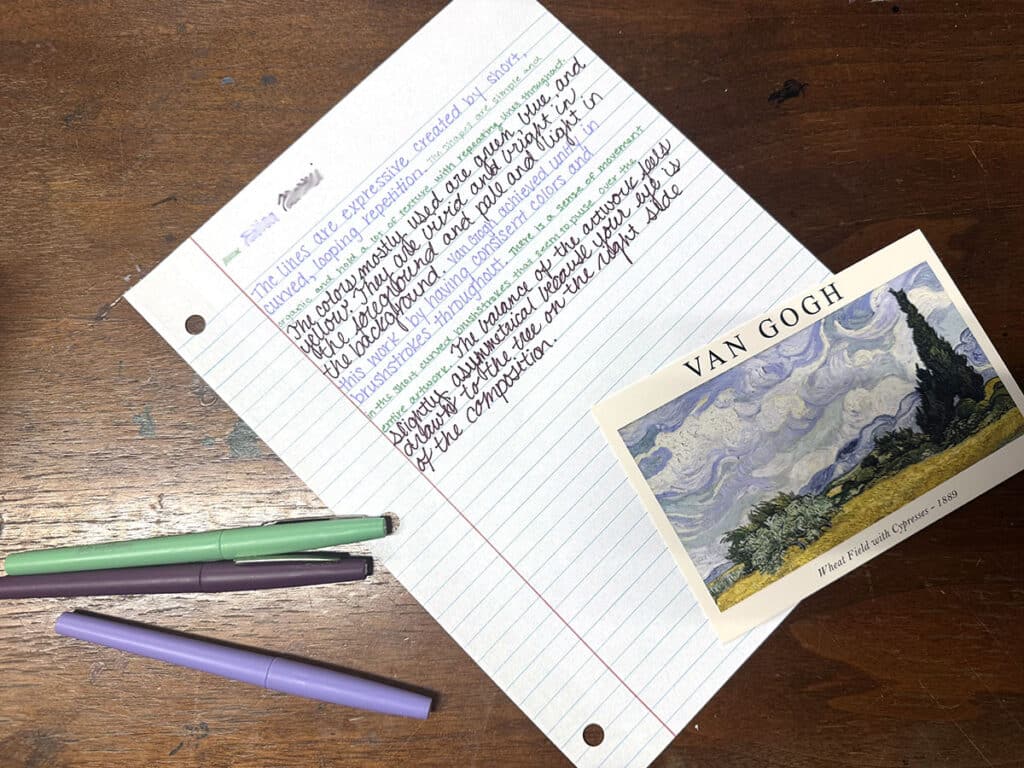
Break the students into groups of four and provide each group with an artwork, paper, and four different-colored pens. Each student writes their name at the top of the paper in their color. Student 1 writes an analysis of an Element or Principle, identifying where they see it and giving three adjectives to describe it. Then, they will pass the paper to Student 2, who will repeat the process with a different Element or Principle. Repeat this process until the paper has made it around the group twice.
Rally Coaching
Each student gets an artwork and a visual aid of the Elements and Principles. Break students into partners. The first partner analyzes at least three Elements and two Principles. The second partner will Watch and Listen, and then Check, Coach, and Praise as necessary. Then, the partners will switch roles.
“You Do” Analysis Activities
It’s time to let your students free and try it on their own! It can be helpful to provide students with a choice in how they capture their analysis skills. For example, some students may prefer to give a presentation or oral analysis, while others may be more comfortable writing a paper or recording a short podcast. You can also provide sentence stems or allow students to draw or use pictures if they’re Multilingual Learners.
Mini Gallery
Each student will need 3-5 artworks; you can choose these or allow students to select their own. Students either build a mini gallery and place printouts of their artworks inside or create a digital version. Students compose information labels for each of their artworks. These must include a brief analysis with at least three Elements and two Principles per work.
Read and Rewrite
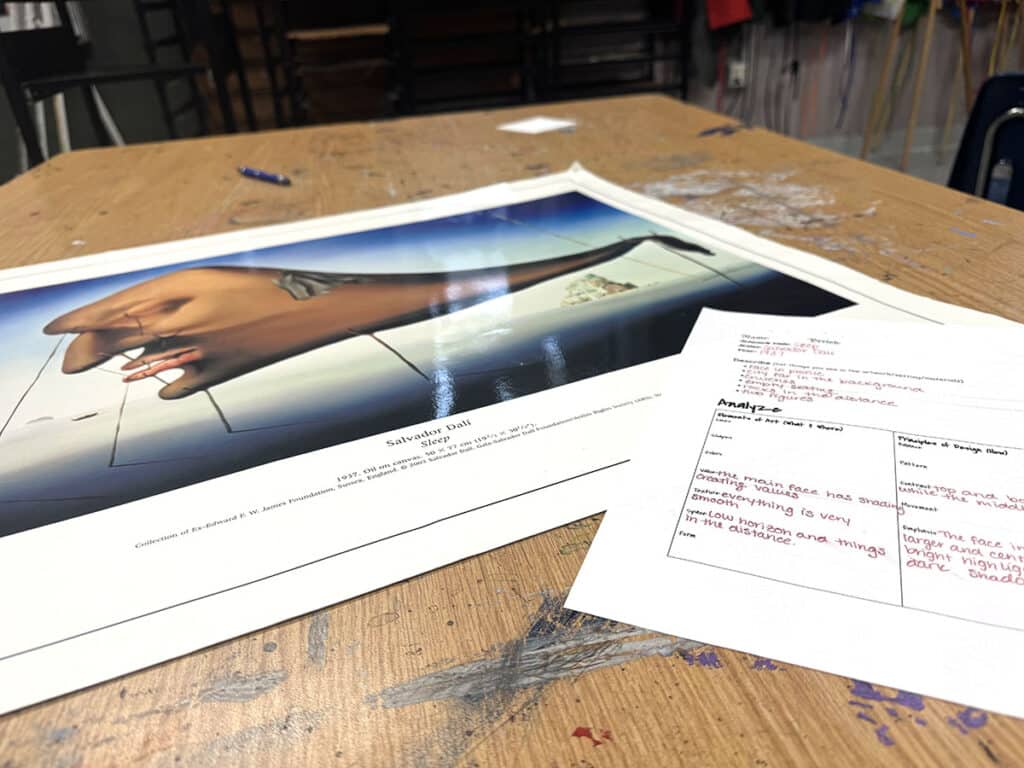
Provide an informational text, such as an artist statement, article, or art critic review of an artwork. You can also guide students to find their own. Students read and highlight statements that reflect analytical thinking. Next, students rewrite the highlighted analysis statements in their own words. This will most likely require students to use a thesaurus to brainstorm alternative yet applicable adjectives.
When students see that you not only love artmaking but also love art history, they will get excited, too! Celebrate art history and bring it alive with the valuable skill of analysis. Once students unlock this way of thinking, they’ll have more confidence in looking at, talking about, and writing about art. It just takes a few simple steps, using the Gradual Release Model and the fun activities above, to make every art class a celebration!
Share a fun art analysis activity that your students love!
Why is it important to make art analysis a part of your curriculum?
To chat about art analysis with other art teachers, join us in The Art of Ed Community!
Magazine articles and podcasts are opinions of professional education contributors and do not necessarily represent the position of the Art of Education University (AOEU) or its academic offerings. Contributors use terms in the way they are most often talked about in the scope of their educational experiences.