
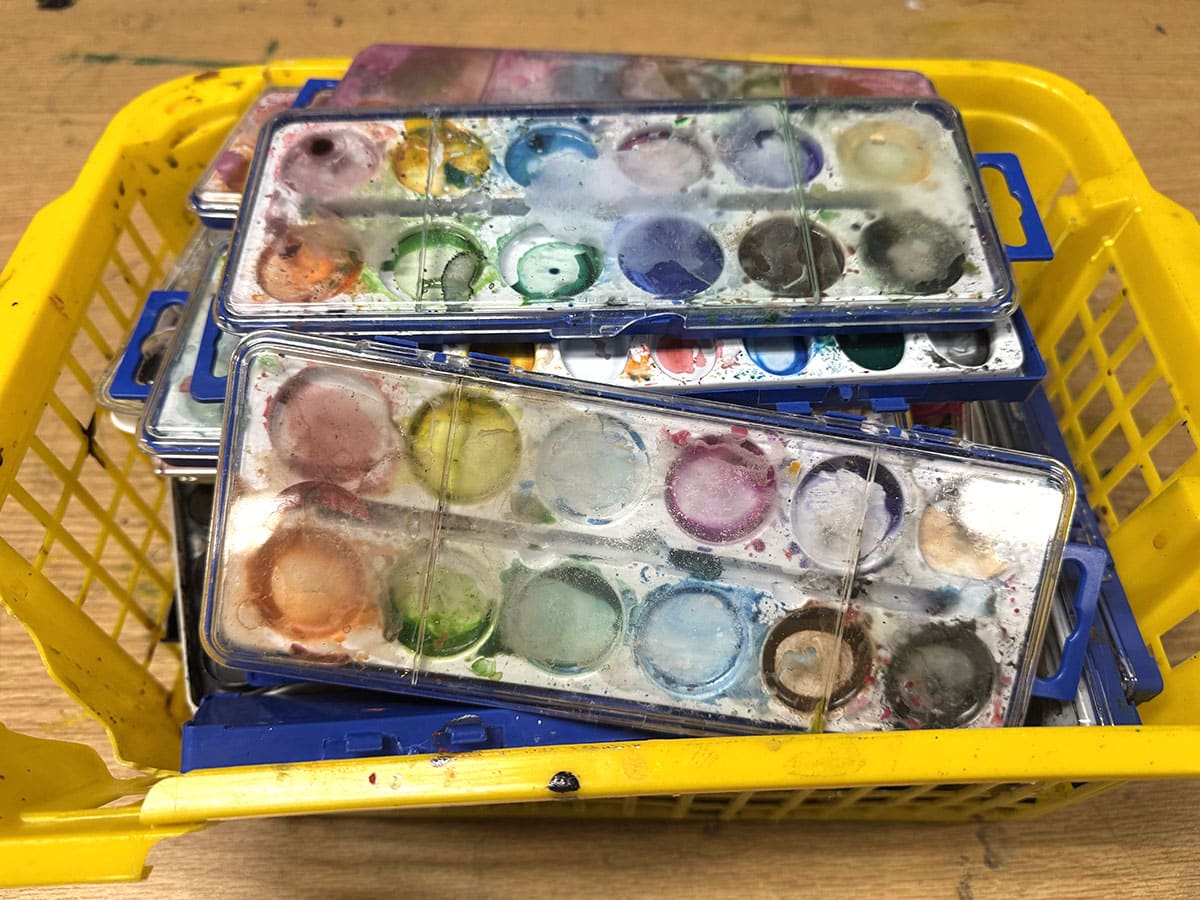
Often overlooked, the one-dollar watercolor palette from the office supply aisle may be one of the most valuable tools in the K-12 art room. Watercolor combines easy cleanup with rich creative potential, making it both practical for teachers and exciting for students who feel like they’re using “real” art materials. Its fast-drying time, budget-friendly price, and accessibility support meaningful artmaking at every level while encouraging students to let go and engage in the process.
The grocery store watercolor palette is a mighty supply to fall in love with this season, and here are six reasons why!
1. It builds appreciation for higher-quality watercolors.
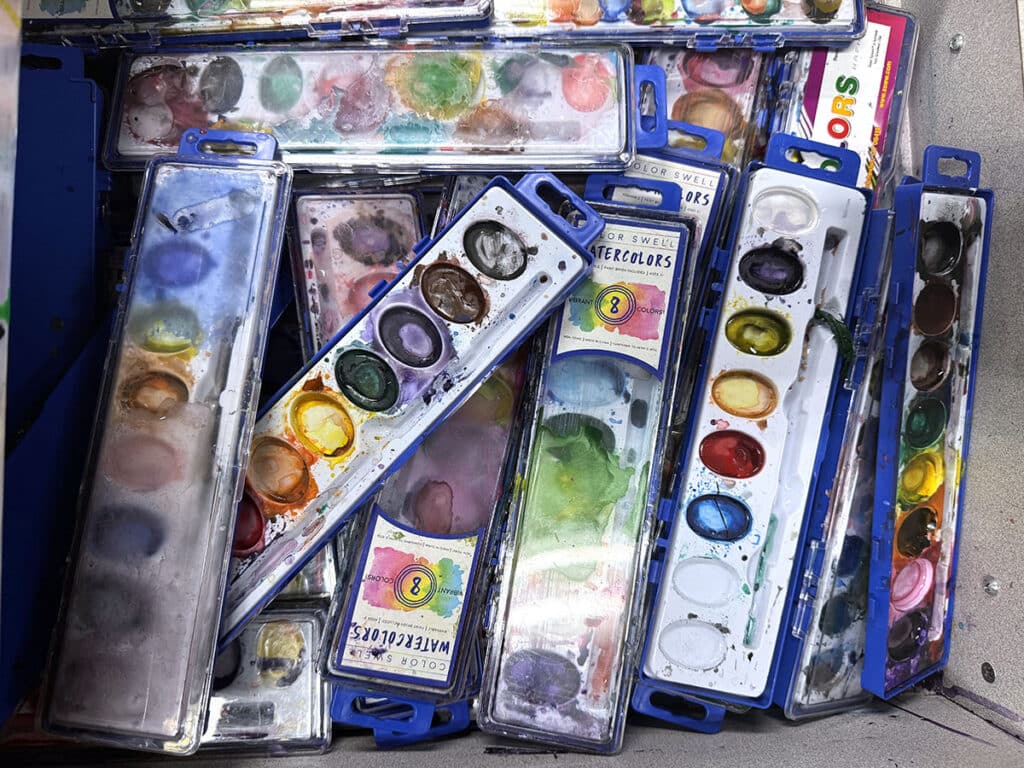
Help students recognize the value of higher-quality watercolors by starting with the one-dollar palette. Not all watercolors are created equally, and starting with the simple pan palette gives students an essential point of comparison. When you introduce liquid watercolors or tube paints, you will amaze students with the richness, flow, and vibrancy of the pigment. This moment sparks curiosity and excitement, prompting students to understand why some materials are worth more. It also encourages them to care for your more expensive supplies with extra intention and respect.
Here are some great skill builder activities to try with the one-dollar watercolor palette:
- Neurographic Art
- Colorful Leaf Prints
- Mini Atmospheric Perspective Painting
- 7 Simple Techniques
- Watercolor Layering
2. It sets you up to paint with a large number of students affordably.
Painting with large groups of students can be especially challenging, particularly when class sizes are large, you have hundreds or thousands of students on your roster, or you’re a traveling art teacher purchasing for multiple campuses. In these situations, cost-effectiveness matters. The grocery store watercolor palette offers a cheap solution that still allows students to experience falling in love with watercolor painting. You can purchase them off the shelf or order them in bulk for an even steeper reduced rate.
3. It provides students with accessible materials.
We want our students to obsess over the art materials we introduce, so it is important to bring them materials that everyone can use! When you require students to bring their own supplies, grocery store watercolors are an accessible option for nearly every family, ensuring participation isn’t limited by cost or transportation.
These watercolor sets are also ideal for students who miss class due to absences, suspensions, or extended time away. Easily send these cheaper palettes home without worrying about whether you’ll get them back! This flexibility ensures students can continue creating and learning beyond the classroom, reinforcing the idea that access to artmaking should be reliable, practical, and inclusive.
4. It creates custom color palettes.
Creating custom watercolor palettes lets you mix and match colors, turning a simple supply into a powerful teaching tool. By restricting color choices and having students work with limited color schemes, you can guide a deeper exploration of color, supporting the idea that creativity thrives within constraints. It shows students that watercolor is an ideal medium for meaningful, process-driven color exploration!
5. It gives opportunities to work out techniques and ideas so you can stretch your higher-quality and more expensive supplies.
Using inexpensive watercolor pans as a planning and practice tool allows students to work through techniques and ideas before moving on to higher-quality materials. Have students grab a sketchbook or scrap paper and use the one-dollar watercolor pan as an initial sketching tool. They can work out foundational compositions and color schemes before moving on to a larger, final project.
By sketching and experimenting in a sketchbook or visual journal with grocery store watercolors, students can:
- Test compositions
- Explore techniques
- Experiment with color schemes
- Make mistakes without pressure
When it is time to begin a final project, introducing higher-quality watercolors signals a shift in expectations. Students approach their work with greater focus, care, and intentionality because they have already clarified their ideas and direction. This process reinforces the value of planning, helps you hold final work to a higher standard, and teaches students that professional-quality materials are best used when experimentation is complete and artistic decisions are purposeful.
6. It allows you to seamlessly differentiate for a diverse student population.
Differentiation is a quiet superpower of grocery store watercolor pans. Unlike other media that require precision, watercolor’s unpredictability allows students to begin using it at many different entry points. Students can easily work at different levels of complexity without changing the assignment.
For example, take a landscape project. A more advanced student may start tackling wet-on-wet color blending or creating a range of values with different water proportions. They may even play with layering to create depth. In the same project, a beginner student may stick to controlled washes to get a feel for watercolor and its properties.
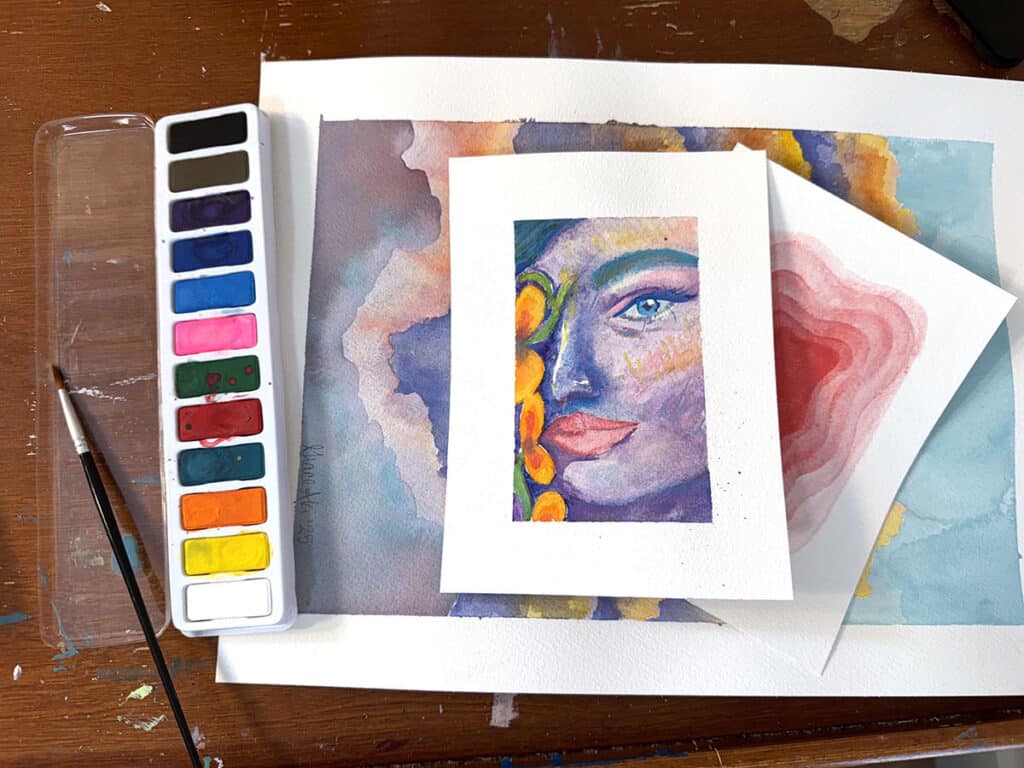
The grocery store watercolor palette offers art teachers remarkable flexibility, supporting a wide range of techniques and instructional approaches. As a stepping stone within a larger watercolor unit, affordable palettes help establish foundational skills while setting the stage for more advanced materials. When students are gradually introduced to higher-quality watercolors, they bring confidence, curiosity, and an appreciation shaped by their experience with grocery-store palettes. This shift transforms watercolor from a simple supply to a meaningful artistic experience in your art room.
How do you build student appreciation for higher-quality materials?
What other art supplies help meet the accessibility needs of your students?
To chat about watercolor with other art teachers, join us in The Art of Ed Community!
Magazine articles and podcasts are opinions of professional education contributors and do not necessarily represent the position of the Art of Education University (AOEU) or its academic offerings. Contributors use terms in the way they are most often talked about in the scope of their educational experiences.