
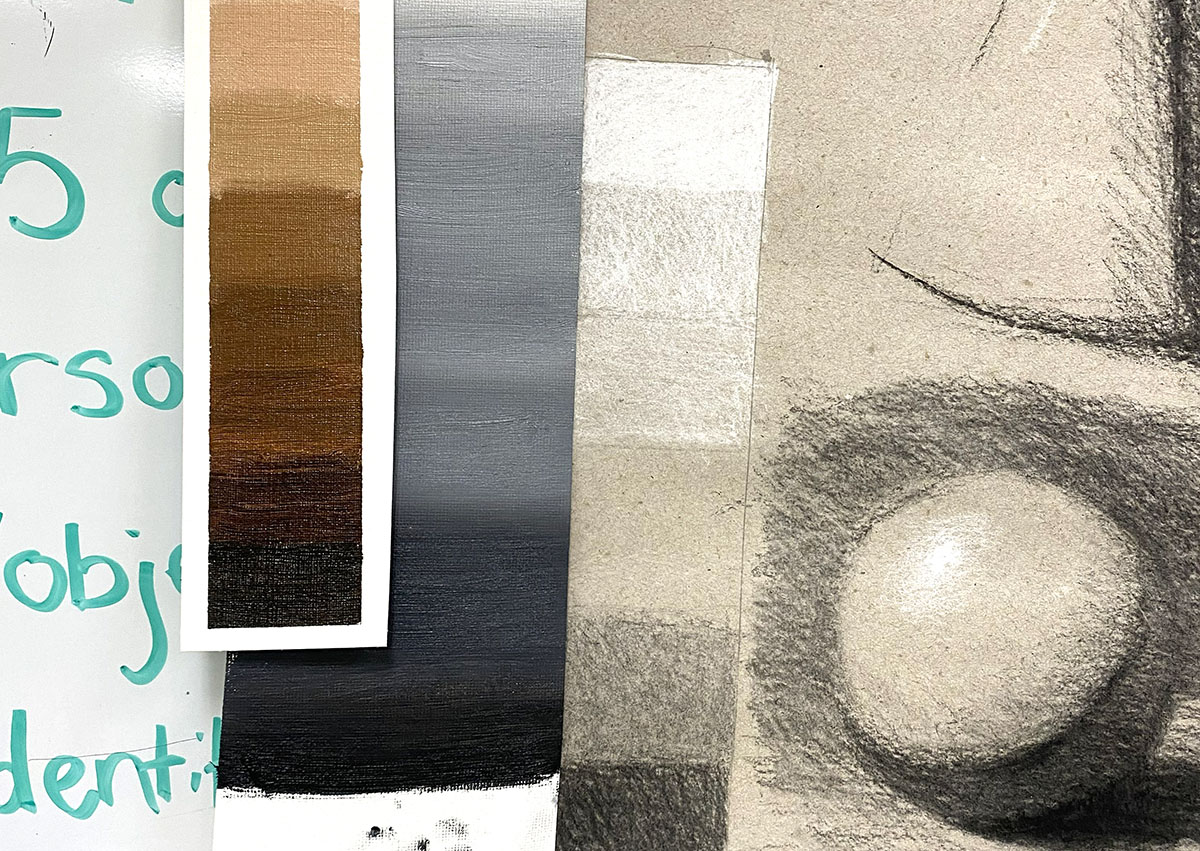
Oil paint is often viewed as too advanced, too messy, or too expensive for the middle and high school art room. Many teachers default to acrylics or tempera due to budget constraints, cleanup stress, or safety concerns. But with a thoughtful approach, oil paint can become one of the most rewarding mediums for young artists to explore. Oil paint offers depth, subtlety, and a deep connection to art history. We’ll cover material choices, setup strategies, and scaffolding techniques to incorporate oil painting into your curriculum without sacrificing classroom management or creativity.
With the right materials, safety information, and approachable project ideas, you can introduce oil painting to your secondary students with confidence.
Note: Follow district and school policies regarding specialized art tools and mediums.
Go Back to Foundations: The Case for Oil Paint
Oil painting supports the kind of learning many art teachers are seeking: depth over speed, process over product, and skill built through sustained attention. The properties of oil paint invite students to slow down, observe carefully, and engage in deliberate problem-solving. Rather than locking students into their first decisions, oil paint makes revision an expected and productive part of the process.
Oil painting also connects students to a tradition that spans from the Old Masters to the Impressionists, and to contemporary realism and beyond. Throughout an oil paint unit, learning the ins and outs of this medium and those who elevate it cultivates respect for materials and for oneself as an artist.
Oil paint offers:
- Rich colors and a wide range of values
- Long working time to encourage revision and layering
- A sense of professionalism, which often motivates students
- Opportunities to slow down and build intention, patience, and craft
Address the Myths: Safety, Expense, and Time
You may have hesitated to bring oil paint into your classroom in the past due to safety concerns, budgets, and tight schedules. Oil painting feels intimidating at first glance! The good news is that many of these worries are based on outdated information or incomplete assumptions. Let’s tackle a few common concerns.
Myth: Oil paint is toxic.
Truth: Modern oil painting can be non-toxic and classroom safe. Even odorless mineral spirits still produce fumes, so avoid all solvents and pigments with heavy metals. Instead, switch to non-toxic oil painting mediums, such as linseed oil or oleogel, so you can create a healthy painting environment without the need for industrial ventilation. Many earth pigments are naturally occurring and completely non-toxic. Simply put, you can paint like a professional with just dirt and oil!
Myth: It’s too expensive.
Truth: While oil paint is more expensive per tube, its pigment load means it stretches farther than acrylic or tempera. Start with a limited palette of high-quality student-grade oils, and limit the scale. It’s surprising how a little goes a long way.
Myth: It takes too long to dry.
Truth: Yes, oils dry slowly, but that can be a benefit. Projects can span 2–4 weeks and teach students to layer, pause, and reflect. If needed, use alkyd mediums or gels to speed up drying time.
Start Small: Materials & Setup
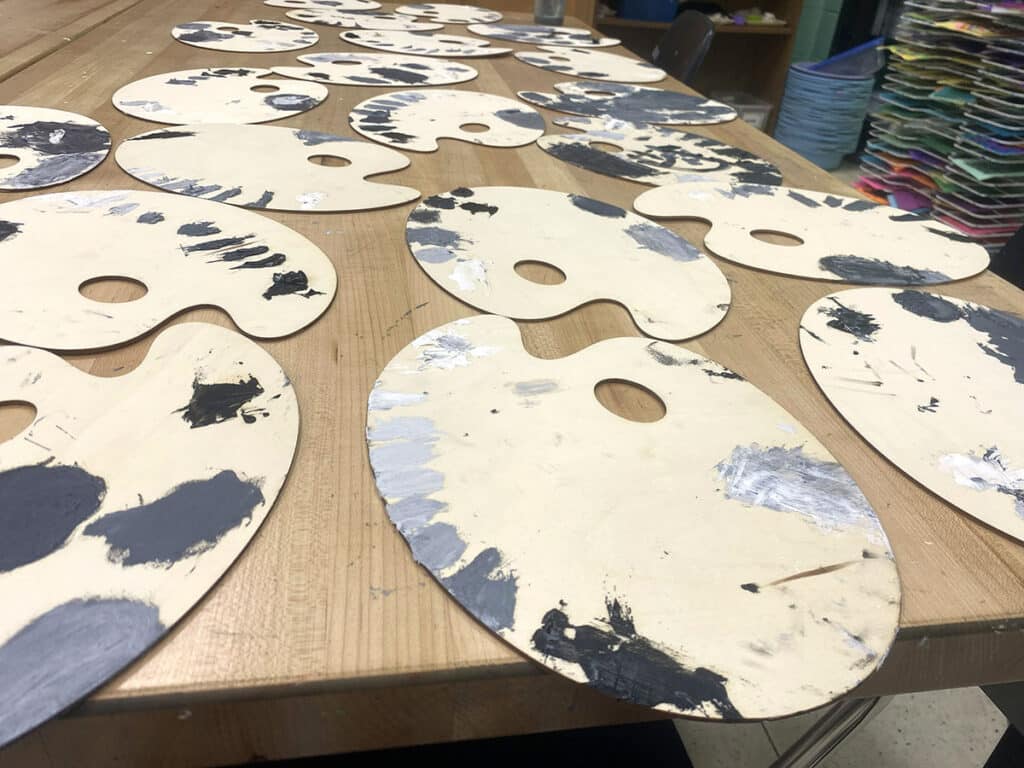
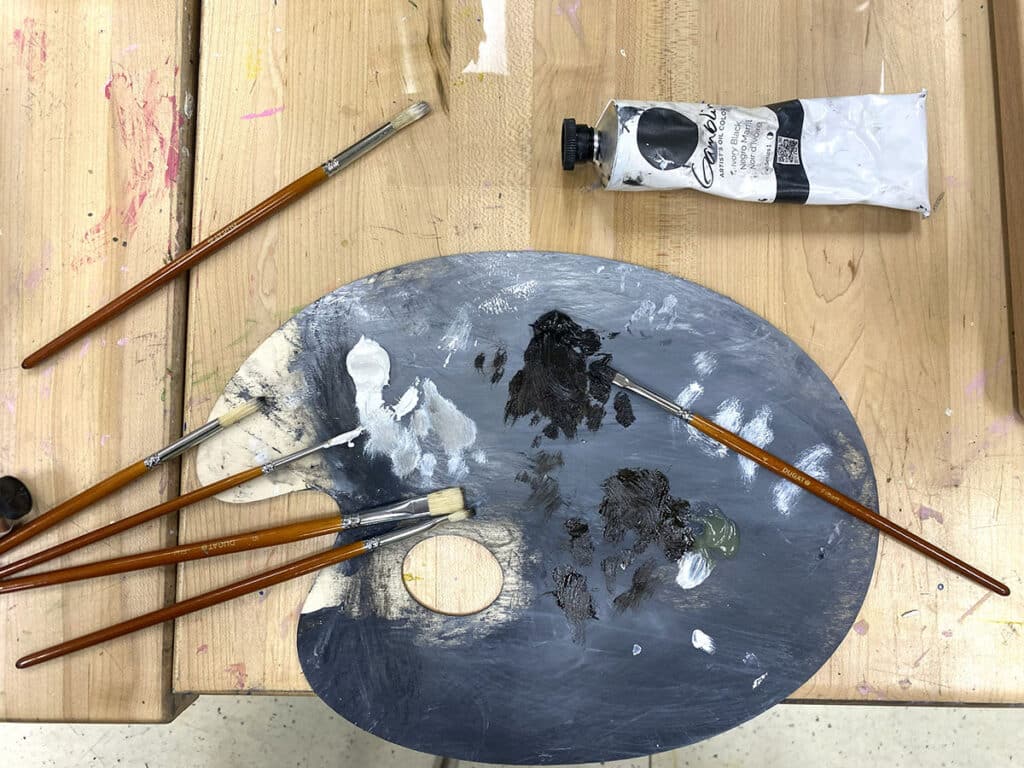
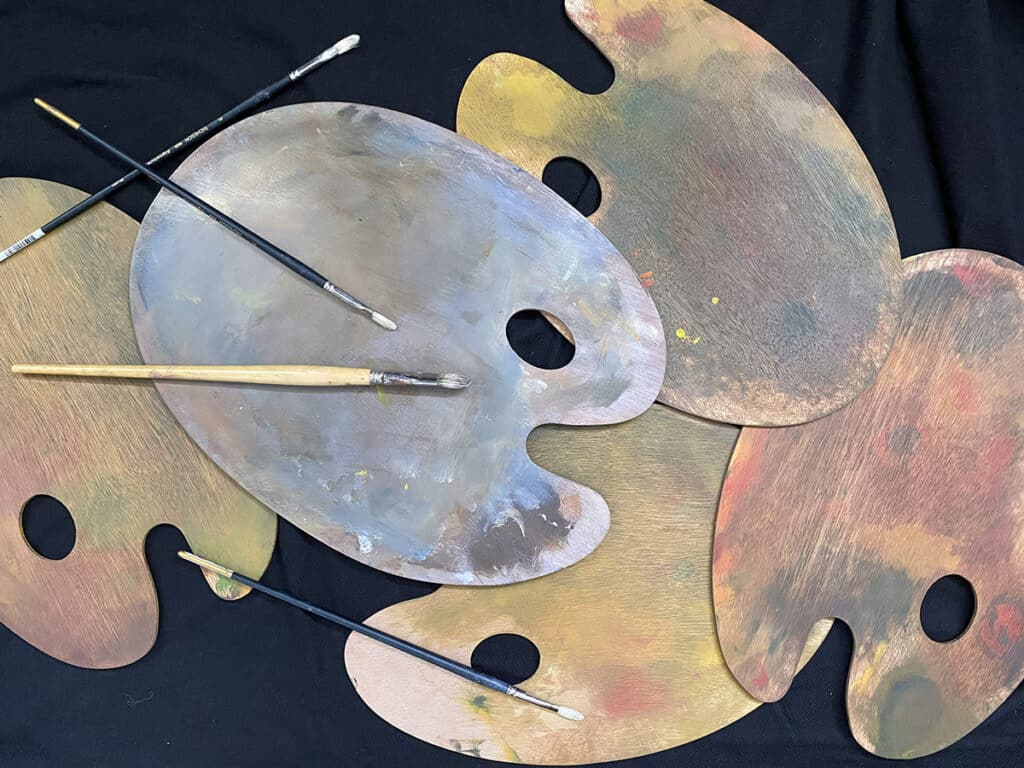
For beginners, use inexpensive surface options like canvas paper or gessoed tagboard or mat board. If your budget allows, you can purchase small 8×10 or 9×12 pre-stretched canvases or canvas boards in bulk. For paint supplies, it’s best to designate specific brushes and palettes for oil paint use only. Clearly label them, including a waste bin with a lid for used paper towels. While spontaneous combustion of linseed oil is rare, it’s worth educating about and taking precautions.
To clean brushes and palettes, use solvent-free methods with baby oil, followed by strong dish soap and warm water. Store brushes upright in jars in between classes to dry thoroughly. If you want to streamline your cleanup, grab disposable paper palettes such as paper plates, parchment paper, or magazines.
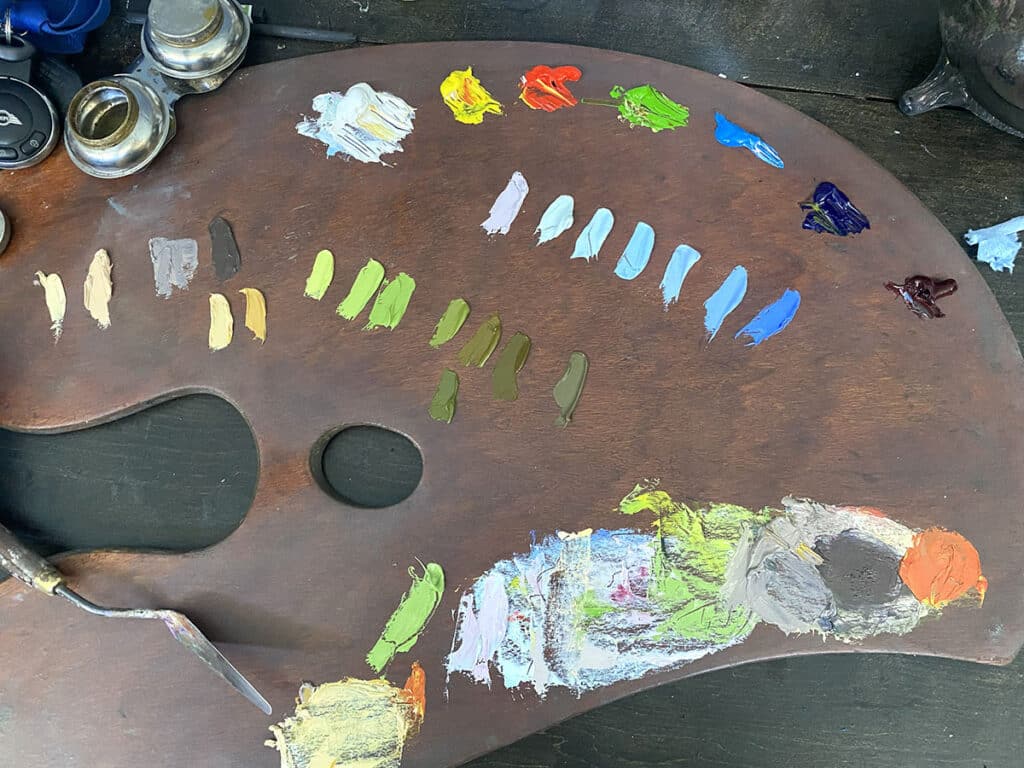
Start with a limited palette to teach color mixing and avoid overwhelm:
- Titanium White
- Ivory Black
- Burnt Umber
- Cadmium Red Hue
- Ultramarine Blue
- Cadmium Yellow Hue or Yellow Ochre
Note: “Hues” do not contain cadmium.
Scaffold the Techniques: Simple Exercises
Oil paint is most successful in the classroom when students have time to explore the medium without pressure. Small-scale exercises let students practice essential techniques, make adjustments, and experience success early on. Rather than launching into a large final painting, start with bite-sized artmaking.
Here are four simple exercises to develop self-control, intention, and confidence:
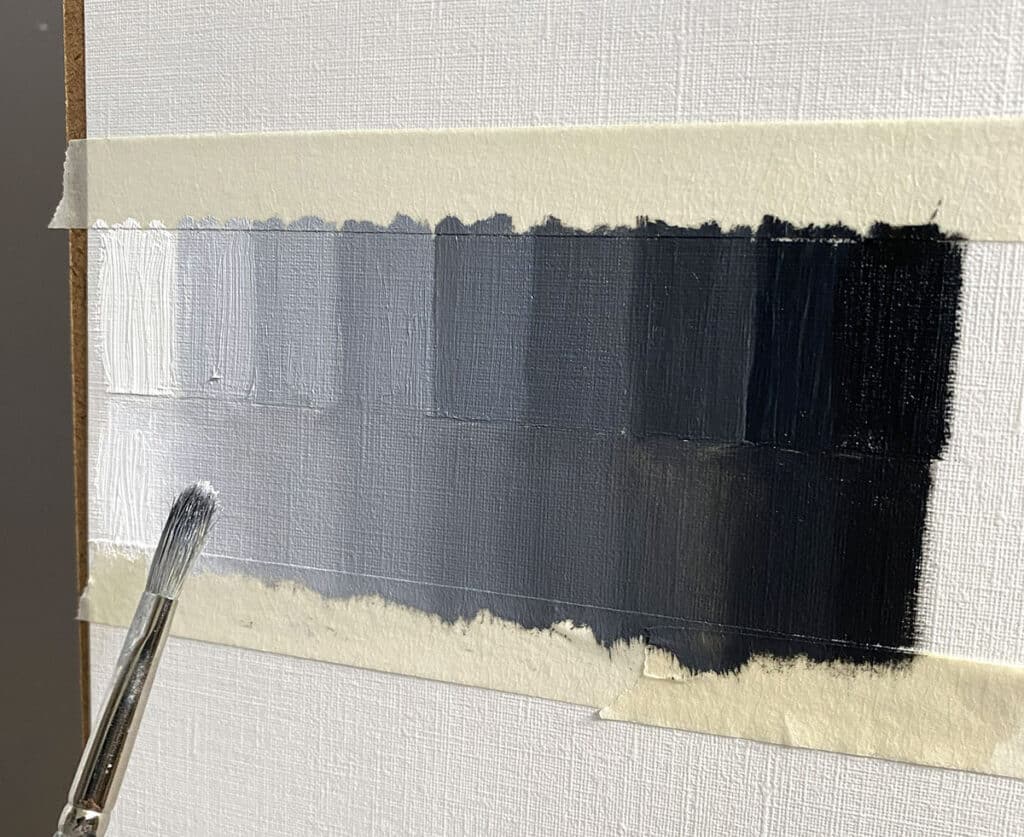
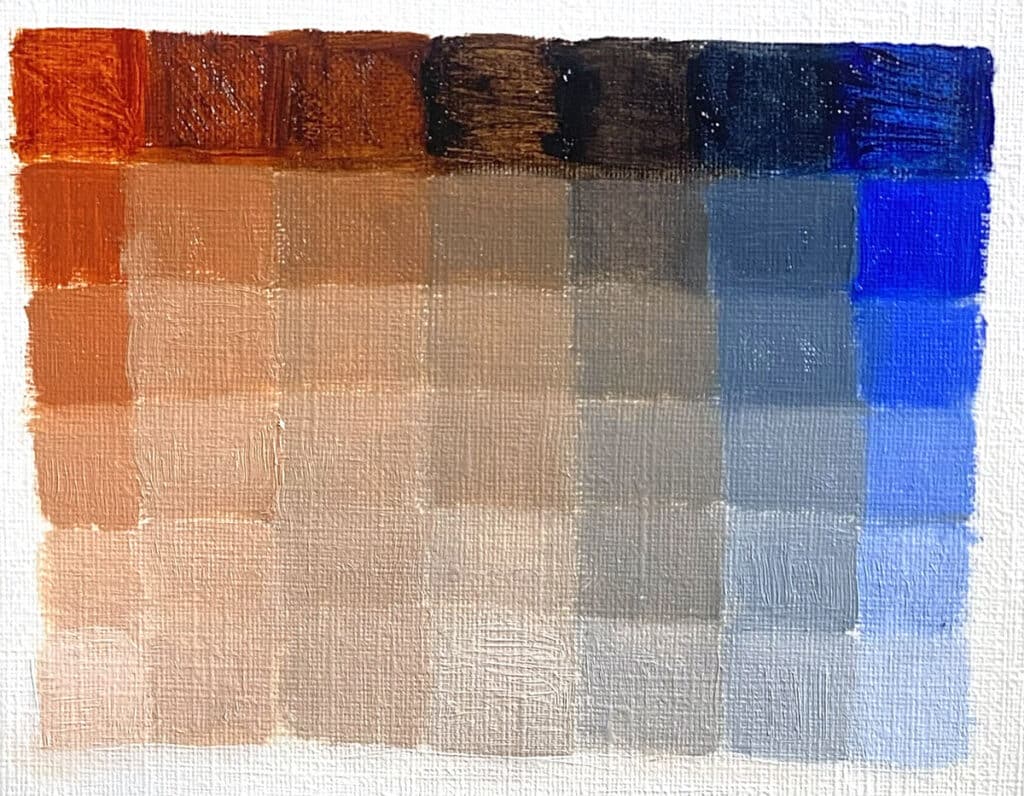
- Value Scales in Monochrome
Use only black and white to explore value mixing, edge control, and brushwork. - Color Mixing Grids
Teach complementary mixing, temperature shifts, and warm/cool relationships. - Mini Color Studies
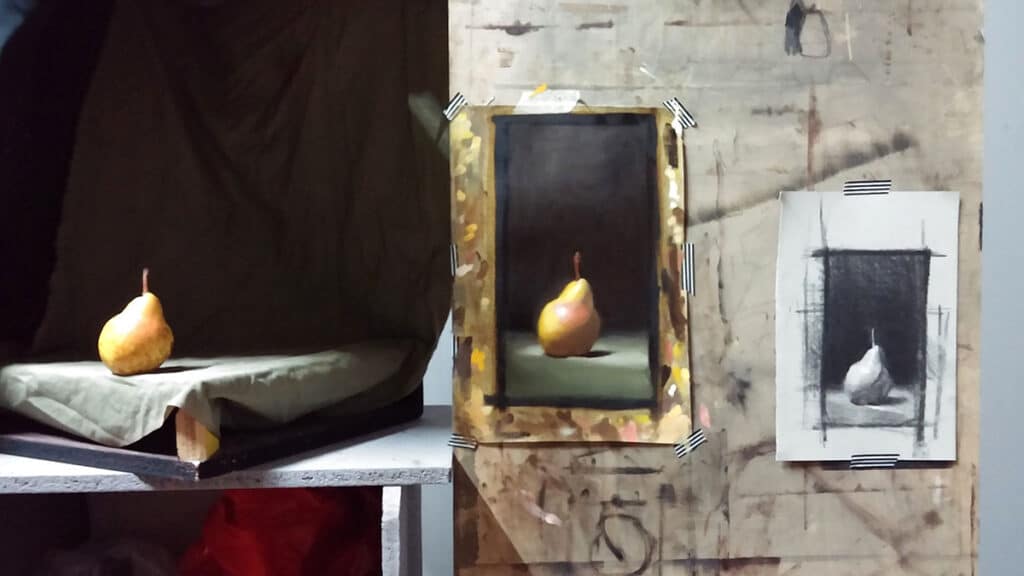
Simplify historic artworks or abstract their own photo references into small 4×6 studies. - Alla Prima Still Life
Provide simple objects (such as fruit, shells, eggs, and cups) for direct painting from observation, where students focus on light, form, and mixing neutrals.
Introduce Art History: Traditional & Contemporary Examples
Note: Be sure to review all resources and preview all artists before determining if they are appropriate to share with your students.
Working in oil paint helps students see themselves as part of a much larger artistic conversation. The medium offers a meaningful entry point for students to study artists who shaped visual culture across centuries and continue to do so today. As you show them famous artworks, ask them to identify artistic choices and what rules the artists follow… and break!
To easily introduce your students to hundreds of diverse historical and contemporary artists, dive into the vast archive of Artist Bios in FLEX Curriculum. Each artist bio has noteworthy artworks, at-a-glance facts, a brief bio, and famous quotes. Many artist bios are available in two reading levels, and you can filter them by medium, subject, theme, art movement, and more. Artist bios make it so easy to integrate quick snippets of art history into any lesson or activity!
Captivate your students with these oil paint masters:
- Rembrandt van Rijn: dramatic lighting, impasto, portraits
- Diego Velázquez: painterly realism, visual rhythm
- Artemisia Gentileschi: narrative strength, chiaroscuro
- Wayne Thiebaud: thick paint, vibrant color, contemporary subject matter
- Kehinde Wiley: classical forms reimagined with a modern cultural lens
- Jordan Casteel: everyday portraits with emotional presence
- Jenny Saville: expressive large-scale figure work
- Jordan Wolfson: conceptual uses of traditional oil paint
Move to Independence: Oil Painting Project Ideas
Keep oil paint accessible with simple project ideas, too. Following each painting, encourage short artist statements where students explain their intent and the techniques they used to achieve it. This supports metacognition and deepens their engagement with the medium. Additional reflection points can include how oil paints feel different than other paints they’ve tried, as well as surprises and challenges along the way.
Here are four project ideas for middle and high school:
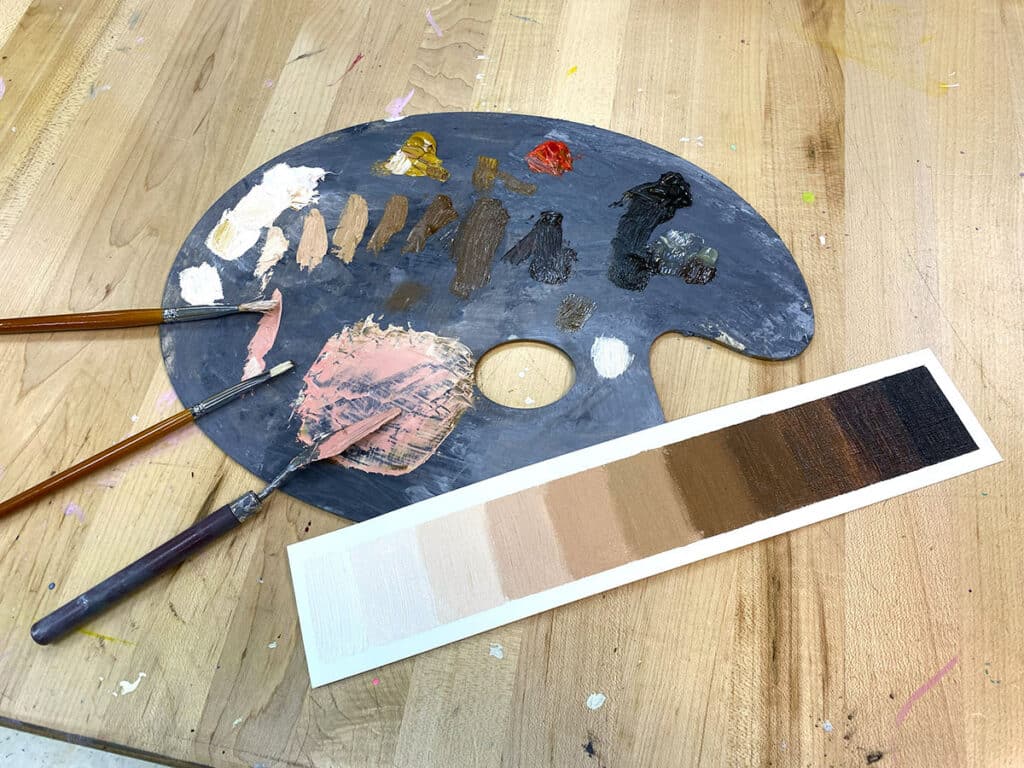
- Portrait with a Limited Palette
Teach classical underpainting and skin tones using just a few colors. Students can paint themselves or someone they admire. (This would be a wonderful way to create a portrait for The Memory Project!) - Observed Object in Four Layers
Students paint a still life object over four sessions: drawing, block-in, modeling, and detail. - Personal Symbolism Piece
After studying Renaissance and Baroque allegory, students design an image that symbolizes aspects of their identity, using oil painting techniques to emphasize meaning through lighting, color, and scale. - Master Copy Remix
Students select an Old Master painting, create a small-scale study, and remix it with a contemporary twist. Encourage them to bring in modern elements, cultural commentary, or personal symbolism.
Introducing oil paint into the classroom does more than teach technique. It invites students into a living artistic lineage. As they work with the same medium used by the Old Masters, young artists begin to see themselves as part of a centuries-long conversation, empowered to add to it in new and personal ways. Oil painting cultivates observation, intentionality, and expressive voice, while grounding students in both tradition and innovation. It’s not an “advanced someday” material; it’s a powerful teaching tool available right now for your middle and high school artists!
Which artistic habits do you hope your students carry with them beyond their time in your art room, and how can oil painting help cultivate those habits?
In a fast-moving world, which materials best teach your students to slow down and look more carefully in the art room?
To chat about oil painting with other art teachers, join us in The Art of Ed Community!
Magazine articles and podcasts are opinions of professional education contributors and do not necessarily represent the position of the Art of Education University (AOEU) or its academic offerings. Contributors use terms in the way they are most often talked about in the scope of their educational experiences.