
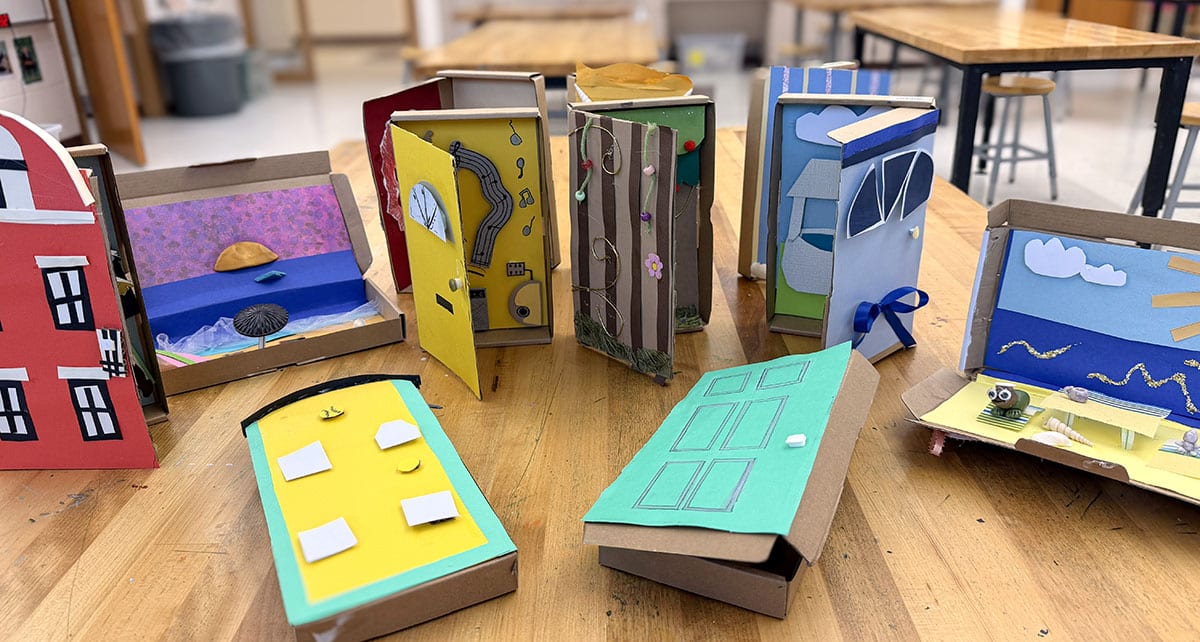
Imagination, storytelling, and creative play can turn an art lesson into an unforgettable experience for students. Students enjoy constructing their own worlds that evolve before their eyes, allowing them to explore ideas in new ways. Make-believe and pretend often fade during the middle years, but they still exist. Channel the wonder and world-building found in video games, books, movies, and TV shows through artworks that focus on doorways.
Set the stage for projects that build endless imaginary worlds through small open doors.
Thresholds Through Time
Doors, gates, portals, and architectural openings historically symbolize transition, mystery, memory, identity, and transformation. Doors spark curiosity about what lies beyond and encourage storytelling. Connect students to art history, literature, popular culture, and their own imaginations with doors, doorways, and what’s on the other side.
Some inspiring examples include:
- Stonehenge is essentially a monumental series of doorways, inviting questions about ceremony, ritual, and passage.
- The Gates of Paradise literally embody the symbolism of doors as thresholds between worlds and as symbols of spiritual transformation.
- Marc Chagall’s Cemetery Gates uses gateways to evoke memory, longing, and reflection.
- Giorgio de Chirico’s Conversation frames architectural openings as mysterious psychological spaces.
- René Magritte frequently incorporated doors and windows to blur the boundaries between reality and imagination.
- Jan van Eyck used architectural openings to guide viewers into symbolic and carefully constructed narrative spaces.
- Do Ho Suh creates transparent replicas of doors and homes to explore identity, memory, and belonging.
- Japanese torii gates mark the transition from the everyday world into sacred space.
- Traditional Moroccan carved doors symbolize hospitality while serving as beautifully crafted architectural focal points.
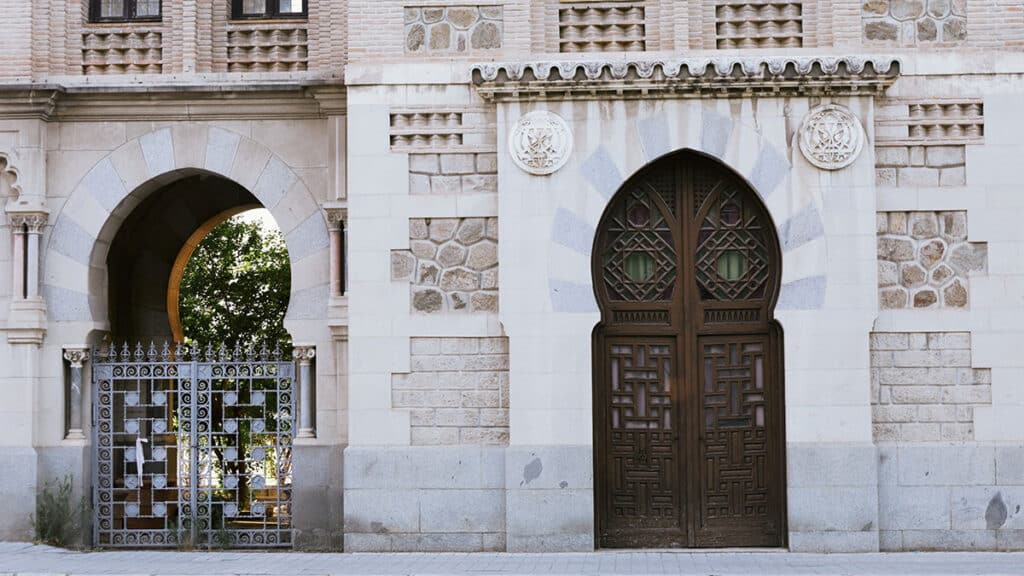
Students will recognize the prevalence of doors in stories and popular media. Portals and magical doorways appear throughout The Lion, the Witch and the Wardrobe, Stranger Things, Doctor Strange, The Secret Garden, Minecraft, and The Legend of Zelda. Across cultures and throughout history, doors continue to symbolize possibility and the beginning of a new adventure.
Start with a simple prompt: Build a doorway and imagine what lies beyond it. As students develop their ideas, intentionally introduce artworks that echo their themes. This shows students that artists across history explored many of the same ideas, which is very validating! It makes the connections they’re forming feel personal and genuine.
Walking Through Relief Sculpture
Begin a relief sculpture unit with a simple 6×6-inch practice build. Students construct a simple relief by stacking a large, medium, and small shape from the ground up, using one to three cardboard or foam core supports between layers. Prompt them to build from the largest at the base to the smallest at the top, and to think in layers.
Introduce these four key concepts and supplies:
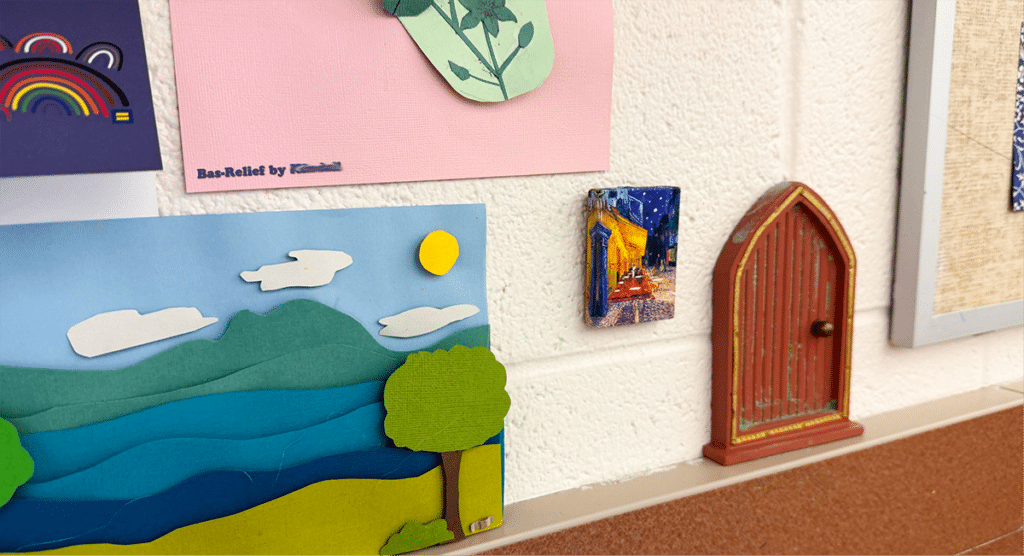
- Bas-Relief: This is a low relief with shallow depth.
- Foam Core: This is a thick board with a foam center, often used for model constructions.
- Corrugated Cardboard: This is the fluted inner layer sandwiched between plies.
- Supports: These hold or raise up the layers.
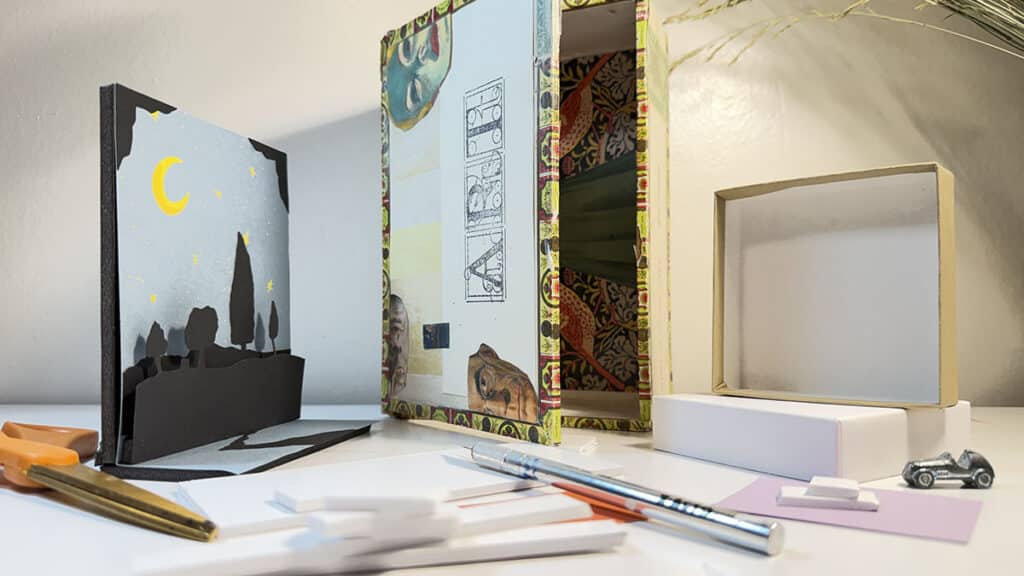
Even with simple materials, bas-relief becomes bold, dimensional work, revealing how limitless the process can be. Cardboard is the ultimate supply because it’s plentiful and free. Look for sturdy boxes with lift-up or hinged lids. These make a perfect door to a student’s miniature world. A great source for boxes is your school’s IT department, where laptop and replacement-part boxes tend to pile up quickly. If you can’t find boxes with opening lids, simply create your own hinged door from cardboard with masking tape, then cover the tape with paper or paint.
Provide your students with construction paper, cardstock, and supports to hide underneath propping elements. Construction paper is handy for covering surfaces, and cardstock is good to use for elements that need to stand on their own. Prep supports ahead of time by pre-cutting smaller scraps of cardboard or foam core into small blocks that students can stack.
Students can definitely do this project with just scissors, but there are many helpful cardboard-cutting tools available. With clear expectations and organized storage and collection systems, craft knives can create clean, intricate cuts. To contain the classroom chaos, consider setting up a few cutting stations for students to take turns at. Use self-healing mats or additional sheets of scrap cardboard to protect your surfaces.
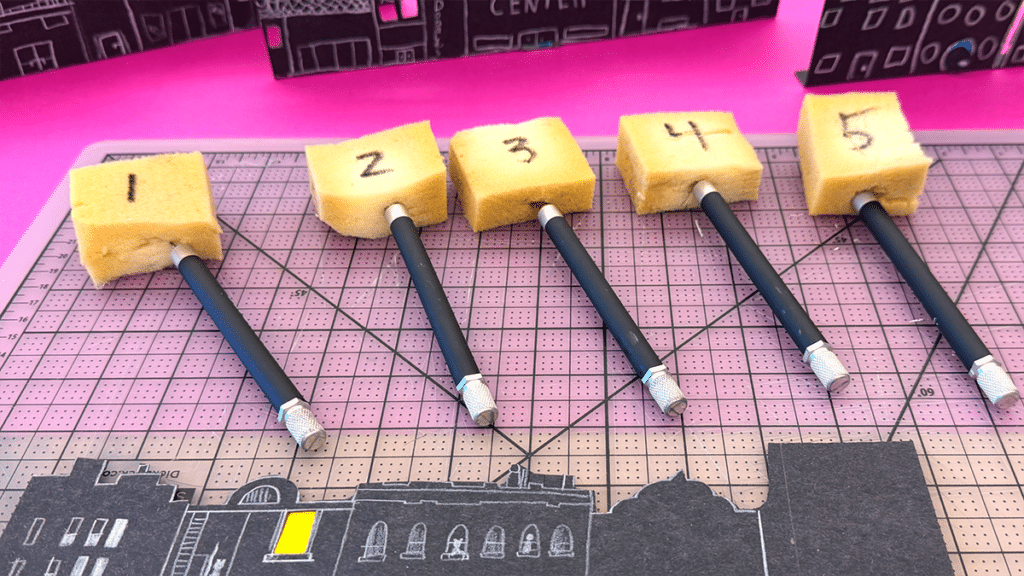
Get pre-made cardboard resources at your fingertips with FLEX Curriculum:
- How to Manipulate Cardboard
- Cardboard Cutting Tools
- Cardboard Texture Techniques
- Working With Cardboard
Beyond the Door
Now for the big reveal! When students open their boxes, they discover new worlds beyond each door. The last prompt is simple: What exists on the other side? Their small spaces can become magical gardens, outer space, sports arenas, animal habitats, or imaginative worlds. Depending on the box’s depth, students can achieve bas-relief or high-relief.
As ideas grow, use mixed media when needed. This helps students capture their vision. Invite them to a “crafty corner” filled with buttons, feathers, keys, pom-poms, strings, and other small treasures. Students can use their construction skills to focus on storytelling and design. Challenge them to transform each material into something unrecognizable to keep the level of artworks as original and detailed as possible. The result is a classroom full of engaged artists determined to bring their ideas to life.
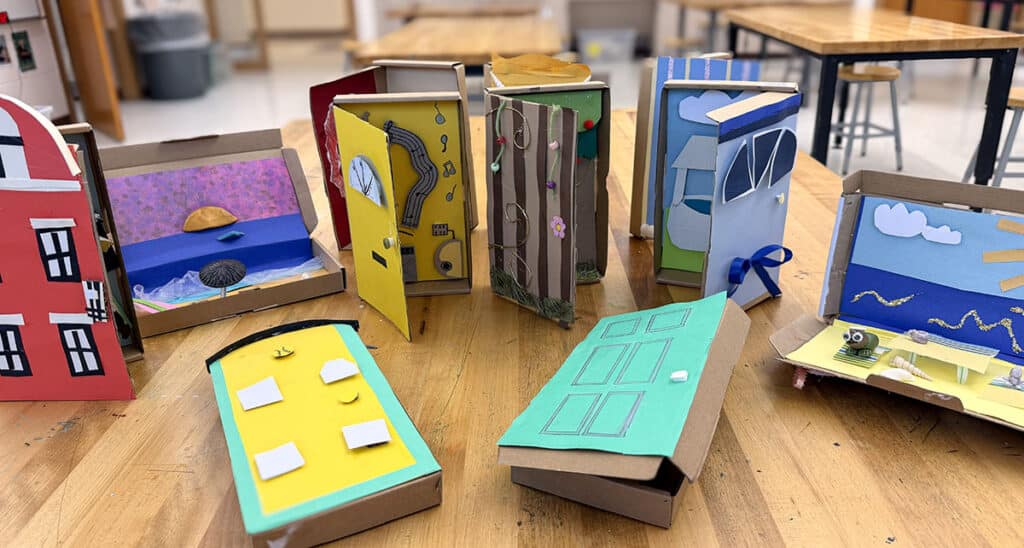
Students connect with doors from games, books, films, and shows. Doorways, gates, and portals invite mystery, spark curiosity, and invite us in. Two simple prompts to construct bas-relief doors will get your students to imagine, tell stories, and play, making art class memorable for years to come. When the final sculptures are on the table, everyone will wonder what’s on the other side, making this not only an art project but also an invitation and interactive experience for the viewer!
How can you encourage students to use art to step into another world?
Where will you let structure and story meet in your next project?
To chat about cultivating imagination with other art teachers, join us in The Art of Ed Community!
Articles and podcasts are opinions of professional education contributors and do not necessarily represent the position of the Art of Education University (AOEU) or its academic offerings. Contributors use terms in the way they are most often talked about in the scope of their educational experiences.