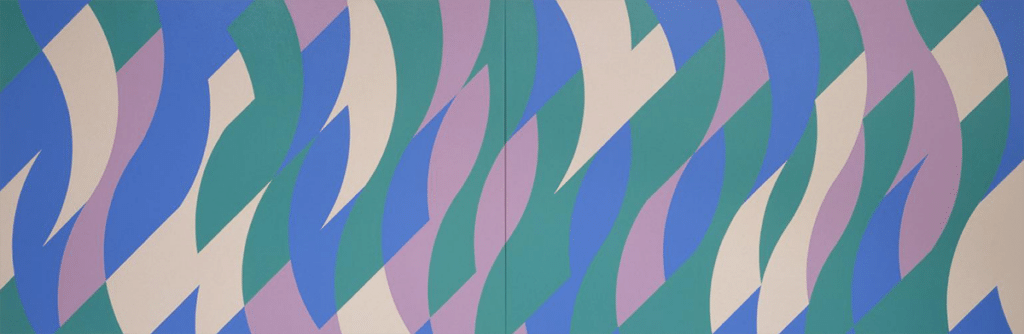
Deceiving the eye with unique, creative projects is fun for the whole art room. It challenges students to refine their skills while blending cross-curricular subjects such as physics and geometry. Trompe-l’oeil originated when two Ancient Greek artists created lifelike paintings depicting scenes such as birds swooping down to take a bite of hyper-realistic grapes. These mind-bending tricks continue to enthrall through the work of contemporary artists like Bridget Riley, Ramon Bruin, and Edgar Mueller.
Prepare for double-takes as you explore the visual tricks waiting in these art lesson ideas!
Dimensional Interplay
Students of all ages benefit from transforming two-dimensional images into three-dimensional forms. It challenges their brains to account for all of the shapes, values, planes, and contour lines on objects. Experimenting between flat shapes and three-dimensional forms supports spatial thinking, visual awareness, and higher-level cognition. Consider one of the lesson ideas below to incorporate illusion using everyday objects and your daily environment.
Elementary School
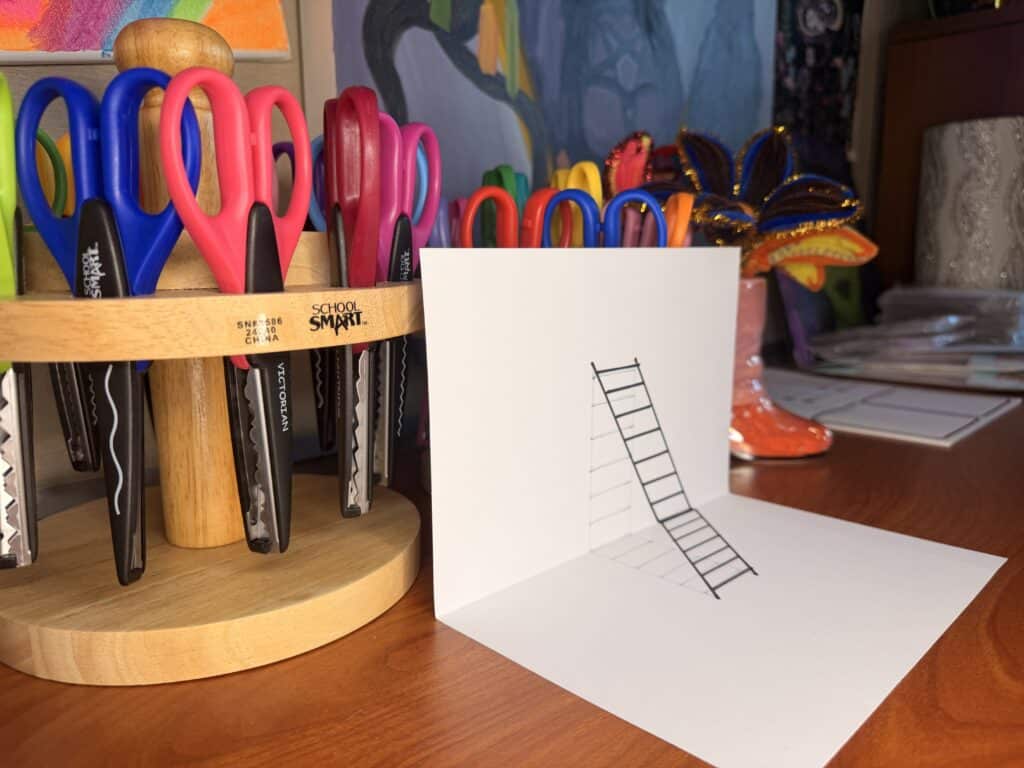
Transform a flat piece of paper into a scene that pops out at you, like this floating soccer ball or 3D ladder. Teaching younger students to use a ruler is a valuable life skill across all subjects. Take a deep breath, be patient, draw lightly, and watch your students float an object off their page with persistence.
Follow these steps to float any object:
- Gather pencils, erasers, paper, and rulers.
- Fold the paper in half.
- Use a ruler to draw two parallel lines: one in the center and the other below it.
- Add ladder rungs between the two rails.
- Draw a triangle-shaped ladder that touches the edges of the original ladder and darken the lines.
- Fold the paper in half, turn it to a right angle, and voilà—a mind-bending trick your students will love!
Middle School
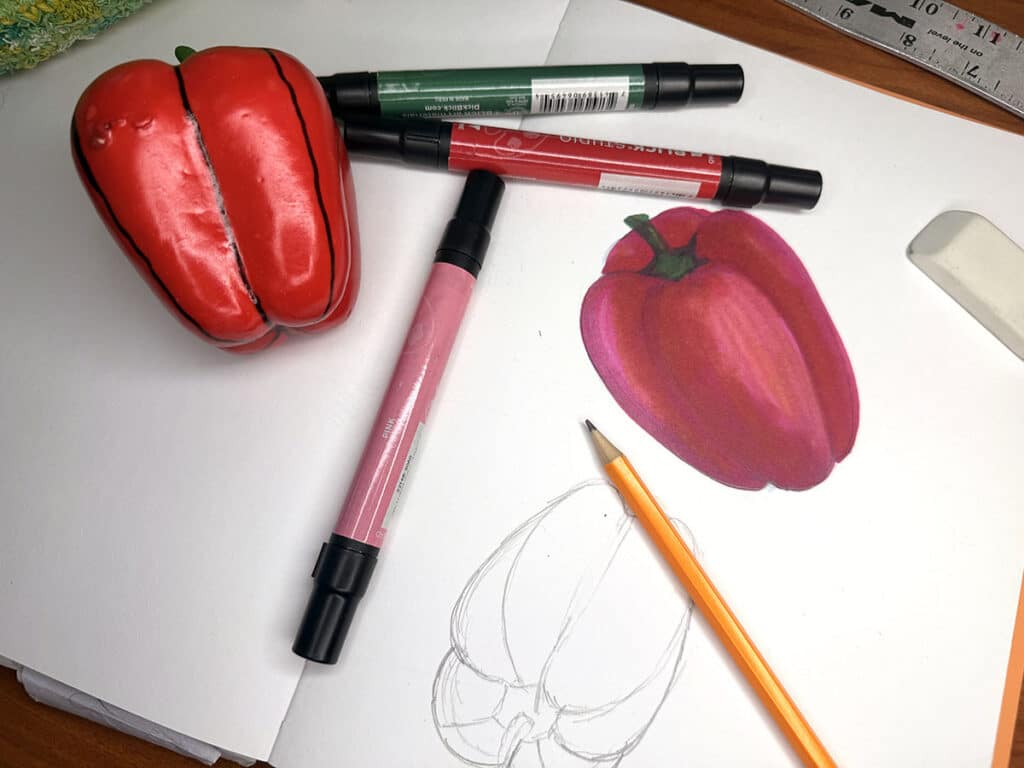
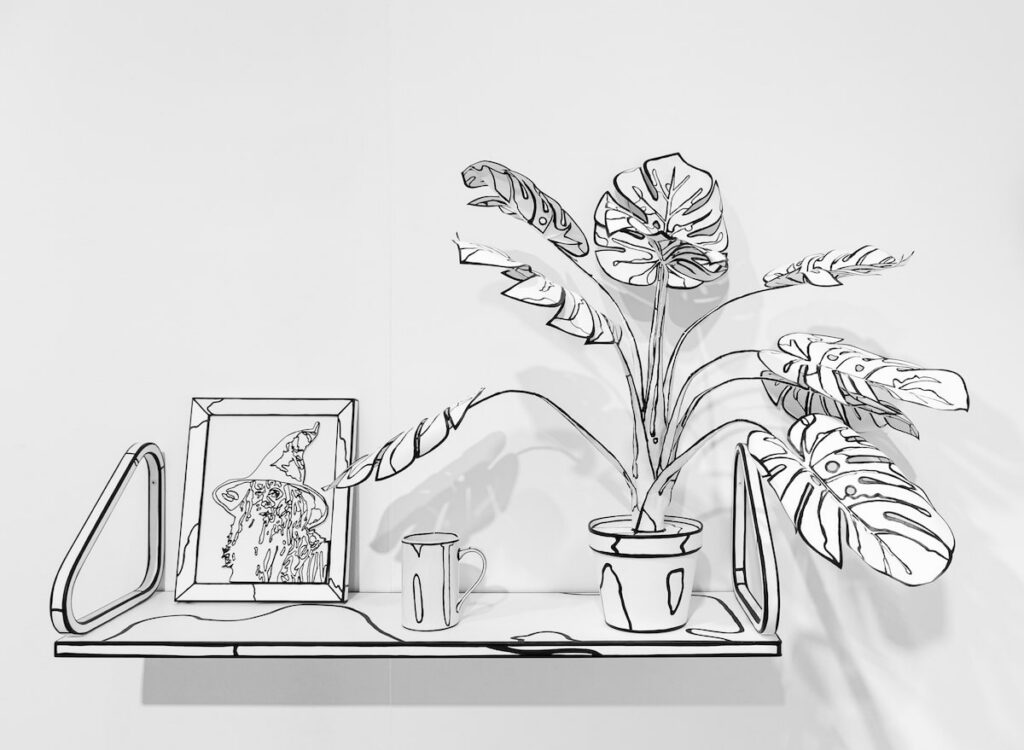
Increase the illusion challenge by having your middle school students draw black lines directly on real objects to create an “outlined” still life setup. Then, they draw from observation to make a two-dimensional drawing. The extra lines actually help them capture more accurate contour lines in their own drawings.
Follow these steps to contour reality:
- Gather a variety of objects, permanent markers, pencils, paper, and erasers.
- Draw contour lines over the objects. If you don’t want to mark the objects permanently, try thin black tape or dry-erase markers instead.
- Arrange the objects on a table.
- Capture the still life by drawing from observation.
- Create the illusion by adding intricate patterns, details, or Ben-Day dots instead of traditional shading.
High School
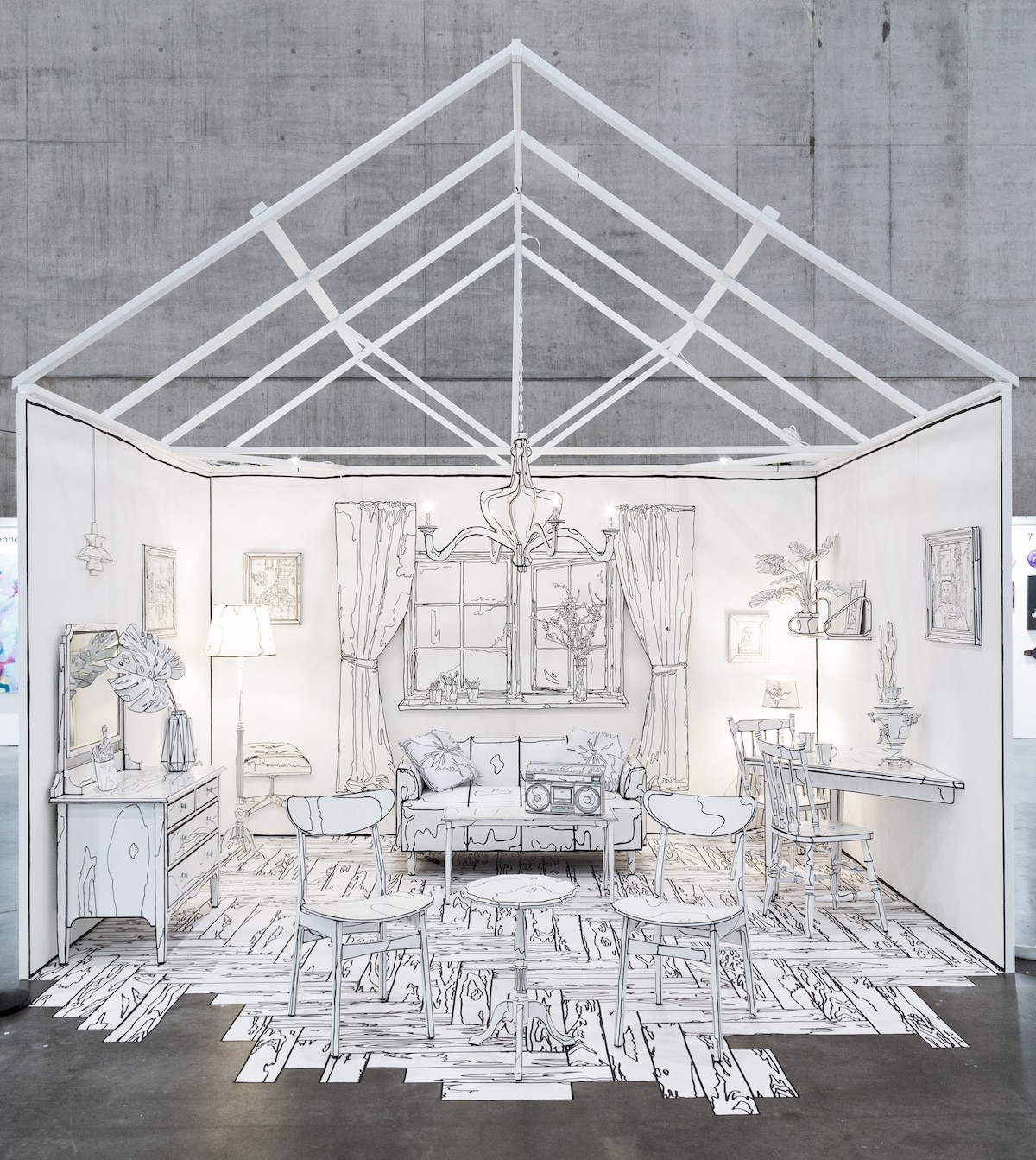
Level up the trick for a collaborative installation challenge. Students work together to turn an entire room into a two-dimensional backdrop before photographing each other as they interact in the space. If you don’t have the resources to transform an entire room, try a corner or a smaller area.
Follow these steps to cartoon your room:
- Gather black tape, a space in your classroom or campus, and a collaborative mindset.
- Use tape to outline main shapes and add a bit of linear detail.
- Remind students to commit to a focused viewpoint for the illusion to work.
- Photograph your students interacting with the space.
Larger than Life
Encourage students to think creatively about the everyday by making oversized artworks. They can turn ordinary objects into massive sculptures, detailed messages, and captivating illusions. Upcycling materials for sculpture gets students’ critical thinking and physical bodies moving. Plus, making something on a large scale is exhilarating!
Elementary School
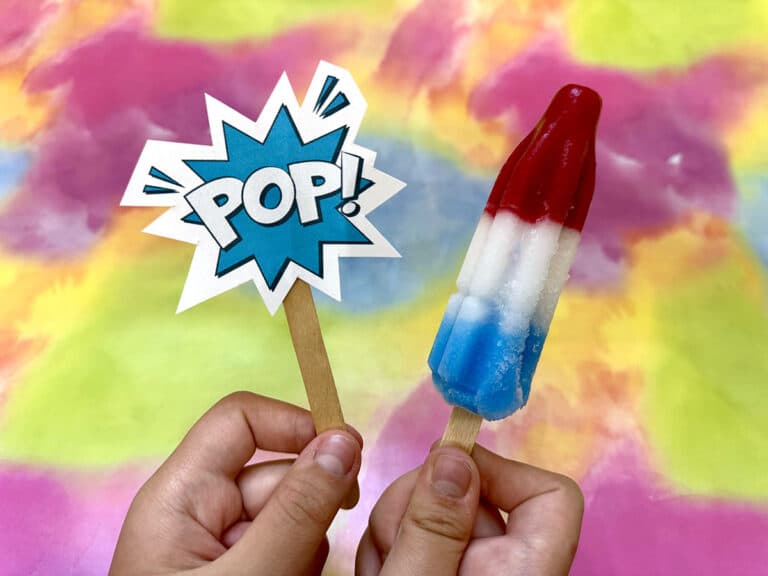
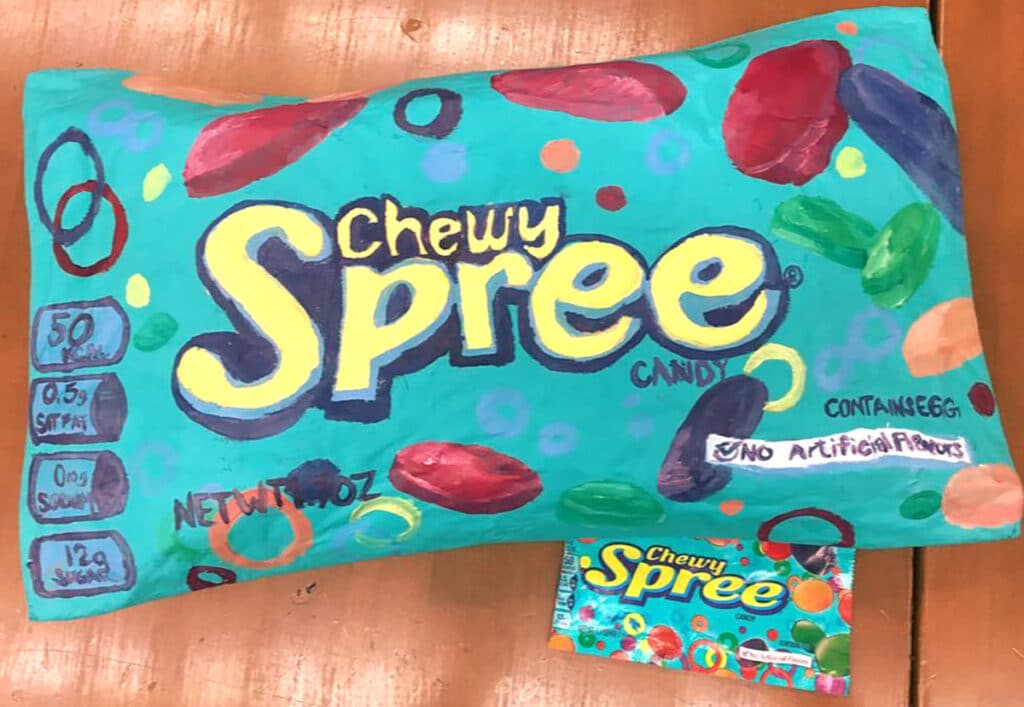
Trick your school with Pop Art paper mache snacks and candy sculptures. Students bring in their favorite snack, take a little nibble, and use the empty container as a reference to sketch their sculpture. Make sure your snack party follows your district and school’s food policies and guidelines. Alternatively, students can bring in a photo or empty container for reference.
Follow these steps to make it extra sweet:
- Create armatures from basic materials like foil, newspaper, and tape.
- Use paper mache to cover and smooth the form.
- Paint once dry.
- Display the delicious snacks in the school cafeteria or hallway to trick everyone walking by.
Middle School
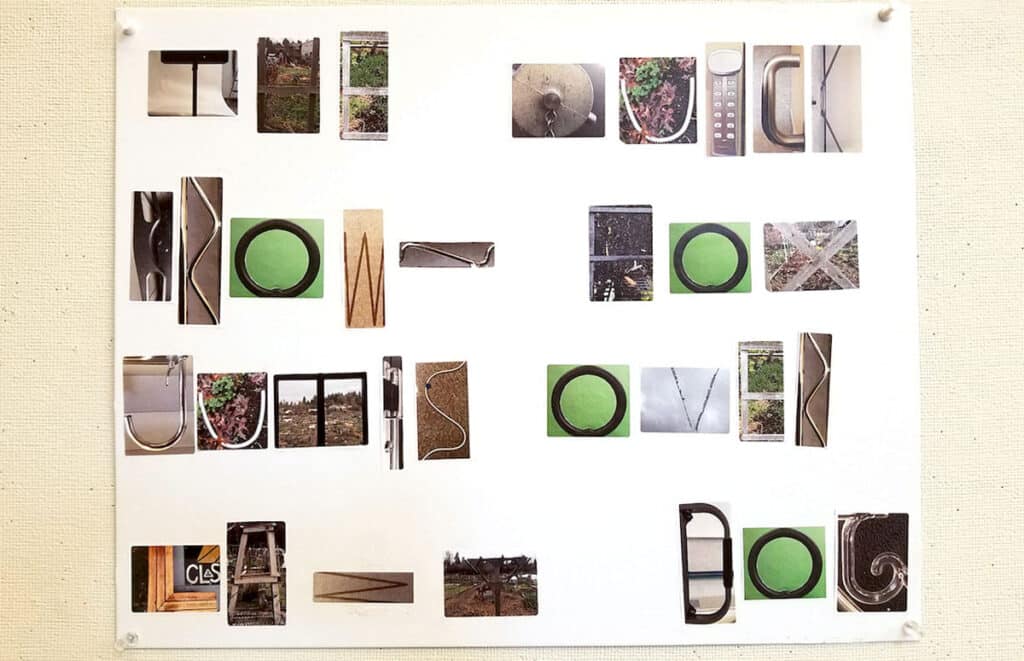
Use students’ observational skills and their environment to capture a phrase or saying using “found” letters. A Photo Scavenger Hunt is a fun, interactive way to use everyday items in the school to create the illusion of letters. Challenge students to go beyond what meets the eye to find words, phrases, and letters from fresh angles and details.
Follow these steps to materialize phrases:
- Set parameters so students can photograph only things that create the illusion of letters and words, not real words.
- Send them out in pairs around the school, or in the classroom, to find secret letters and words.
- Print the photos and let students create their own original saying or coded message.
- Display the artworks around the school to encourage others to decipher the message.
High School
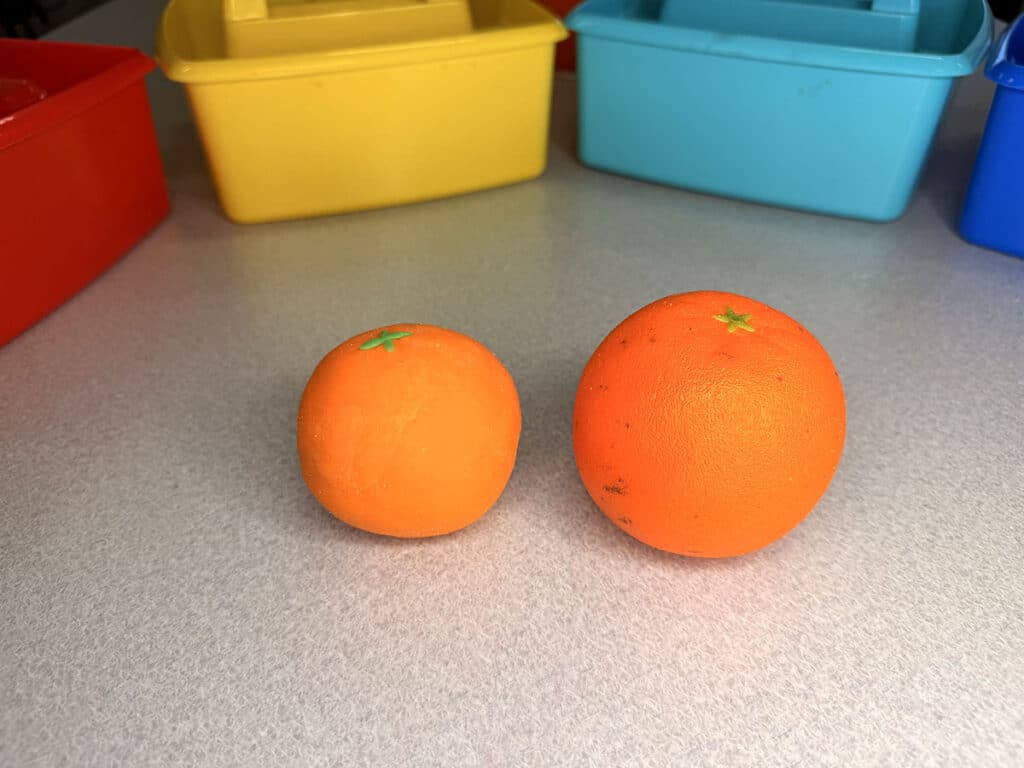
Bring the Is It Clay project to your curriculum to challenge students to mold hyper-realistic objects. This hands-on experience pushes them to sharpen their observational skills and artistic abilities while fostering detailed craftsmanship. Let students experiment with different tools to recreate the object as realistically as possible.
Follow these steps to duplicate an item:
- Gather modeling clay (or clay), clay tools, and a variety of objects.
- Remind students to pay close attention to size, proportion, form, and minute details like texture and color shifts.
- Place the real object and clay form side by side and let the class debate which one is real and which one is clay.
- Reveal the clay form by slicing into the clay version with a tool.
Trompe l’oeil is more than meets the eye, inviting both the viewer and the artist to explore their surroundings more deeply. These tricky project ideas sharpen students’ observational skills and refine their craftsmanship through explorative methods and intricate techniques. Whether you are introducing illusion art from a new angle, challenging perception by turning rooms into flat environments, or creating hyper-realistic ceramic sculptures, you can trick your students into getting excited about art!
What’s your favorite way to trick your students with illusion artwork?
Which project idea are you most looking forward to trying?
To chat about trick-of-the-eye art project ideas with other art teachers, join us in The Art of Ed Community!
Articles and podcasts are opinions of professional education contributors and do not necessarily represent the position of the Art of Education University (AOEU) or its academic offerings. Contributors use terms in the way they are most often talked about in the scope of their educational experiences.