
Curriculum

The Best Ways to Brainstorm in Student Sketchbooks to Be More Creative Thinkers (Ep. 4)

Do your students’ sketchbooks fill up with the same cliche drawings over and over again?

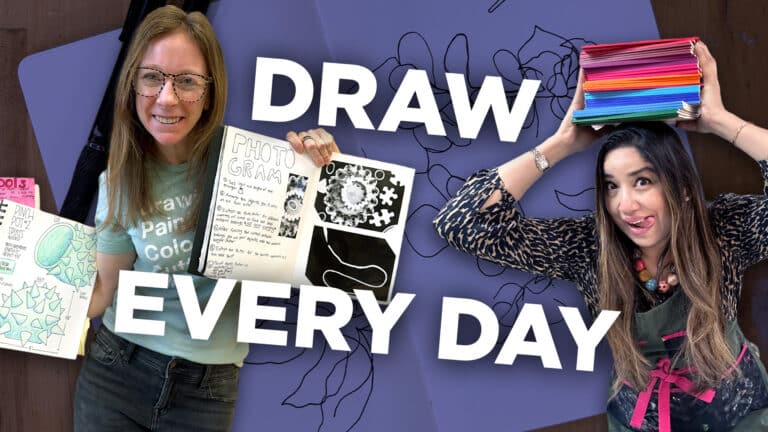
Brainstorming can help students move beyond their first idea and develop more thoughtful, creative imagery. In this episode of The Art of Education’s Sketchbooks 101, elementary art teacher Nylah Khan and high school art teacher Crystal Dunn share quick, practical sketchbook exercises that help students generate ideas, explore possibilities, and develop their own artistic voices.

Brainstorming is not about creating perfect drawings right away. It is about giving students permission to doodle, experiment, revise, and make unexpected connections before committing to a final artwork.

In this episode, you’ll discover:

  • How to use thumbnails to help students explore multiple compositions
  • A six-box brainstorming activity that changes one element at a time
  • How to move from artist inspiration to original student artwork
  • The three-step process of observing, tweaking, and transforming an idea
  • A 20-box exercise for quick compositions and creative risk-taking
  • How to use word maps and visual brain dumps to develop concepts
  • Fun “What if?” prompts that make brainstorming playful
  • Ways to use objects, ideas, and random combinations to spark originality
  • How to help advanced students develop more conceptual ideas
  • Strategies for using brainstorming to break through creative blocks
  • How to make planning and thinking a visible part of the artistic process

When students understand that changing their minds and revising ideas are normal parts of artmaking, they become more willing to take risks and explore. The goal is not perfection. The goal is idea generation.

Learn how to nurture idea generation in the Pack Generating Ideas for Art in PRO Learning.

To chat about sketchbooks with other art teachers, join us in The Art of Ed Community!

Articles and podcasts are opinions of professional education contributors and do not necessarily represent the position of the Art of Education University (AOEU) or its academic offerings. Contributors use terms in the way they are most often talked about in the scope of their educational experiences.

ABOUT THE AUTHOR

Lindsey McGinnis

Lindsey McGinnis is AOE’s Media Content Manager and a former high school art educator. She is passionate about equipping art teachers to be successful in their classrooms and firmly believes that art is the best place for students to explore and process the challenging topics and concepts around them.

More from Lindsey