
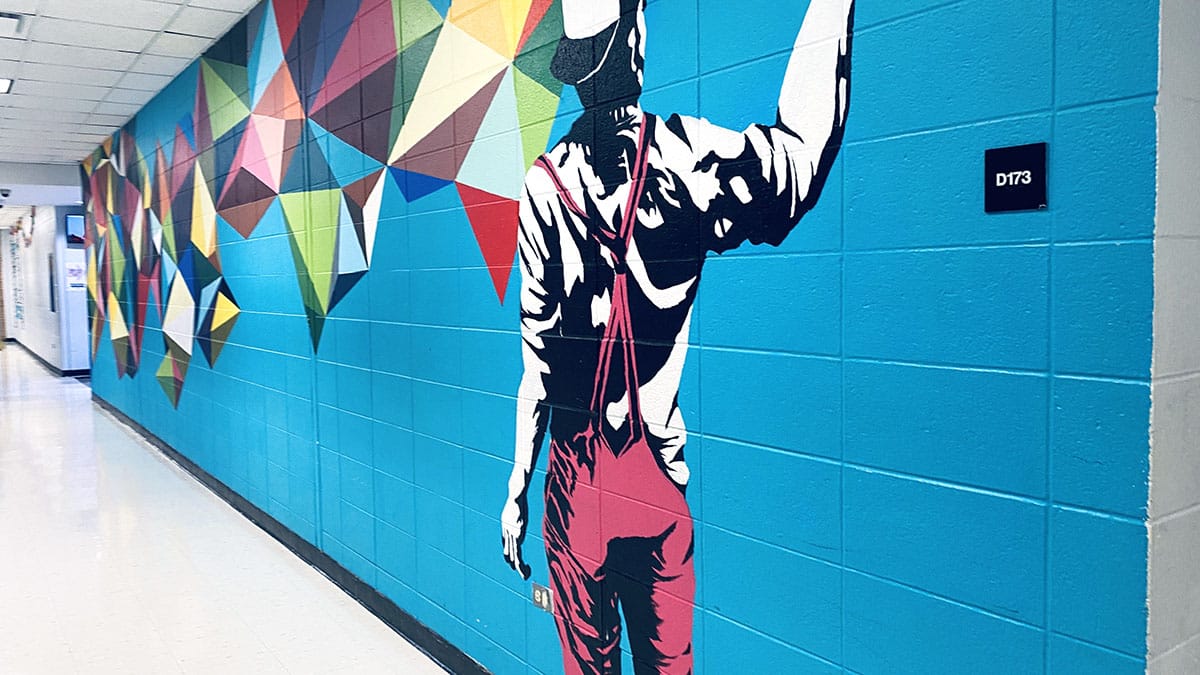
Imagine a school where staff members took an active interest in one another’s classrooms and curricula. Instead of joking that they “can’t draw a stick figure,” they may ask you how you teach students to draw or what medium you’re exploring. While that picture-perfect sense of community may not happen overnight, one small effort with one group can create a ripple effect, strengthening and encouraging staff connections.
Contribute to an awesome staff community by focusing on the four groups below.
1. Administration
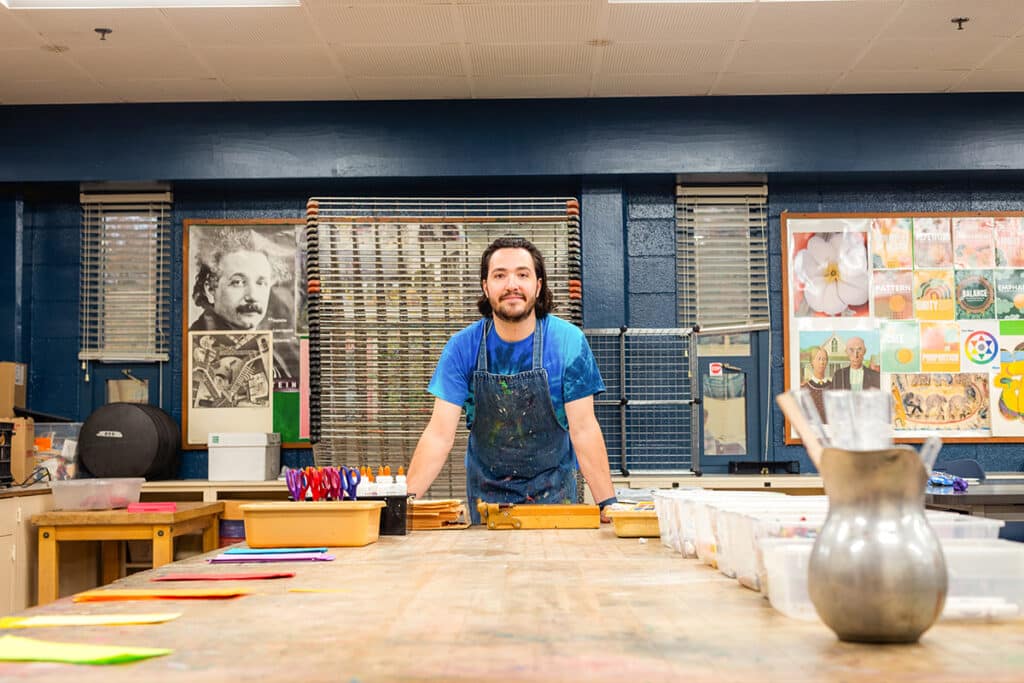
Have you ever heard the saying, “You don’t get what you don’t ask for?” This is very true of your administration! Most administrators are eager to support you, but often they don’t know how because they lack an art background. When administrators can actively see what’s happening in your art room, they are better equipped to advocate for your program.
Aside from hanging great art displays in the halls and inviting them to stop by your classes and art show, sometimes you need to spell out the benefits and connections for them. It’s easy for administrators to see that you engage students with hands-on learning! However, administrators are typically accustomed to the language of data, and it may be difficult for them to understand the art skills students are learning and the level of thinking behind each task.
Guide your administrator to understand the work you do with these tips:
- Invite them to your planning period for 15 minutes to see you grade amazing artwork and show them how specific pieces exemplify rubric criteria
- Hang the National Core Arts Standards (or district standards) and lesson objectives next to the art projects on display in the halls
- Translate your students’ work into numerical data and periodically share fun stats
- Provide them with a handout on how to talk to students about their art before their next walk-through

2. Teachers and Support Staff
There are often so many things going on in the art room that you may find it nearly impossible to leave your room during the school day. There are projects to grade, materials to prep, examples to create, and students who want to come in to work on their art. You may go a whole day without interacting with your colleagues! However, teachers are better together, and they can be your biggest support system and cheerleaders.
Build up your community at school with some of these ideas:
- Engage in casual chit-chat instead of bringing work to grade during your next hall duty shift
- Ask a different colleague each month to have lunch together
- Sit next to someone new at staff meetings
- Take on a leadership role in your building
- Invite colleagues to be guest judges at critiques
3. Social Committee
Many schools have a Sunshine Committee, PTO/PTA, Booster Club, or similar organization. These organizations strive to foster a sense of belonging, camaraderie, and support among school staff. Joining the team or spearheading the efforts will not only accelerate the relationships you build with your colleagues but also enable you to facilitate others’ connections! Being at the center of staff morale and culture will make it that much easier to get support to hang your art show, extra chaperones for a museum trip, or leniency for students to come to your class to wrap up their portfolios before the deadline.
Organize these events to bring your school staff together:
- Staff potlucks (with an element of competition!)
- Dress-up or dress-down days
- Gift exchanges
- Get-to-know-you activities like Guess the Staff Member
- Scavenger hunts to find the mini image of your principal
- Bingo cards during professional development with common administrative phrases

4. Small Group
If you prefer a more relaxed, smaller setting, try forming a group around a shared interest. This is a fun way to decompress from school life while getting to know colleagues. This may be a more manageable way to connect with your school community, especially if you’re an introvert who prefers more controlled, meaningful interactions. You can meet during lunch or outside of school every week, month, or quarter!
Share common interests and hobbies such as:
- Reading
- Walking
- Running
- Working out
- Crafting
- Joining a team sport
- Gaming
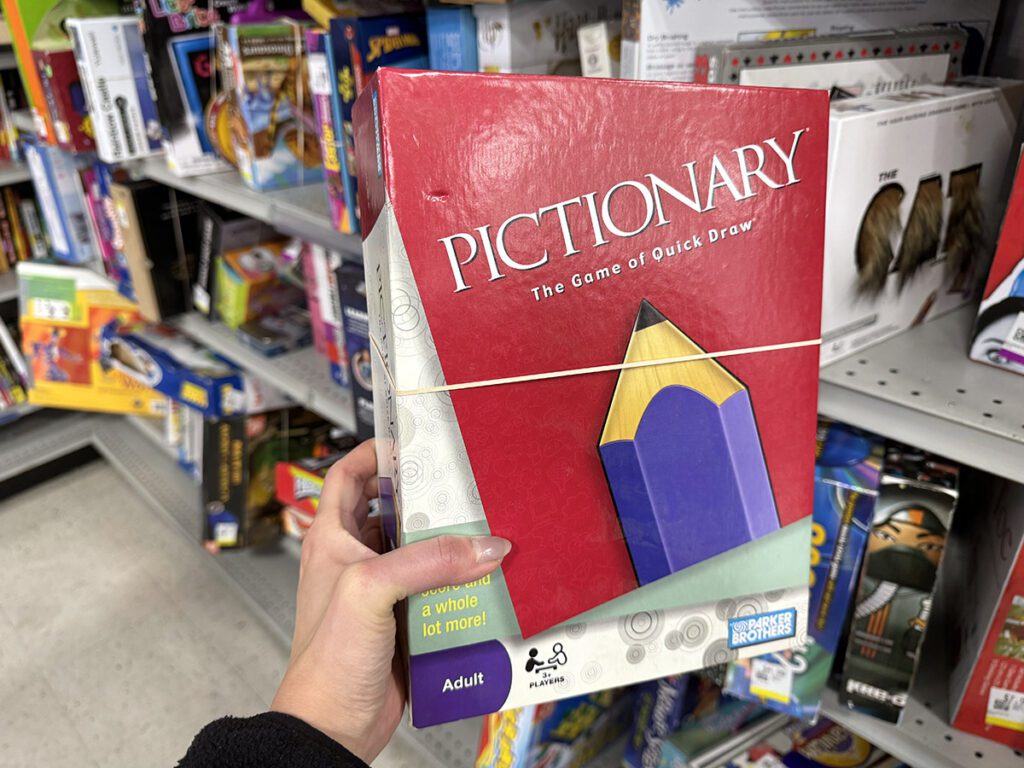
- Playing board games
- Volunteering
Strong staff communities don’t mean you get along with everyone all of the time. Rather, it means you put forth effort to connect with your colleagues, share what’s going on in your art room and program, and grow together! From administration and other teachers to support staff and parent volunteers, every relationship can strengthen your program and sense of belonging. Whether you join an existing group or host your own, small steps can make a meaningful difference and spread joy. You have the power to spark a ripple effect of connection, collaboration, and community throughout your school!
For more ways to grow your staff community, check out the resources below:
- Challenges and Solutions: How to Work With Difficult Colleagues as the Art Teacher
- How to Talk to Your Staff About the Power of Art
- Why Staff Portraits Are the Perfect Project for December
- Why You Need to Paint Your Staff Bathrooms (Ep. 144)
How do you get your administration involved in your art program?
What is your favorite staff get-to-know-you activity?
To chat about building your staff community with other art teachers, join us in The Art of Ed Community!
Articles and podcasts are opinions of professional education contributors and do not necessarily represent the position of the Art of Education University (AOEU) or its academic offerings. Contributors use terms in the way they are most often talked about in the scope of their educational experiences.