
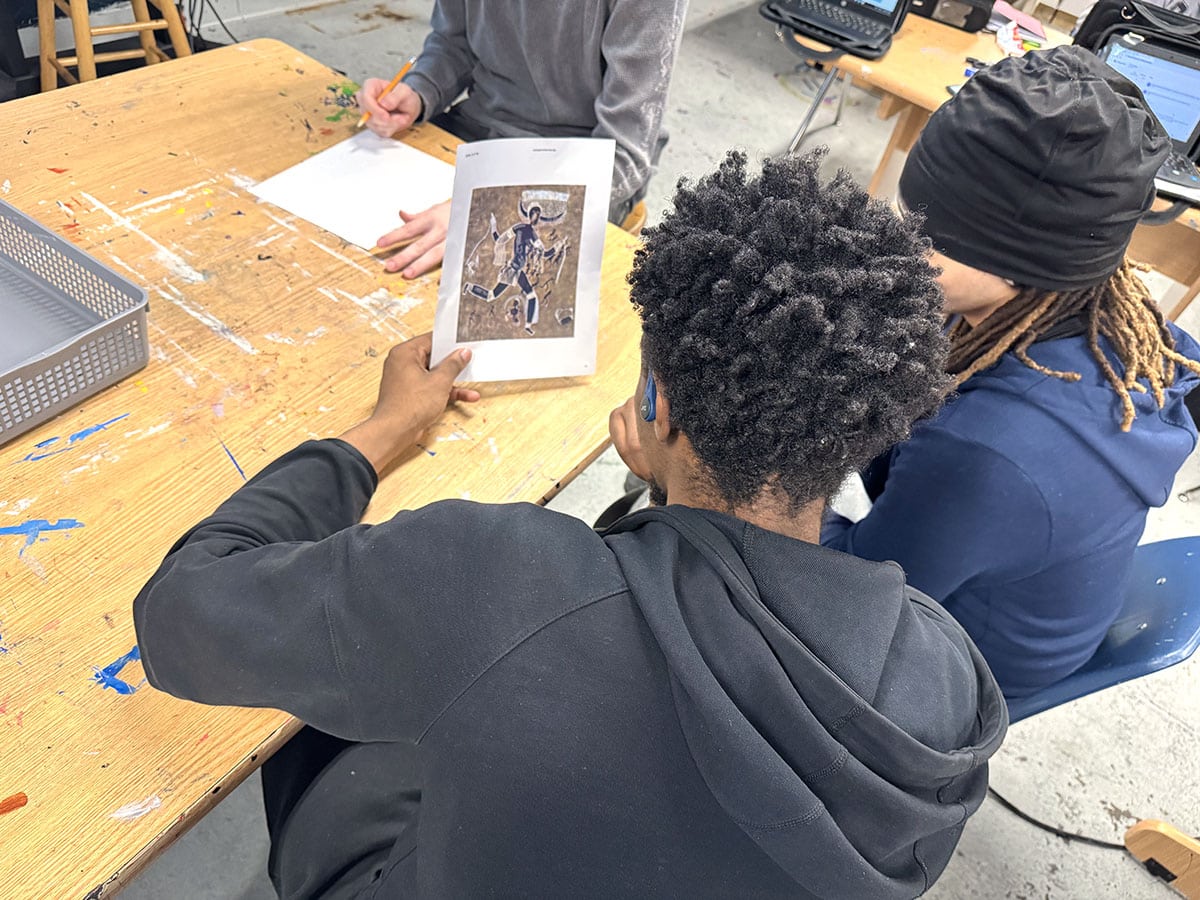
Confidence is the first step to leadership—and this often starts in the art room. If your students hesitate to take risks, second-guess their ideas, or avoid sharing thoughts, they need your encouragement to experiment and celebrate mistakes. Creating artmaking opportunities to build resilience prompts students to follow their instincts, make creative decisions, and value the process as much as the outcome.
Build student confidence with these four activities and see how they translate to developing creative leaders!
Research shows that the visual arts play a critical role in boosting student success by equipping learners with problem-solving skills, resilience, and a sense of agency. This foundation of skills directly builds confidence as students learn to trust their own judgement. By fostering confidence through creative practice, art teachers are shaping students who are not only capable artists but also capable leaders ready to make their mark on the classroom, school, and world.
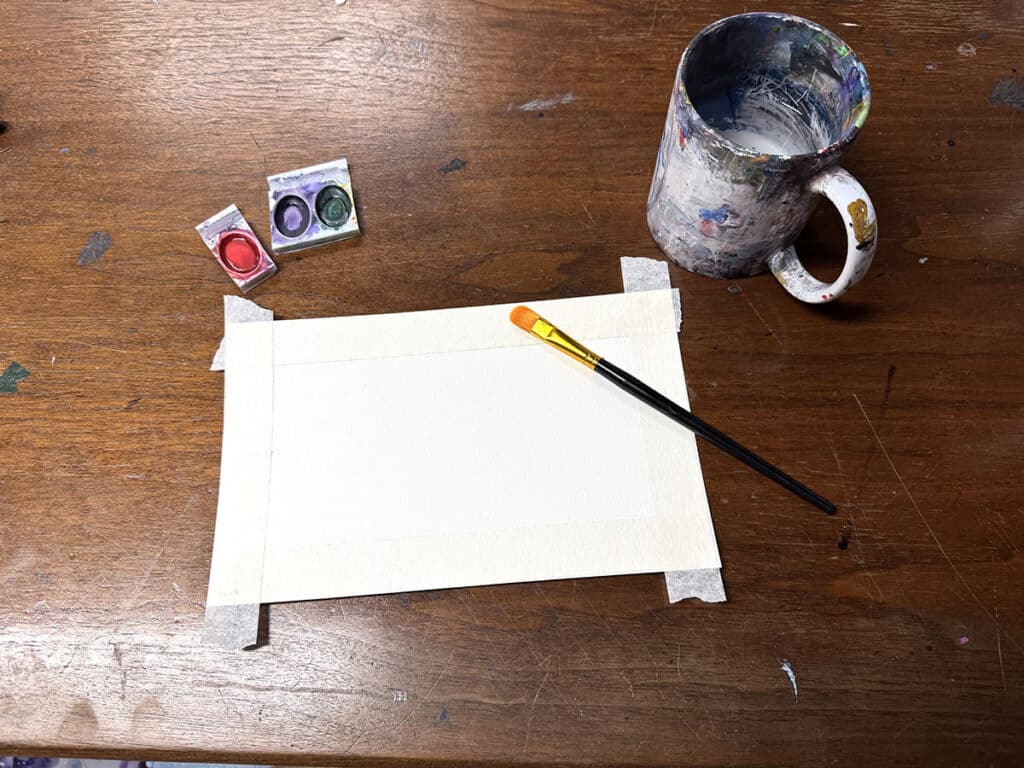
1. Center process over perfection.
In the Art Room:
One of the most powerful lessons we can teach students is the importance of the creative process. Centering process over final outcomes emphasizes growth, experimentation, and revision. It helps students see trial and error not as a failure, but as an essential part of learning. Center process over perfection with an activity like the Happy Accident Drawing below.
Translation to Leadership:
These skills foster a growth mindset, so students learn that mistakes are not endpoints but stepping stones. Students learn to tackle challenges with persistence and overcome setbacks. Confidence in the growth process teaches students to adapt, collaborate, and innovate. Invite students to create a portfolio that showcases their learning journey and not just the final products.
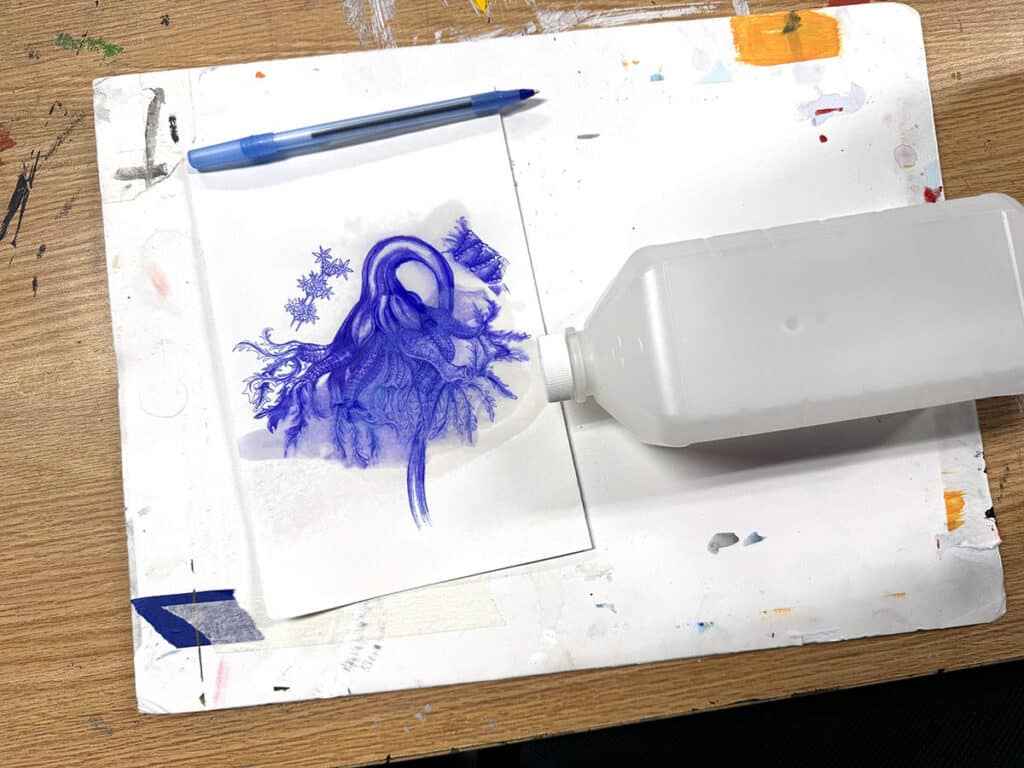
Here’s how to do the Happy Accident Drawing:
- Create a drawing using a ballpoint pen.
- “Spill” rubbing alcohol on the drawing to smear the image.
- Observe how the image changed.
- Read Beautiful Oops to show how unexpected outcomes can become opportunities for creativity and problem-solving.
- Brainstorm ways to transform the “mistake.”
2. Position students as mentors.
In the Art Room:
Empower your students to guide each other. Encourage them to give and receive feedback through active listening. This helps students practice emotional intelligence and thoughtful communication. Students gain confidence through art room structures such as a student reference library, support systems, and critiques. A fun activity to flex communication skills is with Blind Partner Drawings, below.
Translation to Leadership:
Leadership isn’t about being in charge—it’s about lifting others up and helping them reach their potential. Their wins become your wins! Mentorship requires a lot of coaching, a core leadership trait that extends beyond the classroom. Student mentors can guide new or younger students and provide encouragement and accountability to their peers.
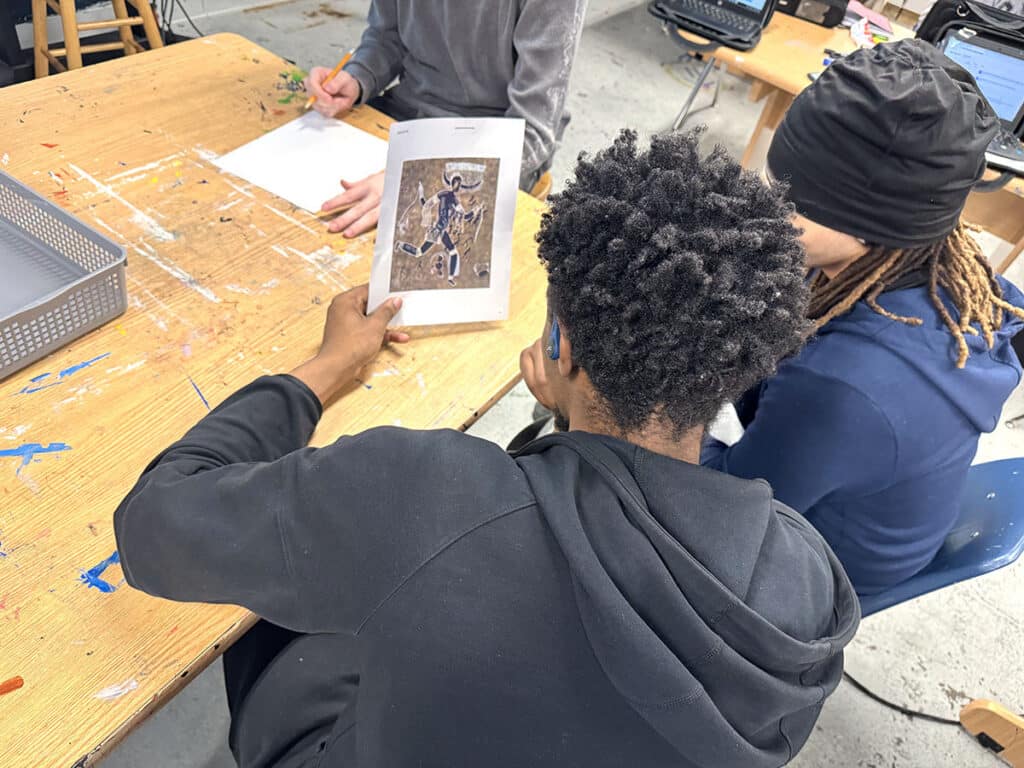
Here’s how to coach with Blind Partner Drawings:
- Partner students up.
- Give Partner A an image that Partner B cannot see.
- Provide Partner B with a blank piece of paper and a drawing utensil.
- Partner A will coach Partner B to recreate the image using only descriptive verbal phrases.
- Compare the original image with the illustration.
- Discuss coaching instructions and style.
- Switch roles and repeat.
3. Normalize productive struggle.
In the Art Room:
Facing challenges is something to embrace because it teaches adaptability and builds cognitive flexibility. When you create spaces for students to struggle productively, they will try multiple strategies, revise their thinking, and persist through uncertainty. This process mirrors real-world problem-solving and is essential to developing confident, capable leaders. Try it in your studio with the Disruption Drawing, outlined below.
Translation to Leadership:
Strong leaders navigate change, respond to unexpected challenges, and make informed decisions while remaining grounded. By embedding productive struggle into art instruction, we help students develop the grit required to adapt in uncertain circumstances. Students will grow in perseverance, flexibility, and creative problem-solving. They will gain the confidence they need to be decisive while keeping their teams or peers calm and informed.
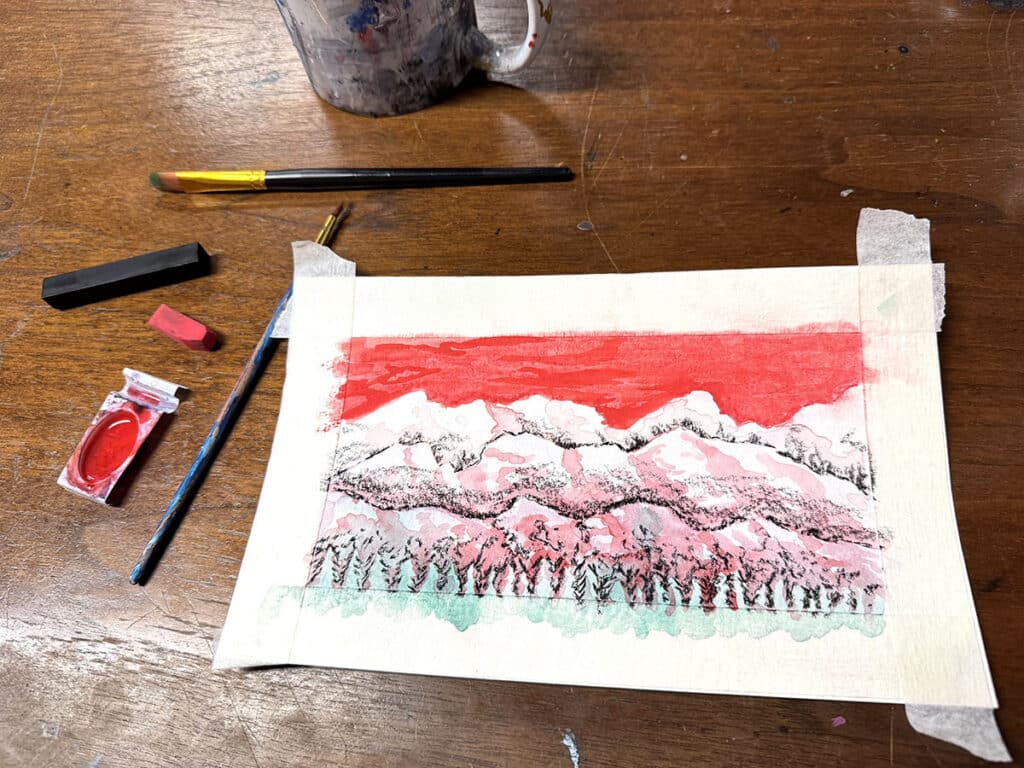
Here’s how to encourage adaptability with the Disruption Drawing:
- Sketch a composition.
- Apply color using a limited palette with a familiar medium, such as watercolor or colored pencil.
- Introduce a disruption midway through by removing one of the colors or adding an unexpected supply such as chalk, pastel, or charcoal.
- Adapt the drawing to include the disruption.
- Reflect on the process and end product.
4. Connect artmaking to social impact.
In the Art Room:
Art has always been a powerful tool for communication, reflection, and change. When we connect artmaking to social impact, we teach students that their voices matter and that their work can address real-world issues. This approach challenges students to move beyond self-expression and into purposeful creation, where art becomes a means of understanding, questioning, and influencing the world around them.
Translation to Leadership:
We love leaders who advocate for us! They cheer us on when we’re doing something great, and they pave the way when we face difficulty. We do this all the time for our students and the arts, and it’s crucial to pass this skill along to them. In leadership, advocacy is both outward and inward. Students can address concerns in their school or community while also amplifying peers’ and community members’ voices. They will learn to use their platforms and circles of influence responsibly and compassionately.
Here’s how to promote advocacy with Speak Up from FLEX:
Show students they can harness their art and leadership skills to put a voice to a marginalized population. Speak Up from FLEX Curriculum is a step-by-step collage lesson plan that focuses on advocacy and social issues through mixed media. Designed for grades 6-8, this lesson includes standards, objectives, and student-facing resources, like the Art and Activism handout. End with the included reflection sheets to make the process and connections more meaningful.
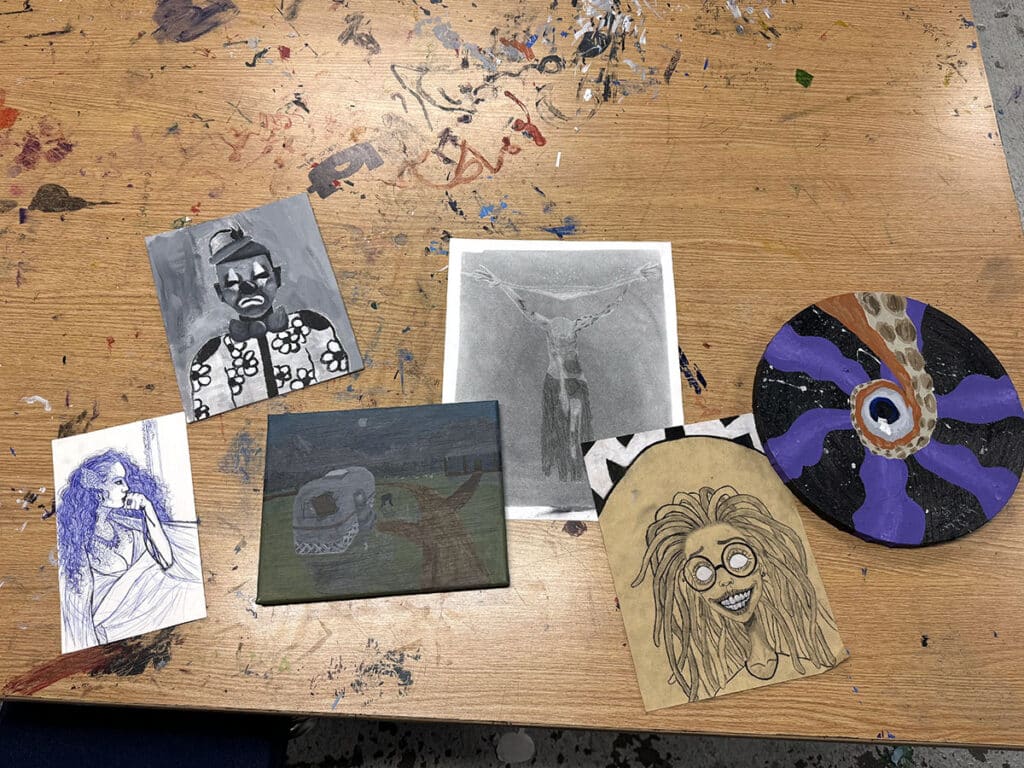
Art teachers are uniquely positioned to help shape the next generation of leaders. In the art room, you can intentionally cultivate valuable leadership skills, such as a growth mindset, mentorship, adaptability, and advocacy. Artmaking activities that focus on these areas build confidence, empowering learners to take risks, speak up, support each other, and adapt to challenges. Confident artists become confident thinkers, and confident thinkers become confident leaders!
How do you build student confidence in the art room?
What do you look for in a student leader?
To chat about confidence and leadership with other art teachers, join us in The Art of Ed Community!
Magazine articles and podcasts are opinions of professional education contributors and do not necessarily represent the position of the Art of Education University (AOEU) or its academic offerings. Contributors use terms in the way they are most often talked about in the scope of their educational experiences.