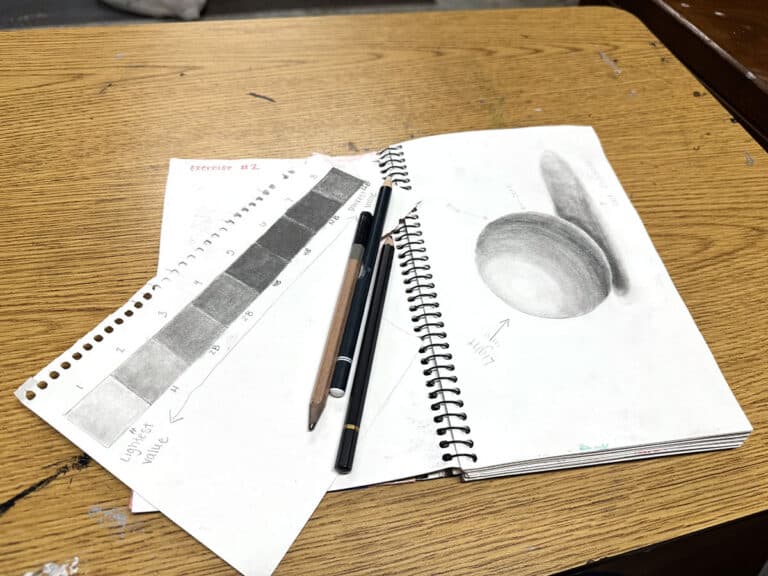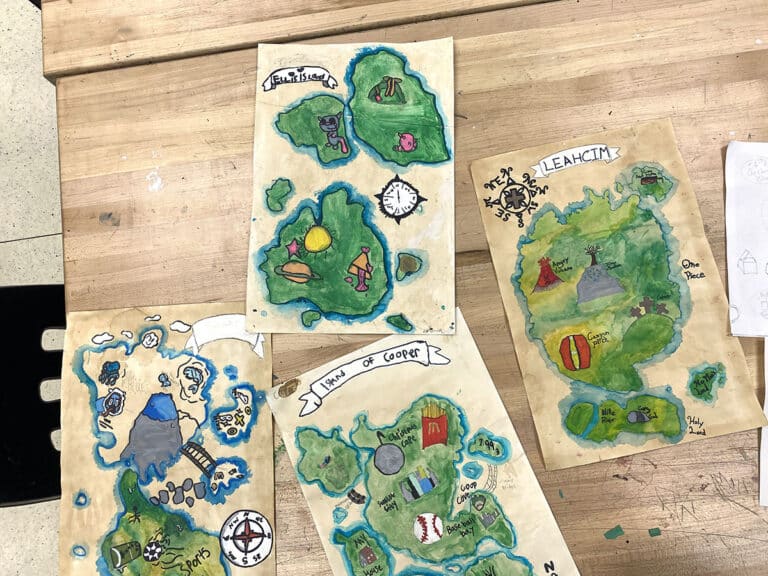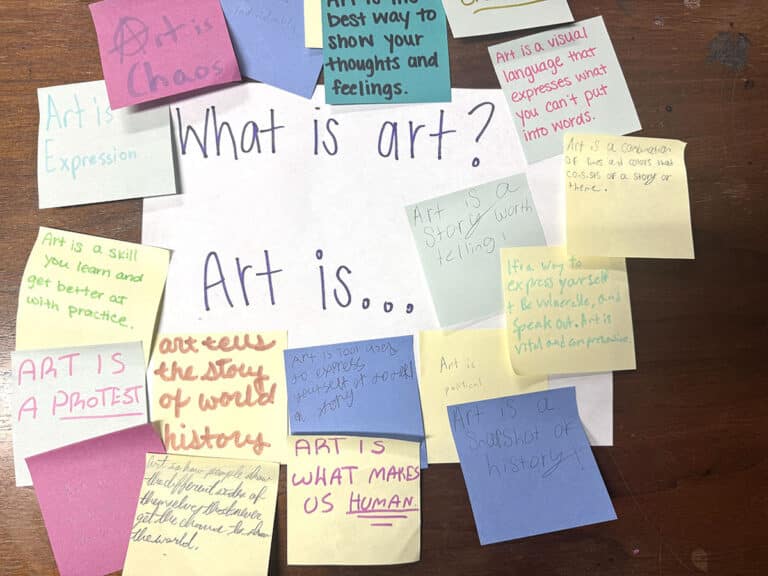


The bell rings, and you shut the door to begin class. Even though we’re not directly in your classroom, we see the value in all you do, thanks to the stories you shared in the State of Art Education Survey. From sharpening pencils to matting artwork to looking for “missing artwork,” we see the joy and hard work that drives you to be the best creative educator you can be.
Come take a peek behind other teachers’ art room doors and discover the joy and value that art educators bring to their students each and every day.
The Center for the Advancement of Art Education (CAAE) aims to capture the joy and value of art education to further visual arts in schools in projects like the State of Art Education. The CAAE has more research-backed resources to empower you as an art educator to advocate for your students and innovate in the field. Get started with the 2026 Results (and corresponding Arts Administrators Results) to get excited for what’s to come in the future of art education!
1. You find joy in nurturing strong relationships that transcend art room walls.
Student rapport just looks different in an art room. Maybe it’s knowing there’s no wrong answers in art, the diverse range of artists and artforms posted on the walls, or how it’s actually fun to take risks and try new things. Art has a special way of inviting people in and connecting them, which is why almost 80% of art teachers love building relationships with students.
But you put in the work, too! You establish clear expectations for a distraction-free environment, you learn each student’s name, nickname, and unique interests. You ask them about their day and what’s on their hearts, and discover even more in their habits, artwork, and writing. Almost three-fourths of art teachers find deep fulfillment in giving them a welcoming, warm place to be themselves and discover who they are as they grow up. You notice, you care, and you celebrate.
“I strive to create a space that celebrates each student’s individuality. I meet students where they are, providing the tools and support they need to grow and build confidence in both themselves and their learning.” – Anonymous Teacher Response
For fresh ideas to nurture relationships, confidence, and character in your art room, check out the following resources:
- How to Reach Uninterested Elementary Students in the Art Room
- Art Room Slang 101: Stay Current and Connect with Students
- How to Build Student Confidence (Ep. 147)
- 6 Ways the Visual Arts Promotes Resilient Learners for Life
Administrator Note:
While relationships are deeply rewarding, they are also nuanced and take a lot of intentionality and care. Continue building positive relationships with your teachers, so they feel supported in doing the same for their students. One of the best ways to do this is to show up. Schedule visits to see your teachers and their classroom culture in action!

2. You find joy in having an art room door!
The data speaks for itself and shows us that 3.5% of art teachers graduated from shared studios and pushing carts to their own art rooms over the past five years. Ninety percent of art teachers having their own space is something to celebrate—especially since this is your home away from home for most of the day!
If you’re looking for ways to deck out your space, there’s no shortage of inspiration over on YouTube with Art Teacher Cribs. Visit art teachers’ homes and classrooms across the country and see how they’ve transformed their spaces to reflect their unique needs and personalities. And if you’re on a tight budget, discover how to make your space your own without spending out of pocket with Renae Greene over on Zero Budget Art Room.
Administrator Note:
Thank you for advocating for your teachers to have their own space to put down roots. While art teachers are innovative and can figure out a way to teach a clay lesson anywhere, having tables and a sink certainly improves the learning experience for all. See what they still need to make their classroom feel like home and connect them with the appropriate local organization or grant to make it happen!
3. You find joy in more time.
Time—it’s the one thing everyone has the same amount of, but it flies by so fast! Would you believe that art teachers have more time? Over the past two years, you reported that lack of time dropped almost 20% as a challenge and that most teachers have anywhere from 30-60 minutes of daily planning time.
Our daily norm can make it hard to forget that we’re living the dream we once wished for. We can get so caught up in all our “to dos” that the immediate need for time outweighs the big picture. Pause and remember: Did you once wish for more time and now you have it? When we stop to reflect with gratitude about the little things, mental health improves.
One thing you do crave is more time together! Come hang out with fellow art educators while we laugh, learn, and make art over in our semi-annual Art Ed NOW Conference. Art Ed NOW is the largest virtual conference just for art teachers packed full of artmaking, perks and prizes, and practical classroom strategies from dynamic artists and educators.
“I wish I had more prep time and a planning time dedicated to the art teachers together.” – Anonymous Teacher Response
Administrator Note:
Protect and respect your teachers’ time with thoughtful and valuable professional development. Give the gift of the Art ED NOW Conference to your team and host a watch party together! Not only will you equip your teachers with 15 PD hours, but you’ll streamline your own prep—all you need to do is register your team, provide snacks and supplies, and AOE will take care of the rest.

4. You find joy in a calm art room.
Sometimes joy is quiet, like in a peaceful art room where the whole class is in a flow state of creation. The only sounds you hear are pencils scratching paper and your Good Vibes Playlist from The Art of Ed Community.
Unfortunately, sometimes reality doesn’t quite match our wishes. Seventy-three percent of art teachers reported that challenging student behaviors caused burnout this past year. Let’s get you back into a calm art room and reclaim your studio (and stress levels)! Watch Kyle Wood and Liz Brent in Draw the Line as they tackle the wild and tricky behaviors that arise in the art room, with tangible tips to meet students in the heat of the moment and establish proactive systems.
Administrator Note:
Parent and caregiver involvement decreases as students get older. It’s incredibly difficult for your teachers to manage behaviors at school with minimal home support. Along the same lines, behavior issues usually stem from a deeper root problem. While you can’t easily fix either of these, you can step in and provide reinforcement and understanding.
Proactively check in with the student and be the bridge between parents, coaches, counselors, and all of their teachers. You have the time and resources that your individual art teacher may not have to connect these parties and facilitate everyone getting on the same page.

5. You find joy in tactile art processes.
Everyone needs a screen break—even art teachers! The art room, while a hub of hands-on processes, is still chock-full of digital tasks from grading and lesson plans to supply inventory and parent communication. (Even AOE is virtual!) In a world full of technology, there is extra joy in being present and making something with your hands.
Come play with art for “in-person” artmaking at Art Club, hosted by The Art of Ed Community. Once a month, hang with other art teachers to pick up strategies to support your mind and classroom—all while making art.
“By fostering a supportive art community, educators can create a more resilient and rewarding creative practice, ultimately contributing to their personal and professional growth.” – Anonymous Teacher Response
Art teachers are also making a shift back to learning traditional processes, namely printmaking (44%) and fiber arts (42%), surpassing digital art, the medium of choice since 2018. Explore these artforms at your own pace and from the comfort of your own home with PRO Learning. These on-demand videos will show you everything you need to know to get started, plus practical tips on how to teach it to students.
Start with these two PRO Packs:
Administrator Note:
Encourage your teachers to keep creating and making! Take an interest in what they’ve made or are working on. Allocate a small portion of your budget to gift them really fun and unexpected art supplies for them to play with—just because. Remember, play is beneficial for all ages and results in higher morale and joy in the workplace, as well as fueling problem-solving skills.
6. You find joy in learning and engaging your creative brain!
Art teachers are smart. We know about a range of mediums, processes, techniques, and tools. Not to mention, we know developmental stages, teaching pedagogies, and art history! And yet, true to our nature, we’re always striving to learn more.
So it’s not surprising that advanced degrees continue to slowly rise. This year, almost 60% of art teachers have an advanced degree. These credentials not only expand your knowledge, but it also can boost your placement on the salary scale and open doors to fresh professional opportunities.
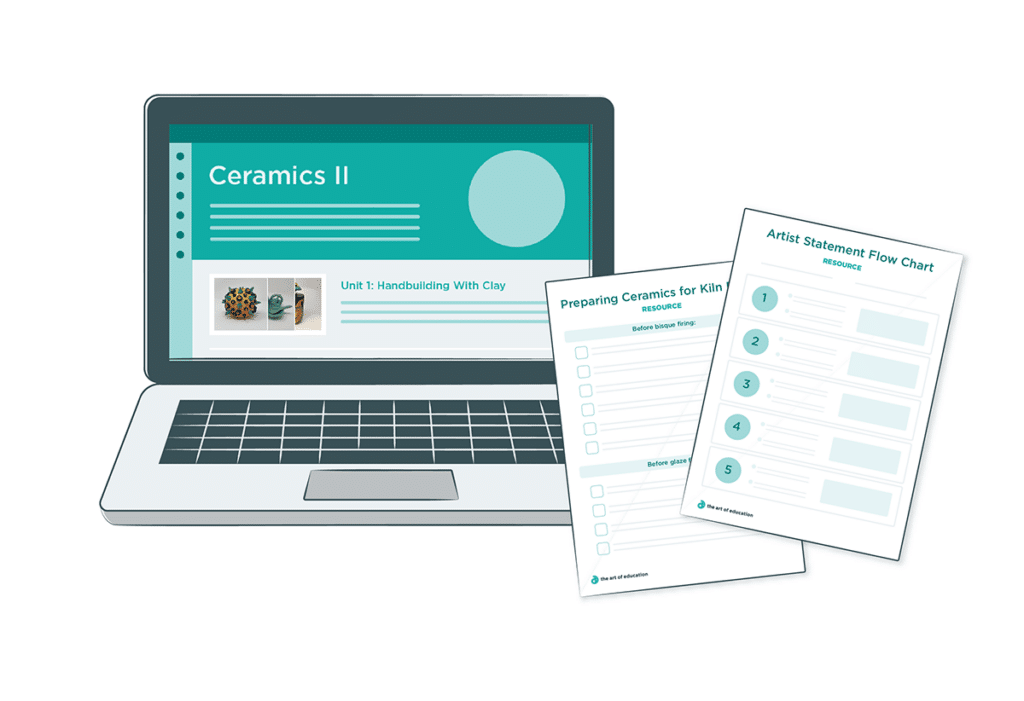
Whether you’re interested in a one-off studio course, a certificate, or a degree program, The Art of Education University has what you need. The virtual programs and courses are created for art teachers, by art teachers, and are designed to fit your busy teaching schedule and need for hands-on artmaking. Reach out to an admissions counselor today to see how AOEU can help you tackle your next learning adventure!
Administrator Note:
When your teachers keep learning, your students keep learning. Create a culture in your district, school, or team that values continuing education. Make it a big deal, because it is a big deal!
Here are three ways to show your support:
- Ask around and find out who is enrolled in a workshop, course, or degree program so you can cheer them on and check in on them.
- Walk them through your district’s process so they get the recognition, credits, and pay increases they deserve.
- Ask them to share discoveries with the team and celebrate when they hit completion.

7. You find joy in custom, curated curricula.
One way art teachers use their creativity every single day is through developing lesson plans. With each passing year, more art teachers have full autonomy over their curriculum—a 19% increase from 2019 to 85% today who write all or most of it. As part of the curriculum writing process, 85% of art teachers are also creating their own resources, also reflected in the 10% drop of teachers who use social media as a source of resources.
While there are so many great project ideas out there, only you know your group of students the best. You know what will get them excited, what will challenge them, and what they need extra reinforcement in. While it makes sense to write your own plans, it can get cumbersome.
Don’t overlook FLEX Curriculum—you’ll have the ease of pre-written Curricula, Collections, Lesson Plans, and Resources, but with the ability to adapt them to your specific classroom needs. It’s truly the best of both worlds, structure and flexibility!
Administrator Note:
Set your teachers up for an entire school year of success with a comprehensive K-12 art curriculum. FLEX Curriculum can support your whole district with standards-aligned content for all 50 states and the National Core Arts Standards. Plus, we know you’re working within a tight budget, too! Explore key funding sources to help you bring FLEX to your team.
Art teachers need curriculum to keep growing, too! Pair with PRO Learning, our on-demand professional development platform, for our FLEX & PRO Curriculum Suite to unlock administrator benefits. Make your workflow more efficient with features like virtual product trainings, administrator reports, and the ability to build your own district classes.
Behind every art room door is a place where creativity and connection come alive. The State of Art Education 2026 data proves that the joy you make—through relationships, spaces, routines, and learning—has a lasting impact. Even when the work is challenging, it matters deeply. You are molding more than students; you are shaping confident and courageous artists, and that work is worth celebrating and supporting!
Download and share the Center’s advocacy resources.
To chat about what brings you joy with other art teachers, join us in The Art of Ed Community!
Magazine articles and podcasts are opinions of professional education contributors and do not necessarily represent the position of the Art of Education University (AOEU) or its academic offerings. Contributors use terms in the way they are most often talked about in the scope of their educational experiences.