

Most homes have a hair dryer… but does your art room have one yet? If not, grab some blow dryers on your next thrift store run and add them to your art closet. Not only can you freshen up during your planning period, but you can also level up your artwork and artmaking processes! We asked the talented artists and knowledgeable art teachers here at The Art of Ed for their best hair dryer uses for the art room, and they did not disappoint.
Heat up your art room with these amazing uses for the ordinary hair dryer!

1. Transfer images in encaustic wax.
Instead of a heat gun (which can be intimidating!), Andrea McDonough, AOEU’s Chair of Faculty Development, suggests trying a blow dryer. Run passes across the board with a hair dryer to smooth the wax. For a fun twist that students love, add an image transfer to their final encaustic piece. Students are able to use their favorite photo or scanned artwork and transform it into something fresh.
Try encaustic image transfers with these steps:
- Print an image with a laser printer (that uses toner).
- Coat the substrate with a layer of wax.
- Smooth the layer by running passes with the hair dryer.
- Lay the image face down on the wax.
- Warm the paper with the hair dryer until you start seeing the wax melt into the image.
- Burnish the image with a spoon.
- Let the paper cool completely.
- Saturate the paper with a sponge and water.
- Rub the soaked paper away to reveal the image underneath!

2. Speed dry gel plate printing processes.
Gel plate printing is magical for students and art teachers alike! Who doesn’t love making art with something that resembles a gelatin dessert? There are so many possibilities when it comes to gel plate prints, making it a new adventure each time. One of Andrea McDonough’s essential gel plate printing tools is a blow dryer. It’s super helpful to dry ink or paint layers as you go!
3. Prepare clay for trimming.
Dry time in the ceramics room is always a wildcard! There are so many factors like humidity, storage options, and clay composition. Then, throw in teaching schedules and rotations, school breaks, and student absences, and things can get complicated really fast. If you’re in a pinch and need to get clay to the leatherhard stage for trimming or carving, plug in that hair dryer! Rachel Kline, one of AOEU’s Adjunct Instructors, says it’s the perfect trick to accelerate the drying stages in one class period.
4. Dry underglaze for ceramic monoprint transfers.
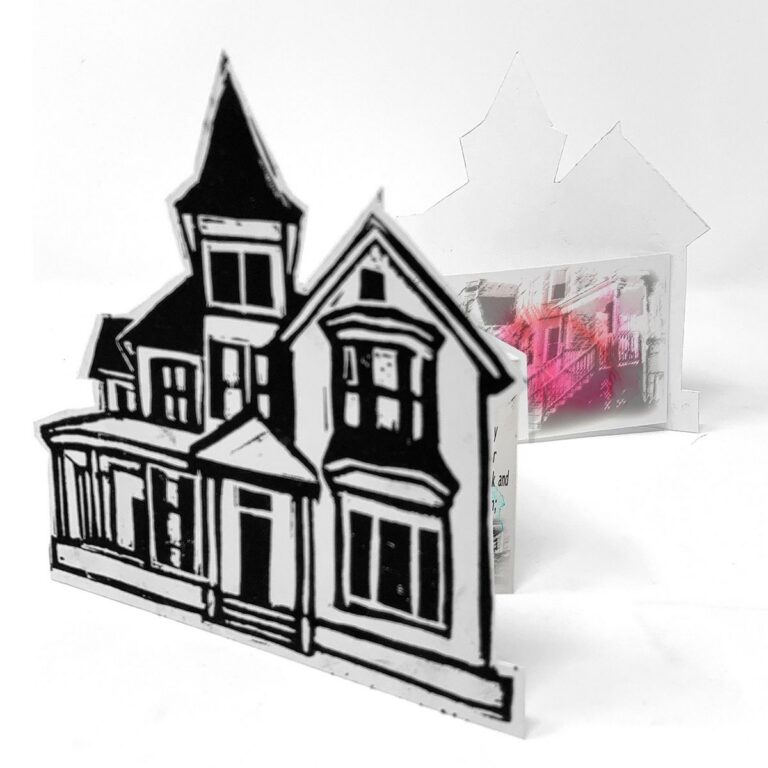
Who says printmaking is just for 2D artists? Bring printmaking processes into your clay unit with monoprint transfers. Rachel Kline also creates fabulous, detailed images with this process in her own ceramics practice. Turn on your hair dryer to dry the underglaze in between layers to get the perfect clay print!

Here’s a quick overview of how to do a clay transfer:
- Apply a design to newsprint with underglaze.
- Remember that all images and text will be reversed.
- Use a hair dryer to ensure each layer is mostly dry before adding another.
- Brush on a layer of slip.
- Use a hair dryer again to ensure the slip is leatherhard.
- Add a layer of slip to the leatherhard clay piece.
- Gently press the newsprint onto the surface of the clay piece.
- Pierce any air pockets with a needle tool.
- Firmly press the newsprint with a rib tool.
- Peel away the newsprint.
Watch the video below for a similar ceramics process with gel plates.
5. Warm linoleum for easy carving.
Apply a little heat to your next linoleum block before carving. Once warmed up, your carving tools will glide like butter! It eliminates jerky movements, assists students with limited hand strength, and produces smooth, fluid lines. If you don’t have a blow dryer, Jen Leban, AOE’s Online Community Manager, says that a thrifted iron works well, too.
6. Save outfits!
We all have had students get paint on their clothes… and probably even ourselves too! After frantically scrubbing wet paint out of garments, break out the hair dryer to quickly remove that water stain before the next class. Frances Vaughan, one of AOEU’s Adjunct Instructors, fondly calls it the “microwave of the art room” for shortcuts like this.

7. Level up collages with gel medium.
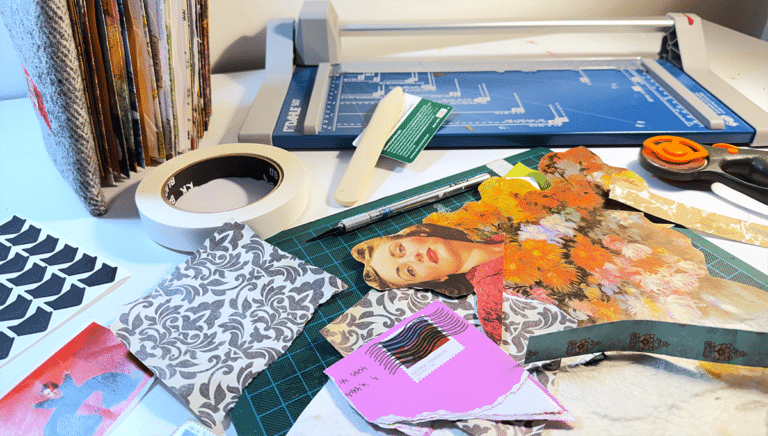
Take your collage practice up a notch with a hair dryer station. Instead of typical glue sticks, try little cups or containers of gel medium. Use paintbrushes to apply the medium in lieu of glue. Brush on to adhere each layer and top it off with another thin coat to produce professional results. Debi West, one of AOEU’s Adjunct Instructors, suggests using the hair dryer station to speed along the drying process in between layers, if needed. Plus, the top coat helps to protect the artwork from spills and seals the artwork from peeling and lifting up.
8. Layer and move watercolor washes.
Of course, we couldn’t end this compilation without mentioning drying watercolors. Painting with watercolors can take a lot of patience. The more layers, the more intricate the image. Use a blow dryer to speed the drying process so you can paint multiple layers in one sitting. You can also use the blowing air to manipulate washes and force bleeds.
If you’re looking for the ultimate watercolor inspiration this summer, there’s still time to join Mini Masterpieces over on Instagram. Download the prompt list and whip up a tiny watercolor exploration each day. Take a look at all of the fantastic art teachers who have already posted and add your own!

Whether you’re drying your hair or drying an artwork, this is one essential tool you’ll want to grab for your art room this fall. Use it to speed dry layers in collage, watercolor, or printmaking—all of which are very helpful when under the time constraint of the dismissal bell. Plus, save your clothes from the inevitable paint mishap. Get ready to heat up your art room and blow your students away with amazing processes using a hair dryer!
How else do you use a hair dryer in your art room?
To chat about blow dryers with other art teachers, join us in The Art of Ed Community!
Magazine articles and podcasts are opinions of professional education contributors and do not necessarily represent the position of the Art of Education University (AOEU) or its academic offerings. Contributors use terms in the way they are most often talked about in the scope of their educational experiences.